
The 疍家 Dànjiā are the boat people of the South China coast, the people who for centuries lived and worked and died on their boats, fishing and farming the sea in floating net-cages and only coming ashore to trade and to bury their dead. Their world was the 渔排 yú pái, the raft: a platform of timber and rope strung together into a little floating village, carrying a house, a garden of net-cages, and a family. In 新村港 Xīncūn gǎng on the 陵水 Língshuǐ coast, that world is still there, and a few of the rafts have been turned into somewhere you can spend the night. A floating homestay is a room, or a small cabin, built over the water on a raft, and it is the closest you will come to sleeping the way the 疍家 have for centuries.
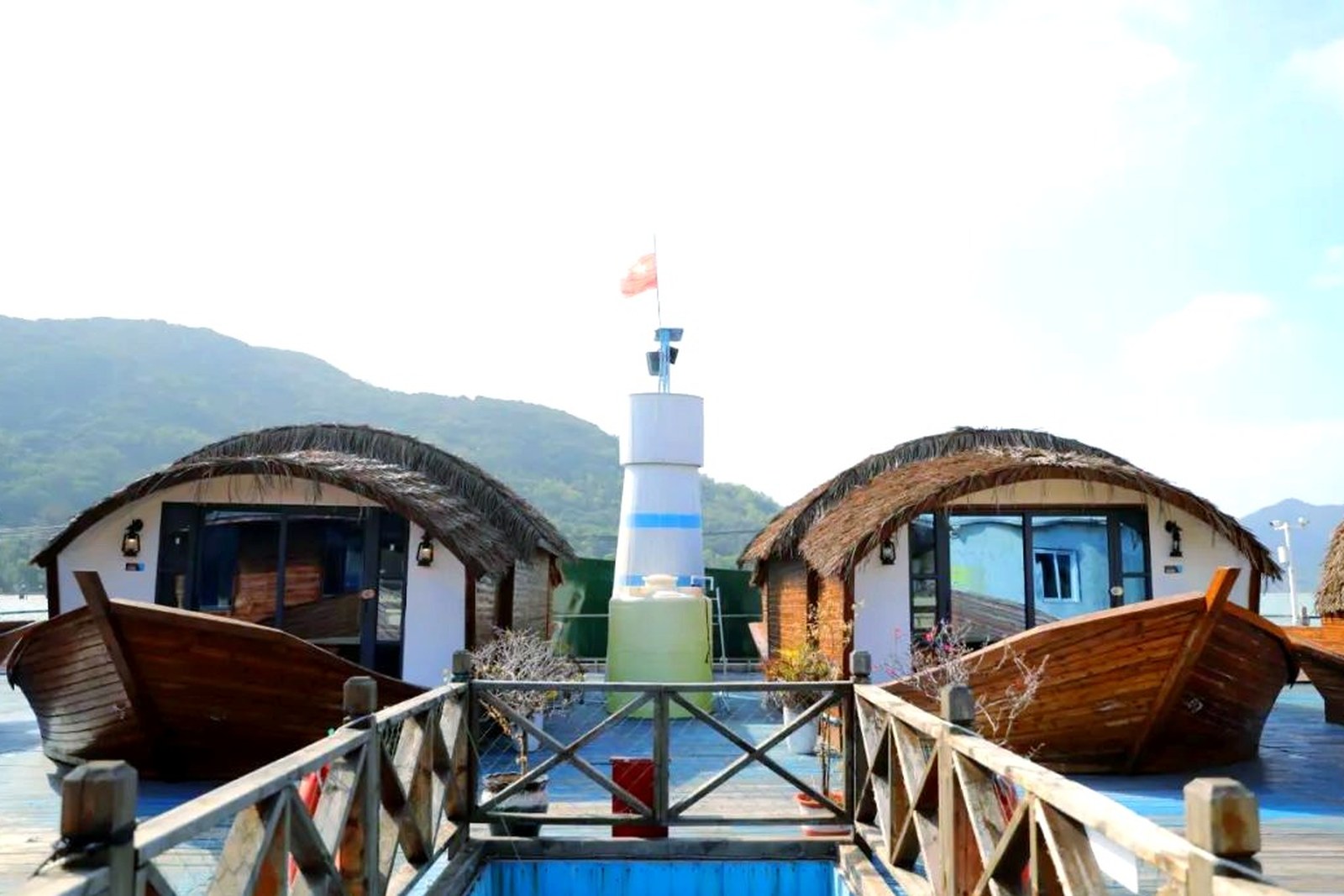
The experience is the water. You reach your raft by a short boat ride from the pier, step off onto the wooden platform, and the platform rocks a little and then settles. Beneath your feet is the sea, through the gaps in the planks you can see it, and a metre below, at the edge of the raft, are the net-cages where the fish are kept, some of them the ones you will eat for dinner. The cabin is simple: a bed, a fan or air conditioning, a lamp, a small bathroom, and a doorway or a window that faces out over the water. It is not luxurious and it is not meant to be; it is a room on a working raft, and the point is the position and the light and the sound of water underneath.
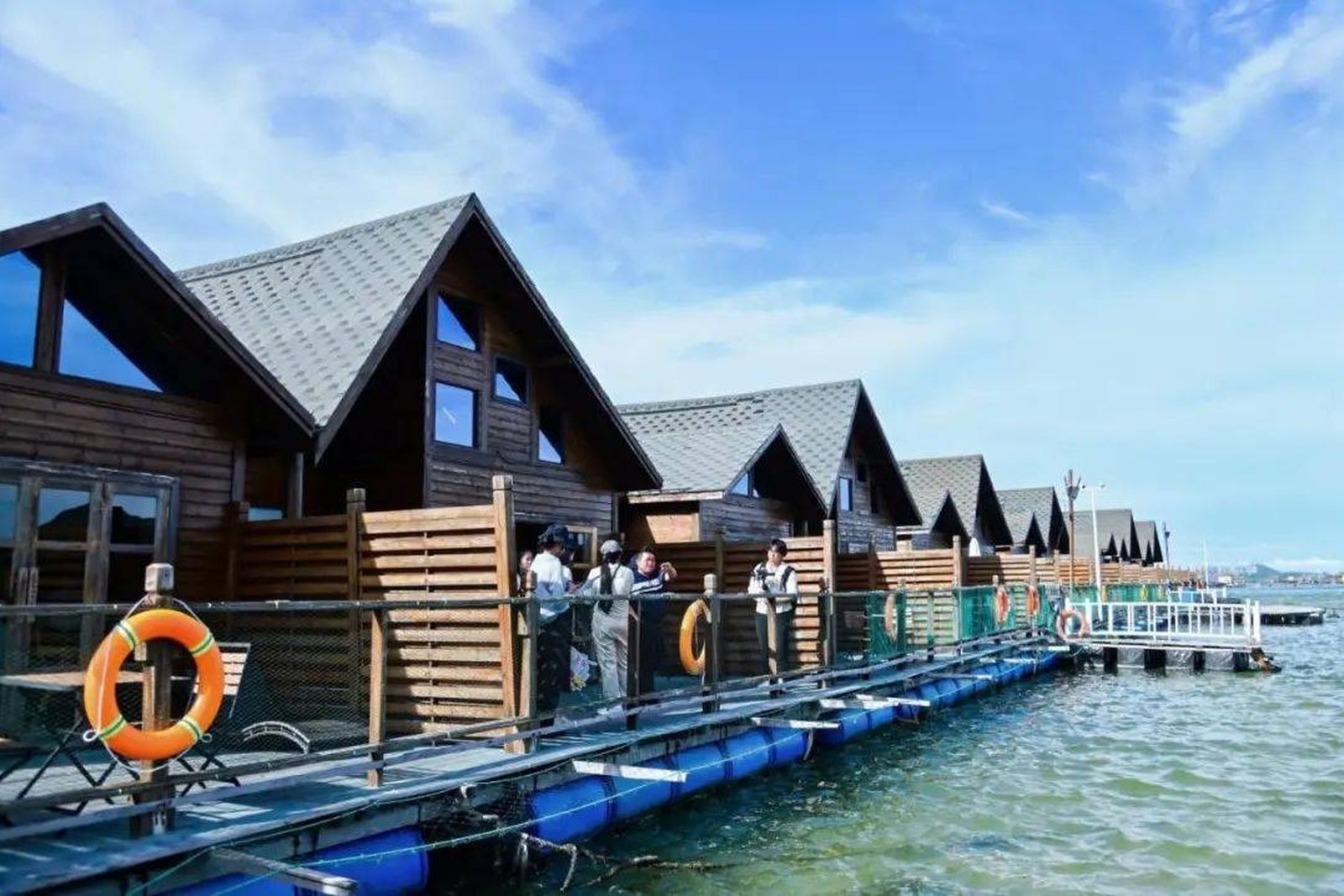
At night, the rafts light up and the 疍家 village of platforms spreads out around you, each strung with a lamp, the fishing boats going out and coming in across the water. You eat the 疍家 seafood on a neighbouring raft — the fish from the cages, the crab in season, the 气鼓鱼粥 qì gǔ yú zhōu — and you go to sleep to the sound of the water. In the morning you are woken by the birds and the boats rather than by a road, and you can be across at 南湾猴岛 before the day crowd. It is the most distinctive night’s sleep on this coast, and it is a small, honest window into a way of life that is almost gone.
What the Rooms Are Like
Expect a small cabin of eight to fifteen square metres, with a bed, a fan or air conditioning, a lamp, and a small bathroom that may be shared with the raft or may be private. The floor is timber over the water, and you will feel the raft move a little with the tide and with the boats passing. Everything is practical rather than stylish, and there may be no television and no steady Wi-Fi. The reward is the water right underneath you and the lights of the rafts around you — bring a sense of adventure and leave the worries about decor at the shore.
Practicalities
Price. A double on a 疍家 raft homestay runs ¥200 to ¥500 a night in the shoulder season, and more over the October week and Chinese New Year. It often includes the boat from the pier and sometimes the 疍家 breakfast.
Address. The floating homestays are on the 疍家 rafts of 新村港 Xīncūn gǎng, on the coast near 新村镇 Xīncūn zhèn in 陵水黎族自治县, about forty minutes by car from 陵水 town and an hour and a half from 三亚. You reach them by boat from the pier.
Rooms. Ask whether the cabin has its own bathroom or shares one, and whether the air conditioning works, because the raft is over water and can be humid. Confirm the boat between the pier and the raft is included and at what times it runs, since you are dependent on it to get on and off. Ask about the 疍家 meal.
Getting there. From 陵水 town, 新村 is about forty minutes by car; from 三亚 it is a good hour and a half. The ring railway’s 陵水站 is the nearest station, from which a taxi runs to the pier, and the raft is then a short boat ride away.
flowcloud would say that a night on a raft over the water is the most honest place to understand a people who lived and died on the sea, and that being let in for a night is a privilege rather than a transaction.
Where to stay: the floating homestays on the 疍家 rafts of 新村港 in 陵水黎族自治县, reached by boat from the 新村港码头 pier. Book a cabin with its own bathroom, confirm the air conditioning and the boat times, and come for the one night on this coast you are unlikely to forget.