
瑶塘村 Yáo táng cūn is a village inside the 丹霞山 Dān xiá shān scenic area in 仁化县 Rén huà xiàn, and the reason to sleep in it is a clock rather than a view. The mountain is a 292-square-kilometre spread of red sandstone ridges about which the numbers are genuinely strange – more than six hundred and eighty rock towers and walls, the highest point at 巴寨 Bā zhài around 618 metres, most of the peaks between 300 and 400 – and it is the place the whole landform is named after, “the colour of cinnabar, bright as sunset clouds,” 色如渥丹,灿若明霞 sè rú wò dān, càn ruò míng xiá. It was approved as one of the world’s first batch of global geoparks in February 2004 and went onto the world natural heritage list in August 2010 as the head of the serial site China Danxia, the eighth such listing for the country and the first and so far only one in 广东. What all of that means for a bed is simple: the scenic area sells a hundred-yuan ticket that is valid for forty-eight hours and includes the shuttle bus, and the shuttle bus starts running at 06:30. A guesthouse inside the gate is a guesthouse on the right side of that sentence.
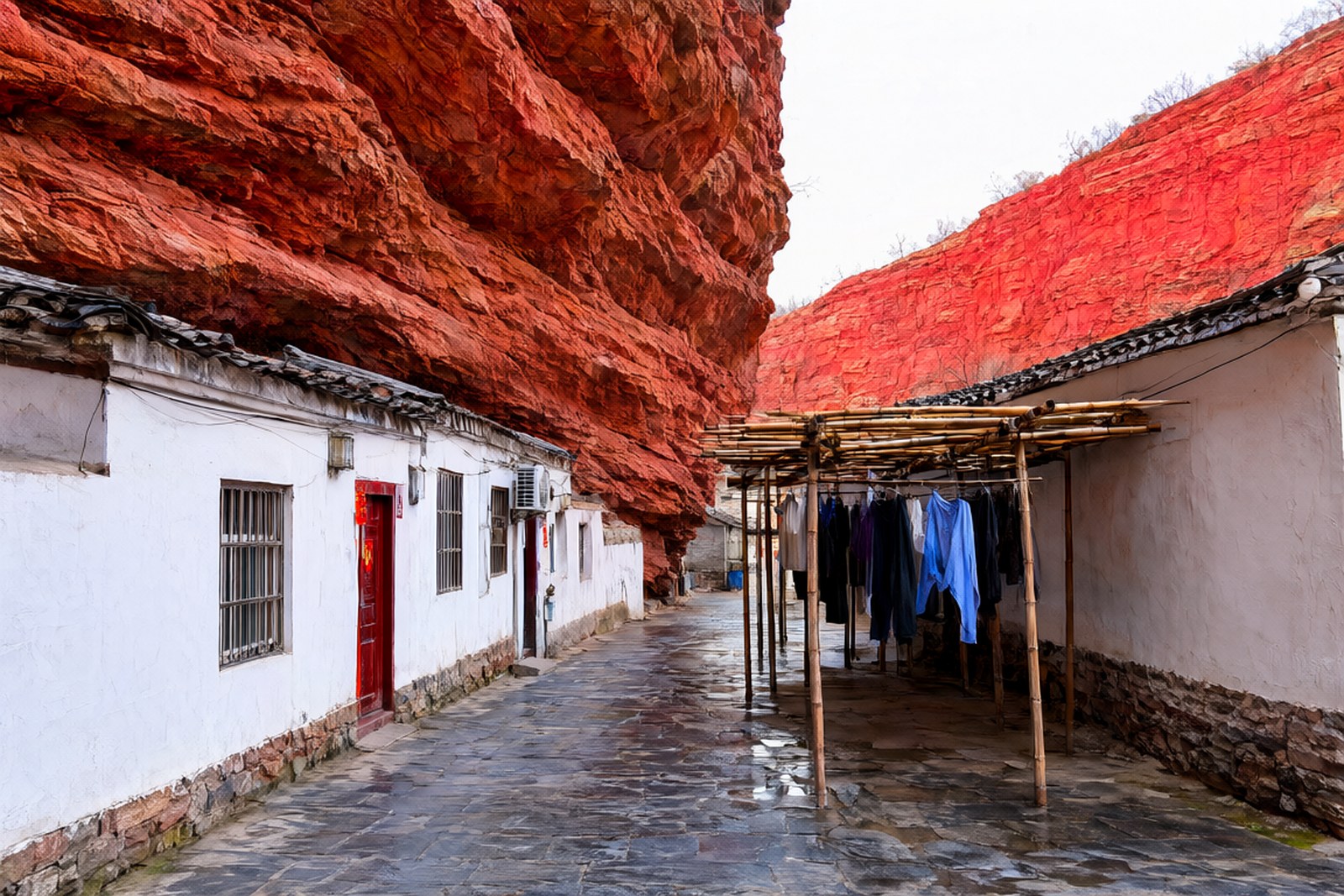
The villages that hold the guesthouses are not one place and it is worth knowing which one you are booking, because each sits against a different entrance to the mountain. 瑶塘村 Yáo táng cūn – also written 瑶塘新村 – is the nearest to 长老峰 Zhǎng lǎo fēng, the ridge with the sunrise pavilion on it, which is why it is the village for people who intend to be up before light. 断石村 Duàn shí cūn sits by 阳元山 Yáng yuán shān and the boat landing on the 锦江 Jǐn jiāng, so its rooms are the ones for an evening cruise and a sunset. 夏富村 Xià fù cūn and 青湖塘村 Qīng hú táng cūn are further out and quieter again. And there is a belt of hotels around the 外山门 wài shān mén, the outer gate, with proper restaurants and shops, which is the convenient choice if you would rather eat well than sleep deep in the villages. All of them are cheap by the standards of a world heritage site: figures in the sources run from about ¥180 to ¥300 in 瑶塘村, ¥200 to ¥460 in 断石村 depending on the house, and about ¥220 to ¥300 and up for the hotels at the outer gate.
What the villages actually give you, apart from the bed, is that the walk starts where the lane ends. 长老峰 and its 观日亭 guān rì tíng are the sunrise; 阳元石 Yáng yuán shí and 翔龙湖 Xiáng lóng hú are on the other side of the same ticket; 锦石岩寺 Jǐn shí yán sì hangs in a cave in the cliff on the way up 长老峰 and 别传寺 Bié chuán sì is on the same slope; 细美寨 Xì měi zhài is where the sunset crowd goes and 锦江 sets out its boats from the landing. All of that is written up in the travel column, where it belongs. What the guesthouse adds is the arithmetic: the shuttle stops at the outer gate, at 阳元山, at the museum, at 宝珠峰 for the cable car and at 长老峰, the buses run from 06:30 to 18:00, private cars are not allowed up the mountain, and the difference between sleeping in the village and sleeping in 仁化 town or 韶关 is between one and two hours of the day spent in a vehicle rather than on a path.
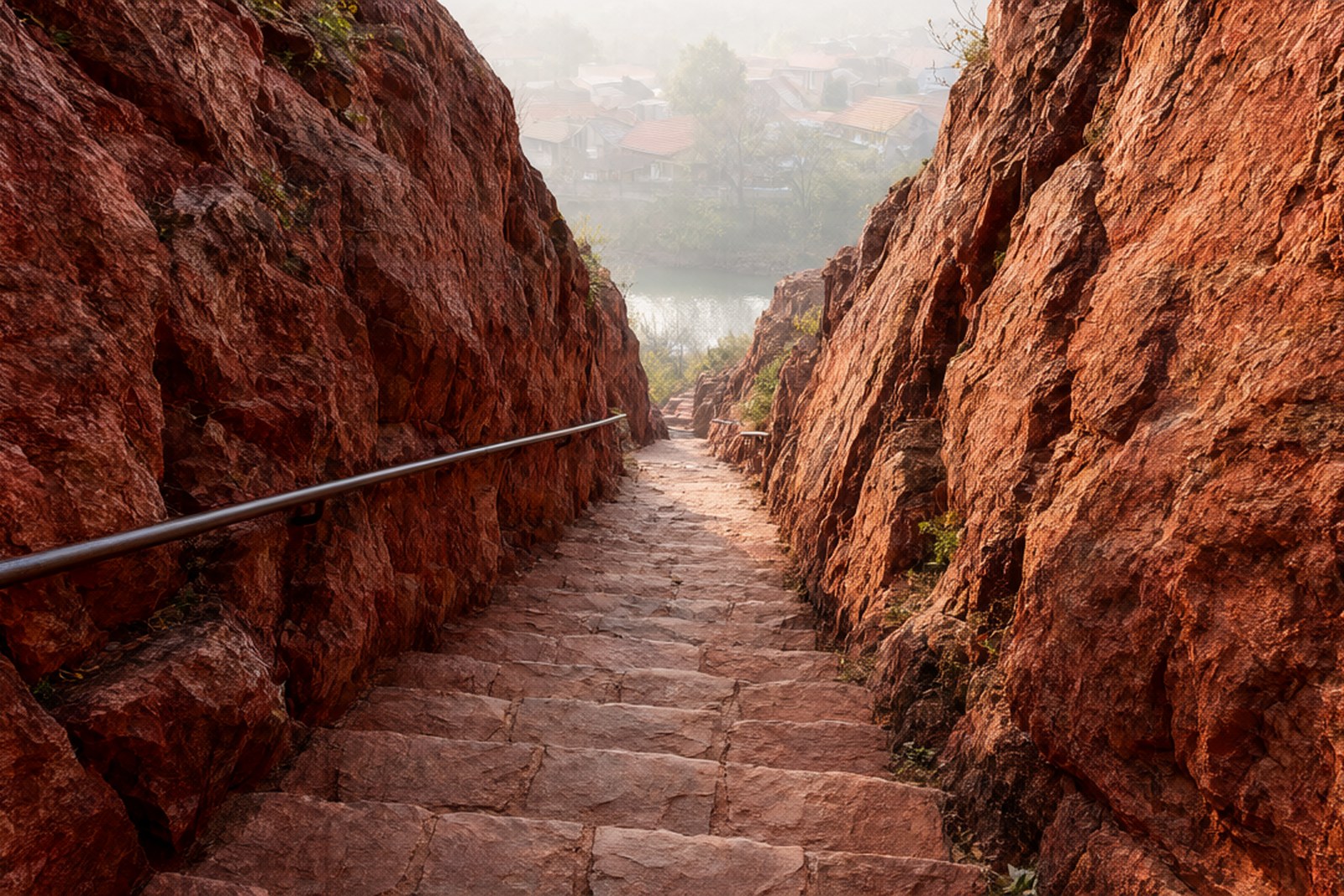
The other half of the argument for staying inside the gate is the biology, which people discover on the second morning. As of June 2022 the mountain’s roll-call was 2,270 species of higher plant, 1,516 insects, more than a hundred spiders, 447 vertebrates including 248 birds, and 26 species new to science that were found and named here and live almost nowhere else. The 丹霞梧桐 dān xiá wú tóng, the Danxia phoenix tree, grows on these cliffs and on very few others; eleven protected plant species and thirty-two protected animals are recorded inside the boundary. None of that is visible from a bus window at eleven in the morning with forty other people on the path. It is audible at six, when the birds have the place and the cliffs are still cool, and a guest sleeping two hundred metres inside the gate is the only kind of visitor who gets it. Food up here is village food and it is honest about it: the kitchens in 瑶塘村 and 断石村 cook mountain vegetables, free-range chicken, river fish and the local bean curd, and the restaurants at the 外山门 serve the same dishes to a bigger room. The one thing worth planning around is dinner time, because the villages eat early and the kitchens close when the last table finishes; a guest arriving off a late bus will find the lights going out rather than a menu. Breakfast in a guesthouse is arranged the night before and is usually rice noodles or congee with something pickled, which is the right thing to eat before a climb and not a thing anyone should expect to be a buffet. Water from the tap is fine for washing and not for the mountain, so buy it on the way out.
What the Rooms Are Like
A 瑶塘村 guesthouse is a family house with rooms added on, and the honest description is a tiled floor, white walls, a bed with a firm mattress and a quilt rather than a duvet, air conditioning, an electric kettle, a wall-mounted television and a bathroom with a shower and, in most of them, a proper glass panel rather than a curtain over a wet floor. The newer ones are purpose-built and have a window onto the cliff or the lane, a small balcony in a few, and a tea table by the window; the older houses are smaller and darker and can smell of damp after rain. Rooms in 断石村 tend to be larger and newer because the village was rebuilt further up the price ladder. Nobody’s breakfast is included unless it is stated, hot water is usually a flask rather than a boiler in the room, and the wifi works and is slow. What every one of them has, and what no hotel at the gate can match, is the sound of the place at night, which is frogs.
Practicalities
Price. A guesthouse room in the 丹霞山 villages runs about ¥180 to ¥460 a night for two depending on the village and the standard of the house – 瑶塘村 around ¥180 to ¥300, 断石村 around ¥200 to ¥460 – with the hotels around the 外山门 at roughly ¥220 to ¥300 and up, and the better art-hotel conversions and view rooms above that. The 国庆 guó qìng week, the 春节 Chūn jié week and the weekends through spring and autumn are the times the villages fill, and 五一 wǔ yī is the worst of them. Treat all of it as a range rather than a rate and check the live rate for your dates, because a village room is repriced by the booking channel and by the week.
Address. The guesthouses are in the villages inside the 丹霞山 scenic area in 仁化县 Rén huà xiàn – 瑶塘村 Yáo táng cūn near 长老峰, 断石村 Duàn shí cūn near 阳元山 and the 锦江 landing, and 夏富村 Xià fù cūn and 青湖塘村 Qīng hú táng cūn further out – with a belt of hotels and restaurants around the 外山门 wài shān mén. 仁化 town is a short drive away and 韶关市 Sháo guān shì about fifty to seventy minutes by road.
Rooms. Ask which village the room is in and not just which mountain, because 瑶塘 and 断石 are on opposite sides of the same ticket and the walk between them is a shuttle ride; ask for an upper floor with the cliff in front of you, since the ground floor of a village house is the damp one and the view is the whole point. Ask what time breakfast is served and whether it is included, ask whether the house can hold luggage after check-out so you can climb without it, and ask about the ticket: the hundred-yuan adult ticket runs for forty-eight hours with the shuttle included, half price for students and for ages six to eighteen and sixty to sixty-four, free under 1.2 metres and over sixty-five, and the gate and the driver both want to see it. Parking at the gate is capped at fifteen yuan for twenty-four hours.
Getting there. From 韶关站 Sháo guān zhàn on the 武广 Wǔ guǎng high-speed line, the 丹霞山 through-bus leaves from a stop about a hundred metres out of the exit, on lane 5, and takes roughly seventy minutes for about twenty-one yuan; from 韶关东站 Sháo guān dōng zhàn the same connection leaves from fifty metres left of the exit, takes about fifty minutes, and runs from 06:50 every fifteen to thirty minutes. 丹霞山站 Dān xiá shān zhàn at 周田镇 on the 赣韶 Gàn sháo line is the fastest of all at about twenty minutes by bus from the station, which is roughly an hour less than coming up from the city. By car the exits are 丹霞山 off the 武深 Wǔ shēn expressway, about five kilometres from the gate, or 丹霞 off the 南韶 Nán sháo expressway, about twelve kilometres by the 106 national road. Private cars are not allowed up the mountain, so whatever you drive stops at the gate.
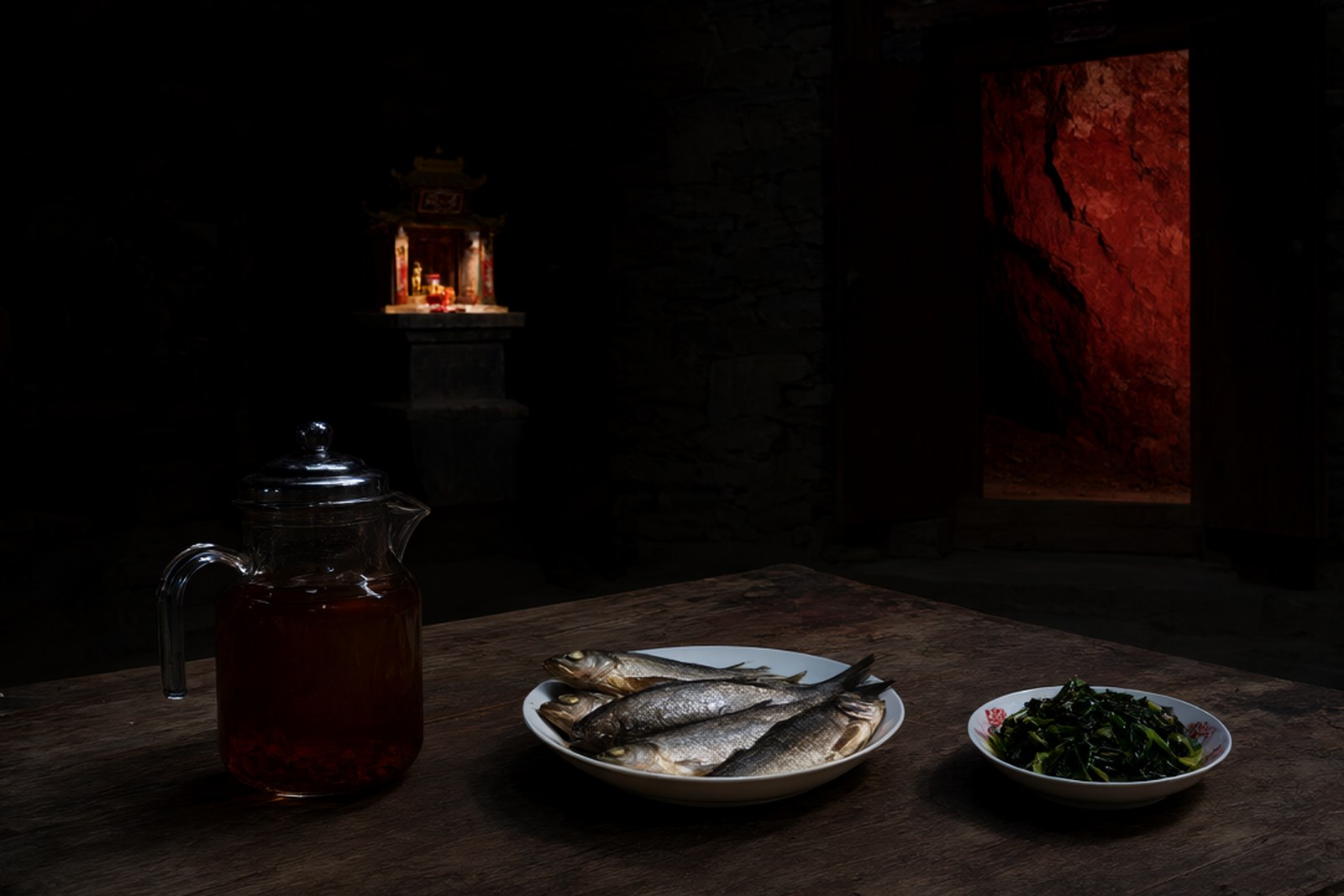
Where to stay: a family guesthouse in 瑶塘村 Yáo táng cūn, the village on the 长老峰 side of the 丹霞山 scenic area in 仁化县, or in 断石村 if you would rather have the 锦江 and the sunset. Take an upper room with the cliff in it, buy the 48-hour ticket at the gate rather than a single day, be on the path before the shuttle fills, and eat early because the village kitchens close early.
flowcloud would say that the world heritage listing and the geopark plaque are both beside the point at five in the morning, when the only things that matter are whether the gate is a hundred metres away or forty kilometres away and whether anybody else is on the stairs – and that this is the one decision a visitor to 丹霞山 can still get wrong after reading everything else.