
儋州市 Dānzhōu shì faces west, out across the 北部湾 Běibù Wān, the Gulf of Tonkin, and that is the first thing to understand about a stay here: the coast looks at the sunset. A resort on the bay is a low, white building set back from a shelving beach, with the water in front of it calm and shallow, the fishing boats of 白马井 working a mile or two to the south, and nothing at all on the horizon except the sun going down. It is Hainan without the crowds, and the quiet is the commodity.
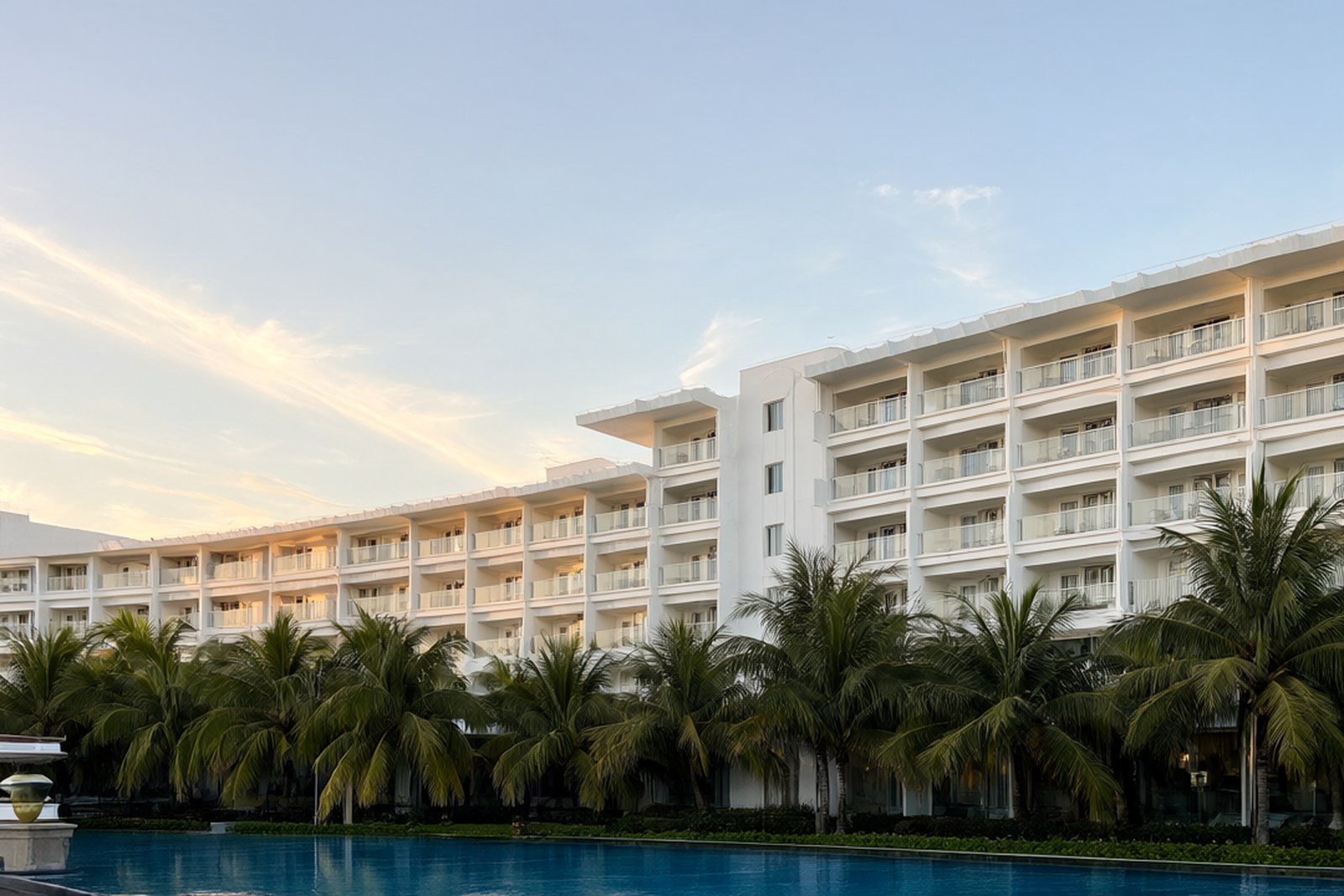
The west coast of Hainan is drier and less visited than the east, and the difference shows in the landscape. The rainfall is lower, the scrub is thinner, and the coast around the city alternates between sand, black basalt and wide tidal flats rather than the continuous line of resort beaches that runs down the south-east. The bay outside town is broad and gentle, with a long low tide and warm shallow water, which makes it good for swimming at the top of the tide and interesting to walk at the bottom of it. Because the coast runs north to south and the sun sets over the water, the light in the last hour of the day is the whole reason people book here.
The resort itself is a comfortable four- or five-star in the Chinese seaside idiom: a lobby, a Chinese restaurant with a heavy seafood section, an outdoor pool set between the building and the sand, and a run of rooms with a balcony facing the water. The seafood comes in from 白马井 and the 光村 tidal flats the same day, and the kitchen will cook crab and prawns to order; the 沙虫 and the 红鱼干 of the west coast both appear on the menu, which is a sign that the kitchen is buying locally rather than catering to a generic resort palate. There is usually a spa and a small fitness room, and the whole place is arranged for people who intend to do very little.
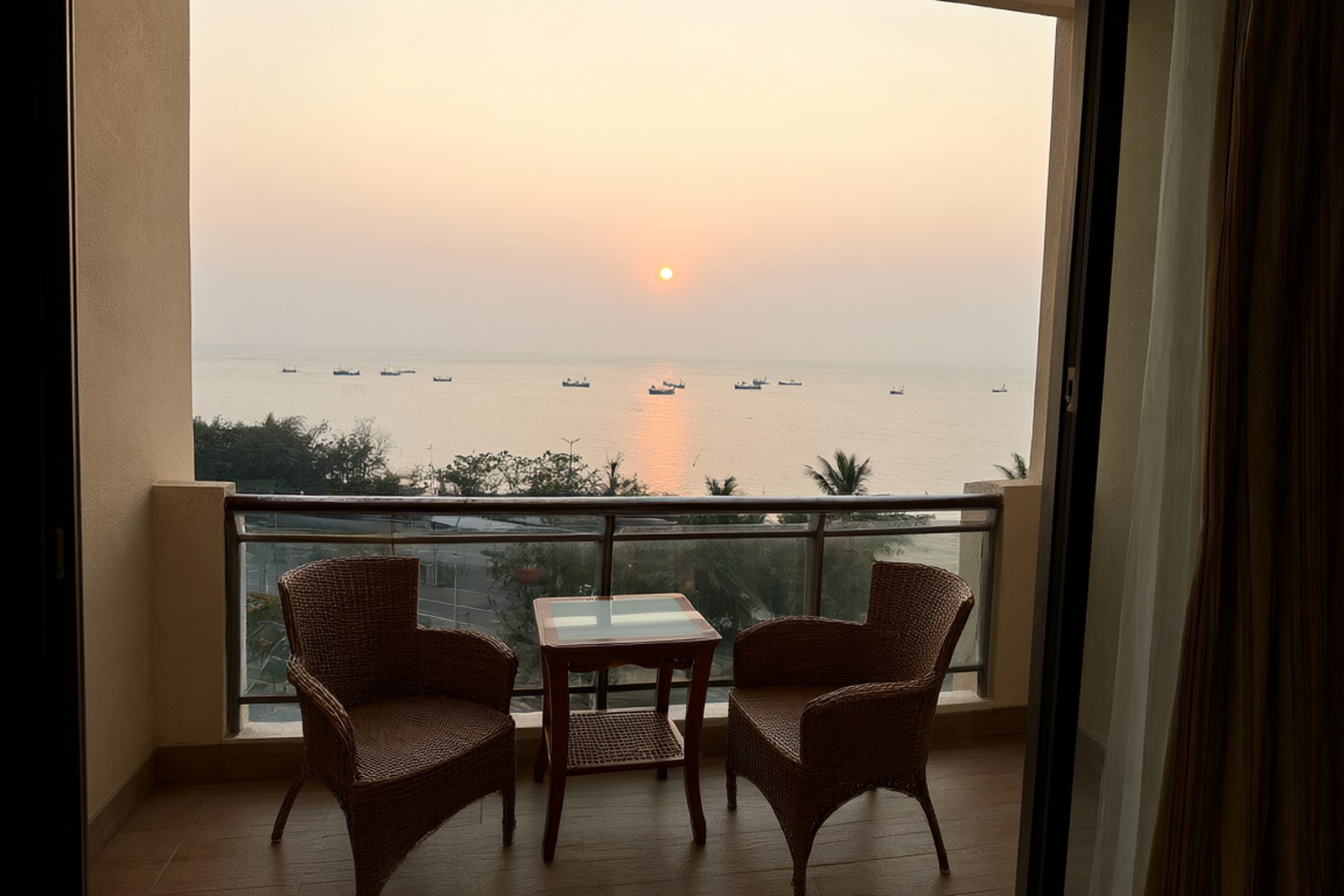
What the position gives you is the west coast as a base. The 千年古盐田 at 峨蔓, the 东坡书院 at 中和 and the 石花水洞 are all inside a day’s driving, the 松涛水库 is up in the hills behind the city, and the port at 白马井 is where the afternoon’s fish comes ashore. The 东坡书院 is the reason most visitors come to the city at all, and it is close enough from a bay hotel for a morning. Come for two nights, take the sunset on the first evening and the academy on the second morning, and eat the west coast’s fish both times.
What the Rooms Are Like
Expect a room of thirty to forty square metres, a firm bed, air conditioning, a clean en-suite bathroom with a shower and often a bath, and a balcony facing the sea. The sea-facing rooms are the ones to book and cost more; the inland rooms look over the grounds and cost less. There is a restaurant, a pool, a lift and reliable Wi-Fi, and the finish is good four-star rather than grand. Ask for a higher floor, because the palms between the building and the water take the sea view from the ground floor.
Practicalities
Price. A double at a bay resort here runs ¥400 to ¥900 a night in the shoulder season, and more over the October week and Chinese New Year. Sea-facing rooms carry a premium, and the poolside or beachfront rooms are the best of them.
Address. The resort is on the coast of 儋州市, west of the city centre at 那大 Nàdà and within reach of 白马井, the fishing port on the west ring rail line. The nearest high-speed rail stop is 白马井站 Báimǎjǐng zhàn, about forty minutes from 海口东 on the west ring line.
Rooms. Ask for a room facing the sea rather than the garden, and for a higher floor clear of the palms. Confirm whether breakfast is included and whether the hotel runs a shuttle to 白马井 station, which matters because the coast is not walkable to the station.
Getting there. From 白马井站 on the west ring high-speed line, a taxi to the bay takes about twenty minutes; from 海口美兰机场 the drive is roughly two hours and from 三亚 about three. A car is useful here, because the coast has no town within walking distance.
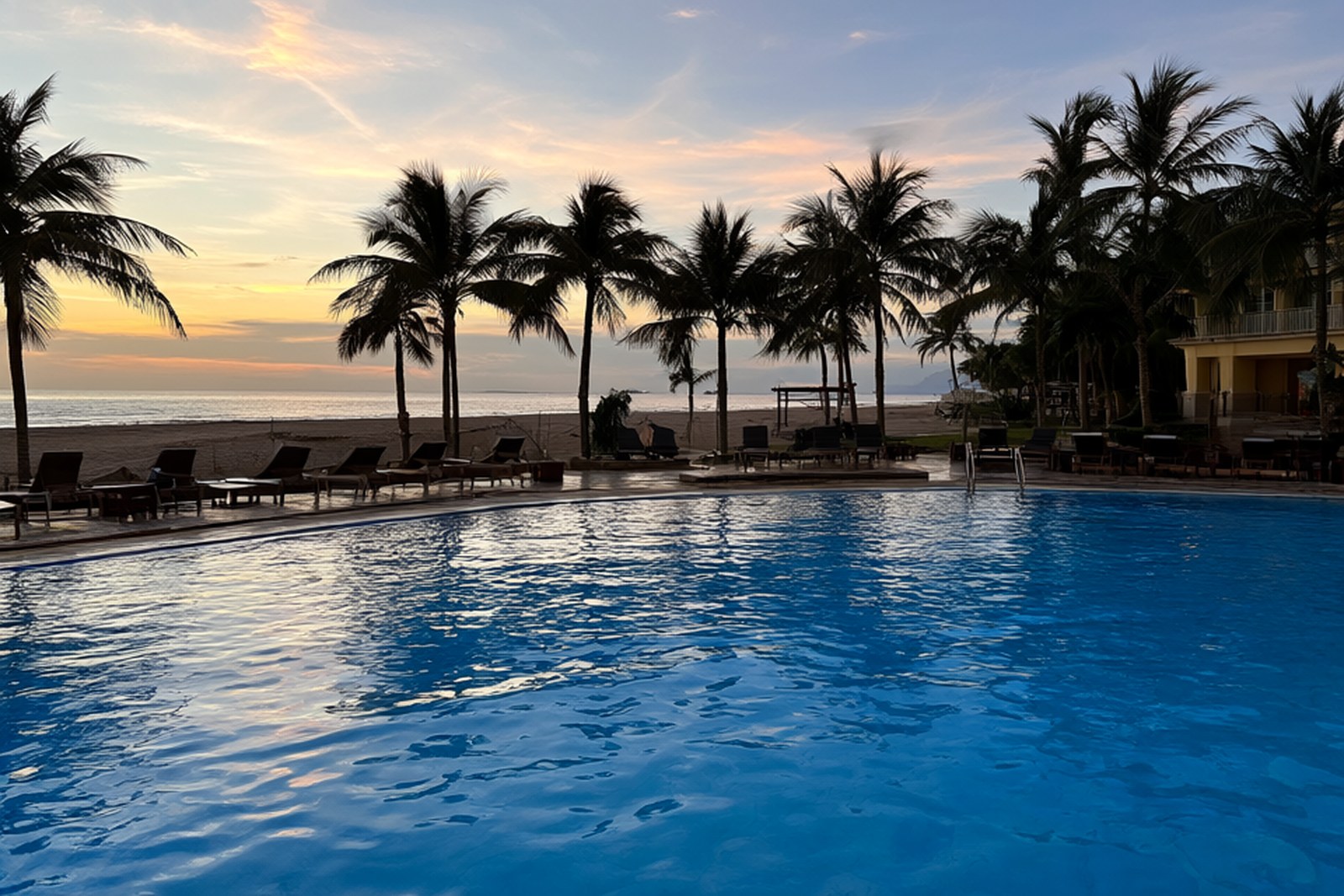
Where to stay: the resorts and larger hotels on the bay west of the city centre, 儋州市, reached by taxi from 白马井站 on the west ring line. Book a sea-facing room on a high floor, take the sunset from the balcony, and use the coast as the base for the 东坡书院, the 峨蔓 salt fields and the port at 白马井.
flowcloud would say that a coast which faces the water it earns its living from, and which builds its hotels low and white and lets the sunset do the entertaining, has understood that on a west-facing shore the only thing worth selling is the hour before dark.