
The walls of 大鹏所城 Dàpéng suǒ chéng were laid out in 1394, in the twenty-seventh year of the Hongwu reign, as one of the coastal garrisons the Ming built to keep pirates and, later, the Portuguese off the Pearl River approaches. What survives is a rough rectangle about six hundred metres around, with four gates, a grid of lanes inside and a stretch of grey brick and rammed earth wall that has been repaired so many times that the repairs are now part of the monument. People live in it. That is the first thing to understand before booking a room: this is not a restored attraction with a ticket gate, it is a village of about a thousand households that happens to be inside a listed fortification, and the guesthouses are ordinary family houses in the older lanes, converted a room at a time.
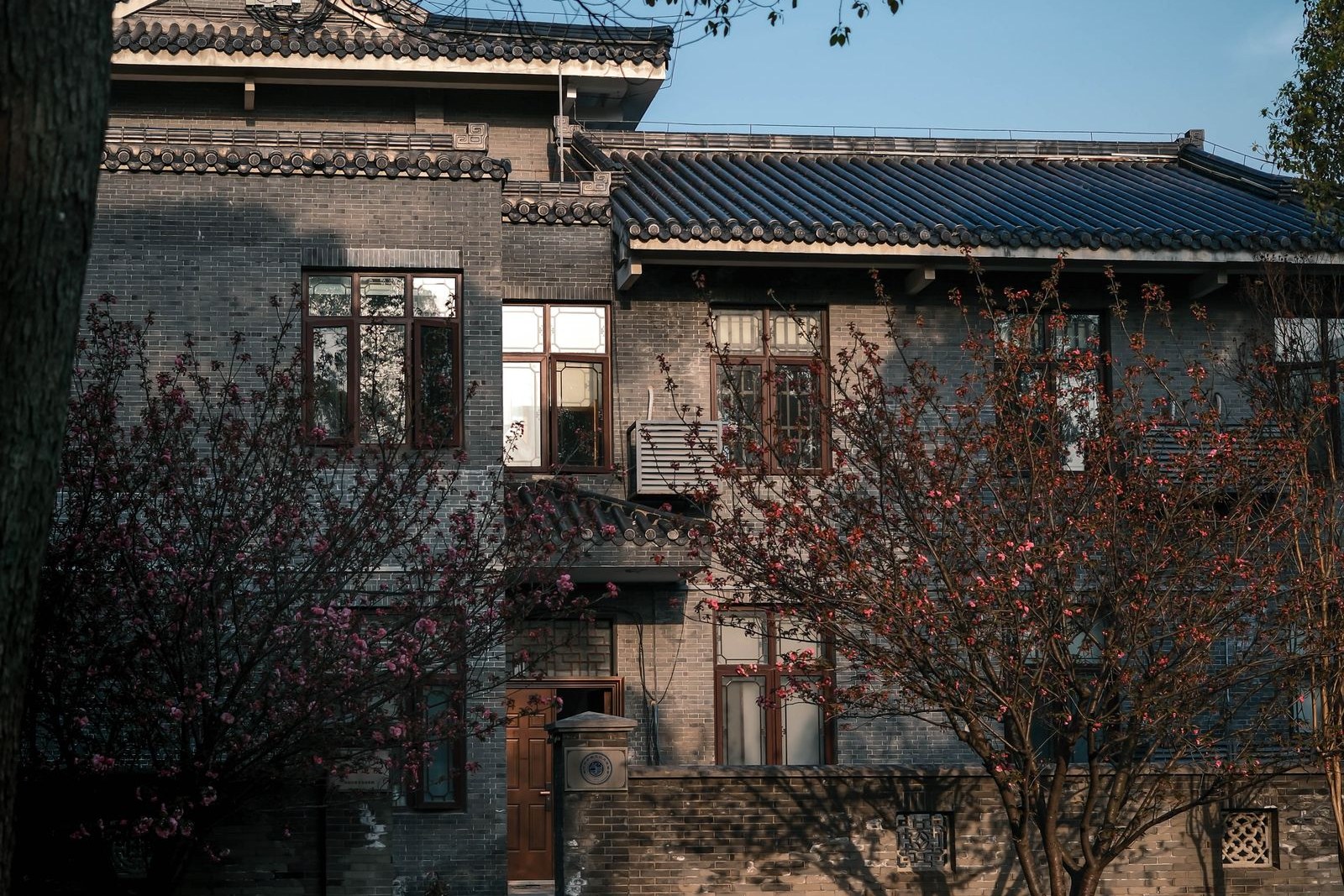
The better guesthouses are in the lanes off 正街 Zhèng Jiē, the main spine that runs from the east gate to the west, and they are recognisable by their courtyards: a 天井 tiān jǐng, a small open square in the middle of the plan that lets light and rain into the house and that every room opens onto. The construction is the 广府 Guǎng fǔ and 客家 Kèjiā hybrid you find across this part of Guangdong, grey brick walls with a band of oyster shell or stone at the base, timber posts and beams, and a roof of 瓦 wǎ, curved clay tiles laid over a battened frame. The rooms that have been done up keep all of it and put the bathroom in a corner behind a screen; the ones that have not are cheaper and colder. Ask which you are getting.
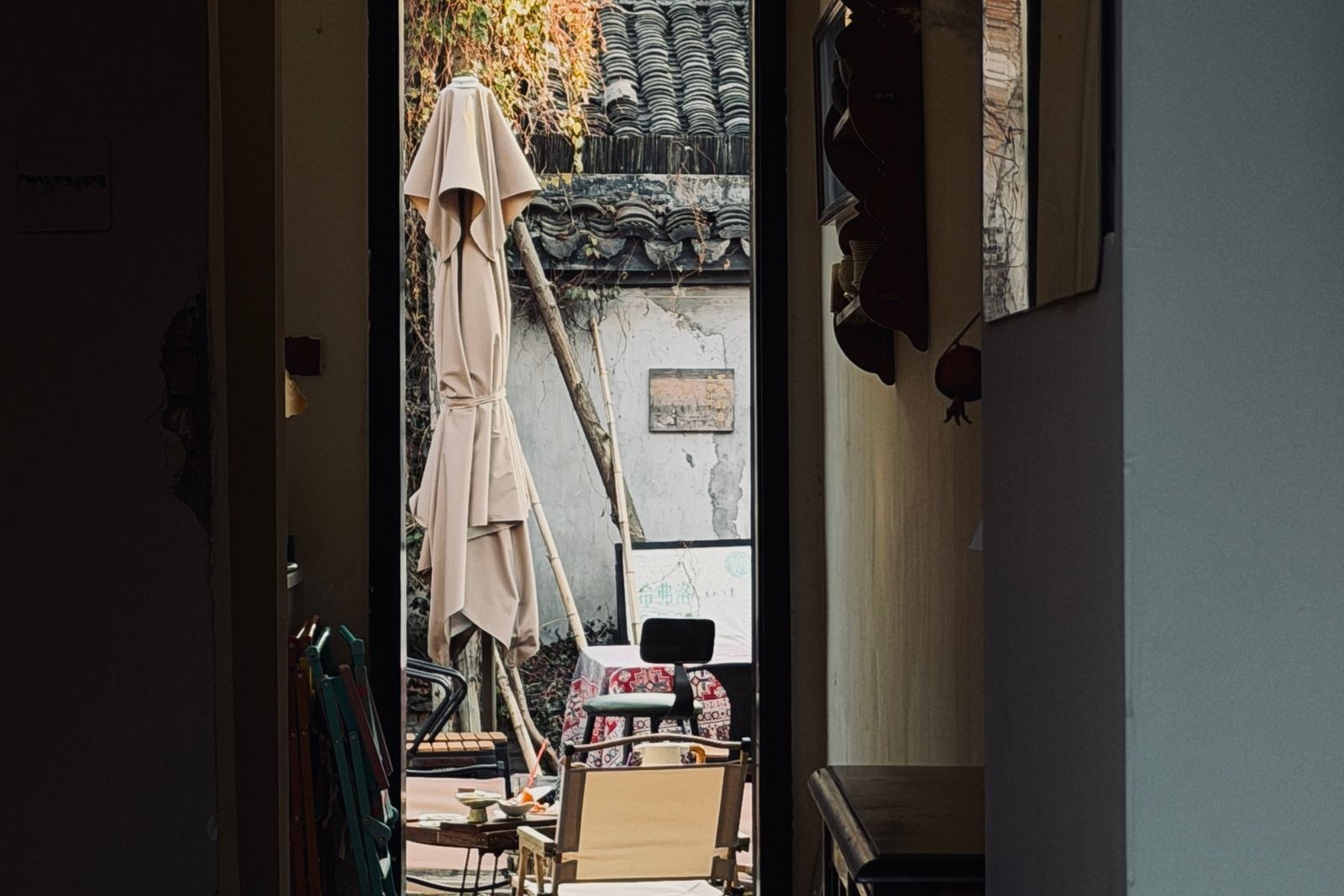
What makes the location worth the trip is what is within a few minutes’ walk. The 将军第 Jiāng Jūn Dì, the residence of 赖恩爵 Lài Ēnjué, the garrison commander who fought the 九龙海战 Jiǔlóng hǎi zhàn of 1839 in the run-up to the Opium War, is two lanes north of the main street and is the largest surviving house in the town. Beyond the walls, 较场尾 Jiàochǎng Wěi is a beach village with a row of small guesthouses on the sand, and 大鹏湾 Dàpéng Wān itself is ten minutes further east. The town is quiet in the way a place with an old population is quiet: the loudest thing in the evening is usually the television in somebody’s front room, and the ancestral halls are still in use. This is the correct place to stay if you came to see the Dapeng peninsula rather than to be entertained by it.
What the Rooms Are Like
Expect a room of fifteen to twenty-five square metres with a hard bed, a firm mattress and often a wooden platform instead of a frame, which is the local habit and not a fault. Air conditioning is standard in the renovated houses and absent in the cheapest ones, and in summer you want it. Bathrooms vary enormously: some are full modern wet rooms, some are a shower rose over a tiled floor with the drain in the middle and no curtain, which is the traditional arrangement and works perfectly well once you stop minding. Water pressure in the older lanes is low in the early evening when everyone is showering at once. Rooms facing the courtyard get the light and the noise; rooms at the back get neither. Almost every guesthouse has a shared kitchen or at least a kettle and a table in the courtyard, and the owners will usually cook breakfast for a small charge if you ask the night before.
Practicalities
Price. A double in a renovated courtyard guesthouse runs ¥280 to ¥600 a night, the upper end buying a properly rebuilt room with a modern bathroom, air conditioning and a courtyard view. The unrenovated family rooms start around ¥150. Weekends and public holidays roughly double the rate and the good houses sell out a fortnight ahead, because this is where Shenzhen people go when they want a night away.
Address. The guesthouses are inside the walls of 大鹏所城 Dàpéng suǒ chéng, in 大鹏新区 Dàpéng Xīn Qū, on the 大鹏半岛 Dàpéng Bàndǎo roughly fifty kilometres east of central Shenzhen. The lanes off 正街 Zhèng Jiē near the east and south gates have the densest cluster, and 较场尾 Jiàochǎng Wěi on the seafront five minutes south is the alternative if you would rather have the beach than the walls.
Rooms. Ask for an upper room if you want quiet and a view over the roofscape, and a ground-floor room off the courtyard if you want to sit outside in the evening, which is the actual pleasure of the place. Confirm whether the house has a resident family, because an occupied courtyard feels alive and an emptied one can feel like a museum after dark. If you are travelling in summer, confirm the air conditioning and the hot water supply in writing, since a restored compound with one water heater serves the whole house in sequence.
Getting there. From central Shenzhen take Metro Line 3 or Line 14 to 大运 Dàyùn or 坪山围 Píngshān Wéi and change to the 大鹏假日专线 or bus M457 to 大鹏所城 Dàpéng suǒ chéng; the whole trip takes about ninety minutes. By car it is roughly an hour and a quarter from 福田 Fútián along the 惠深沿海高速, and the town has car parks just outside the north and west gates because vehicles are not allowed through the gates themselves.
flowcloud would say that the only honest way to see a six-hundred-year-old garrison town is to sleep in it and be woken by somebody’s pressure cooker, and that a place with a resident population will always beat a place with a ticket office.
Where to stay: the courtyard guesthouses in the lanes off 正街 Zhèng Jiē inside 大鹏所城 Dàpéng suǒ chéng, in 大鹏新区. Book direct if you can, since the family houses are often not listed anywhere; ask for a room off the courtyard, confirm the bathroom is inside the room, and walk the perimeter wall at dusk on the first evening, which is when the town is at its best and when you will decide, correctly, to stay a second night.