
大熊山国家森林公园 Dà xióng shān guó jiā sēn lín gōng yuán is the high ground of central Hunan, and the lodges in it are cold houses in a wet forest rather than mountain resorts. The park sits in the north of 新化县 Xīn huà xiàn, on the ridge where 娄底 and 益阳 meet, and it runs to better than nine-tenths forest: forty-odd peaks above a thousand metres, a summit at 1,622 m that is the highest ground in 湘中 Xiāng zhōng, central Hunan, and a cover of mixed broadleaf and pine that keeps the air damp and the temperature down. The county calls the mountain 湘中屋脊 Xiāng zhōng wū jǐ, the roof ridge of central Hunan, and the consequence for anyone sleeping on it is that a thick quilt is in use in August, that the cloud arrives in the middle of the morning and takes the valley away, and that the nights are quiet enough to hear water moving somewhere below the window.
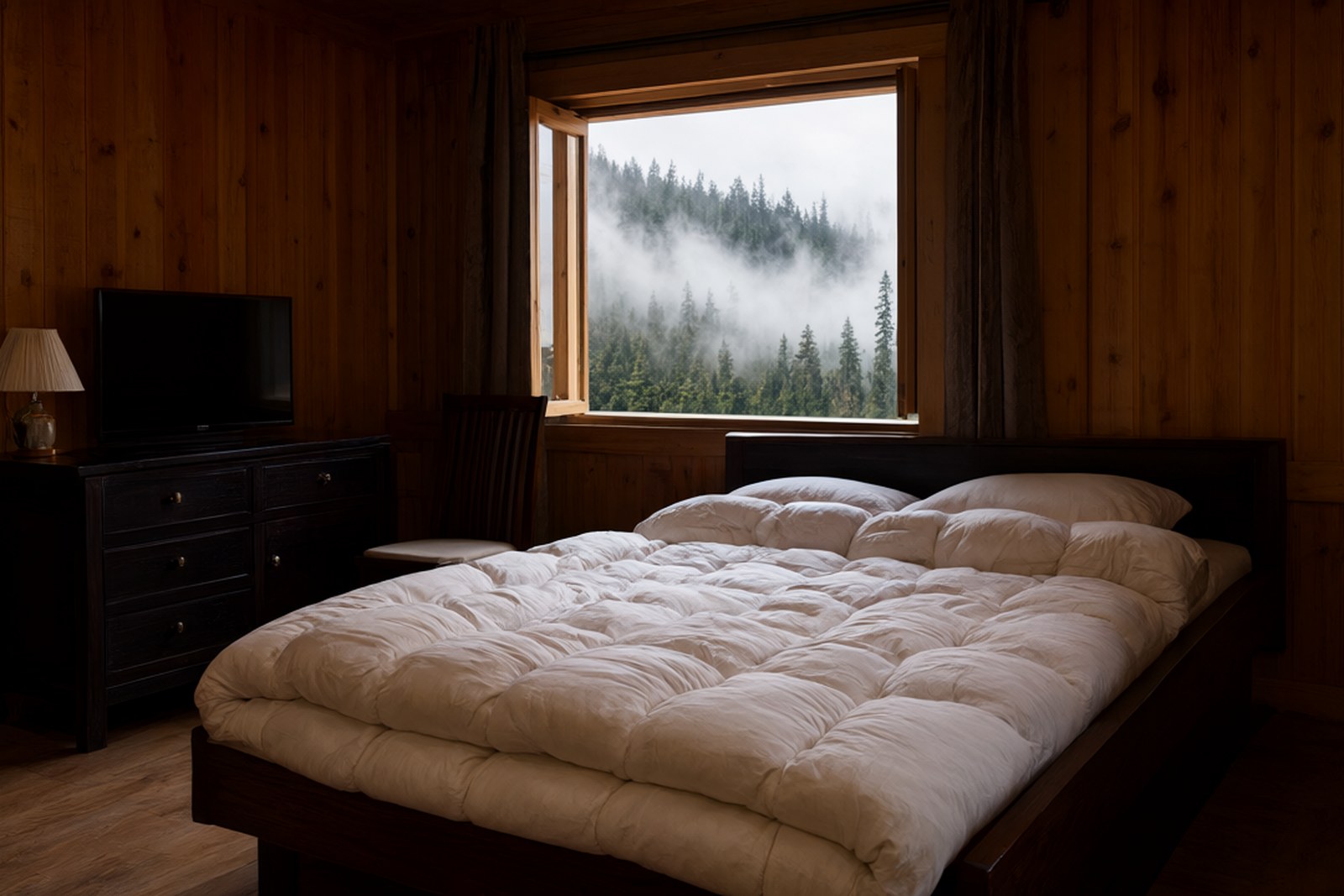
The cold is the whole reason the mountain is worth the climb. At 1,622 m the summit is high enough to hold mist through the morning, and the park’s own figure for the air is around sixty-seven thousand negative oxygen ions per cubic centimetre, the sort of number that gets a place listed as a 中国森林氧吧 Zhōng guó sēn lín yǎng ba, a forest oxygen bar. What that means in practice is that the summer visitors come up from the cities of the plain to sleep under a quilt and walk in shade, and that the mountain has a second season in the cold months, when the rain freezes on the trees and the whole forest goes white – the county’s word for it is 雾凇 wù sōng, rime. Spring brings the azaleas across the upper slopes, autumn brings the colour and the cloud seas, and the long ginkgo inside the walls of 熊山古寺 Xióng shān gǔ sì is said to be fourteen hundred years old and turns gold in November.
The accommodation on the mountain is small, cheap and spread along the forest roads. The guesthouses are family houses in the park’s 工区 gōng qū, the old work districts of the state forest farm, and they run from a plain two-storey block with ten rooms to a handful of rooms in a timber house with a walled garden and a gate you close behind you. There are also rooms inside the temple compound at 熊山古寺, which are the ones to ask for if you want the evening light over the ridge, and a larger hotel in the core area with a car park and a restaurant. The food is mountain food and there is no choice about it: cured pork hung over the kitchen fire, chicken and mushrooms out of the forest, greens grown in the yard, and a bowl of the county’s own tripe soup if the kitchen is doing it that day.
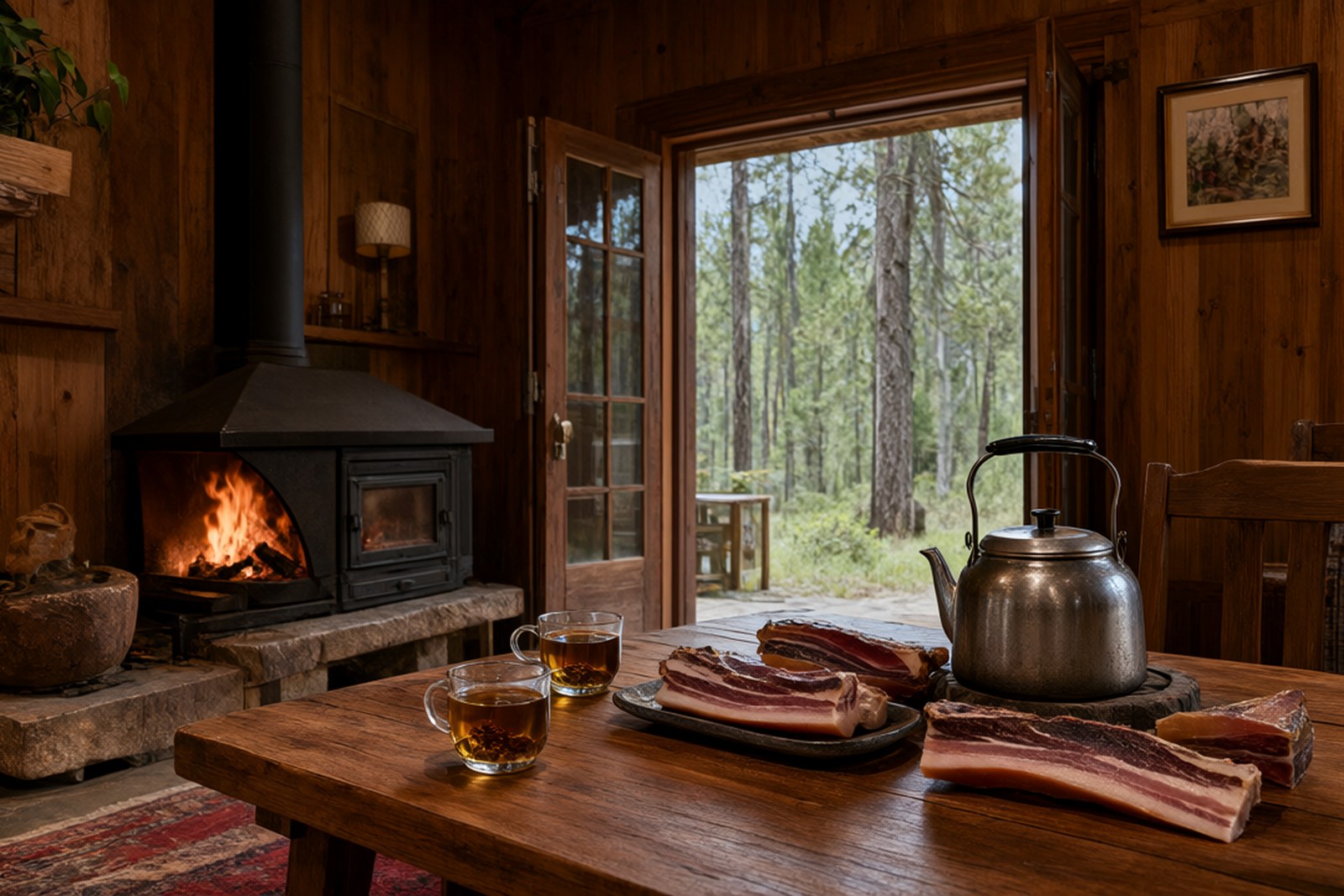
The case for sleeping up here rather than in the county town is the morning. The park gate closes to new arrivals in the late afternoon, and the road from 新化县城 Xīn huà xiàn chéng climbs for the last hour and a half of a journey of sixty-odd kilometres, so anyone who comes up for the day sees the mountain between about eleven and three, in the flat middle of the light and often inside the cloud. A guest gets the two hours that matter: the early start towards the summit for the sunrise over the cloud, with the road already under the wheels, and the evening afterwards when the day traffic has gone down and the forest belongs to the people staying in it. The peak road is steep and the last stretch to the top is on foot, and the county town, with its hospital and its station, is two hours away by road.
What the Rooms Are Like
These are guest-house rooms, not hotel rooms, and the honest description is a family’s spare floor: two beds or one big one, a hard mattress under a heavy quilt, a tiled floor, an electric blanket or a hot-water bottle if you ask, a kettle, and a shower with strong hot water because there is wood to burn. Expect dark timber, a low ceiling, a window that opens onto trees, and a shared balcony if the house is on the ridge side. The temple rooms are simpler again and the newer hotel blocks plainer, with a lift and a restaurant. What none of them has is insulation, so the heating is a quilt plus a fire; what most of them have is a courtyard with a table, a place to hang wet clothes, and a kitchen that will feed you at whatever hour you come off the ridge.
Practicalities
Price. A room in a 大熊山 lodge runs about ¥200 to ¥350 a night, with the timber houses and the temple rooms at the top of that range and the plain forest-farm blocks at the bottom; meals are usually charged separately and are cheap, and the summer weeks and the rime season are the times to book.
Address. The lodges are inside 大熊山国家森林公园 in the north of 新化县, strung along the park roads through the forest farm’s 大礼, 锡溪 and 熊山 work districts, with rooms also available in the temple compound at 熊山古寺 Xióng shān gǔ sì; the park gate and the visitor centre are on the 圳上 road, and the nearest town with a bus station is 圳上镇 below the mountain.
Rooms. Ask for a room with hot water at all hours and confirm how the house heats it, ask for a quilt rather than a blanket because the nights drop hard even in July, and ask whether the room faces the valley or the slope behind, because the valley side gets the cloud sea at dawn. Ask the house what time the morning run up to the summit leaves, and whether a car can be arranged, because the distances inside the park are too long to walk in a day.
Getting there. By road from 新化县城 Xīn huà xiàn chéng, sixty-odd kilometres through 白溪镇 and 圳上镇, the last stretch on a switchback mountain road that wants daylight; 新化南站 Xīn huà nán zhàn on the 沪昆 high-speed line is out at 洋溪镇, about eighteen kilometres from the county town and an hour short of the park. There is no railway and no expressway near the mountain, so a car or a hired one is the practical arrival, and the county’s own bus station below the park serves 圳上镇 rather than the lodges.
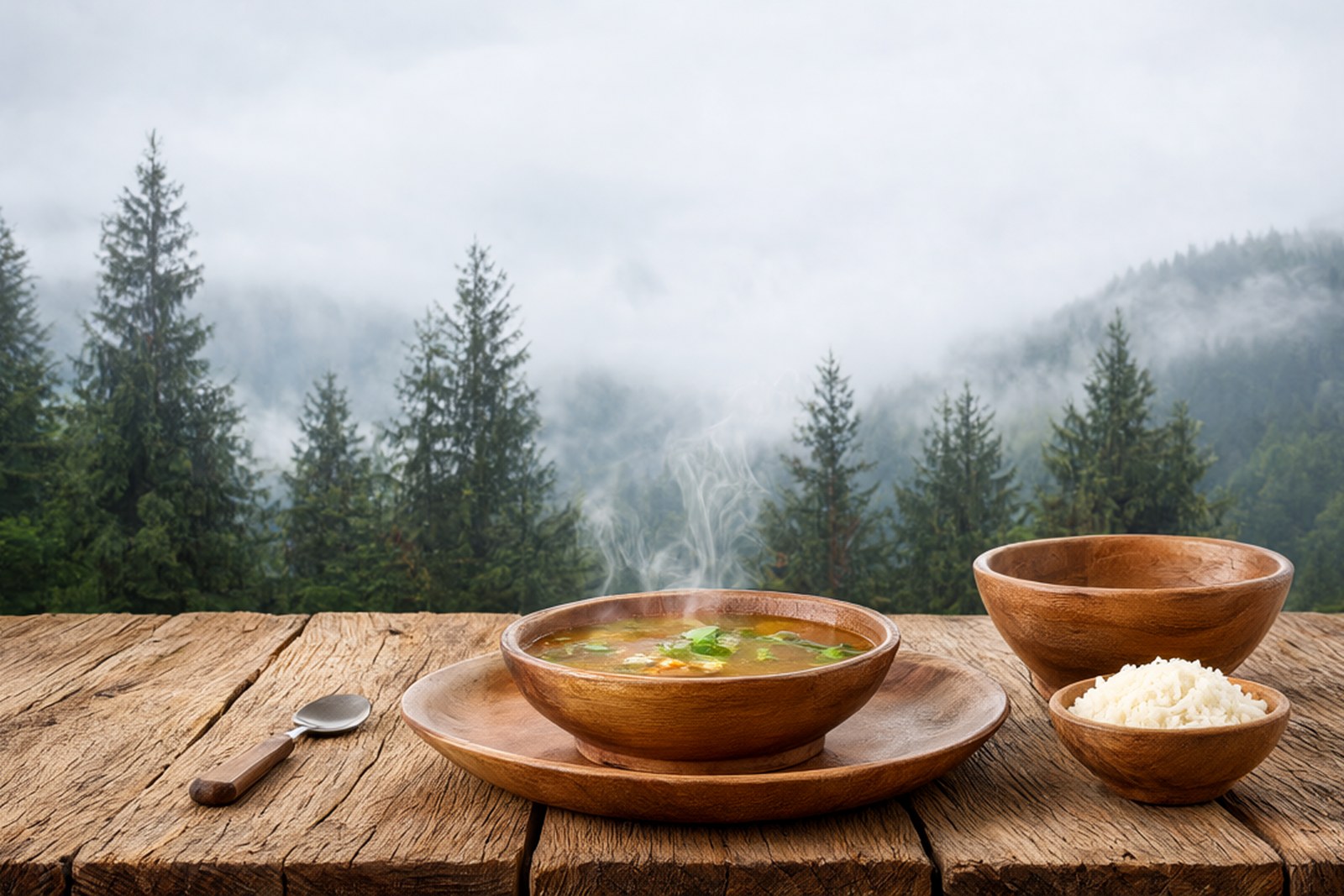
Where to stay: a family lodge on the forest roads inside 大熊山国家森林公园 in 新化县. Take a quilt in any month, be on the road for the summit before the cloud comes up, eat what the kitchen cooked over the fire, and use the mountain as the cold, quiet end of a prefecture that is hot everywhere else.
flowcloud would say that a mountain high enough to need a quilt in August and low enough in profile to have been left off every itinerary is exactly the sort of place a person should go to sleep in, and that the proof of it is a ginkgo that has been standing there for fourteen hundred years.