
Beds Where the Dunes Begin: Desert-Edge Camps and Hotels of Aral
大漠孤烟直,星垂一帐低 Dàmò gū yān zhí, xīng chuí yī zhàng dī – A lone smoke rises straight from the great desert; stars hang low over one bent tent
正文:沙漠边住宿 Shāmò Biān Zhùsù desert-edge stays begin where the poplar country quits – the line of camps, courtyard hotels and tent rows along the dune margin south of 阿拉尔市 Ālā’ěr Shì Aral City, where the desert highway drops off the bridge and the taklamakan opens like a held breath. This is the frontier lodging of the circuit: solid brick guesthouses at the last village, canvas tent camps pitched in the first hollows, and the camp terraces built to face the one thing everyone came for – the dunes at sunset and the sky that follows.
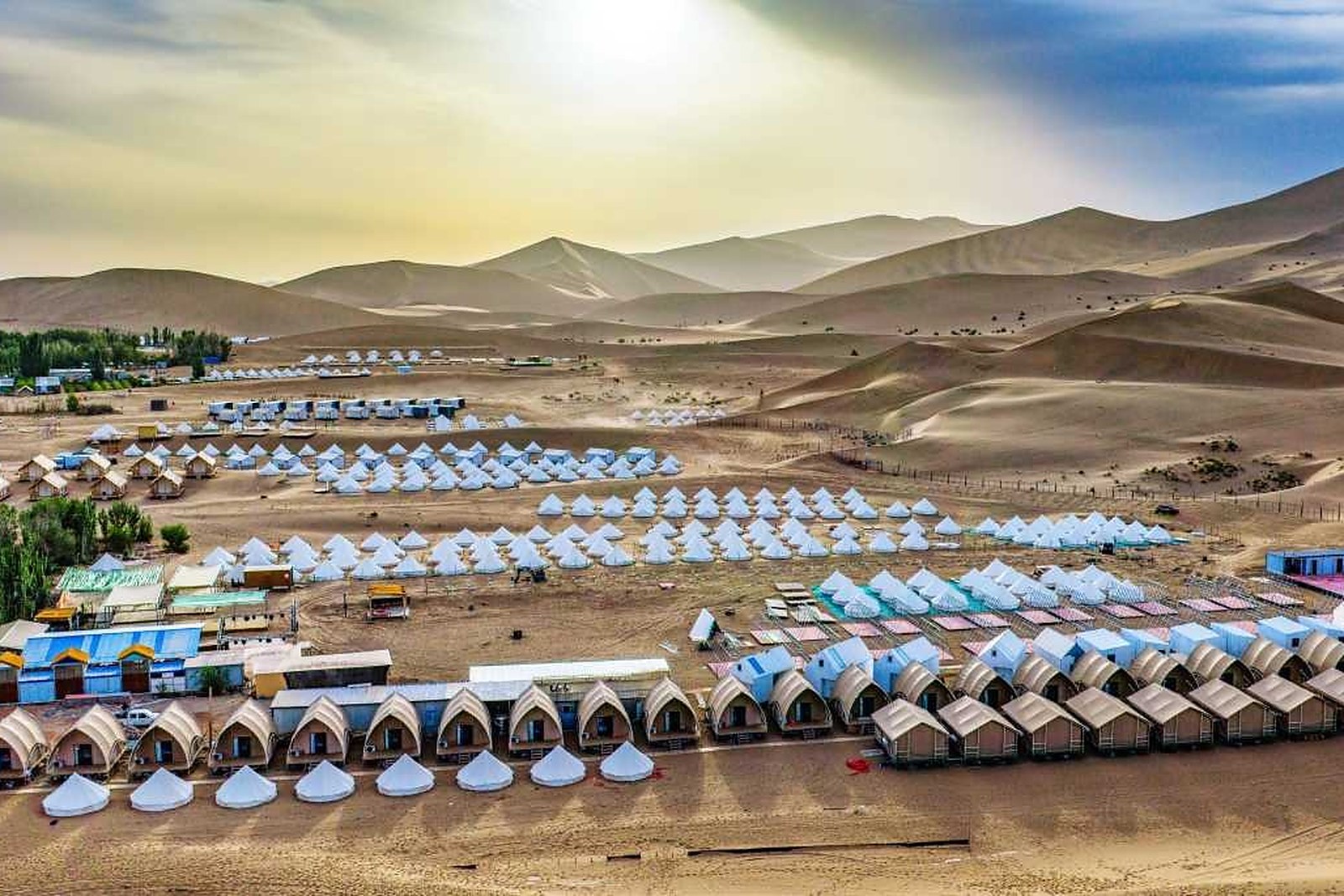
The format runs two ways. The village guesthouses keep the farm tradition at the desert’s threshold – thick walls, platform quilts, a courtyard where the sand arrives politely with the wind; the tent camps go all-in on the open sand: rows of canvas bell tents on wooden platforms, a mess tent with the stove, and a fire circle whose logs crackle against the biggest silence in the region. Both serve the same trade – desert-road travellers, stargazers and the October photographers who want the dawn dunes a minute from the pillow.
The night is the main event. Out here the sky goes properly dark; the Milky Way stands over the dune crest by ten; and the camps keep recliners on the terraces for exactly that hour. Winter guests trade the stars for frost-fire spectacle – hoarfrost on the sand at dawn, the dunes print-crips in low light – and the camps respond with stoves in the tents and breakfast late enough for the sun to soften the air.
The Stays
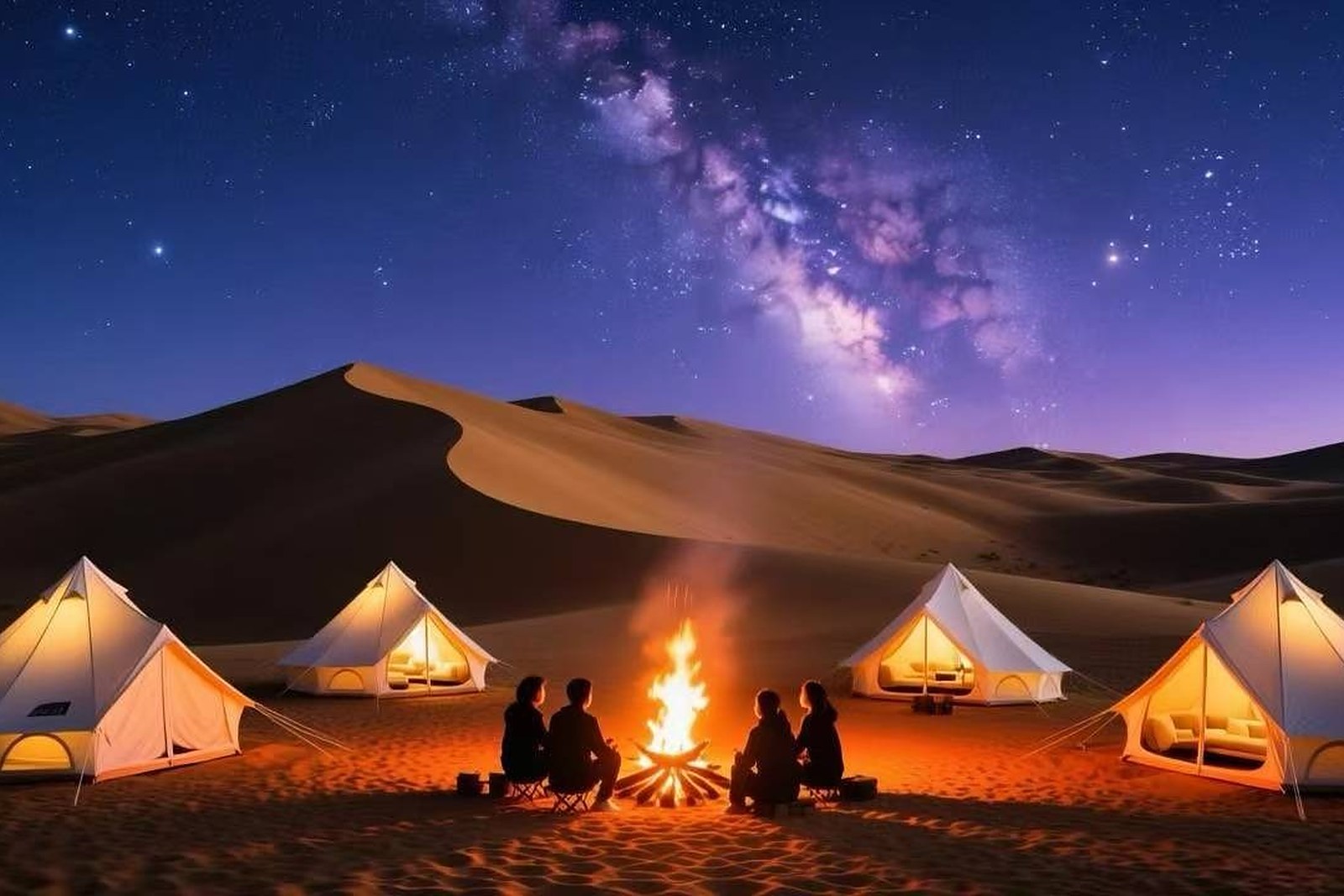
Stargazers and photographers book the platform tents facing the open crest – the zip windows frame the sunrise, and the walks between tents are boardwalked to keep the sand out of the quilts. Families take the village guesthouses: courtyard, dogs, short drives to the dune parking and none of the wind exposure of the open camps. Groups doing the desert highway run use the camps’ package suppers – roast lamb at the fire circle, breakfast before the dawn drive – and the camp crews double as sand-driving guides with real local judgement.
Practical notes carry real weight at the margin. Water at the camps is trucked – ration showers accordingly; the wind decides the fire circle’s mood and sometimes the kitchen’s closing hour; and October nights run near freezing, so the quilt count is generous and the tea is bottomless. Book the tents a week out in season, two days in the calm months; the villages take walk-ins year round.
Beds settled, the same 阿拉尔市 Ālā’ěr Shì Aral City holds other bases: 阿拉尔市区住宿 Ālā’ěr Shìqū Zhùsù city-stays on the avenue, 大学周边住宿 Dàxué Zhōubiān Zhùsù university-area stays by the campus gate, 胡杨谷周边住宿 Húyáng Gǔ Zhōubiān Zhùsù Huyang-valley stays in the timber lodges, or 塔河边住宿 Tǎ Hé Biān Zhùsù Tarim-river stays on the farm courtyards – four more doors into the same 阿拉尔市 Ālā’ěr Shì Aral City. With beds settled, our Aral travel map fills the days.
The Stays
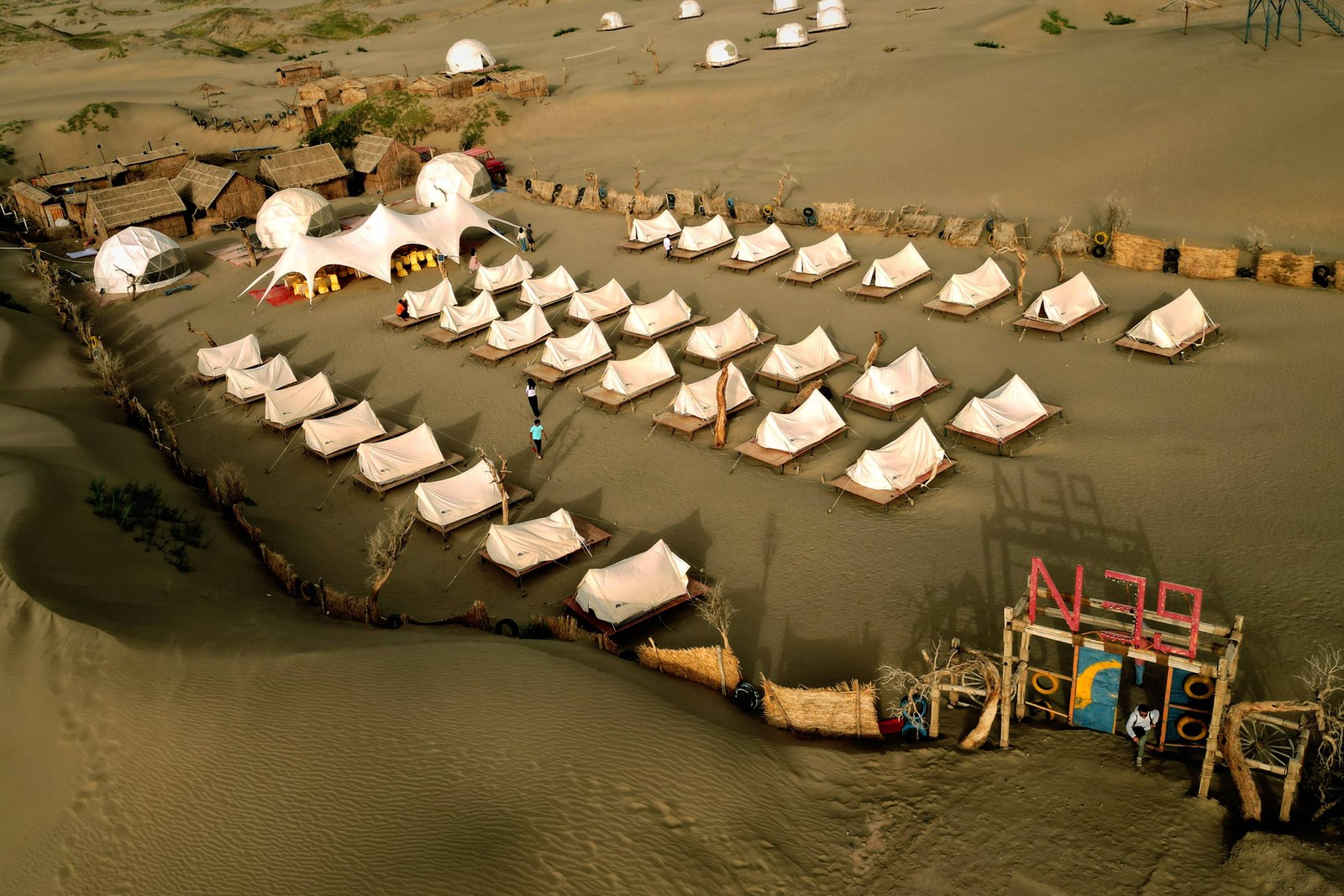
flowcloud would say the desert-edge stays are the taklamakan’s front-row rooms: canvas and courtyard pitched where the pavement gives up, supper by a fire circle under the whole Milky Way, and dawn sand cool as silk underfoot – the trip’s wildest night, slept safe at the edge of it. All checked November 2026.
Where to stay: Book the gate-end rooms for sunrise walks onto the dunes, seal electronics against blowing sand, and confirm dinner before the kitchens close – the nearest food streets sit back toward the city centre. All checked November 2026.