
The CBD bed in this batch is lodged inside the tower group that owns the skyline. 东莞市 Dōngguān Shì, Dongguan, is Guangdong’s other directly-governed city – a prefecture-level city with no county-level children, its 32 towns and subdistricts answering straight to City Hall – and the centre its metro map calls downtown is the four-street core of 莞城 Guānchéng, 南城 Nánchéng, 东城 Dōngchéng and 万江 Wànjiāng. The 民盈·国贸中心 Mínyíng Guómào Zhōngxīn, the Minying International Trade Center, is the city’s first super-complex, a building group of more than a million square metres whose number-two tower runs 423 metres, the tallest in Dongguan; the InterContinental Dongguan sits at the north-east corner of that group, at 1 Hongfu East Road in 东城街道 Dōngchéng Jiēdào, the Dongcheng subdistrict, with 旗峰山 Qífēng Shān, the Qifeng (Huangqi) mountain of the city’s own poetry, about a kilometre and a half away. The house is also the best-connected bed in this batch: Metro Line 2’s 鸿福路站 Hóngfúlù Zhàn – the CBD stop on the city’s single operating metro line – sits 0.4 kilometres from the door by the hotel’s own page, which for a five-town batch is the closest any bed here comes to a train of any kind.
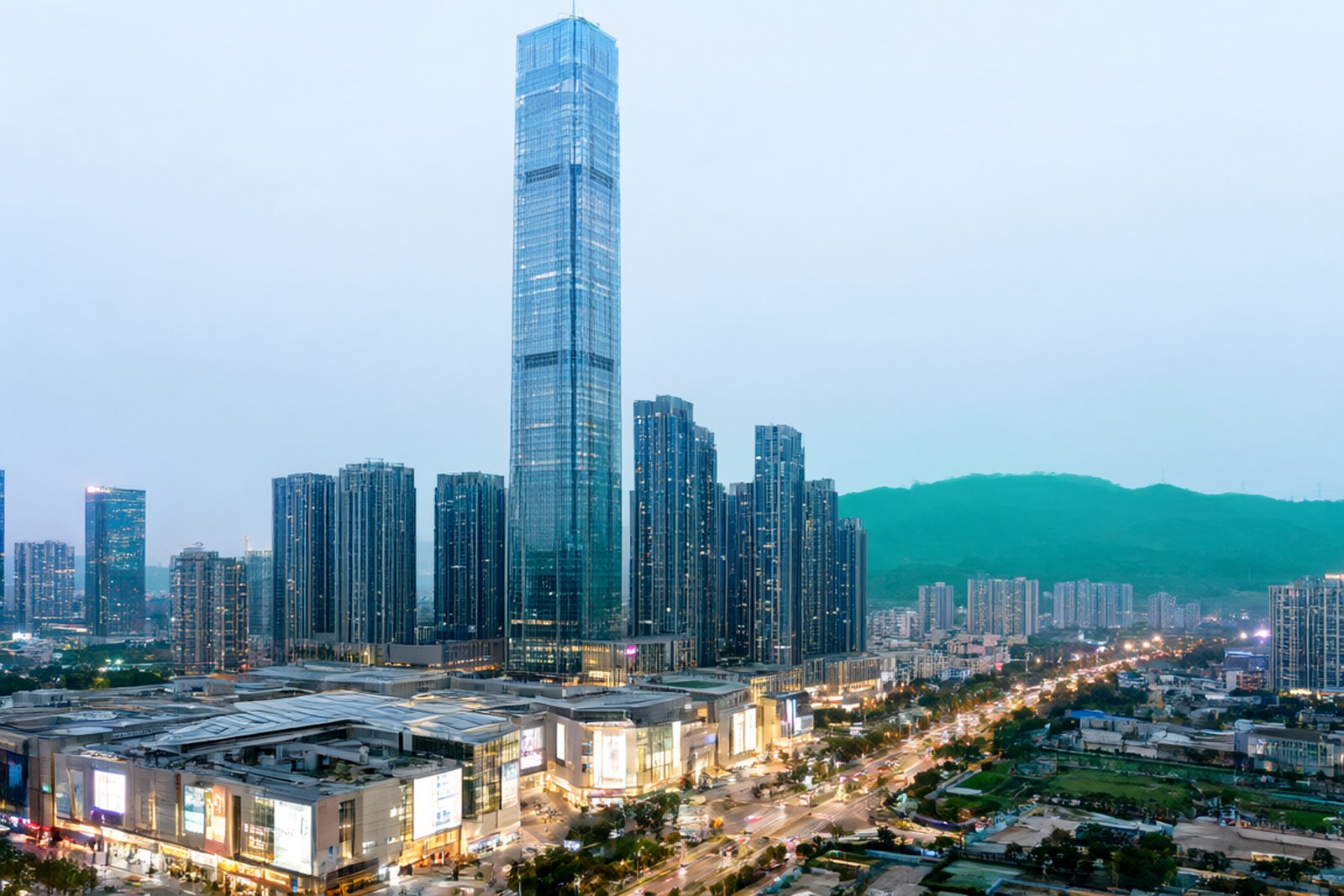
The house is young, and the brand’s arrival is the fact to keep straight. It opened for business on 6 December 2020, built with Minying Group’s money and run by InterContinental Hotels Group – and it is the first InterContinental-branded hotel in Dongguan, which is as far as any “first” claim should go: the self-media and encyclopedia line calling it the city’s first luxury or five-star hotel is a single-source claim that collides with the national five-star plaque Humen’s garden resort took in 2008 and the Hyatt that opened on Songshan Lake that same year, so this article prints the brand-first fact and leaves the rest in that sentence, retired.
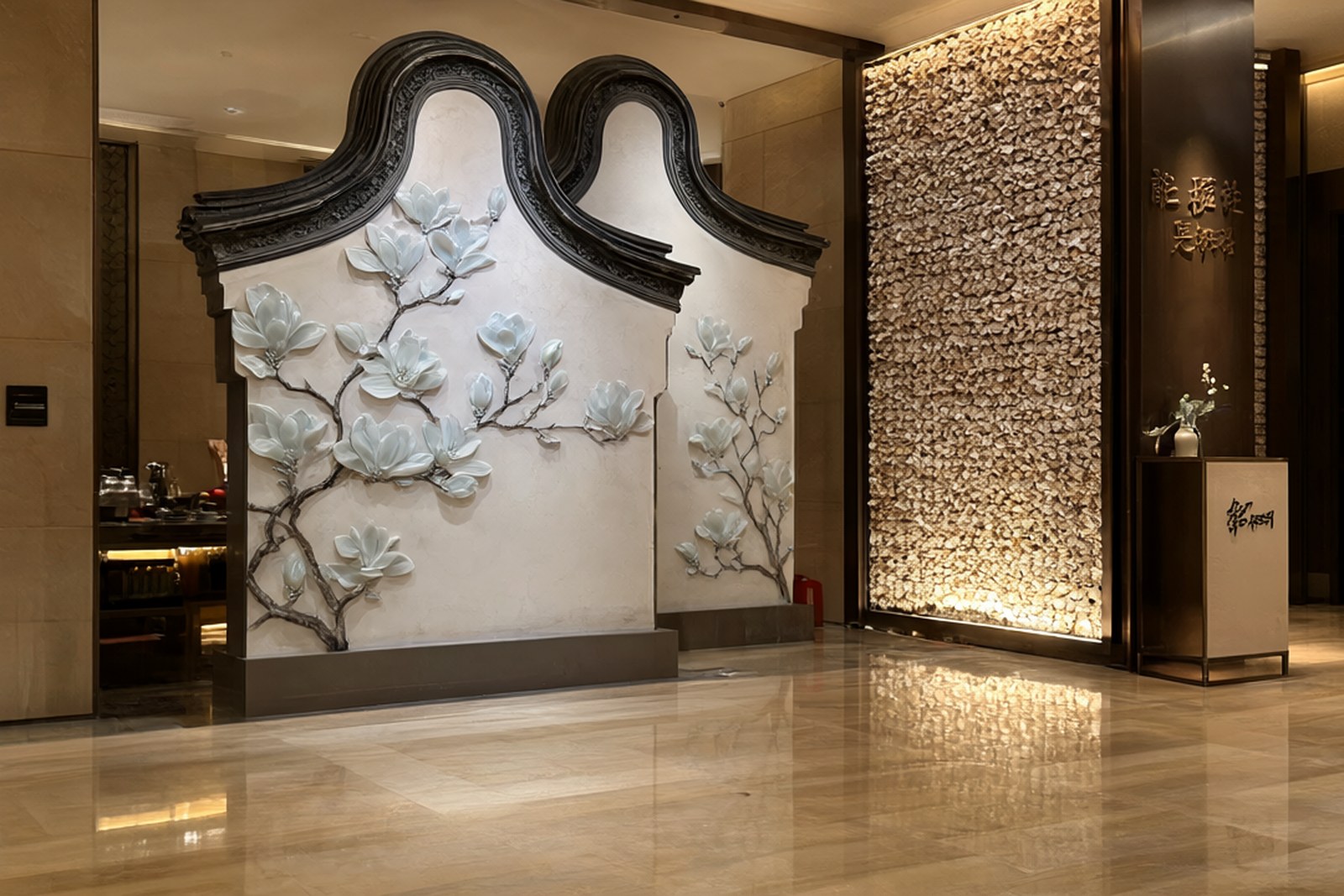
Inside, the design story is the city’s own, retold by CCD, the Hong Kong design office of 郑中 Zhèng Zhōng. The brief draws on 可园 Kě Yuán, Keyuan garden, on the 莞草 guāncǎo grass, on the Lingnan school of painting and on Qifeng mountain, and it shows where a guest actually stands: the lobby’s background wall is built as a 镬耳 guō’ěr gable wall – the wok-ear silhouette of Lingnan roofs – inlaid with silver magnolia, the city flower, and the identity wall beside it is stacked from oyster shells; IHG’s own copy calls the exterior a facade “carved of crystal curtain”.
The tables and halls fill out the tower’s lower floors. Three restaurants and a lobby lounge run the kitchen: 淳 Chún the all-day dining room, 彩丰楼 Cǎifēnglóu the Chinese house – a one-star entry on the 2024 Golden Wutong China restaurant guide, an award the encyclopedia carries from the presentation reports – and 馥 Fù the specialty restaurant. Meeting space runs to about 5,000 square metres topped by the 民盈厅 Mínyíng Tīng, a 2,200-square-metre pillar-free ballroom with a 110-square-metre LED wall whose capacity IHG’s own page prints as 2,000 and the hotel’s own site as about 1,500 – both lines travel here, and neither changes where you sleep. The point for a sleeper is that the house is a modern translation of the 1850 garden across town, and the city keeps the original visitable – see the creative-district article in this same batch for the beds next to it.
What the Rooms Are Like
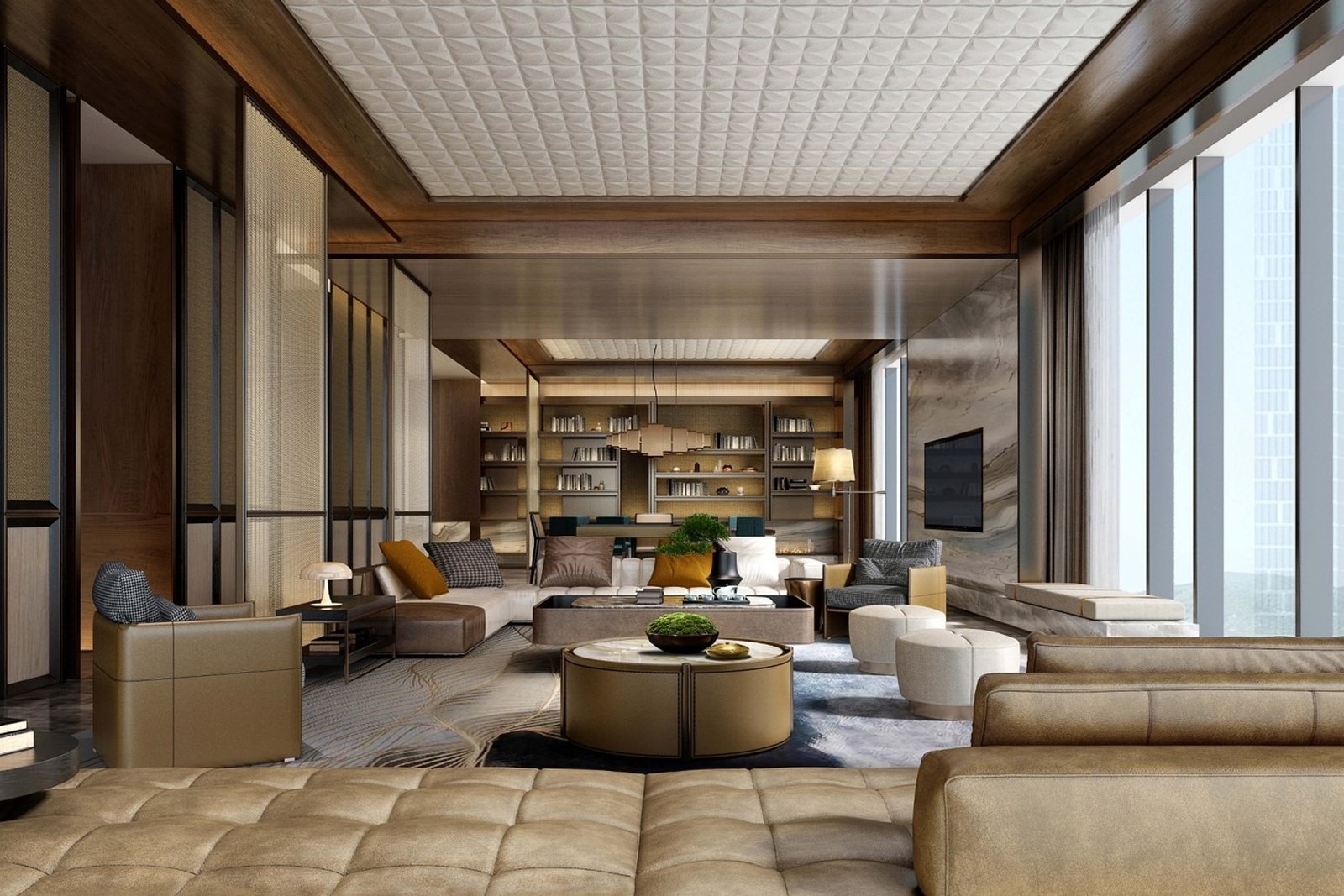
The room ladder climbs 285 rungs. IHG’s official page – the hard fact of this article – prints 285 rooms and suites between 45 and 220 square metres, and the platform snapshot lists twenty-five-plus types: classic and deluxe rooms in king, twin, city-view, Qifeng-view, accessible and children’s-theme cuts, club floors above them, then the 尊享 zūnxiǎng rooms, senior suites, executive and deluxe suites, a one-bedroom suite facing the mountain, and a presidential suite at the top. What the 45-square-metre base class means in practice is that the entry room here is larger than many city hotels’ club suites, and what the view split means is that the real choice is mountain or city: a Qifeng-facing room gets the green mass the city is named for its hill by – a platform flourish this article declines to print – while the city side gets the tower lights. Ask for the floor and the club access when the rate allows it, because the club floors sit apart and the evening spread is the difference between a room and a residence.
Practicalities
Price. On 1 October 2026 the snapshot read: from 850 yuan on Ctrip (4.7 across 4,326 reviews, No. 2 on the platform’s own Dongguan scenery-hotels ranking) and 883 on Tongcheng (4.9), with Meituan at 4.8; the platforms tag it five-star and deluxe without a government grading notice behind the tags. Holiday weeks firm the rates. Every figure is a snapshot that floats.
Address. 东莞市东城街道鸿福东路 1 号国贸中心 4 号楼 – Building 4 of the Minying International Trade Center at 1 Hongfu East Road, Dongcheng subdistrict; phone 88996666 on the Ctrip listing. The hotel’s own site puts Line 2’s 鸿福路站 Hóngfúlù Zhàn station 0.4 kilometres off, the 汇一城 mall 0.3 and the 玉兰大剧院 Yùlán Grand Theatre about 1.3. Note the complex’s own scale at arrival: Building 4 is one of a group of more than a million square metres, and the taxi will need the tower name, not just the street.
Rooms. Ask Qifeng-mountain view or city view before you book, because the two sides of the tower are different holidays. Ask for the floor and the club lounge when the rate runs to it. And if accessibility or a children’s theme matters, book it by name – both exist in the deluxe cut and both are room-type specific, not a floor-wide promise.
Getting there. Two rails serve the house and neither needs a taxi. The Guangzhou-Shenzhen-Hong Kong high-speed line stops at 虎门站 Hǔmén Zhàn, Humen, and Metro Line 2 runs from the attached Humen Railway station straight to Hongfu Road; the Guangzhou-Shenzhen intercity, the 和谐号 Héxiéhào, stops at 东莞站 Dōngguān Zhàn – the station at 石龙镇 Shílóng Zhèn, Shilong, 13.8 kilometres away by the hotel site’s figure – and Line 2 starts there too. The station-name map matters: before 20 June 2013 “Dongguan station” meant 常平 Chángpíng, and pages that still say so are printing a retired address. Shenzhen Bao’an and Guangzhou Baiyun airports both run about 40 to 60 minutes by car – navigate.
Where to stay: a Qifeng-view club room if the mountain side of the skyline is the point, a one-bedroom suite if the 45-to-220 ladder deserves its top half, and a city-view deluxe if the tower lights are the show – all inside the Minying International Trade Center at 1 Hongfu East Road, 东城街道 Dōngchéng Jiēdào, 东莞市, the house whose lobby borrows an 1850 garden and whose address owns the tallest tower in town.
flowcloud would say that a city which spent four decades building the world’s machines has learned to sell one quiet corner of the result as a Lingnan private residence, and that the correct way to sleep here is high on the mountain side with the curtains open, because Qifeng hill kept its place in the skyline for a thousand years and does not need your alarm to rise.