
Dongjiang Lake Minsu
The alarm goes off at four-thirty and it is genuinely dark, and the reason you agreed to this is that the alternative is arriving at six and finding the fog gone, and you will have driven three hours for that. Somebody in the room next door is also getting up. Downstairs the owner has already put the kettle on and is standing in the doorway telling you, with the flat confidence of a person who has said it eight hundred times, that the mist is good this morning, better than yesterday, that you should go to the second platform and then walk to the third because the second one is where all the cameras are.
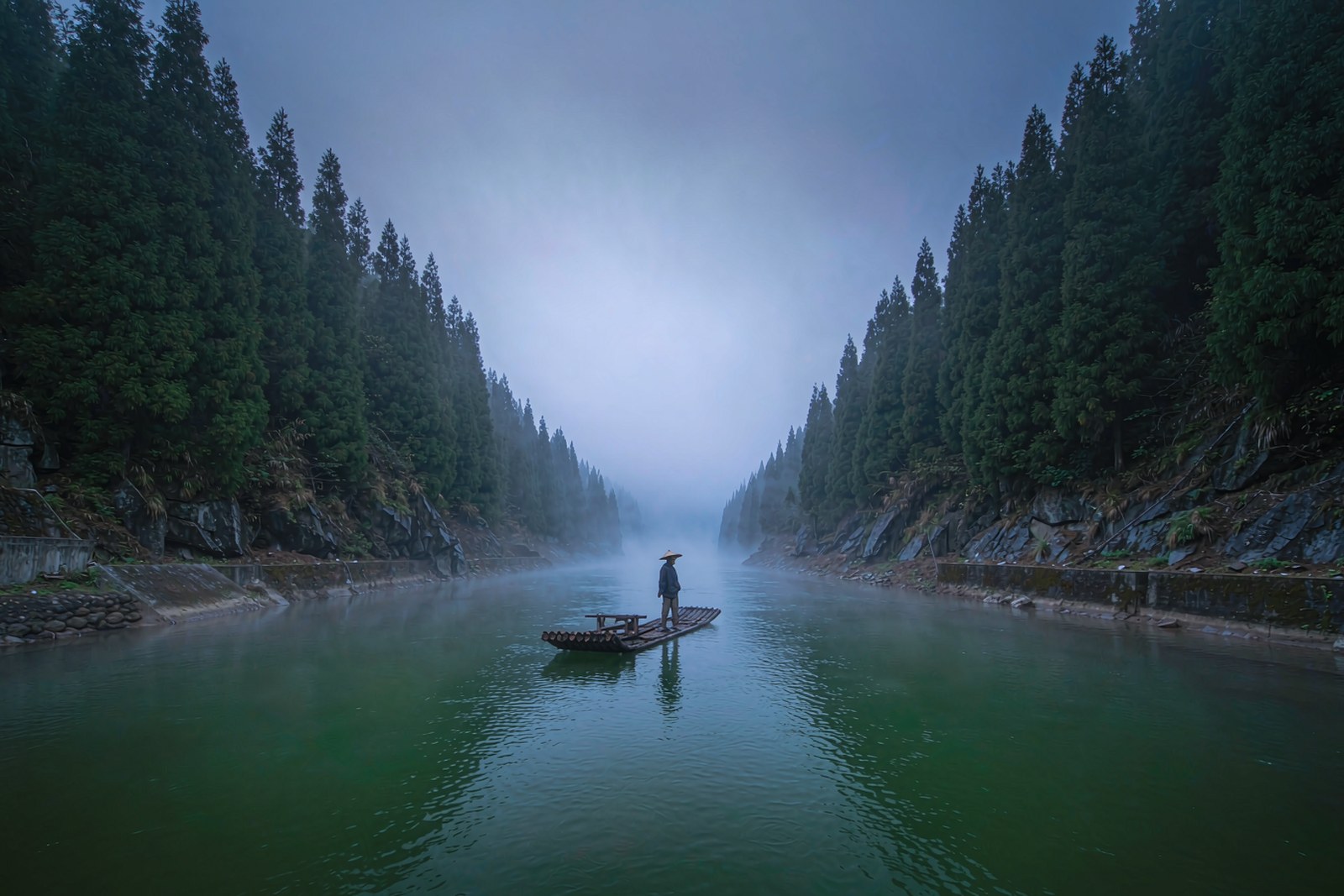
This is 东江湖 (Dōngjiāng Hú), Dongjiang Lake, in 资兴市, a county-level city inside 郴州 in southern Hunan. It is a large reservoir behind a very tall dam, and for most of the year it is simply an attractive lake in pretty hills. For about six months of the year, between five and half past eight in the morning, it becomes one of the strangest spectacles in Chinese tourism: a two-kilometre stretch of river below the dam disappearing under a band of white fog that sits flat on the surface of the water while the sun comes up over the top of it.
Why the Fog Happens, and Why It Is Not an Accident
The 东江大坝 (Dōngjiāng Dàbà) is a 157-metre double-curvature arch dam — when it was built it was described as the thinnest shell of its kind in Asia, and standing on top of it looking down is a strange experience in itself. The point for visitors is what the dam does to the water.
Water drawn from deep in the reservoir comes out at the bottom of the dam at a temperature that barely changes all year — cold in July. It flows into the lower channel, 小东江, and in summer the air above it is hot and humid while the water is not. The warm air hits the cold surface, condenses, and the result is a low, dense, slow-moving mist that hugs the water and goes nowhere until the sun burns it off.
This is a thermal inversion made by engineering. The valley shape does the rest: the fog is confined between two wooded banks about a hundred metres apart, so instead of dispersing it becomes a river of cloud with a river underneath it. In winter the temperature difference disappears and there is no fog at all.
The Morning, in Order
05:00. Leave the guesthouse. It is dark and cold — colder than you expected; the valley holds the night. The gate sells, or rents, a 军大衣 (jūndàyī), an army-surplus greatcoat, for around ¥20, and everybody buys one.
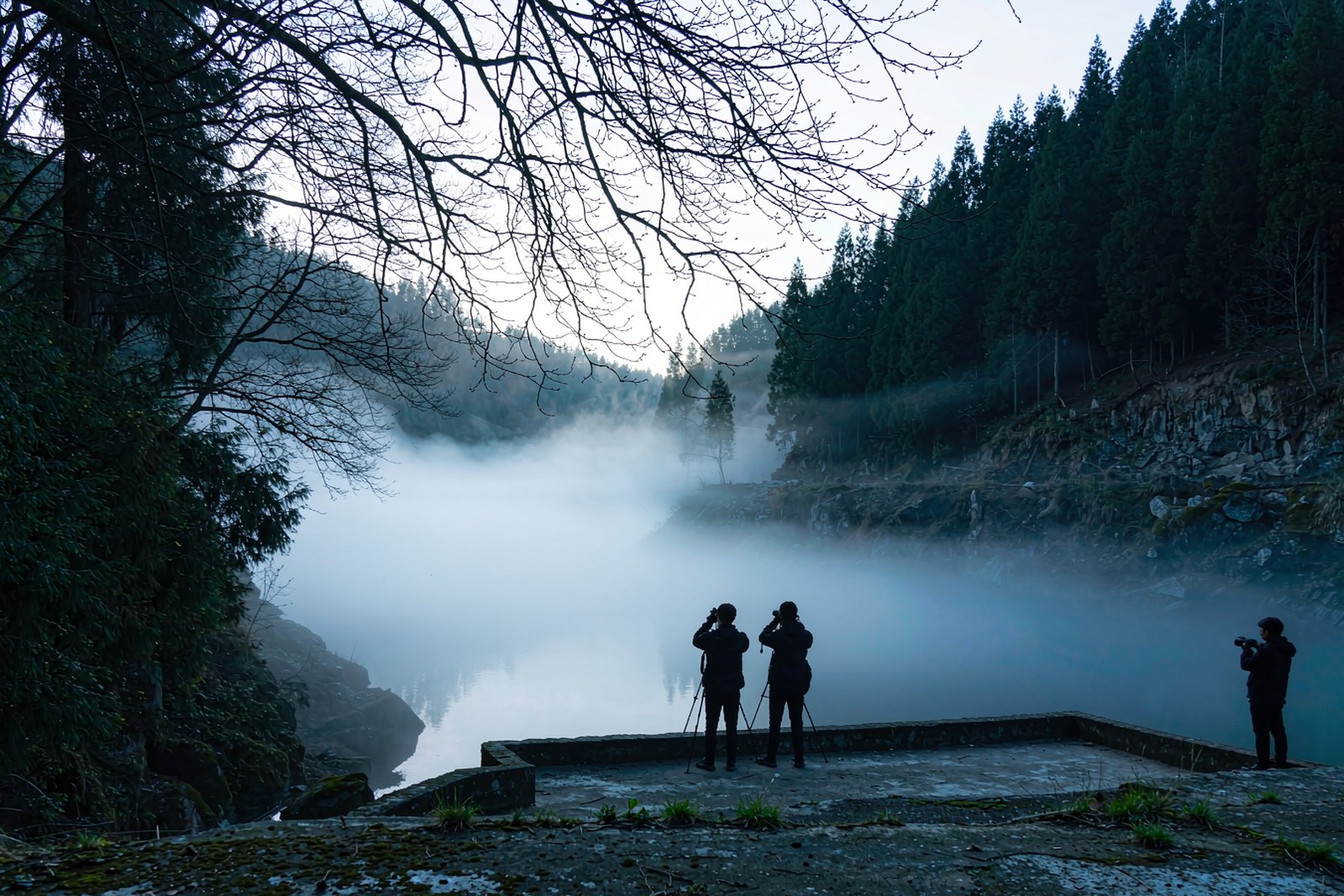
05:20. Platform two. Even on a weekday there are thirty or forty people here, mostly with tripods, arranged along the railing. By six on a summer weekend it is uncomfortable.
06:30 to 08:00. The net-casting. A man in a straw hat stands on a bamboo raft and throws a wide net, waits, pulls it in, and does it again every twenty minutes or so. Nobody in the water, in the valley, or in the crowd is under any illusion that this is a working fisherman. He is paid, the raft is a prop, and the whole thing is theatre. It is also completely beautiful, and no photograph you have ever seen of 雾漫小东江 was taken without him.
07:30. Walk to the third platform. The fog is thickest here and the crowd is thinner. The trick, which the guesthouse owner will tell you if you ask, is not to stay at the platforms at all: walk fifty metres past them, sit on a rock at the water’s edge, and watch the mist drift instead of photographing it. This is the half hour you came for.
08:30. The sun clears the ridge, the mist lifts off the water in about fifteen minutes, and by nine it is an ordinary river in an ordinary valley with a lot of people standing around holding cameras.
The season runs from about 28 April to 31 October, and the hotter the weather, the heavier the fog. Opening hours follow the season: the reserve runs 06:00–18:30 during the fog season and 08:00–17:30 outside it.
What Else Is Here
The lake is big enough that the gorge is only one part of it. 龙景峡谷 is a short walk of waterfall and boardwalk beyond the fog section — half an hour, pleasant, loud when the water is high. 兜率岛 sits out in the lake and has a limestone cave lit in the usual theatrical colours, reached by boat, and the boat ride is the better half of it. The 东江大坝 itself has a viewing platform. 白廊镇 on the far shore is the quiet end of the lake, with the 五岛一村 scatter of islands and a road along the water. And the water is stocked — 东江三文鱼, salmon, farmed in the cold deep water, served 一鱼五吃 at the lakeside restaurants for about ¥60 a head, which is a great deal of fish for the money.
The Beds
Nobody comes here for the hotel. They come for a bed within walking distance of the gate, and there are dozens.
By the gate. 东江镇 and the strip along 沿江东路 and 219省道, five minutes from the ticket office. Simple, family-run, mostly two and three hundred yuan in season and ¥100–200 outside it. The advantage is enormous: the difference between a guesthouse at the gate and one in the city is the difference between a five-minute walk at 05:00 and a twenty-minute drive.
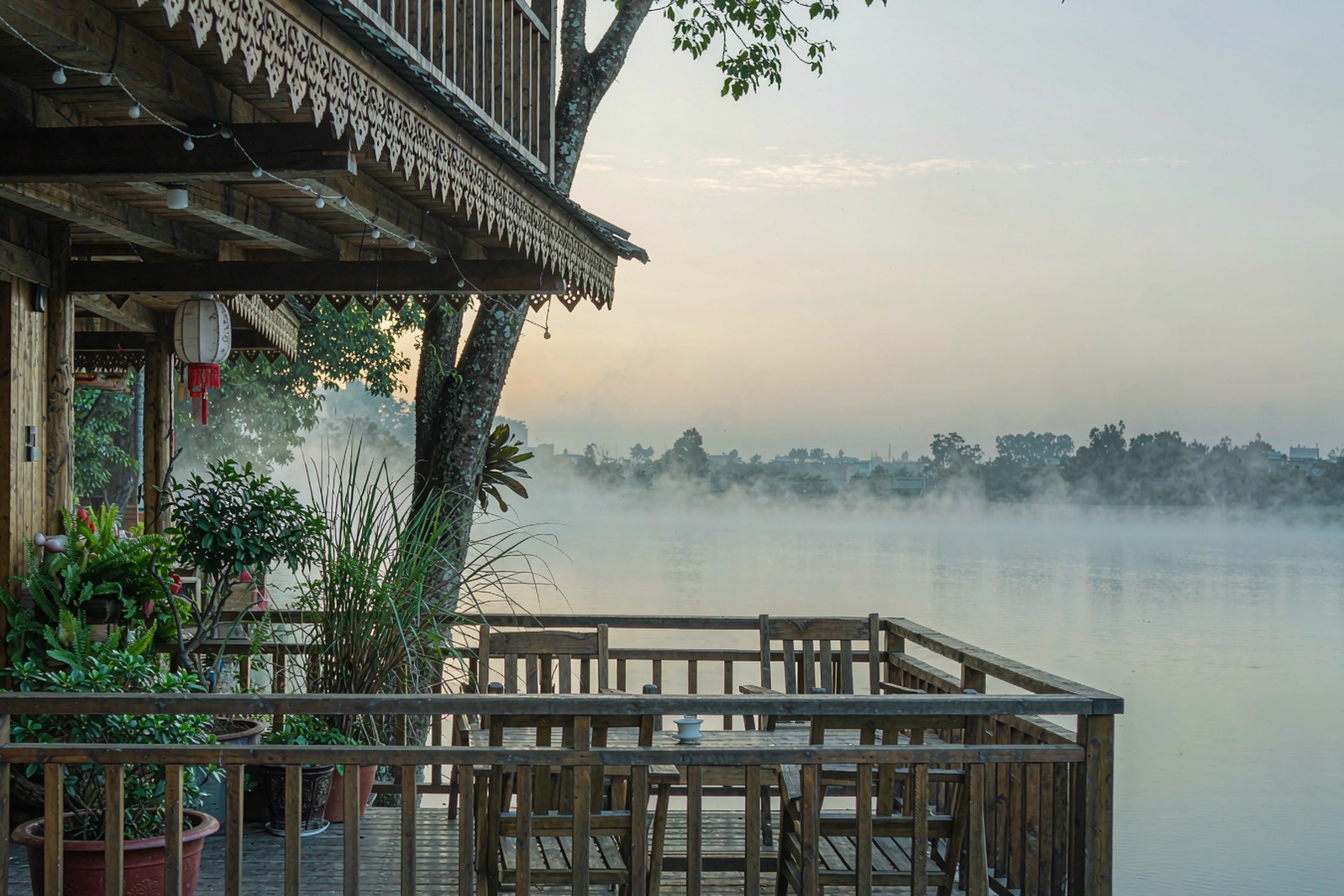
On the water. A small group of newer places with actual design in them. 雾小院 (Mist Yard), at 东江组 3栋 48号, is the best known — river-view rooms with projection screens, a courtyard, a 4.9 rating, and someone in the office who will tell you exactly what time to get up. 东江湖山水四秀民宿, on 219省道 right beside the 雾漫小东江梧洞二号桥, is as close to the fog as it is possible to sleep. 东江湖陌野·花夕 and 东江湖漫柒汐, on 沿江西路, are higher-floor apartments with river views and a 270-degree corner room in the range.
Out on the islands and the far shore. For a different trip: 揽湖山居 at 白廊镇旧市村桃树垅组 12号, about ¥320, lake-view rooms and a big terrace; 东江湖·北极岛民宿 at 滁口镇荷坳村北极岭组, around ¥840, with 270-degree lake-view rooms, private plunge pools and a genuinely remote position; 何岛主的家 on 兜率岛 at 豆瓜园组 54号, about ¥194, which means you are on the island before the boats start running.
资兴市区. Ten minutes’ drive from the gate, and the practical choice if you want a supermarket, a pharmacy and somewhere open at nine at night. ¥120–250.
Practicalities
Price. Guesthouses within walking distance of the gate are ¥100–200 a night for a double in season, and the newer designed places run higher — around ¥300–400 for a river-view room and ¥840 for the pool-and-terrace rooms out at 北极岛. In 资兴 city, ten minutes away, chains and small hotels are ¥120–250. Peak weekends in the fog season roughly double the gate-side rates, so book ahead for late April, May and the first week of October.
Address. 东江湖旅游区, 东江镇 and the 沿江东路 / 219省道 strip, 资兴市 (Zīxīng), 郴州市 (Chēnzhōu), Hunan. Named places: 雾小院 at 东江组 3栋 48号; 东江湖山水四秀民宿 on 219省道 beside the 梧洞二号桥; 东江湖陌野·花夕 and 东江湖漫柒汐 on 沿江西路 (互湘东江湾); 揽湖山居 at 白廊镇旧市村桃树垅组 12号; 东江湖·北极岛民宿 at 滁口镇荷坳村北极岭组; 何岛主的家 on 兜率岛 豆瓜园组 54号.
Rooms. Mostly simple doubles and twins with a river view and a kettle, which is all anyone needs here. The newer guesthouses have projection-screen rooms, corner rooms with 270-degree water views, terraces, and in one case a private plunge pool. Very few have lifts; you will be carrying your bag up stairs at four in the morning.
Getting there. High-speed rail to 郴州西 (Chēnzhōu Xī) — about 1 hour 20 minutes and ¥155 from Changsha South — then 45–60 minutes by taxi for ¥80–120, or the cheaper coach from 郴州南站 that runs to 东江大坝 itself. Stay at the gate, not in Chenzhou city. The drive from 郴州西 is the reason people miss the fog.
What It Refuses to Be
It refuses to be a lie-in. There is no version of this place that works at eleven in the morning, which is why the guesthouses all have the same conversation with every guest at check-in.
It refuses to be a swimming lake. The water is deep, cold and drawn for the dam; people do not swim in it.
And it refuses to be quiet in October. The fog season coincides with National Day, and the platforms in the first week of October are a crush. Go midweek, or go in May.
The Name of the Place
东江 Dōngjiāng is the East River — 东 dōng, east, 江 jiāng, river — the name given to the stretch below the dam, and by extension to the reservoir. 资兴 Zīxīng is the county-level city. 小东江 Xiǎo Dōngjiāng, “little East River”, is the fog stretch specifically. 雾漫 wùmàn is the phrase used in every signboard and every caption: 雾 wù, fog, 漫 màn, to spread and brim over. 漫 is the important one — it is the verb for water going over an edge, and it is exactly what the mist does.
flowcloud would say that a place which requires you to be awake before the sun in order to see anything at all is doing you a favour, because the thing you came to look at and the thing you have to give up to see it are the same size.
Where to stay: 东江湖 (Dōngjiāng Hú, Dongjiang Lake), 资兴市 (Zīxīng), 郴州市 (Chēnzhōu), Hunan — a 157-metre arch dam and the 雾漫小东江 fog stretch below it. Fog season about 28 April to 31 October; the mist is heaviest between 06:00 and 08:30 and the reserve opens 06:00–18:30 in season (08:00–17:30 out of it). Tickets: ¥68 for the 观湖 line and ¥150 for the 游湖 line, with the 东江花月夜 evening boat at ¥65; third-party listings also sell a fog-line ticket with shuttle at about ¥85. Price: lakeside guesthouses ¥100–200 in season, ¥120–250 in 资兴 city, higher for the designed places — 雾小院 at 东江组 3栋 48号, 东江湖山水四秀民宿 on 219省道 beside the 梧洞二号桥, 揽湖山居 at 白廊镇旧市村桃树垅组 12号 (about ¥320), 东江湖·北极岛民宿 at 滁口镇荷坳村北极岭组 (about ¥840) and 何岛主的家 on 兜率岛 at 豆瓜园组 54号 (about ¥194). Rooms: mostly simple doubles and twins with river views; the newer places have projection rooms, terraces and the odd plunge pool. Getting there: high-speed rail from Changsha South to 郴州西 in about 1 hour 20 minutes for ¥155, then 45–60 minutes by taxi for ¥80–120; or the slower coach from 郴州南站 direct to 东江大坝. Stay at the gate, not in 郴州 city, or you will miss the fog.
We are still eating our way through Dongjiang Lake Minsu. Guides are on the way.