
Chongqing is a municipality of southwest China, and the 巴南区 Bā’nán Qū, Banan District, publishes the number this article opens with: close to half of the city’s hot spring resource is inside it. 东温泉镇 Dōngquánwēn Zhèn, Dongwenquan Town, forty kilometres from the main city, is where that share becomes concrete, on the bank of the 五布河 Wǔbù Hé, Wubu River, in a national AAAA scenic area of 31.47 square kilometres rated in 2015 and run by the district’s health-industry group, open free of charge between nine and eighteen with a telephone booking. Two boundaries belong in this paragraph rather than at the end. The second is inside the town: a paid sub-scenic area sits within the free gate, and the two are different products at different prices, which is a matter of levels rather than a contradiction. The third is outside Banan altogether – the Tongjing spring, which this article does not sell, sits in Beibei District on the municipal scenic register, forty kilometres from a different town.
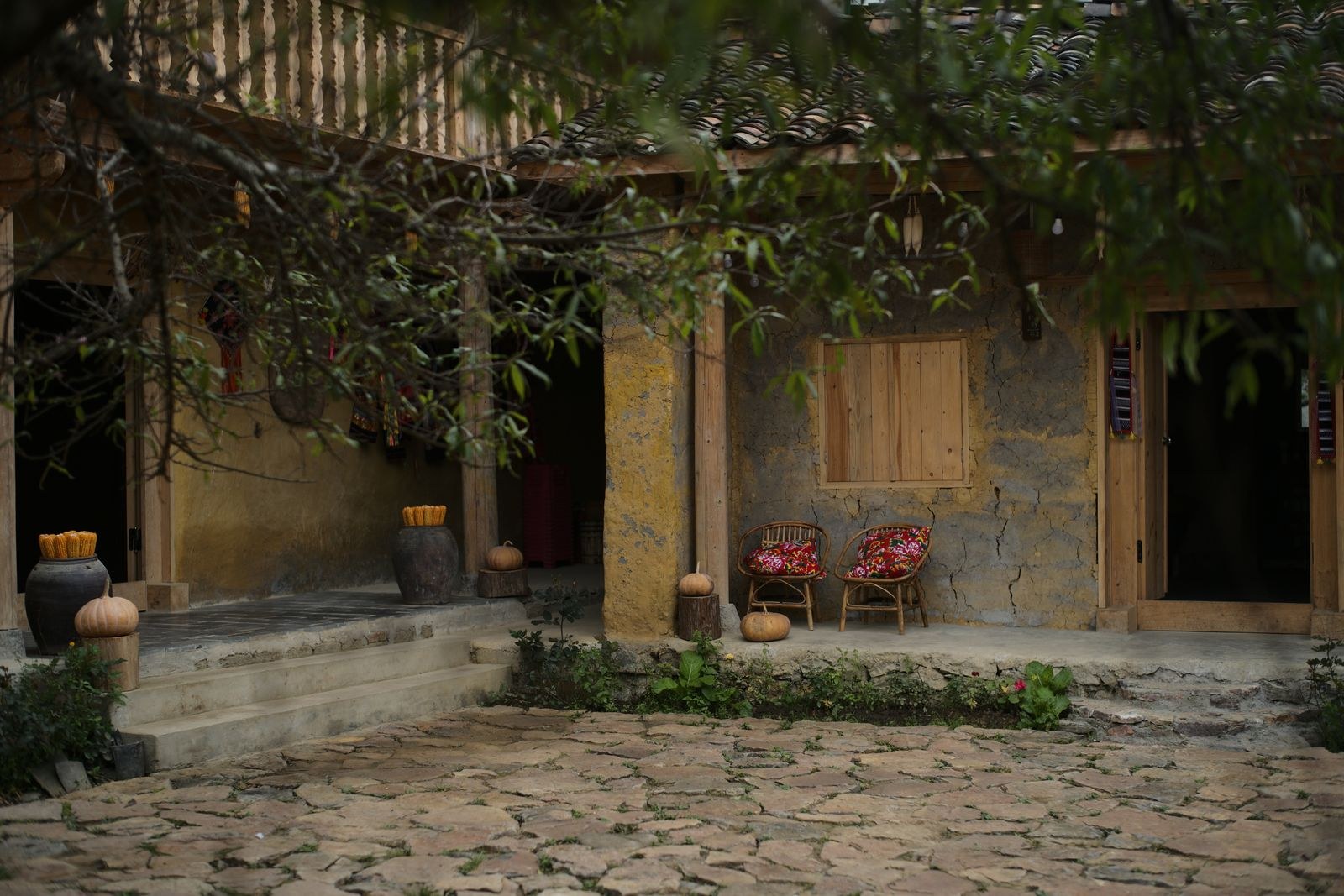
The reason a room in this town costs what it does is a hole in the ground. The 热洞 Rèdòng, the hot cave, is 1.5 metres high and 2.7 wide at the entrance, shaped like an inverted gourd, and holds 43 degrees year-round. The water feeding the town runs between 38 and 53 degrees, with daily recoverable volume put at 50,000 cubic metres, and a second hotel on the spring measures its own flow at over two thousand tonnes a day at a constant temperature above 52.5 degrees, carrying more than forty minerals including radon, fluorine, strontium, zinc and lithium. This is the only place in Chongqing where a karst cave is claimed to carry both cave therapy and spring therapy at once, which is a tourism claim rather than a medical one. The consequence for a guest is simpler: the water does not have a season, so the town does not have an off-season.
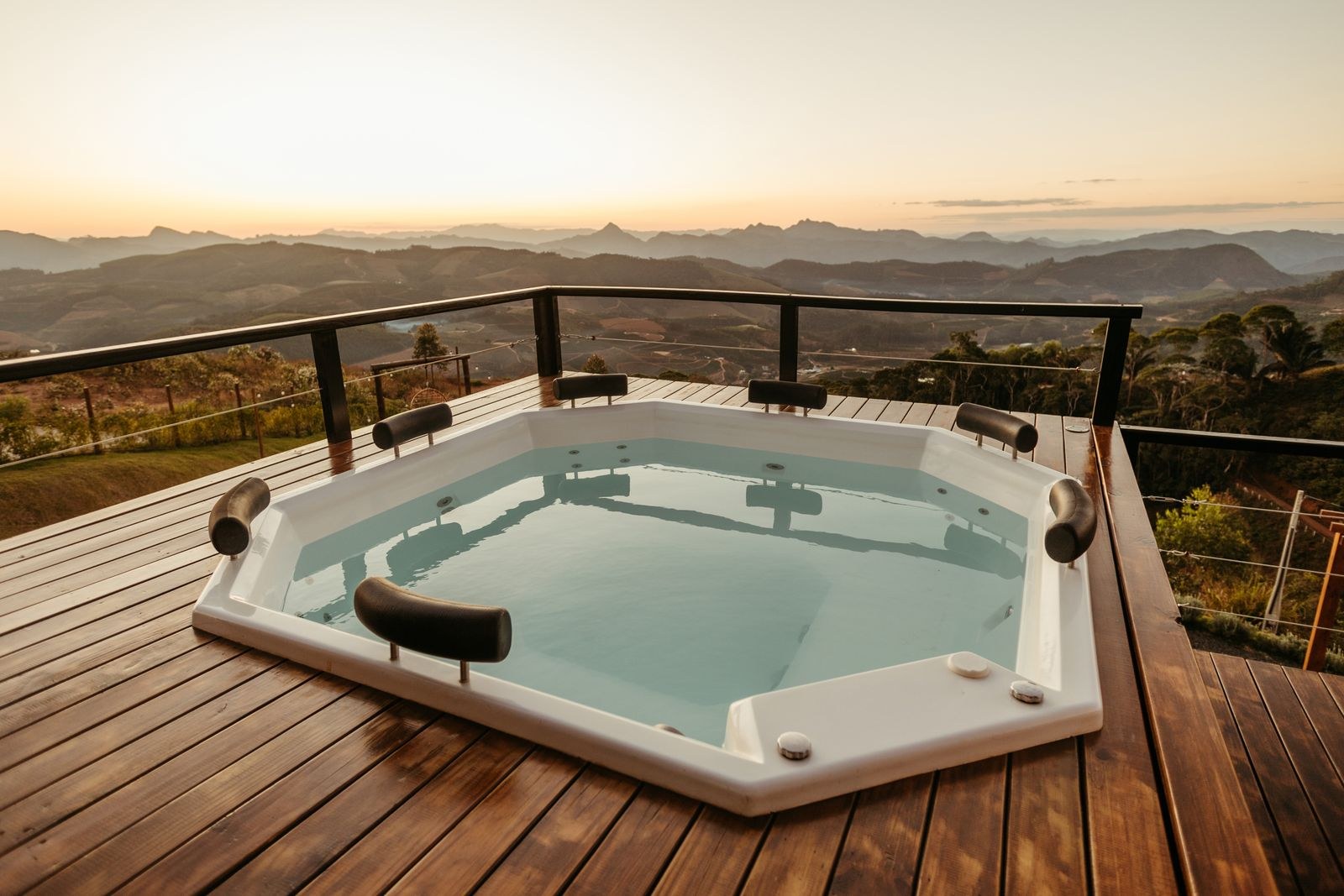
The rooms are the other half of the price. A forest lodge in the Banzhulin group of Dongwenquan Town shows a Tongcheng floor of 838 yuan, and its room names are drawn from the woods and the weather rather than from a star rating – bamboo grove, first clearing after rain, forest foot, coloured sunset, stream hollow, green ridge, rime on the branches, cloud cliff. A second house, in 将军湾村 Jiāngjūn Wān Cūn, Jiangjunwan village, in 南彭街道 Nánpéng Jiēdào, Nanpeng Subdistrict, shows 867 and sells on one thing: a mountain view with a bathtub in the room. That is the entire proposition of this batch’s most expensive piece, and it is worth being plain about it. You are paying three to five times what a Banan guesthouse costs, and the money buys a forest outside the window and a tub in the room, with the town’s own hot water a short walk away.
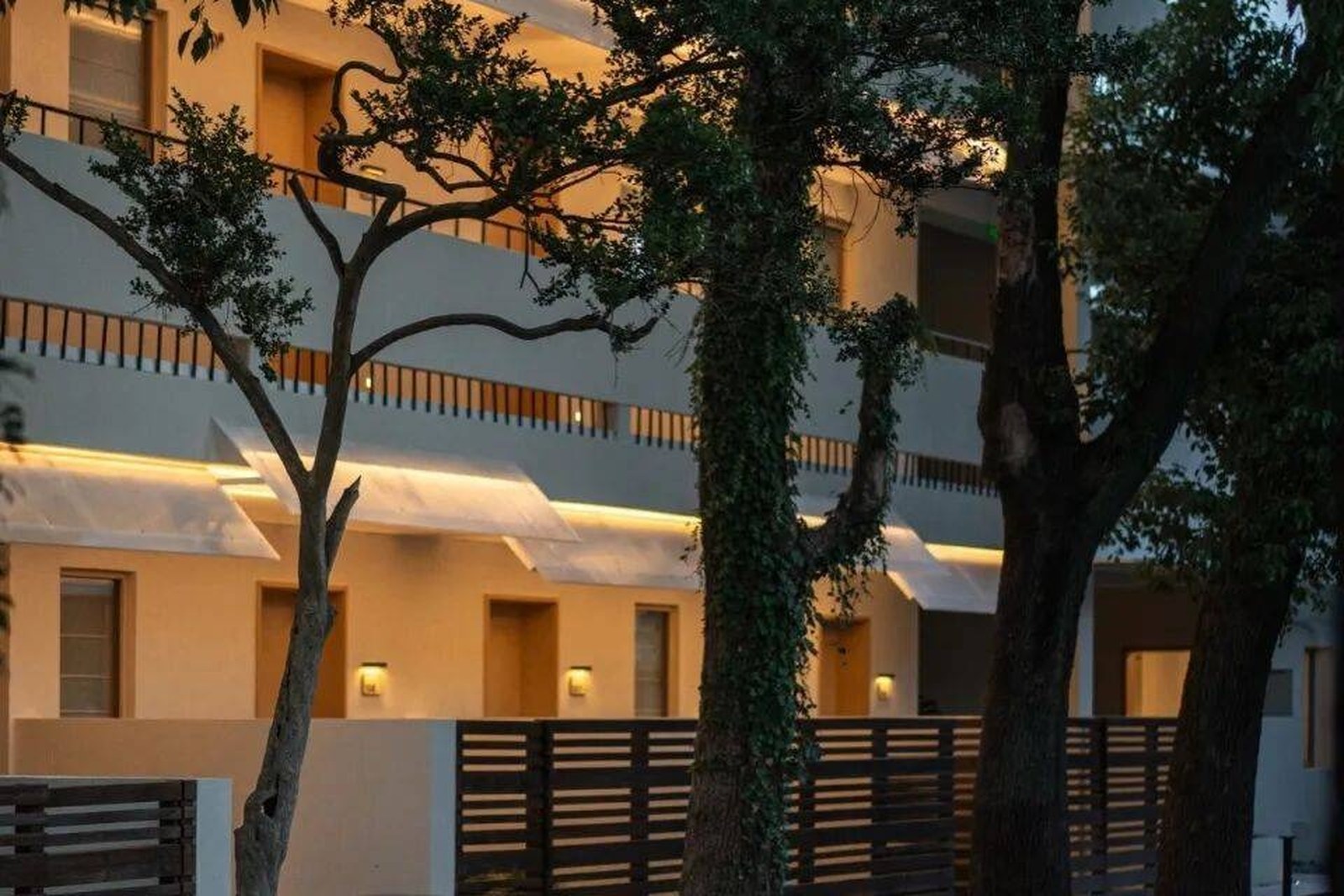
What separates the two price points is not the water. It is the room’s relationship to the landscape: the 838 property is named after its view, and the 867 property is built around a bathtub that faces one. Both are Banan’s high-budget end, and the district’s supply of this kind is small, which is why a second anchor has appeared further out – 南湖多彩植物园 Nánhú Duōcǎi Zhíwùyuán, the Nanhu Colourful Botanical Garden at Shuizhu village in Nanpeng, close to two thousand mu of planted garden, which is a second place the guesthouses in these two towns send their guests. The practical decision is about levels, and it is the one thing to get right before booking anything in this town. The scenic area’s own gate is free: 4A since 2015, at No. 20 the main street, booked by telephone on 023-62297051, open nine to eighteen, open access, and divided into five parts – the Wubu headwaters, the heart of the hot cave, Baisha Chan Temple, the three-peak vista and the mushroom-cloud sky.
Inside that free area there is a separately ticketed place, 威特卡丝东温泉 Wēitèkǎsī Dōngquánwēn, Weitekasi Dong Hot Spring, at No. 3 Fuling Street, charging 69.90 yuan an adult and 39.90 for a child on a day session running from nine in the morning to half past ten at night. Those are two levels of the same hillside, not two answers to the same question: one is the gate to thirty-one square kilometres of open-air valley, the other is one pay-to-enter compound inside it with a longer day. Do not plan on the assumption that the ticket is 69.9 yuan, and do not assume it is free either. Read against that, the booking logic is a three-way split. The room that wants the water buys the package, because the cave and the street are the destination and the room is where you recover from it. The room that wants the view pays for the forest, and could do it from a cheaper property on the same hillside. And the room that wants neither should not come, because Banan has three other springs and one of them has a metro station.
Practicalities
Price. Two figures, both read off booking pages in October 2026, and the widest spread in Banan’s stay stock. The forest lodge in the Banzhulin group shows a Tongcheng floor of 838 yuan, and the house in Jiangjunwan village, Nanpeng Subdistrict, shows 867 and sells on mountain-view rooms with a bathtub. Against those, the same district’s other lodging measured on the same date: the Nanquan spring belt starts at 159, the Mudong river street runs 314 to 528, and the Fengsheng ancient town runs 112 to 368. Neither figure here is a band, because each is one property’s floor rate rather than a neighbourhood’s range, and both move with the season in a way a city rate does not. Treat them as the ceiling of Banan lodging rather than as a rate to budget from.
Address. 重庆市巴南区东温泉镇斑竹林组 – Banzhulin Group, Dongwenquan Town – for the 838 property, and 重庆市巴南区南彭街道将军湾村 – Jiangjunwan village, Nanpeng Subdistrict – for the 867. The scenic area is at 东温泉镇正街 20 号, No. 20 the main street, run by the district’s health-industry group on 023-62297051; the separately ticketed sub-area inside it is at 东泉镇佛灵街 3 号, No. 3 Fuling Street, on a nine-to-half-past-ten day session.
Rooms. Two inventories, built around the same two ideas. The forest lodge names its rooms after the woods and the weather, which means the view is the differentiator and the bed is ordinary. The village house sells one thing, which is a mountain-view room with a bathtub in it. Neither is a public-bath hotel, so neither is near a pool in the conventional sense. Ask two things in writing: how far the walk to the spring water actually is, since these are village addresses on rural roads, and whether the last stretch is lit after dark.
Getting there. Dongwenquan is forty kilometres from the main city on the bank of the Wubu River, and Nanpeng is on the other side of the same valley, so this is a drive-or-coach destination with no metro anywhere near it. The scenic area’s hours are nine to eighteen with free entry and a telephone booking, which is the fixed point the day should be planned around; the pay-to-enter sub-area runs a longer day, nine to half past ten at night. The nearest rail is on the southern river towns, well west of here, and the road over the hills is why a late arrival is a worse idea than an early one.
A day in Dongwenquan has an unusual property: it does not get dark for the walk back, because the town runs on the valley’s hours rather than the city’s. Morning is the best air of the day and the best hour at the cave, when the entrance is cool and the water is at temperature and the light reaches down the shaft. Late morning is the walk up through the forest past the temple and the three-peak viewpoint, and it is the part of the day every guesthouse guest does at the same time. Afternoon is when the temperature drops and the gorge walk becomes the alternative, and it is the second best hour at the water. Evening belongs to the village and to the pay-to-enter compound, whose day session runs to half past ten at night, which is the one place in Banan where bathing goes on after the city’s dinner hour.
flowcloud would say that Dongwenquan is the only place in Banan where the free gate and the paid compound are the same hillside at two different levels rather than two conflicting answers, and that the correct way to book it is to treat 838 and 867 as the ceiling of the district’s lodging rather than as a rate, to check what the walk from the room to the water is before paying for a forest view, and to plan the day around the cave’s forty-three degrees rather than around the compound’s opening hours.
Where to stay: the forest lodge in Banzhulin if the water is why you came and you want to be inside the village that supplies it; the mountain-view room with the bathtub in Jiangjunwan if the room itself is the trip and the valley is scenery; and neither, honestly, if the water is the only thing you want, because 159 yuan buys a bathhouse room in Nanquan with a metro station. And go in with the levels straight: the scenic area gate is free, the compound at No. 3 Fuling Street is a separate paid entry at 69.90 an adult, and they are two levels of one hillside, not two prices for one thing.