
东英镇 Dōng yīng zhèn is the coastal township at the northern edge of 临高县 Lín gāo xiàn, seven kilometres from the county town, and it is the kind of place that has been described so thoroughly by its own promotional material that a visitor has to be careful to separate the claims from the soil. The soil is real and it is the beginning of the story. The township covers 89.56 square kilometres of land with 14.5 kilometres of coastline along 琼州海峡 Qióng zhōu hǎi xiá, and 96.09 per cent of its land sits on a slope of nought to five degrees, which is why it can be farmed the way it is; its forest cover is 48.6 per cent, its soil selenium content is recorded at 2.4 milligrams per kilogram, its drinking-water compliance and air-quality rates are both given as 100 per cent, and its negative-ion count holds above ten thousand per cubic centimetre. Along the shore it holds a provincial 白蝶贝 bái dié bèi pearl-oyster reserve, a county 高山岭 Gāo shān lǐng reserve and a county coral reserve, the last of which covers a band of reef and algae roughly ten kilometres long and five wide that the local material calls an undersea forest. The claim to fame came on 28 October 2023, when 东英 was formally admitted as a 国际慢城 guó jì màn chéng, a Cittaslow, at the movement’s international coordination meeting in Seferihisar in Turkey: the fourteenth Cittaslow in China and the first one on a coast. A snail appears at intervals in the street furniture, and the material says so without irony.
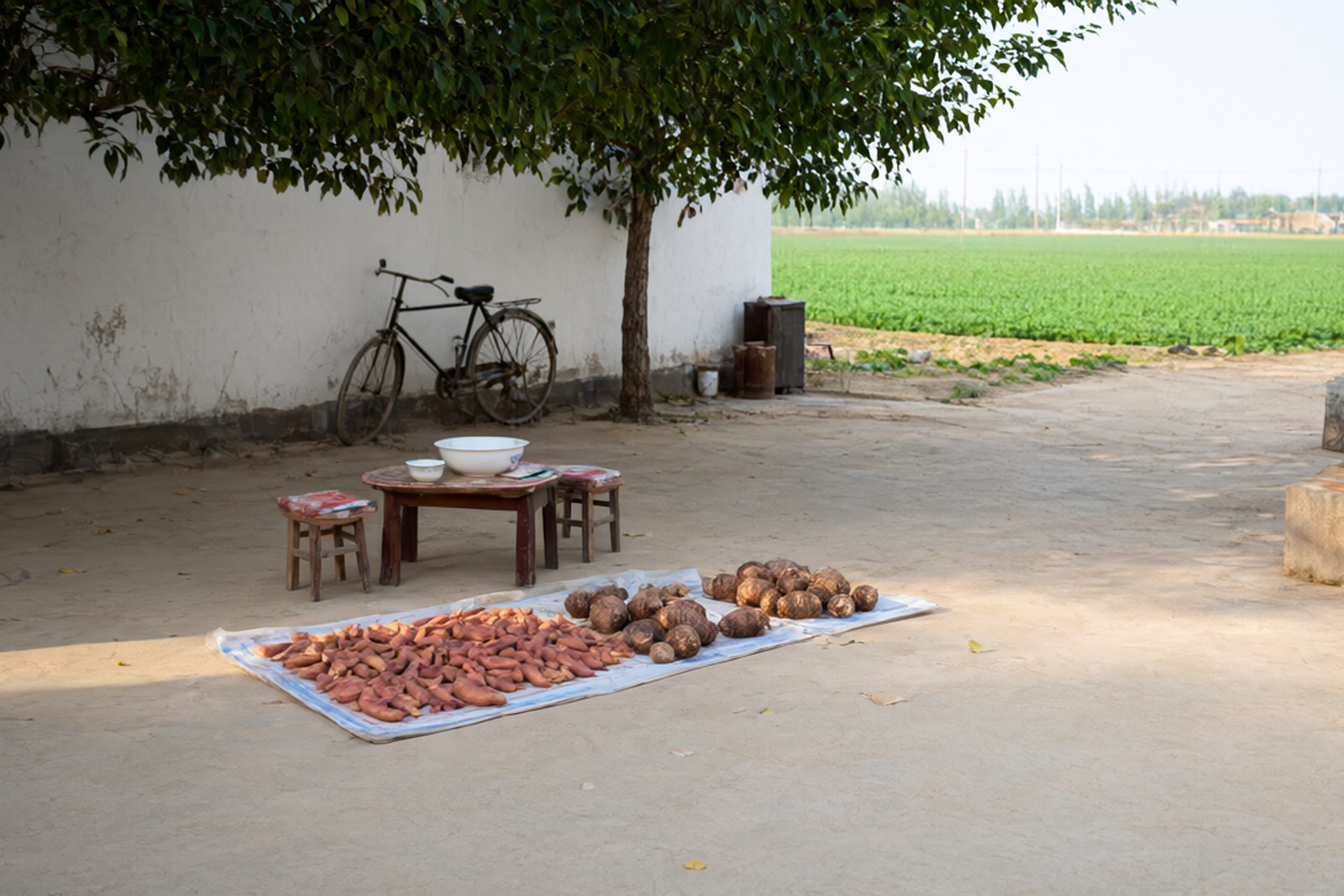
The thing a bed here is really built on is five kinds of root, and they are called the 长寿五粮 cháng shòu wǔ liáng, the longevity five grains: 地瓜 dì guā, sweet potato; 芋头 yù tou, taro; 毛薯 máo shǔ, a hairy yam; 淮山 huái shān, Chinese yam; and 大薯 dà shǔ, the greater yam. They are grown on the township’s selenium-rich red earth and its seaside sand, where the soil is soft and carries copper, selenium and zinc, and the material’s own description of the result is that the roots come out dense, mealy and firm, which is exactly what a good root crop should be and rarely is. The brand is a recent one and has a specific origin: it was started by 符智博 Fú Zhì bó, then a township party committee member, together with 林国文 Lín Guó wén, the party secretary of 文连村 Wén lián cūn, who mobilised farmers to open land; the cooperative registered the trademark, the township supplied seedlings, machinery and fertiliser and brought in technical help and buyers, and the planting grew to at least two thousand 亩 mǔ of 毛薯 and at least a thousand of 淮山. The commercial high point came at the 2018 Hainan International Winter Agricultural Trade Fair, where the five grains signed purchase agreements for more than ten million jin, worth over thirty million yuan, at an average price of three to three and a half yuan a jin. They now reach Beijing, Chengdu and Guangdong, and in 2015 a Hainanese merchant based in India ordered ten thousand jin of them, which is the sort of detail that makes a farm brand memorable. The main producing village is 文连村委会, and the surrounding agriculture runs to 9,048 亩 of rice, plus pineapple, banana, lychee and longan; eight aquaculture operations, a catch of 6,543 tonnes and a fishing output of 139 million yuan sit alongside. The rest of the township’s food names are worth knowing because a farm stay will feed you them: 陈家铺粽 Chén jiā pù zòng, 黎安月饼 Lí ān yuè bǐng, 胭脂香米 yān zhī xiāng mǐ, 伴康地瓜 Bàn kāng dì guā and 扶提西大蒜 Fú tí xī dà suàn. Two of those names run on a festival calendar rather than a farming one: the 陈家铺粽 Chén jiā pù zòng dumplings and the 黎安月饼 Lí ān yuè bǐng moon cakes are ordered in batches, and in 2023 the two together took roughly 23,000 dumpling orders and 6,015 boxes of cakes, worth about 800,000 yuan between them, which is a reminder that a farm economy on this coast runs on festivals as much as on weather.
Then there is the longevity claim, and it needs more care than it usually gets. On 16 December 2021 the UN Institute on Ageing’s expert committee on active ageing awarded 临高县 the title of 世界长寿乡 shì jiè cháng shòu xiāng, world longevity township. As of 11 October 2023 the county had 157 residents aged a hundred or over – 31 men and 126 women – which is 37.4 per hundred thousand people against the seven and a half per hundred thousand the UN’s longevity index asks for, and ten of them were a hundred and ten or older; the county publishes a longevity map and a list of centenarians. Those 2023 figures were broken down by township, and 东英 was credited with ten of them, in eighth place behind 临城镇 with forty-four. The township’s own material, dated 2025, gives a different and better picture for 东英 alone: its longevity index is 74, which it says is the highest of the county’s eleven townships, and as of October 2025 it had nineteen residents aged a hundred or over, 11.24 per cent of the county’s total. The two sets are two years apart and the county’s 2023 ranking put a different township first, so the honest way to hold them is to give twenty twenty-three its ten and twenty twenty-five its nineteen, and to note that 东英 has moved up hard in between and is making a claim about the present rather than about a century ago.
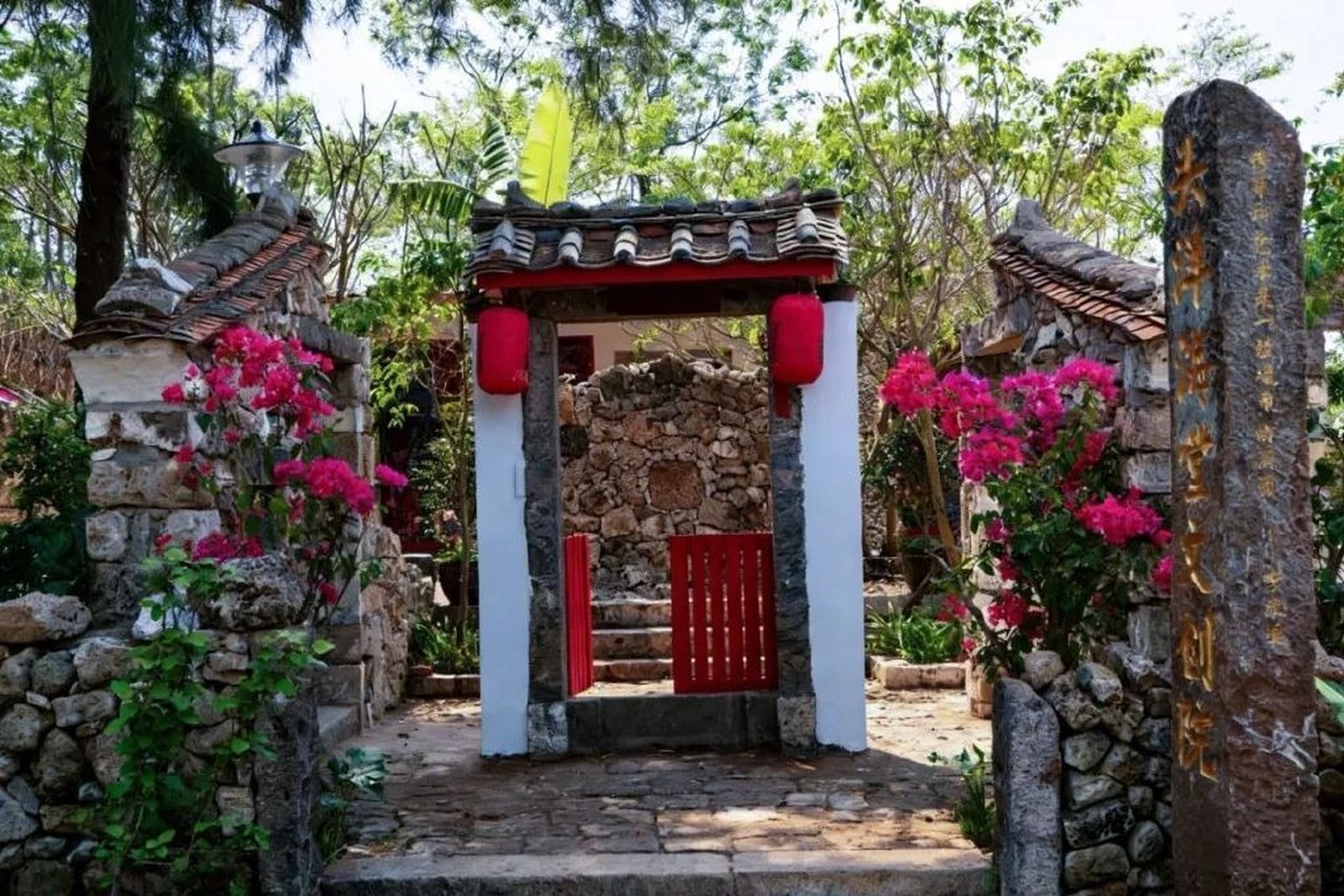
The lodgings here grew out of that ground, and they are the most thoroughly documented in the county because the township has been counting them. The pattern is the return of young people rather than the arrival of a developer. The township has a minsu association, its chair a local man who runs the 耕读山房 Gēng dú shān fáng project, and the county has a county-level association setting standards and star ratings. The numbers moved quickly and each figure needs its year attached: fifteen minsu in operation as of August 2024, eighteen as of November 2024, and twenty-three rooms-to-let businesses with 260 guest rooms and an annual output of over eight million yuan as of 2025, with a provincial gold-rated, several silver-rated and one bronze-rated homestay among them, two provincial shared farms, and a set of five-coconut-level rural tourism sites. One year after the Cittaslow award, coastal minsu in the township were up 28 per cent. The individual projects are what make the picture concrete. 观海民宿 Guān hǎi mín sù is the one that started it: in 2017 a villager who had worked away from home came back to 博纵村 Bó zòng cūn and opened the first minsu in the village, and the village now has more than ten seaside minsu and ten or more places to eat, with over a hundred jobs. 耕读山房 and its 耕读民宿 gēng dú mín sù at 黎安村 Lí ān cūn opened in May 2021 and had taken about eight million yuan by 2024 while benefiting some 2,960 farmers directly. 多福稻舍民宿 Duō fú dào shè mín sù at 多福村 Duō fú cūn opened on a trial basis in May 2024 with 24 rooms, a rice-field and volcanic-rock theme, three thousand visitors by that August, and more than a hundred temporary jobs a year. 且听风吟民宿 Qiě tīng fēng yín mín sù at 和新村 Hé xīn cūn has twelve rooms and runs beach weddings; 美夏湾民宿 Měi xià wān mín sù sits at 美夏村 Měi xià cūn; and 头洋海堂休闲农庄 holds a five-coconut rating. The seaside strip that ties them together runs the coast between 和新村 and 博纵村, and the Cittaslow design gives the whole of it a slow lane: the township’s four areas are themed as slow sea on the coast, slow port at 美夏港 Měi xià gǎng, slow town in the county seat and slow mountain at 高山岭.
What the Rooms Are Like
A farm stay in 东英镇 is a converted village house or a purpose-built small guesthouse, and the range from the plain ones to the polished ones is wide enough that a guest should look at the room rather than the photograph. The plain end is a family building of two or three storeys with rooms let out: a tiled floor, a firm bed, a quilt rather than a duvet, split air conditioning, a kettle, a television, a shower with a boiler on the wall, and a window onto a courtyard where the household keeps its things. The polished end, which is what three of the named projects sell, adds a proper bathroom, a seating corner, a view onto paddy or sea, a shared kitchen, a library or a reading room, a barbecue, and in one case a basketball court, a kids’ play area and a co-working space, which makes it as much a study centre as a bed. The two structural facts worth knowing are that 耕读民宿 at 黎安村 is the most fully equipped of them and prices accordingly, and that 多福稻舍 is the one with the rooms already specified – twenty-four of them, fourteen twins and ten doubles, all with breakfast for two, at forty-five square metres with either a 1.8 metre bed or two 1.35 metre beds, including a category that looks over the paddy. Ask about the ground floor and about the damp, as anywhere in this county, and ask about food: several of these places will cook dinner with notice and none of them will do it without, and the nearest village kitchen after eight in the evening may be the one you are standing in.
Practicalities
Price. A room in 东英镇 Dōng yīng zhèn runs about 269 to 360 yuan a night for the ordinary seaside minsu, with the boutique end of the market at roughly 775 to 809 yuan at 耕读民宿 gēng dú mín sù; the 24-room 多福稻舍 starts at about 358 yuan with breakfast for two and has sold packages at 299 and 369 yuan including meals and activities, with a hundred yuan added per room on peak dates. Farm-restaurant meals run about 95 yuan a head at the 土窑 tǔ yáo pit-cooking places along the same coast. No reliable source was found for a farm stay specifically branded around the five grains, so the figures above are the township’s accommodation market rather than a themed price list. Winter is the season, both for the weather and for the new root harvest, which lands in December and runs to the Spring Festival. Treat every figure as a range and check the live rate.
Address. The farm stays are in 东英镇 Dōng yīng zhèn in 临高县 Lín gāo xiàn, along the coast between 和新村 Hé xīn cūn, 博纵村 Bó zòng cūn, 黎安村 Lí ān cūn, 多福村 Duō fú cūn and 美夏村 Měi xià cūn, with 文连村 Wén lián cūn the main grain-growing village inland, 高山岭 Gāo shān lǐng rising about 3.6 kilometres north-west of the county town at the township’s southern edge, and 临高南站 Lín gāo nán zhàn about twenty kilometres away.
Rooms. Ask for an upper floor and for the direction of the window, because on this coast one side looks at paddy or sea and the other at a courtyard wall. Ask whether the kitchen will cook dinner, with how much notice, and whether there is anything else open within walking distance after eight. Ask about the harvest calendar if you want to see the five grains rather than eat them, because the roots come out in the winter and the fields are bare in the summer. Ask the host about the tide at 美夏港 Měi xià gǎng, which is the township’s 赶海 gǎn hǎi ground: the ebb there can bare twenty metres of flat, the catch runs to stone crabs and sea snails, and the digging is a tide-table activity rather than a fixed hour. And ask the host to cook what you catch, which is the ordinary arrangement here and the best meal in the township.
Getting there. By road 东英 is seven kilometres from the county town of 临城镇 Lín chéng zhèn and the 海南环岛旅游公路 Hǎi nán huán dǎo lǚ yóu gōng lù runs along its whole coastline, with a slow-lane network through the township as part of the Cittaslow design. By rail, 临高南站 Lín gāo nán zhàn on the 海南西环高铁 Hǎi nán xī huán gāo tiě is the arrival, roughly twenty kilometres from the 多福村 Duō fú cūn area and about thirty-five from 银滩站 Yín tān zhàn to the south; a second-class seat from 临高南 to 海口东 Hǎi kǒu dōng costs about 29 yuan and takes 36 to 46 minutes. No reliable source was found for bus routes or fares inside the township, so the last few kilometres to a village guesthouse are best treated as a taxi or a car.
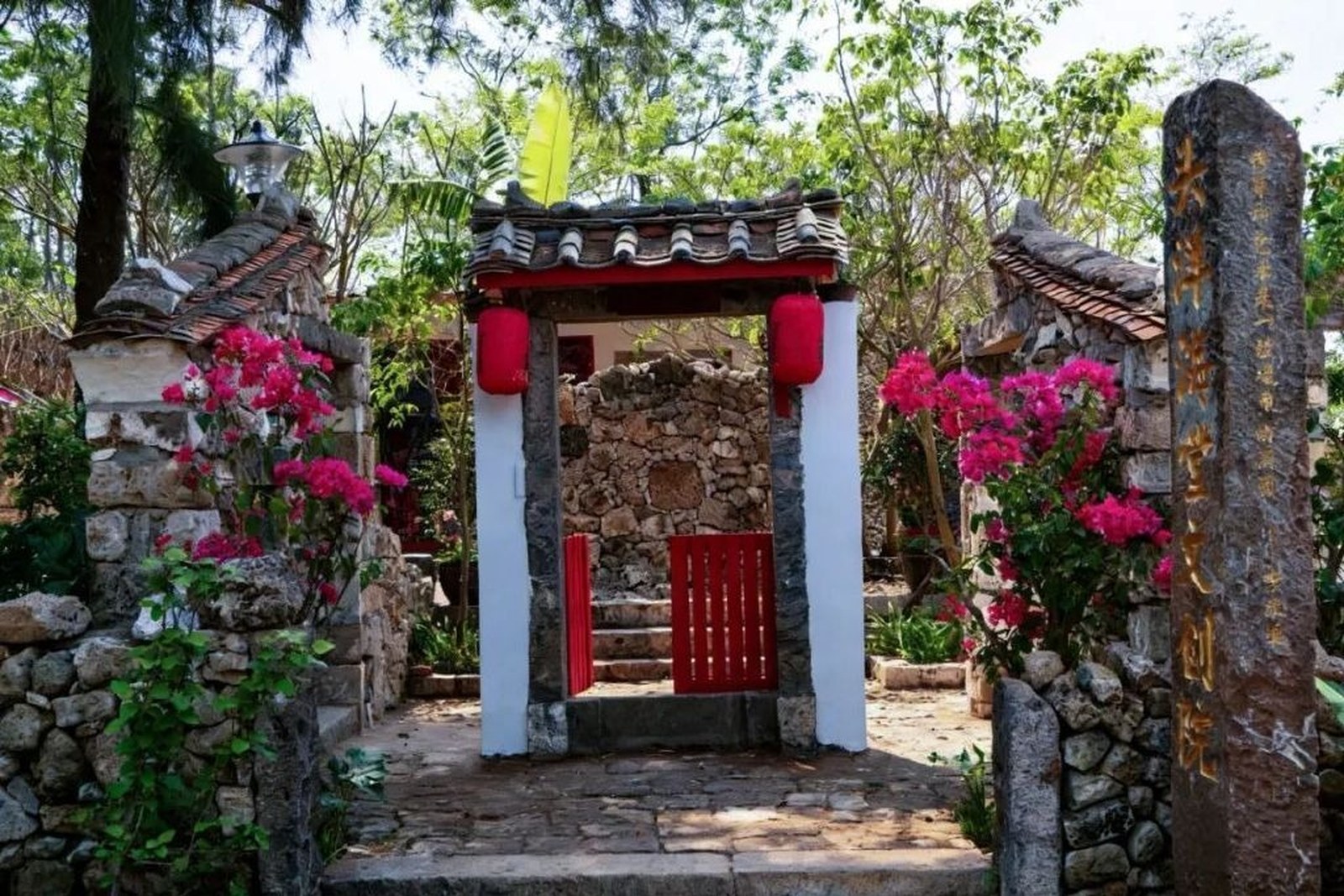
Where to stay: a farm-stay room on the coast of 东英镇 Dōng yīng zhèn in 临高县 Lín gāo xiàn, in one of the villages between 和新村 Hé xīn cūn and 多福村 Duō fú cūn, where the beach, the paddy and the cooking are within a walk and 高山岭 Gāo shān lǐng is a short drive inland. Take an upper room and ask which side the window faces, come in winter for the root harvest as well as the weather, ask the host to cook what the tide leaves on the flats at 美夏港, and treat the slow lane as the point rather than as the route.
flowcloud would say that a township which measures its soil at 2.4 milligrams of selenium per kilogram and then counts nineteen people past their hundredth year has a simpler argument than most places selling longevity – because the correct way to sleep on ground like this is to spend the afternoon in a field pulling yams out of red earth, and the evening eating them at a table that belongs to the family who grew them.