
峨蔓 Émàn is the volcanic coast at the north-western corner of 儋州市 Dānzhōu shì, where the shoreline is black basalt rather than sand and the 千年古盐田 qiān nián gǔ yán tián, the thousand-year-old salt fields, are cut into the rock at the village of 盐丁村 Yándīng cūn. A minsu here is a stone house among the salt pans, built of the same black lava the coast is made of, with the fields in front of it and the sea beyond. It is the most particular stay on the west coast and the one that puts you inside the landscape rather than looking at it.
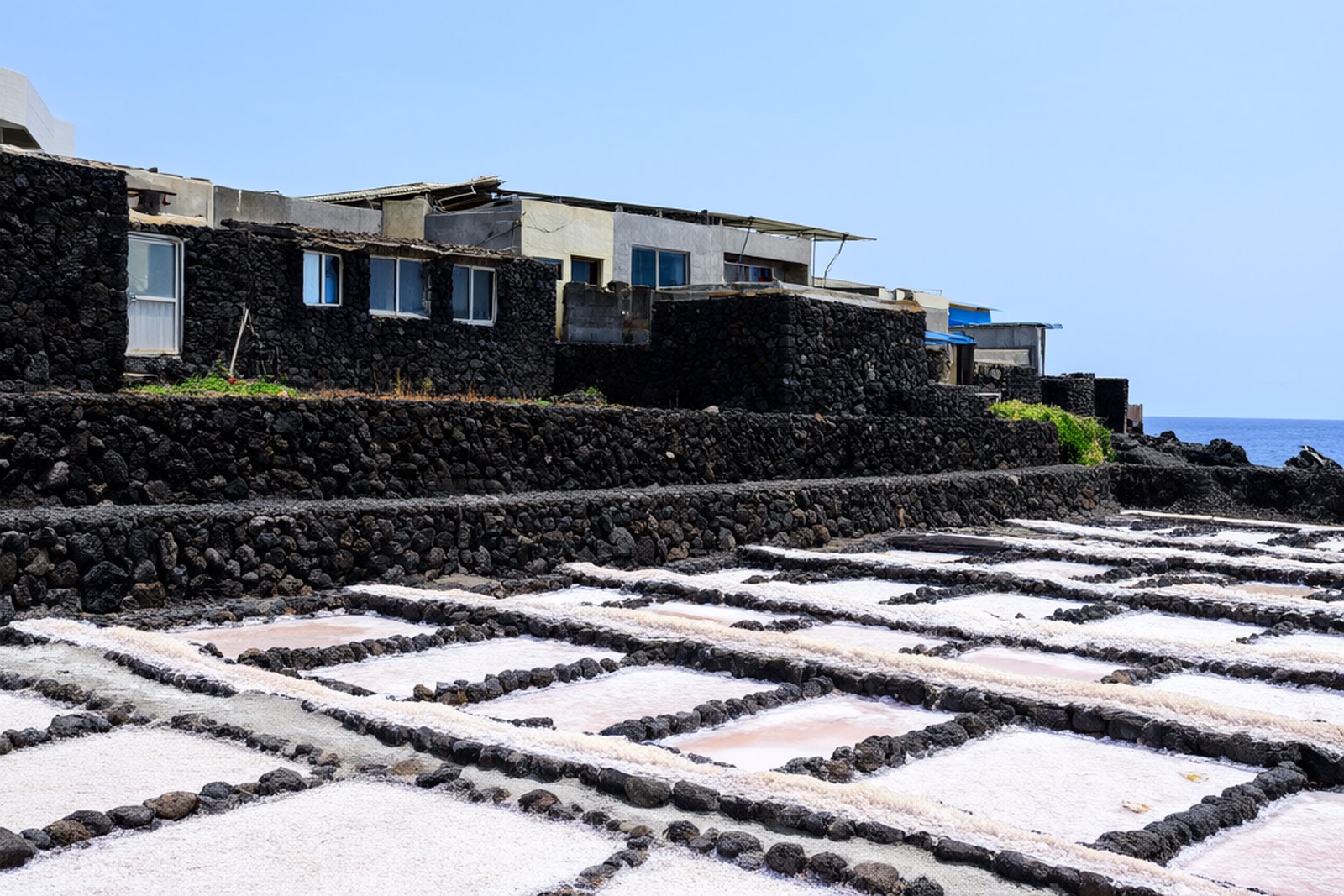
The coast is young and hard and it has shaped how people live on it. The basalt came from eruptions that laid lava down to the water’s edge, so the shore is a shelf of black rock with blowholes and tide pools, and the villages behind it are built of the same stone, low and thick-walled and grey-black. Because there is little soil and no beach to speak of, the sea has always been the living, and salt was the crop: from the Song dynasty onward the salt makers cut shallow pans into the flat lava, let the tide fill them, and raked the brine until it dried. The 千年古盐田 are those pans, thousands of them, still in use.
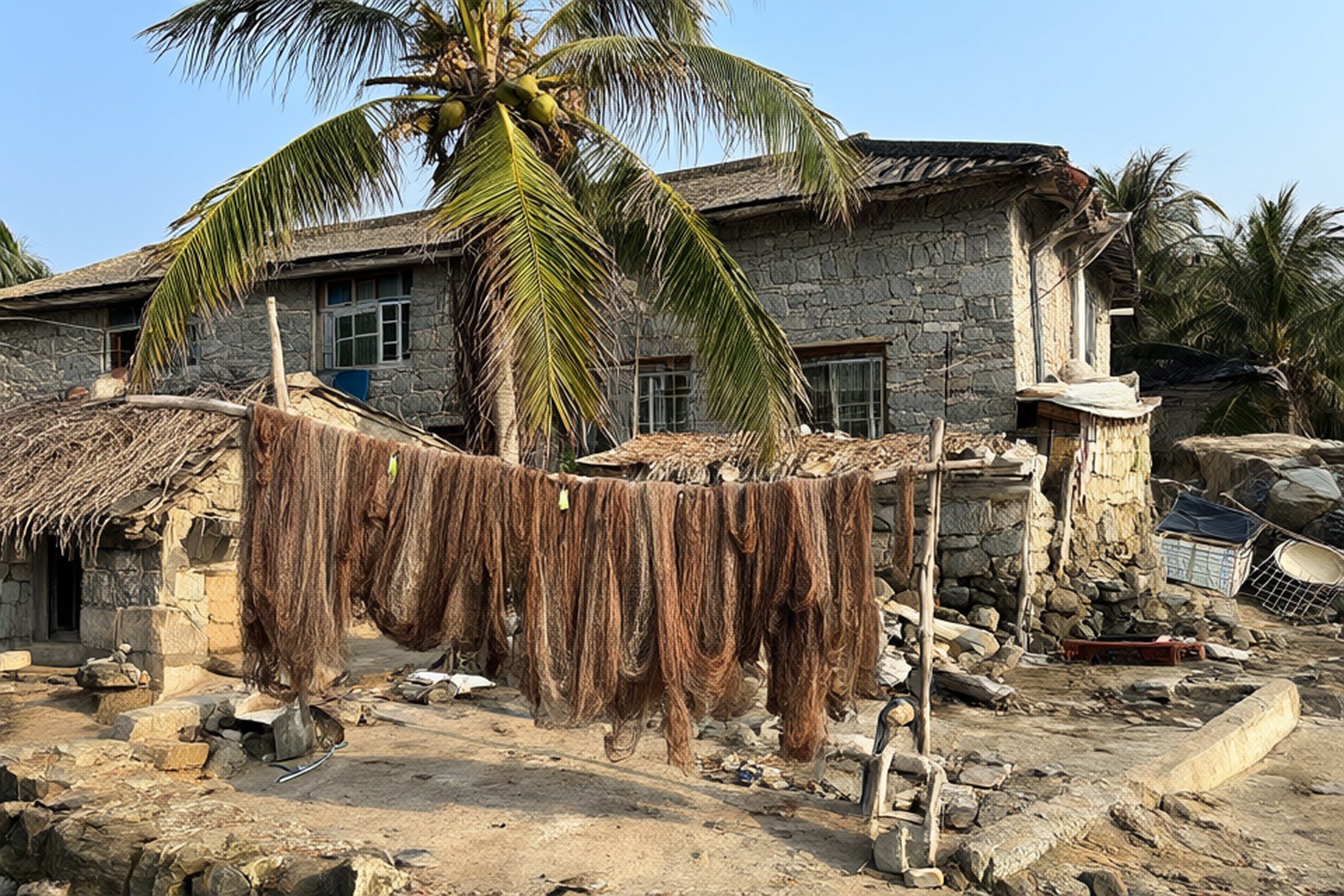
A minsu on this coast is an ordinary village house with a few rooms to let, and the trade has grown up around people who want to see the salt fields at dawn and at dusk, the two hours when they are worth the journey. Expect thick stone walls that stay cool in the day, simple rooms, and often a roof terrace from which the whole run of the pans to the sea is visible. The families here fish and farm salt, and the evening meal, if they cook, is whatever came off the water and out of the garden that day; ask in advance and be prepared to eat what there is rather than order.
The thing to do is the salt fields, and the thing to do with them is to be there early or late. At dawn the pans hold a skim of water and the light comes across them flat and silver; at dusk the whole shelf turns orange and the black rock goes to silhouette, and the salt makers are still out raking. The village of 盐丁村 is where the pans are densest and where the work is still done by hand, and there is no ticket and no gate. Walk the rock coast afterwards for the blowholes and the tide pools, and drive the twenty minutes north or south for a stretch of sand if you want to swim, because the volcanic shelf itself is not a swimming shore. Two nights is right, and one of them should be a dawn.
What the Rooms Are Like
Expect a room of fifteen to twenty square metres, a firm bed, air conditioning, a simple en-suite bathroom with a shower, and walls of local stone. The finish is plain and the point is the setting, so ask for a room with a window or terrace facing the salt fields or the sea. The coast is breezy, the nights are cool for Hainan, and the village is completely quiet after dark. Wi-Fi is usually there but slow, and a few minsu have no restaurant at all, so ask whether dinner is possible.
Practicalities
Price. A double in an 峨蔓 village minsu runs ¥120 to ¥300 a night in the shoulder season, and more over the October week and Chinese New Year. Rooms with a terrace over the salt fields are the ones to ask for and cost a little more.
Address. The minsu is in the village beside the 千年古盐田 at 峨蔓镇, 儋州市, on the basalt coast at the north-western corner of the city. The nearest high-speed rail stop is 白马井站 Báimǎjǐng zhàn on the west ring line, about forty minutes from 海口东.
Rooms. Ask for a room or a terrace facing the salt fields rather than the road, and ask whether the family will cook dinner, because there is nowhere else to eat in the village. Bring a torch, since the lanes are unlit, and a warm layer for the evening, because the coast wind is stronger here than inland.
Getting there. From 白马井站 the drive north along the coast to 峨蔓 takes about forty minutes; from 那大, the city centre, it is roughly an hour. The salt fields are signposted at the village and the pans begin at the edge of the houses, so once you are there everything is walkable.
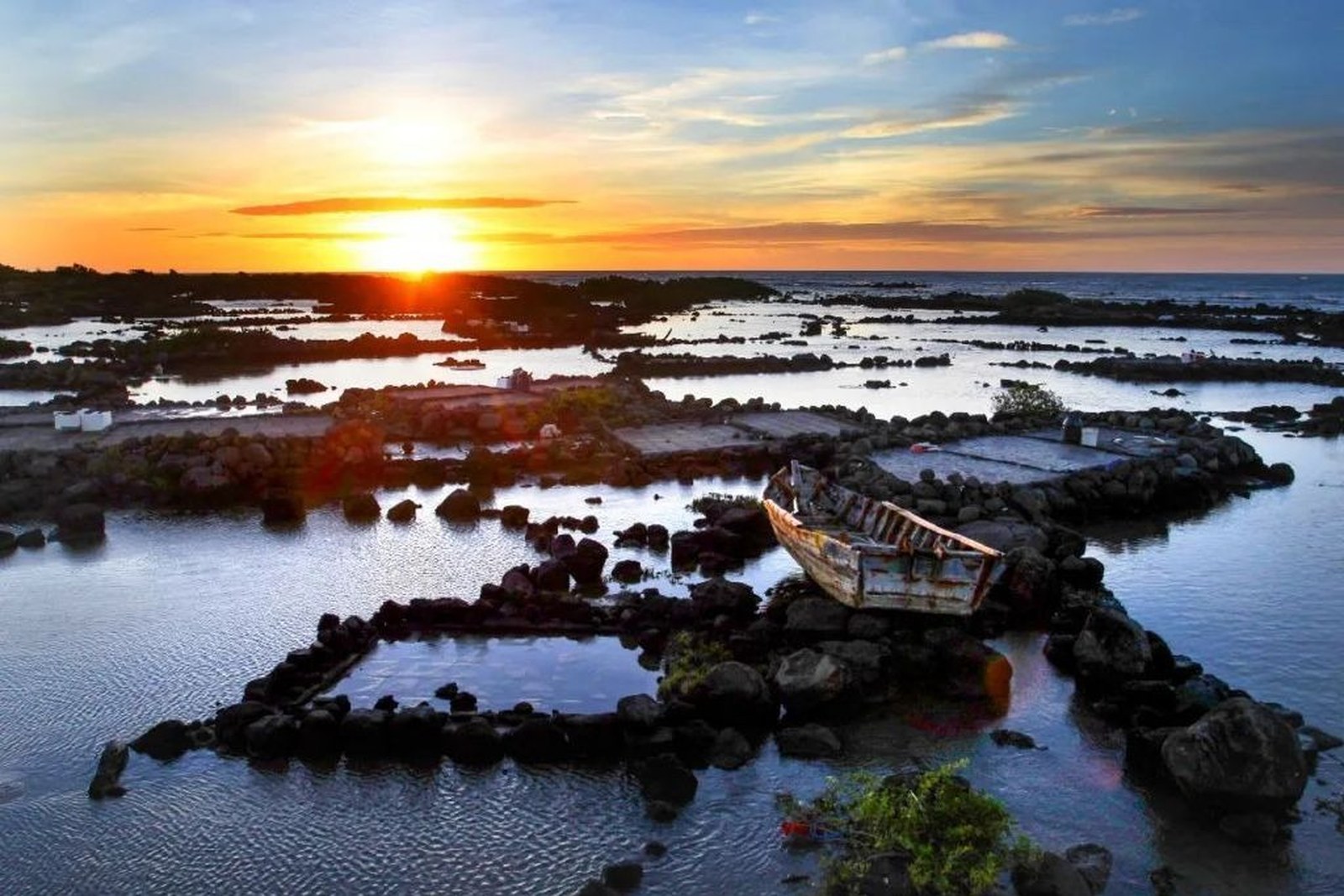
Where to stay: the village minsu among the salt pans at 峨蔓镇, 儋州市, on the basalt coast. Ask for a terrace over the fields, arrange dinner with the family, and be out at dawn or dusk; two nights, one of them starting before sunrise.
flowcloud would say that a village which built its houses out of the lava it stands on, cut its salt pans into the same rock, and has gone on raking them by hand for a thousand years, has shown that in a hard landscape the sensible thing is to stop arguing with it and use it twice.