
恩平 Ēnpíng sits on the western edge of Guangdong, in the hills between 江门 and 阳江, and it is one of the few parts of the province where the ground itself is hot. There is a fault system running through the county, and along it water comes up from a couple of kilometres down at between fifty and eighty degrees, mineralised and faintly sulphurous. The county has built an entire identity on this: it calls itself 中国温泉之乡 Zhōngguó wēn quán zhī xiāng, the hot spring town of China, and the resorts along the 那吉 Nàjí and 良西 Liángxī valleys range from modest pools behind a hotel to large complexes with dozens of outdoor baths. The one worth staying in is the kind that has built the pools into the landscape rather than the other way round, so that you are sitting in hot water under trees at nine at night with the frogs going, which is the version of the experience that justifies the trip.
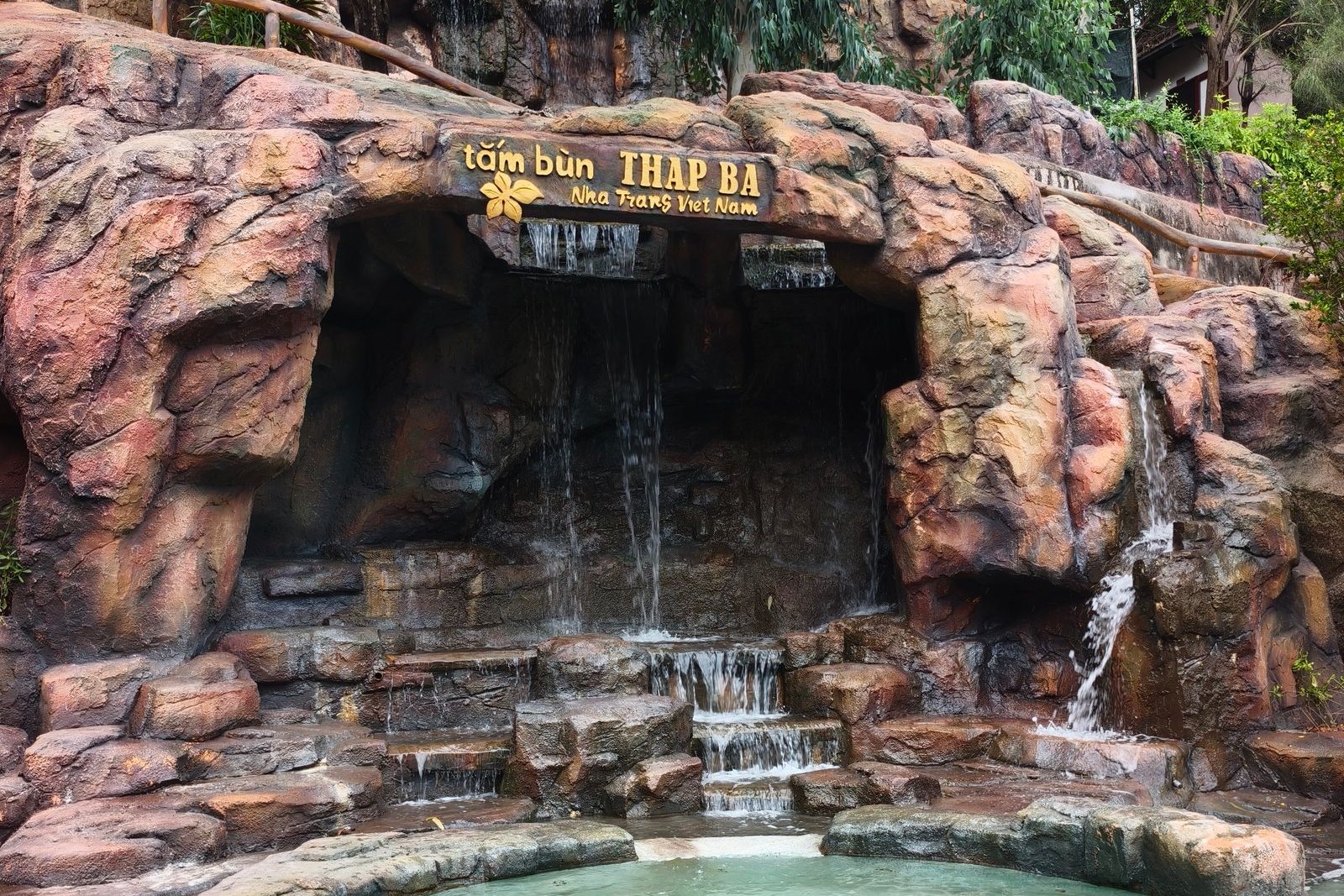
The water is the product and it is worth understanding what you are buying. The springs here are 偏硅酸 piān guī suān and 氟 fú bearing, meaning the water is high in metasilicic acid and fluoride, which is the combination that earns a Chinese hot spring its classification and, in the industry’s own terms, its 医疗价值 yī liáo jià zhí, its therapeutic value. Whether that does anything for you is a matter for your own back; what is certainly true is that the water is genuinely from the ground, not heated tap water, and the difference shows in the smell and in the way the skin feels afterwards. The pools are set at different temperatures, usually from about thirty-eight to forty-four degrees, and the etiquette is the same as anywhere in China: shower before you get in, do not stay in one pool for more than fifteen or twenty minutes at a time, drink water, and move between hot and cool.
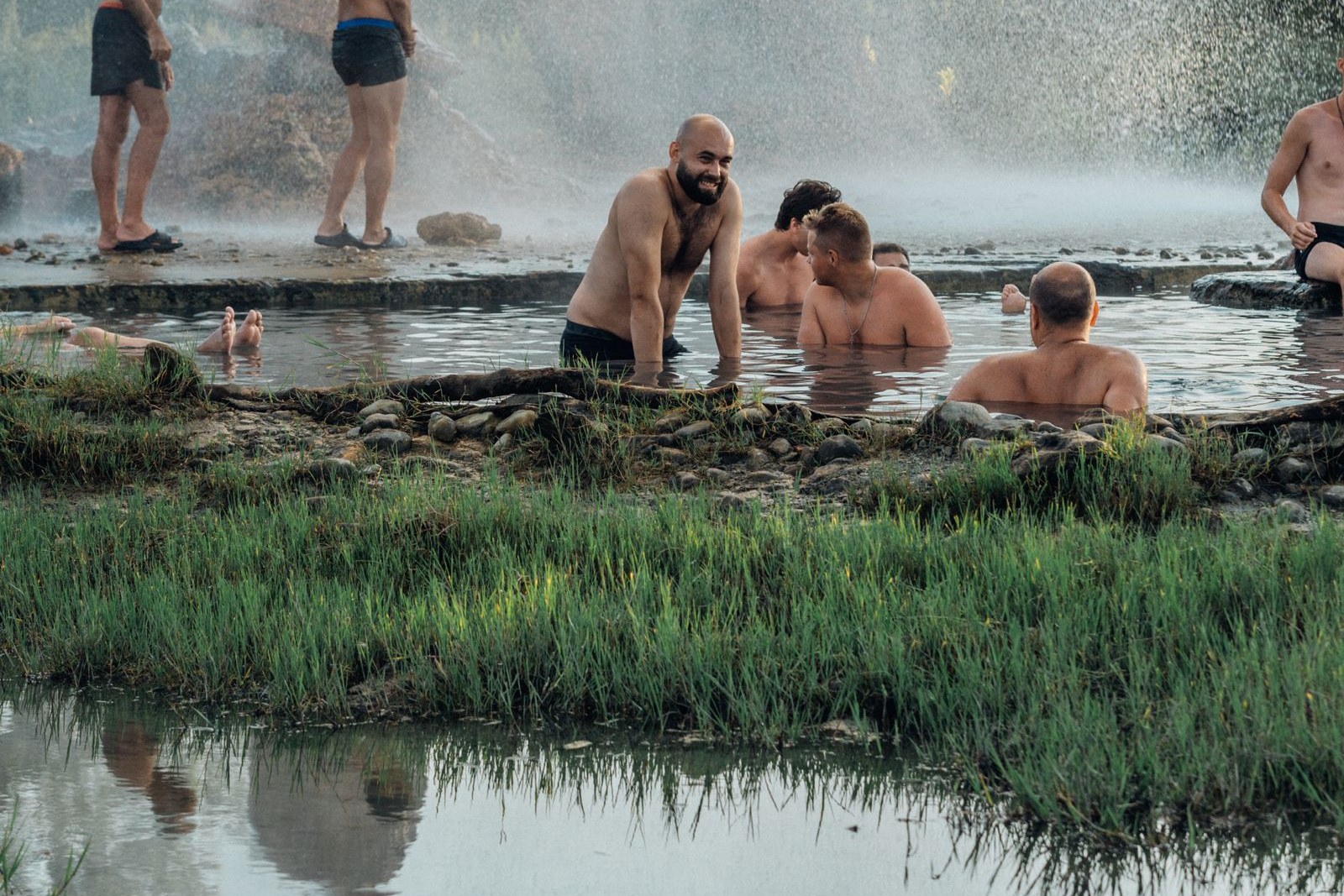
A resort here is a stay as much as a swim. The larger complexes have rooms in a main building and often 汤屋 tāng wū, private rooms with their own small pool, which are worth the extra if you would rather not share. Meals are usually taken in the resort, and the local cooking is worth having: 恩平濑粉 Ēnpíng lài fěn, the county’s fermented rice noodle, 恩平簕菜 lè cài, a thorny green vegetable that grows wild here and is cooked in soup or with eggs, and 黄鱔饭 huáng shàn fàn, eel rice, which 恩平 makes as well as 台山 does. There is also 恩平烧饼 shāo bǐng, a small baked cake with a filling of bean paste or meat, sold from street stalls in the town and eaten warm. In the winter months the resorts fill with families from 广州, 佛山 and 中山, and the pools get loud; in the spring and autumn the same places are half empty and much better.
What the Rooms Are Like
Rooms in the main buildings are standard hotel rooms of twenty-five to forty square metres, with a firm bed, air conditioning, a modern bathroom and often a balcony over the gardens or the valley. The 汤屋 tāng wū, the rooms with a private thermal pool, run larger and cost two to three times as much; the pool is usually a small stone or tiled tub on a private terrace, filled from the same hot source. Bathrooms are modern and water pressure is good, which is not always true in this county. Robes and slippers come with the room, and most resorts expect you to walk to the pools in them. Wi-Fi is reliable in the buildings and weak at the outdoor pools.
Practicalities
Price. A double in a mid-range 恩平 resort with access to the thermal pools is ¥400 to ¥900 a night, usually including breakfast and the pools; a private 汤屋 starts near ¥900 and climbs past ¥2,000 at the top end. Day use of the pools without a room is commonly ¥100 to ¥200 a person. Rates roughly double over the New Year and Spring Festival holidays and fall sharply on weekdays out of season.
Address. The resorts are in the 那吉 Nàjí, 良西 Liángxī and 大田 Dàtián valleys around 恩平市 Ēnpíng shì, on the western side of 江门 prefecture, about two hours from 江门 city and an hour and a half from 阳江. 金山温泉 Jīnshān wēn quán and 帝都温泉 Dìdū wēn quán are the two best known, with several smaller ones in the same valleys, and they are spread out, so check which one you have booked before setting off.
Rooms. Ask whether the thermal water reaches your room or only the shared pools, because “spa room” and “hot spring room” are used loosely. Confirm whether the room rate includes the pools for both days of a two-night stay, which varies between resorts, and whether there is a limit on entries. If you are going in winter, ask about outdoor pool temperatures at night, since not all of them stay open. And ask for a room away from the main pool building if you want to sleep before eleven, because the loudest part of any resort is the pool at closing time.
Getting there. 恩平站 Ēnpíng zhàn on the 深湛 railway is the quickest way in, with the journey from 江门 taking under an hour and from 广州 about an hour and a half; taxis meet the trains and most resorts are twenty to forty minutes from the station. By coach, 恩平 has services from 江门 and 阳江, and by car it is reached from the 沈海高速 Shěnhǎi gāosù or the 汕湛高速 Shànzhàn gāosù. Arrange your return transport when you arrive: taxis are scarce at the resorts, and the station is not within walking distance of any of them.
flowcloud would say that a county that has turned a geological accident into its whole economy has at least been honest about what it is selling, and that the correct way to use it is to book a weekday in spring, take the smallest pool, and stay in until your hands go soft.
Where to stay: the thermal resorts of the 那吉 Nàjí, 良西 Liángxī and 大田 Dàtián valleys around 恩平市 Ēnpíng shì in western 江门, with 金山温泉 Jīnshān wēn quán and 帝都温泉 Dìdū wēn quán the two best known and 恩平站 Ēnpíng zhàn the nearest railway station. Check which valley you have booked before setting off, ask whether the room rate includes the pools on both days, and take a weekday in spring or autumn if you want the water to yourself.