
Tents on the Lawn: River-Bank Camps Along the Irtysh
河畔帐篷枕水声,白杨影里梦初醒 Hépàn zhàngpéng zhěn shuǐshēng, báiyáng yǐng lǐ mèng chū xǐng – Tents on the river bank pillow on the water’s sound; dreams wake in the poplar shade
正文:额河畔住宿 É Hé Pàn Zhùsù Irtysh river-bank stays are Beitun’s soft-adventure answer – glamping tents and timber cabins pitched on the green lawns where the town ends and the river terraces begin. The category has grown fast: white dome tents with real beds and private decks, cabin rows under the poplars, and camp lawns that fill with hammocks and kettle smoke on summer weekends. All of it sits within minutes of the city grid, which is exactly the point – frontier river nights without giving up a hot shower.
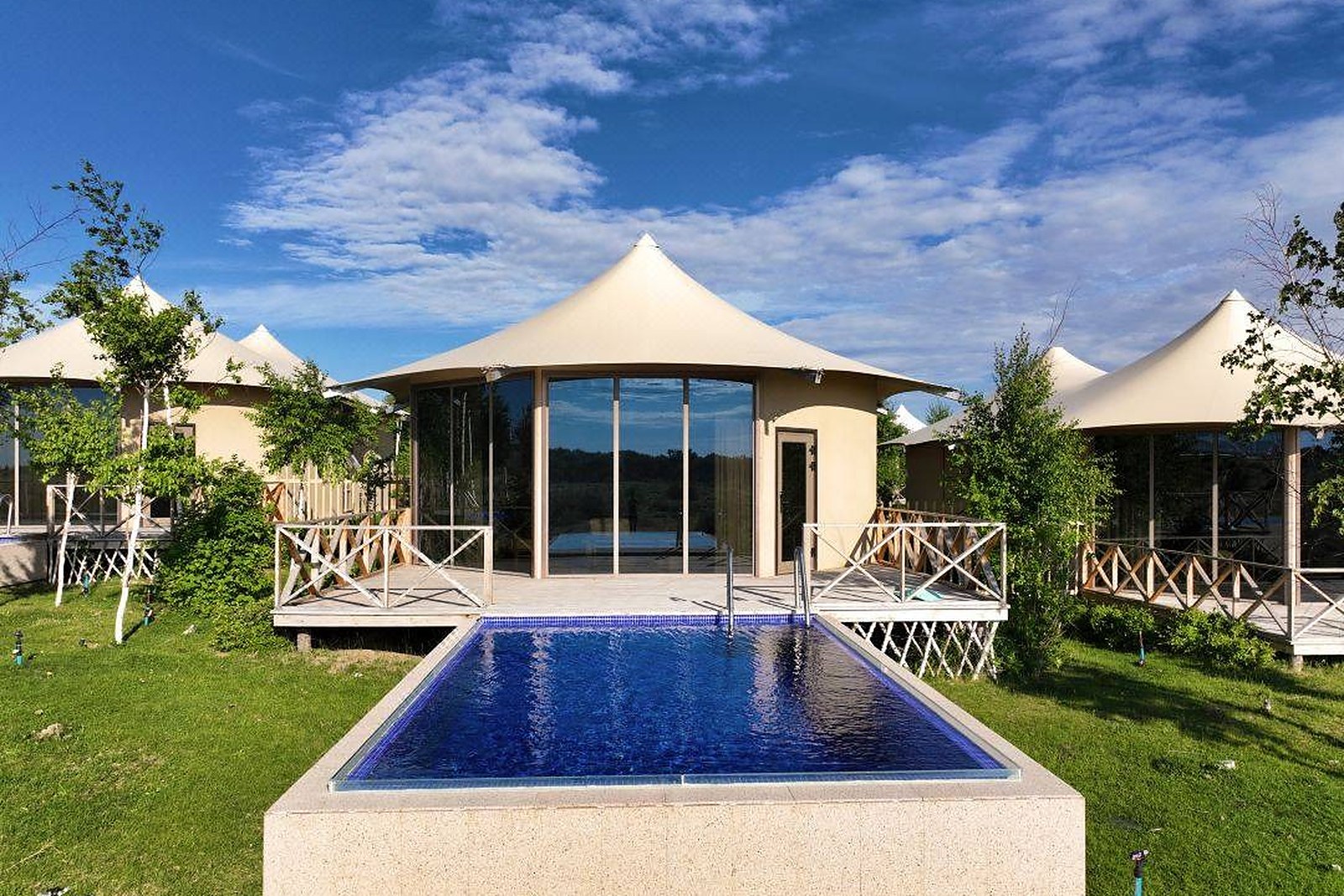
The river does the entertainment. Fall asleep to water sound and wake to birdsong, walk out of the tent onto the levee path, and the promenade’s whole evening theater – fishers, kites, sunset benches – is a five-minute stroll. Camps run their own riverfront decks for breakfast, and the best pitches face west for the light show over the bend, where the poplar line turns gold and the water goes pewter in stripes.
The tents themselves are the surprise. These are not festival campos: proper beds with real linen, wood or tiled floors, heating for the shoulder months, and bathrooms a short walk or en-suite depending on the pitch. Family domes sleep four; the cabin rows suit travelers who want the river with solid walls. Campfires are licensed at the communal pits – the staff-light kind, with tea and corn sold at the desk.
The Stays
Couples take the west-facing domes for the sunset deck and the privacy; families take the lawn cabins for the grass and the shallow wading spots the camp marks out. Groups book the fire-pit lawn for the evening – guitar optional, brick tea mandatory. Light sleepers bring earplugs in spring: the river birds start before five and the wind in the poplars carries all night, which is either the charm or the nuisance depending on the traveler.
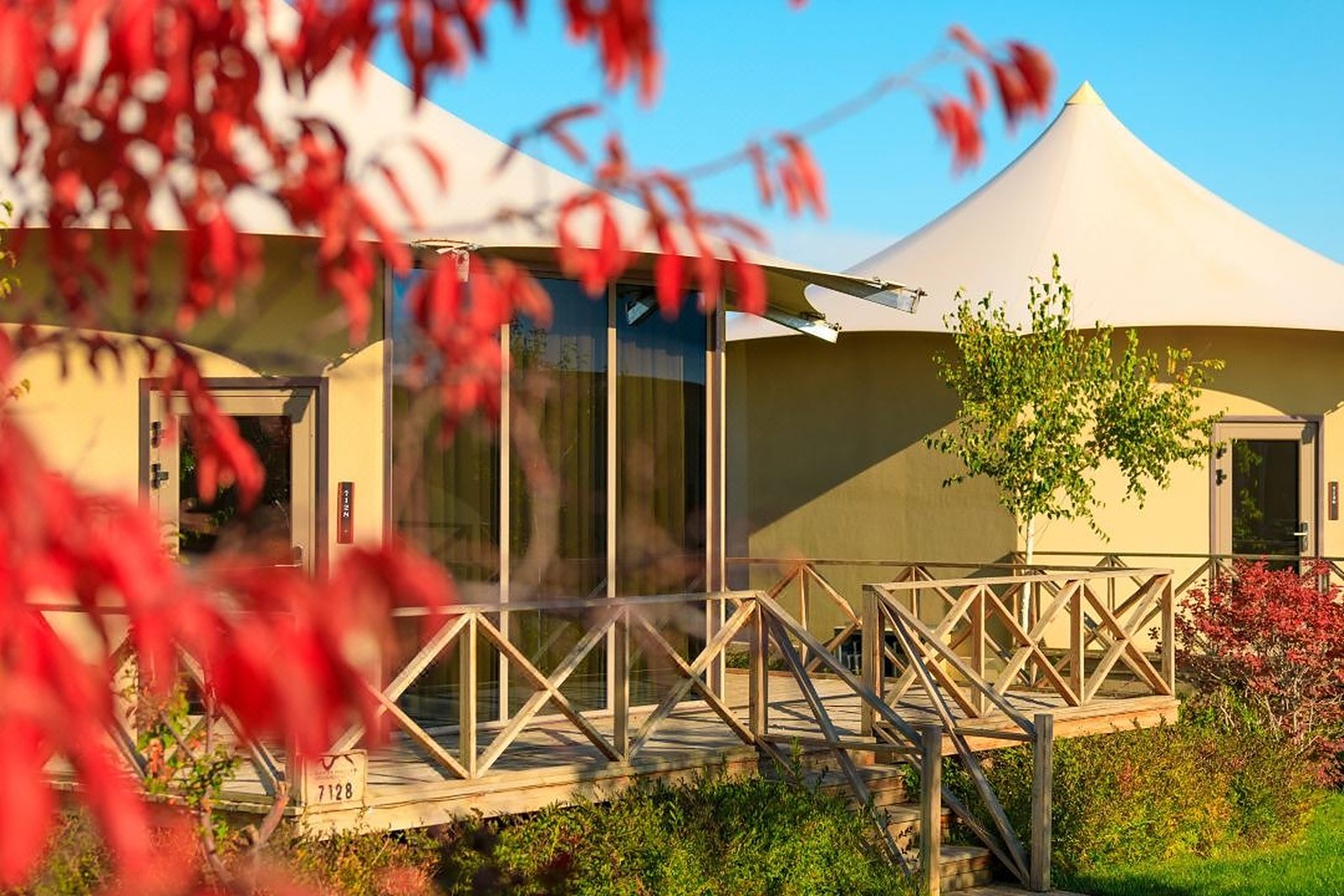
Season shapes the book. June through early September is camp weather proper – warm nights, full lawns, weekend queues for the best domes; the gold weeks of late September bring photographers who want dawn mist off the water from their tent door; and after October the camps winterize or close, pushing everyone back to the city hotels. Book the weekend domes a week out, walk in midweek, and confirm the heating if the forecast says ten degrees.
Practicalities are camp-simple. The camps line the northern river terraces ten minutes from the center by taxi; parking is on-site, breakfast is in the lodge or delivered to the deck, and the desk arranges the river walks and bike hires that make the stay more than a bed. Pack a layer for the evenings even in August – the river keeps its own climate.
Beds settled, the same 北屯市 Běitún Shì Beitun City holds other bases: 北屯市区住宿 Běitún Shìqū Zhùsù city stays for the station-side hotels, 白沙湖周边住宿 Báishā Hú Zhōubiān Zhùsù Baishahu lake stays for the frontier inns, 塘巴湖周边住宿 Tángbā Hú Zhōubiān Zhùsù Tangbahu lake stays for the resort compound, or 牧家乐住宿 Mùjiālè Zhùsù herder homestays for the felt-tent nights – four more doors into the same 北屯市 Běitún Shì Beitun City. With beds settled, our Beitun travel map fills the days.
The Stays
flowcloud would say the Irtysh river camps are Beitun’s soft frontier: dome tents with linen on the lawn, water sound instead of traffic, and the whole city five minutes inland if you need it – camping with an escape hatch. All checked November 2026.
Where to stay: Take the river-facing rooms for the poplar-and-water view, confirm breakfast hour since the levee strip wakes late, and keep a windbreaker for the evening walk. All checked November 2026.