
The county is named for its hot water and the town is named after a hole in the ground. 丰顺县 Fēngshùn Xiàn sits on a fault line in the far south of 梅州 Méizhōu, and 汤坑镇 Tāngkēng Zhèn, its county town, takes its name from 汤坑 tāngkēng, hot spring pit. Geothermal water comes up here at temperatures high enough to need cooling before it reaches a bath, and it has been used for washing, for scalding poultry and for soaking for as long as anyone has written the history down. The lodges built around it are low buildings with pools rather than towers with views, and the arrangement is usually a set of outdoor pools at different temperatures, fed from the source and drained continuously rather than filtered and recycled. That last detail is the one to ask about, and it is the difference between a hot spring resort and a hotel with a heated pool.
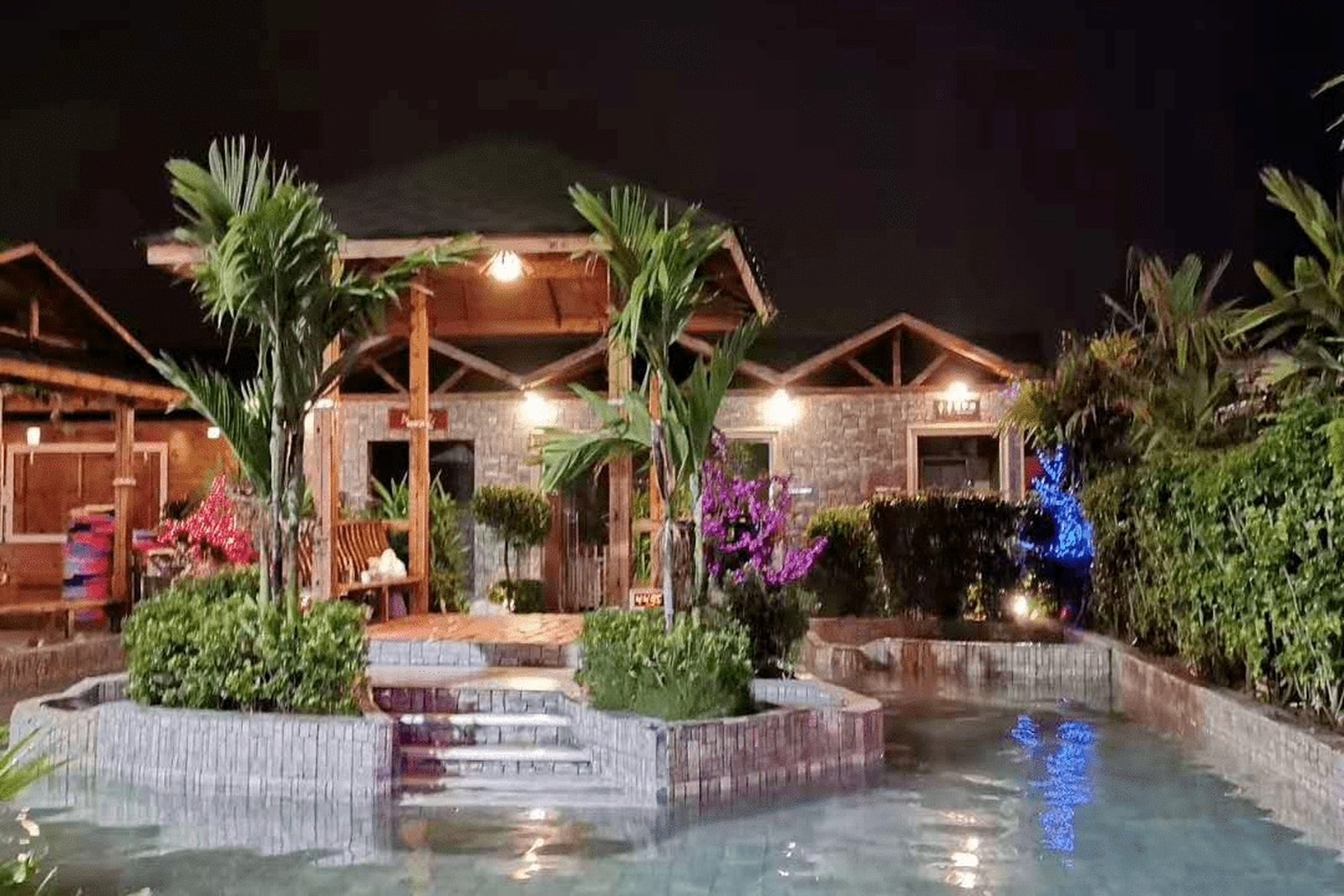
The water is the product. A genuine 汤坑 source runs hot, has a faint mineral smell, and leaves a light deposit on the tiles around the pool; the pools are usually graded from about 38 to 43 degrees, with a cold plunge beside the hottest one. The etiquette is the same as anywhere in Guangdong: shower before you get in, do not take food to the poolside, and do not stay in the hottest pool for more than about fifteen minutes at a time. Off the pool deck the county has a second attraction that is worth timing a visit around: the 埔寨 Pǔzhài fire dragon, in which a dragon is carried through the streets under a shower of sparks from fireworks at 元宵 Yuánxiāo, the Lantern Festival in the first lunar month. It is one of the few fire-dragon performances in the province still done at full scale, and it draws crowds from across the Hakka country.
The surrounding hills are wet, green and almost empty, and the road into 丰顺 from the north runs through tea and 青梅 qīngméi plum country. This is a working agricultural county with a resort industry attached, not a resort county with farms attached, and a stay here is more interesting for it: the market in the morning sells the plums and the preserved vegetables that show up on the lodge’s dinner menu, and the older people in the town square are using the same geothermal water in the public baths that the visitors are paying for in the resort.
What the Rooms Are Like
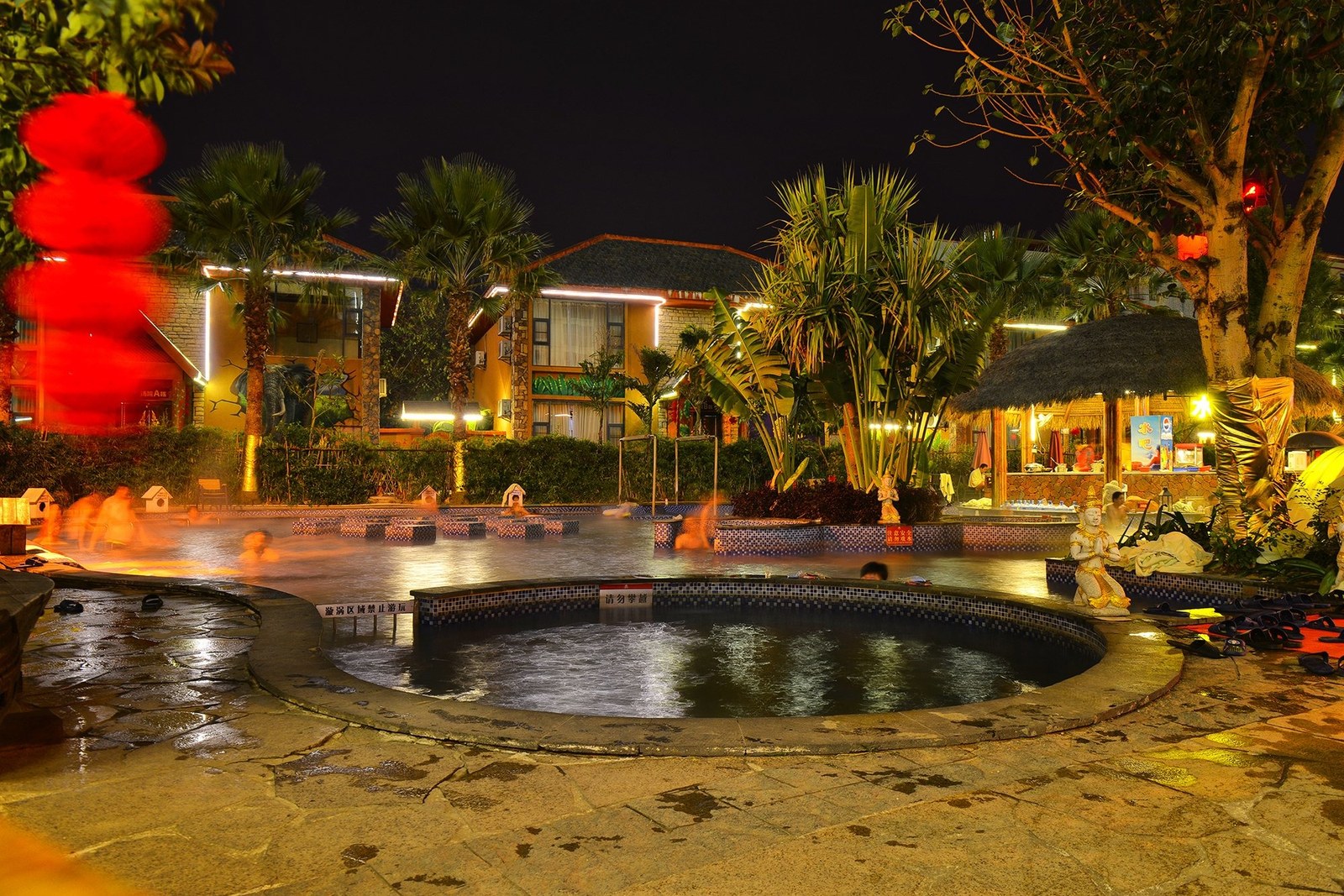
Rooms in these lodges are plain and often large, with tile floors, firm beds and a bathroom whose hot water comes off the same geothermal source, which means it smells faintly of minerals and is genuinely hot the moment you turn the tap. The rooms worth asking for are the ones on the ground floor with a private plunge pool, which cost more and are the reason some people come; the ordinary rooms are perfectly comfortable and you use the shared pools instead. Ask whether the private pool is filled on arrival or shared with a neighbouring room’s wall, and ask for a room away from the boiler plant, which can run all night and hum. Air conditioning is universal and needed in summer, though the geothermal water means the bath is a pleasure in winter rather than a chore.
Practicalities
Price. A double runs about ¥220 to ¥600 a night. The bottom of that range is a standard room in a state-run lodge with shared pools; the top buys a room with a private outdoor plunge pool and dinner. Weekend rates in winter rise sharply, because this is where the delta comes to soak, and the 元宵 Yuánxiāo fire-dragon night is the busiest date of the year.
Address. The lodges concentrate in and around 汤坑镇 Tāngkēng Zhèn, the county town of 丰顺县 Fēngshùn Xiàn, with a second cluster at 汤湖 Tānghú a short drive away. Most are within ten minutes by car of the town centre and the bus station.
Rooms. Ask whether the pool water is fed continuously from the source or recirculated, which is the single question that separates the real springs from a heated swimming pool. Ask for a ground-floor room with a private pool if that is why you came, and for a room on the far side of the plant if you are a light sleeper. Confirm whether dinner is included, since the lodges are often some distance from any restaurant.
Getting there. 丰顺 has stations on the 梅汕 Méi-Shàn line, with 丰顺东站 Fēngshùn Dōng Zhàn about half an hour from 梅州西站 Méizhōu Xī Zhàn and under three hours from 广州 Guǎngzhōu. The stations are a taxi ride from 汤坑镇. By road the county is reached from 梅州市 in about an hour and from 汕头 Shàntóu in a little over an hour.
flowcloud would say that a county named for its hot water is unusually honest municipal branding, and that the correct way to judge a 丰顺 lodge is to ask where the water goes after it has been used, since the answer tells you whether you are in a spring or a swimming pool.
Where to stay: in a lodge at 汤坑镇 Tāngkēng Zhèn or 汤湖 Tānghú in 丰顺县 Fēngshùn Xiàn, ideally in a ground-floor room with its own plunge pool. Ask whether the pools are fed from the source continuously, keep the soaking sessions short and start with the coolest pool, and if you are here in the first lunar month find out whether the 埔寨 Pǔzhài fire dragon is being performed.