
The district seat of 涪陵区 Fúlíng Qū, Fuling District, in 重庆 Chóngqìng, Chongqing, is built on the wedge of land where the 乌江 Wūjiāng, Wu River, runs into the 长江 Chángjiāng, Yangtze, and its best-known hotels line the combined waterfront facing exactly that meeting of waters. From a higher floor the two rivers are legible at a glance: the Yangtze running wide and silt-coloured, the Wujiang arriving greener and faster, and the 两江 liǎngjiāng, two-river, confluence drawn in a blended band that shifts with the season and the rain. Below, the town steps down to the water in low-rise blocks, embankment walks and ferry pontoons, and after dark the bridges string their lights across both rivers at once. This page is written on that riverside class of room, because a one-night stay in Fuling is almost always booked around the water, and the address of the bed decides whether the water is outside your window or a ten-minute climb away.
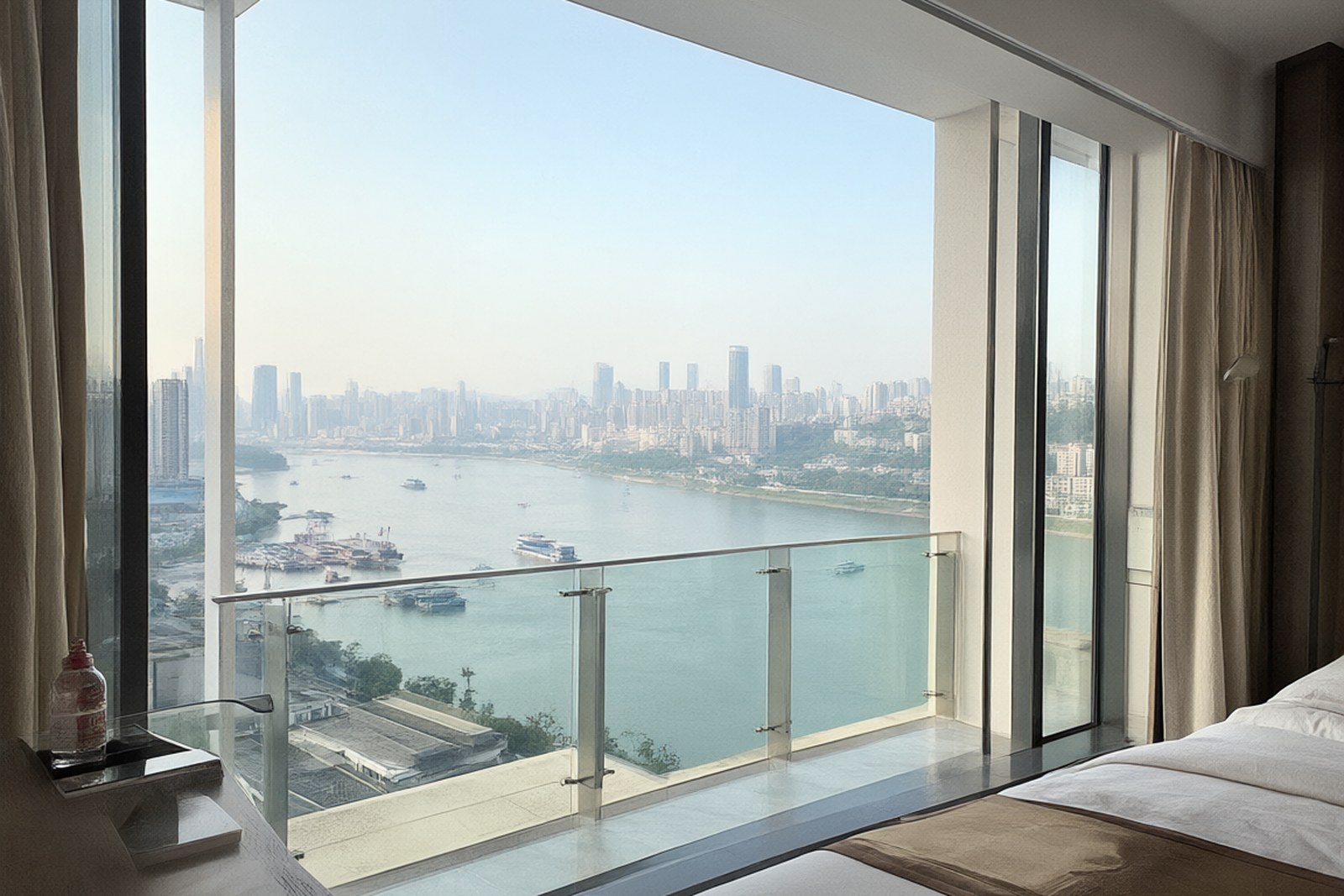
The rooms themselves split on a single question: which side of the corridor the bed faces. The 江景房 jiāngjǐng fáng, river-view room, is the class the whole waterfront trades in, and the houses put their better windows on the confluence – the bridges, the pontoons, the far bank turning gold before dark. The town-side rooms of the same buildings look onto the working streets behind the riverfront, and the working streets start early: shutters rolling up, deliveries backing in, the breakfast steamers of the lanes below. That morning noise is not a defect but the sound of a functioning town, yet it is not what the booking was made for, so the request to make at reservation is the river side by name. The platforms do not always separate the two classes cleanly, and a front desk told plainly which water you want will usually find it.
The evening is the reason this stretch exists. Along 滨江路 Bīnjiāng Lù, Binjiang Road, the embankment walk runs level with the river past the ferry pontoons, and the 锦绣广场 Jǐnxiù Guǎngchǎng, Jinxiu Square, pier where the two-river night cruise boards sits within a short walk of every hotel on the strip. Guests drift down after dinner, join the crowd at the pontoon, and come back up to bed with the bridges still glowing behind them. It is the easiest night walk in the district seat – flat, lit, all of it river – and the hotels along it sell the walk as much as the bed.
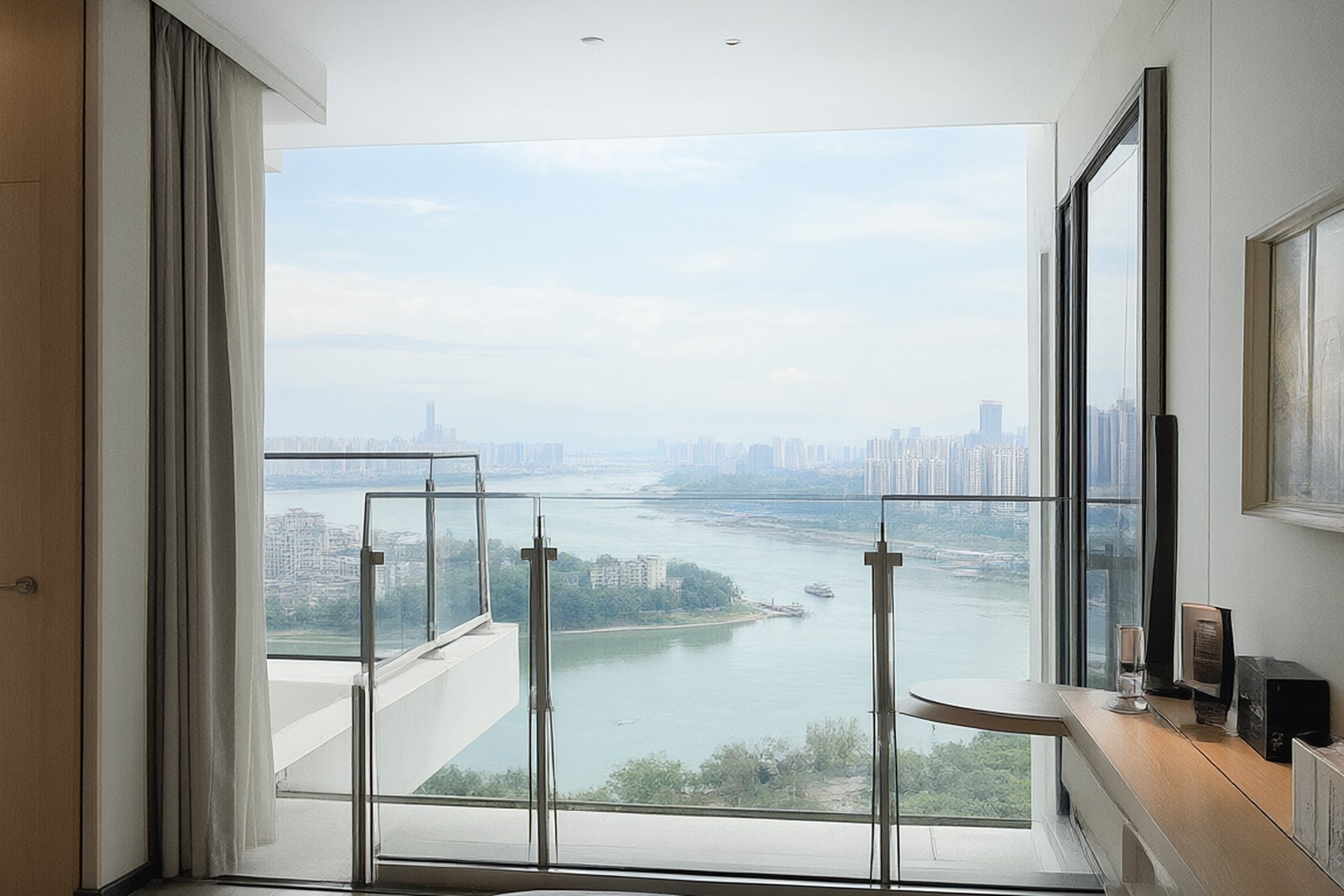
The morning belongs to the museum. The 白鹤梁 Báihèliáng, White Crane Reef, underwater museum stands on the same stretch of shore, so a one-night riverside stay can fold the reef, the cruise and the confluence into a single uncomplicated loop with no driving at all. That is the practical case for the riverfront class: not grandeur, but geography. The district’s mountain sights lie hours up the valleys, and the traveller who wants them should sleep up there instead; the traveller who wants Fuling itself – the water, the pickle shops, the river fish – needs nothing more than a room above the confluence and two good walks.
Words and Names
涪陵区 Fúlíng Qū, Fuling District, of 重庆 Chóngqìng, Chongqing: a river city at the confluence of the 乌江 Wūjiāng, Wu River, and the 长江 Chángjiāng, Yangtze, whose district-seat hotels line the combined waterfront facing the 两江 liǎngjiāng two-river meeting. The class of room is the 江景房 jiāngjǐng fáng, river-view room; the riverside road is 滨江路 Bīnjiāng Lù, Binjiang Road; the square and pier where the night cruise boards is 锦绣广场 Jǐnxiù Guǎngchǎng, Jinxiu Square; and the drowned inscription ridge viewed from the underwater museum is 白鹤梁 Báihèliáng, White Crane Reef. No named hotel, posted rate or star count is on the record consulted, and none is invented here.
Price. No tariff figure for any house on this waterfront is on the record consulted, so the page declines to quote one; rooms at this level are quoted by the platforms at booking time, in the ordinary band of a district-seat business hotel. Rooms on the river side carry a visible premium over the town-side rooms of the same buildings, which is the view explaining itself, and the town-side alternatives serve the traveller who lands late and leaves before the water has done anything worth seeing.
Address. The hotels stand along the combined riverfront of the district seat, on and just behind 滨江路 Bīnjiāng Lù, Binjiang Road, within a short walk of 锦绣广场 Jǐnxiù Guǎngchǎng, Jinxiu Square, and the cruise pier, with the 白鹤梁 Báihèliáng, White Crane Reef, museum on the same shore; no street-numbered directory is on the record consulted, and the practical address is the riverfront road itself.
Getting there. From Chongqing the district seat is reached by train or by the expressway that follows the river country east, and from the district’s own stations a short bus or taxi hop carries luggage down into the riverside grid. Within the town the strip is walked: any point on the riverfront reaches the cruise pier and the museum on foot, which is the entire argument for sleeping here rather than one district away.
What the Locals Know
The local knowledge is the ask and the floor. The ask is the river-view room by name – “面向江的那间” miànxiàng jiāng de nà jiān, the one facing the river – because within one house the difference between a window on the confluence and a window on the delivery yard is the whole stay, and the booking platforms blur the two. The floor matters nearly as much: the higher the room, the more of both rivers comes in, and the low floors see mostly embankment. On festival weekends and holiday nights the river-side rooms go first, because the whole city knows what they are worth, so book the water early and take the town side only as a fallback. Locals also walk the strip late – after the cruise boats have emptied and the square crowds have thinned, Binjiang Road at ten at night belongs to the neighbourhood, and it is the best hour the riverside has.
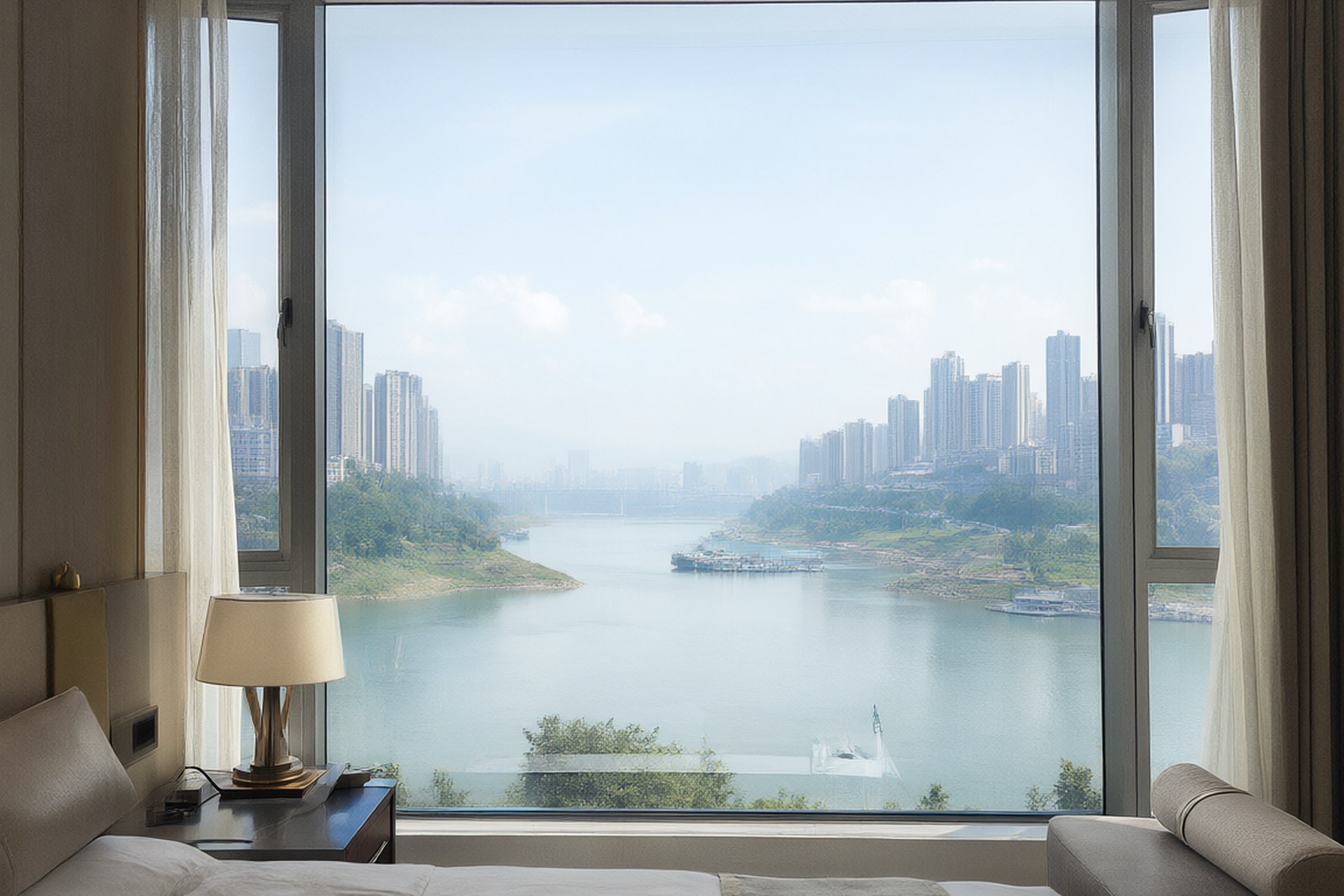
flowcloud would say that the riverfront hotels of Fuling are the two-river class – mid-rise business houses along the combined waterfront of the district seat in 涪陵区 Fuling District, the confluence and the lit bridges outside the window, the night-cruise pier and the underwater museum both a short walk down Binjiang Road – and that the correct booking is the river-side room on an upper floor, taken for the evening water and the morning mist, because no named house or posted rate survives in the record consulted and none is invented. All checked October 2026.
Where to stay: the class stands along the riverfront of the district seat of 涪陵区 Fúlíng Qū, Fuling District, on and behind 滨江路 Bīnjiāng Lù, Binjiang Road, between 锦绣广场 Jǐnxiù Guǎngchǎng, Jinxiu Square, and the 白鹤梁 Báihèliáng, White Crane Reef, museum shore – a walkable strip reached by train or expressway from 重庆 Chóngqìng, Chongqing, with the cruise pier at its centre. Book the river-view room through the platforms or directly, name the river side and a higher floor, and the confluence, the night walk and the museum morning are all outside the door. Pair this page with the underwater-museum page and the two-river night cruise page for the evening loop. All checked October 2026.