
At half past five in the morning the boats start coming back. You hear them before you see them — a low diesel mutter that builds across the water, then the change in pitch as each one throttles down to slide through the channel — and if you are on the balcony with a cup of the local coffee you get the whole arrival at once: a dozen boats queuing to get through the same narrow gap, nets being hauled up, plastic crates of prawns going onto the quay, and a small crowd of buyers already there, arguing. Everything you eat tonight came in through that gap this morning. 港北 Gǎngběi is a working fishing village on the north shore of 小海 Xiǎohǎi, the great lagoon of eastern 万宁 Wànníng, and staying here means living on the edge of that rhythm for a night or two.
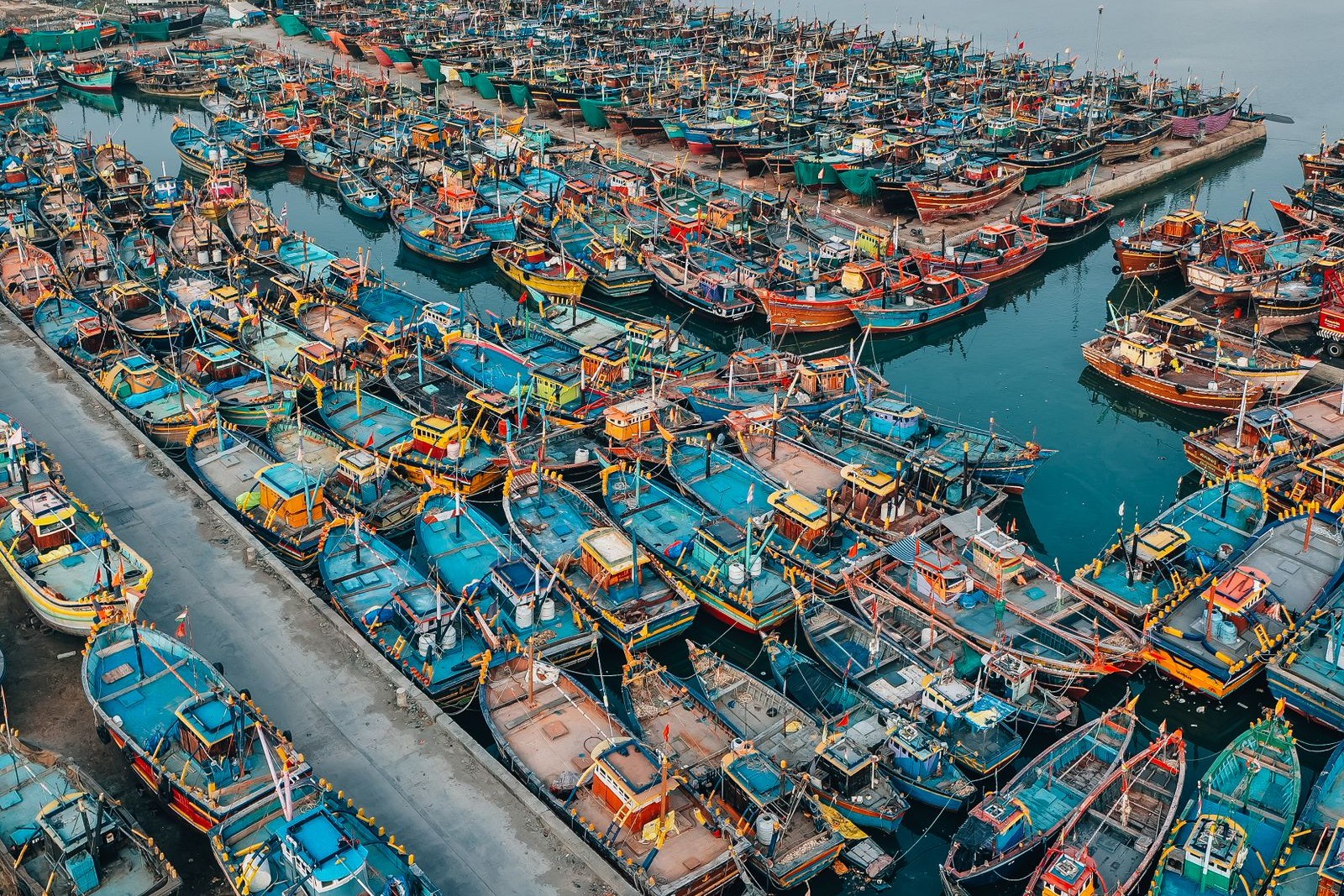
The village is not really one place. 港北 Gǎngběi is a name for the northern shore of the lagoon, covering 港上 Gǎngshàng and 港下 Gǎngxià, the two hamlets that sit either side of the channel where the lagoon meets the sea. It has been a harbour for a very long time and it is still one — a few thousand people whose working day is organised around the tide. The tourism that has arrived in the last decade is small and specific, and it grew out of two things about this spot: the food, and the dragon boats.
The Dragon Boat Town
The stretch of water in front of the village is a permanent racecourse. 港北 Gǎngběi is a 龙舟小镇 lóngzhōu xiǎozhèn, a dragon-boat town, and the lagoon is used as a regular venue for the national dragon-boat championships, with the first leg of the season traditionally raced here on the second day of the second lunar month. On race days the whole place turns out and the shore is packed. On ordinary days there is still a training crew on the water most mornings, the long narrow boats with a drummer at the bow, and you can watch from the quay with a coffee for as long as you like.
That identity is why the accommodation here is better than a fishing village would normally offer. A handful of small 海洋民宿 hǎiyáng mínsù, ocean guesthouses, have opened along the shore, one of which has collected a shelf of provincial guesthouse awards and is now well enough known to need booking a fortnight out. They are all doing roughly the same thing: a few simple rooms, a shared terrace facing the water, and a restaurant downstairs that cooks the day’s catch.
What You Get
The rooms are the ordinary, comfortable kind: a double bed, air conditioning that works, a bathroom with actual water pressure, and often a small balcony. What puts these places above their class is position and food.
The position is the channel. Rooms facing the water look out on the quay, the moored boats, the channel and the bridge, and are worth a small premium over the ones facing inland; the caveat is that a harbour starts working before five, so if you are a light sleeper, ask for the back or bring earplugs and be at peace with being awake for the arrival.
The food is why people come. The restaurant downstairs, and half a dozen others within walking distance, cook what landed that morning: 白灼 báizhuó prawns, 和乐蟹 Hélè xiè with its butter-yellow roe, steamed fish, 沙虫 shāchóng if you are brave, and a bowl of congee with dried shrimp that is the correct breakfast here. The house rule in most of them is that you point at tanks or ask what came in, and the price is settled by weight before they cook it. A guesthouse dinner for two, with a crab and a plate of prawns and vegetables, runs about ¥150–250.
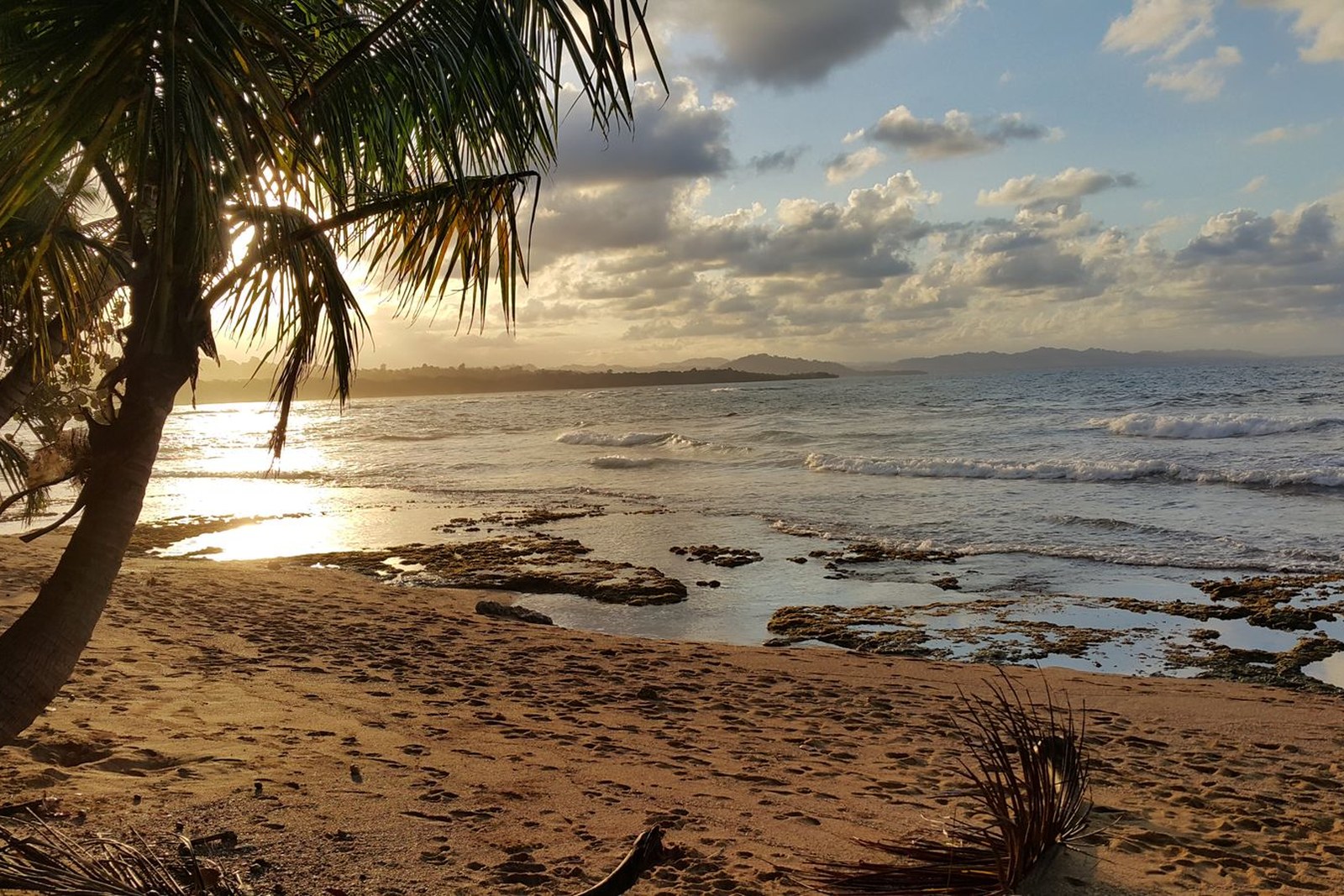
Behind the village there is a second shore that almost nobody photographs: 港北丽湾 Gǎngběilì Wān, a wild, undeveloped beach with sand mixed with broken shell and vines growing down to the tideline, and almost no facilities at all. It is ten minutes’ walk from the guesthouses, and it is the reason to stay here rather than somewhere grander. Bring a bucket and a small spade at low tide and you will find crabs and shells by the dozen.
Practicalities
Price. Village guesthouse rooms run about ¥150–350 a night depending on the season and whether you take a water-facing room. 春节, the October holiday and dragon-boat weekends are the peaks; midweek in the off-season is the cheapest and often the nicest. Dinner at the guesthouse restaurant is ¥150–250 for two, prawns and crab included.
Address. 港北 (Gǎngběi), 和乐镇 (Hélè) township, 万宁 (Wànníng), east 海南 (Hǎinán), on the north shore of 小海 (Xiǎohǎi) at the tidal mouth of the lagoon, reached across the 港北大桥 (Gǎngběi Dàqiáo) bridge.
Rooms. A dozen or so small guesthouses and 海洋民宿 (hǎiyáng mínsù) with doubles, twins and a few family or sea-view rooms; all simple, all air-conditioned, most with a restaurant on the ground floor. Ask for a room facing the channel, and confirm whether the restaurant needs notice for crab or a whole fish — the good ones prefer a day’s warning so they can buy for you at the morning landing.
Getting there. 万宁 (Wànníng) high-speed rail station on the island’s east loop is the closest stop, about thirty to forty minutes by car from 港北 (Gǎngběi); from 海口美兰 (Hǎikǒu Měilán) airport the train takes about twenty minutes and from 三亚 (Sānyà) around an hour. By road, take the ring expressway to the 万宁 (Wànníng) exit and head east and north along the lagoon, crossing at 港北大桥 (Gǎngběi Dàqiáo). Self-driving is the practical choice; a taxi from the station is straightforward but you will want a number to call for the return, because there is nothing to hail in the village.
flowcloud would say that the correct hotel for a place like this is the one where the staff know which boat brought in the crab, and that a night spent waking up for the arrival of the fleet is worth more than a night spent sleeping through it.
Where to stay: Gangbei fishing village guesthouses, 港北 (Gǎngběi), 和乐镇 (Hélè), 万宁 (Wànníng), east Hainan. Small 海洋民宿 (hǎiyáng mínsù) ocean guesthouses from about ¥150 a night, water-facing rooms ¥250–350 in season; dinner for two with crab and prawns ¥150–250. Thirty to forty minutes by car from 万宁 (Wànníng) high-speed rail station, across the 港北大桥 (Gǎngběi Dàqiáo). Get up for the boats at dawn, eat 白灼对虾 (báizhuó duìxiā) and 和乐蟹 (Hélè xiè) in the evening, walk the ten minutes to 港北丽湾 (Gǎngběilì Wān) at low tide with a bucket, and book a fortnight ahead if you want the room on the water.