
The lanes in 高椅古村 Gāoyǐ Gǔcūn are barely wide enough for two people to pass, and there are 104 buildings packed into a hillside, and the whole thing is laid out in the shape of a plum blossom because that is what the geomancers told the founding family to do in 1380. You sleep in a 窨子屋 yìnziwū — a timber house wrapped in its own brick wall, with a courtyard and a small upstairs gallery — and in the morning the mist sits in the valley below and the village is above it. A double is ¥160–320, generally including two meals, because there is nowhere else to eat.
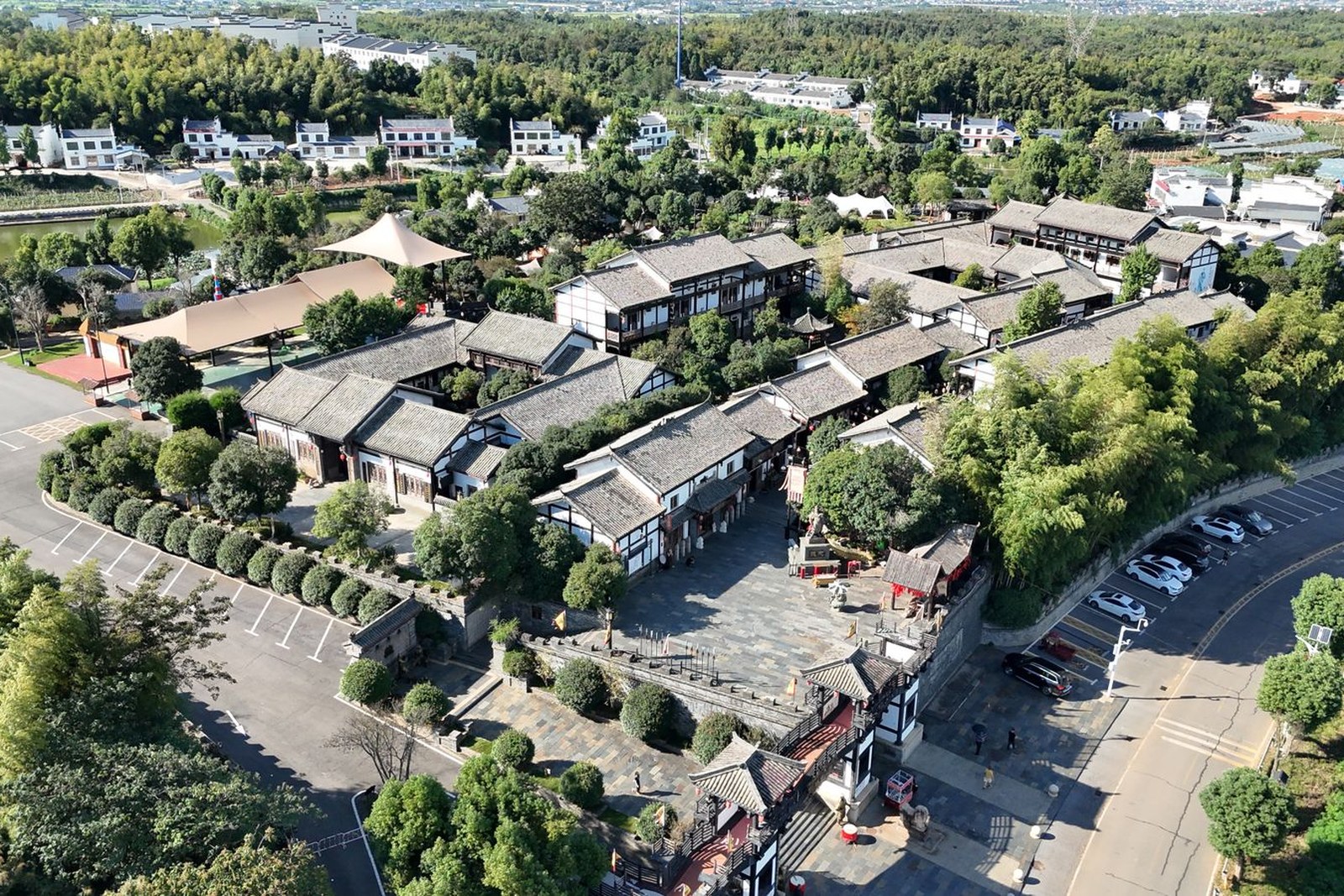
The village takes its name from its site: three sides of mountain, one side of water, the whole thing cupped like a 太师椅 tàishīyǐ, the high-backed chair of a senior official, so 高椅 Gāoyǐ — “high chair”. It was founded by descendants of 杨再思 Yáng Zàisī, a chieftain of the late Tang ennobled as 威远侯 Wēiyuǎn Hóu, and eighty-five per cent of the 594 households are still surnamed Yang. That continuity shows: 104 houses spanning from 明洪武十三年 (1380) to 清光绪七年 (1881), each with its date recorded in a fired brick at the base of its fire wall, still standing, still lived in, still waterproof because the foundations are raised sixty centimetres on cut stone over a drainage system that has been working for six hundred years.
The houses were built to burn out, not in. Every one is a two-storey timber frame with 马头墙 mǎtóuqiáng — stepped brick gables — rising above the roofline on all four sides, and the effect is that a fire in one house has nowhere to go. In six hundred years, the village record claims, no house has ever taken fire from a neighbour. The other defensive measure is the plan itself: five clusters arranged around 五通庙 Wǔtōng Miào, the temple at the centre, connected by lanes that double back on themselves. It is a maze on purpose. Locals say it has never been robbed.
What You Are Paying For
Price. ¥160–320 for a double, usually with two meals. The lodge rooms are in restored houses: timber, a hard bed, an electric blanket in winter, a bathroom that is often a wet room down the corridor. Wi-Fi is unreliable and mobile signal is patchy.
Address. 高椅乡高椅村 Gāoyǐ Xiāng Gāoyǐ Cūn, 会同县 Huìtóng Xiàn, 怀化市 (Huáihuàshì).
Rooms. Perhaps a dozen guest rooms in the village, spread across three or four families. Book by phone through 怀化 or 会同; there is no online inventory worth trusting. Ask for an upstairs room facing the courtyard.
Getting there. 会同站 Huìtóng Zhàn on the 焦柳 line is about forty minutes by road; 怀化南站 Huáihuà Nán Zhàn is about two hours. From the county town you take a bus towards 高椅 Gāoyǐ and get out at the village entrance; there is a viewpoint on the hillside above it, and it is worth the ten-minute climb before you go in.
What the Locals Know
Get lost deliberately. The lanes are a network and the fastest way to understand it is to give up on the map. If you find the 红黑鱼塘 hónghēi yútáng — the paired red and black fish ponds dug at the end of the Qing — you are at the centre.
Look for the 铭砖. Each fire wall has a dated brick at its base; that is how the village’s architectural history has been established. It is a small thing and it is quietly astonishing.
Eat what the family cooks. There is no restaurant. Dinner is whatever the household makes, usually 腊肉 làròu, a bitter green, river fish and rice, and it will be one of the better meals of the trip.
Bring cash. Cards and phone payments are unreliable here and the homestays do not take them.
Where to Stay
高椅 Gāoyǐ for the village itself, 会同县城 Huìtóng xiànchéng if you need a hotel with a lift, 怀化 Huáihuà if you are doing this as a day trip. One night in the village is enough to see it in the evening and morning, which is when it is worth seeing; two nights is for people who want to sit still. April and May, when the hillside is green and the river is full, are the best months, and the village is quiet outside the 国庆 week.
flowcloud would say that a village which has stood for six hundred years by never being worth attacking, and has stayed inhabited because nobody could be bothered to make it a museum, has quietly won an argument that most heritage sites are still losing.
Where to stay: 高椅古村 (Gāoyǐ Gǔcūn), 高椅乡 (Gāoyǐ Xiāng), 会同县 (Huìtóng Xiàn), 怀化市 (Huáihuàshì), 湖南 (Húnán). Doubles ¥160–320 including two meals. About forty minutes by road from 会同站 (Huìtóng Zhàn), about two hours from 怀化南站 (Huáihuà Nán Zhàn). Climb the viewpoint above the village before you enter it, be ready to get lost in the lanes, and bring cash.