
根子镇 Gēn zi zhèn is a township of orchards in 高州市 Gāo zhōu shì, and a lodge here is a bed in the middle of the crop. The township sits about twenty-five kilometres south-east of 茂名市 Mào míng shì on the road down towards 电白, on the slopes of 浮山岭 Fú shān lǐng, and the land either side of the road is lychee – about seventy thousand mu of it, producing some sixty thousand tonnes a year, on ground that has been carrying the trees for two thousand years. The reason to sleep in it rather than in the city is the same reason people sleep in vineyards: for six weeks a year the whole place is in fruit, and the rest of the year it is a green hillside with very old trees on it and not much else.
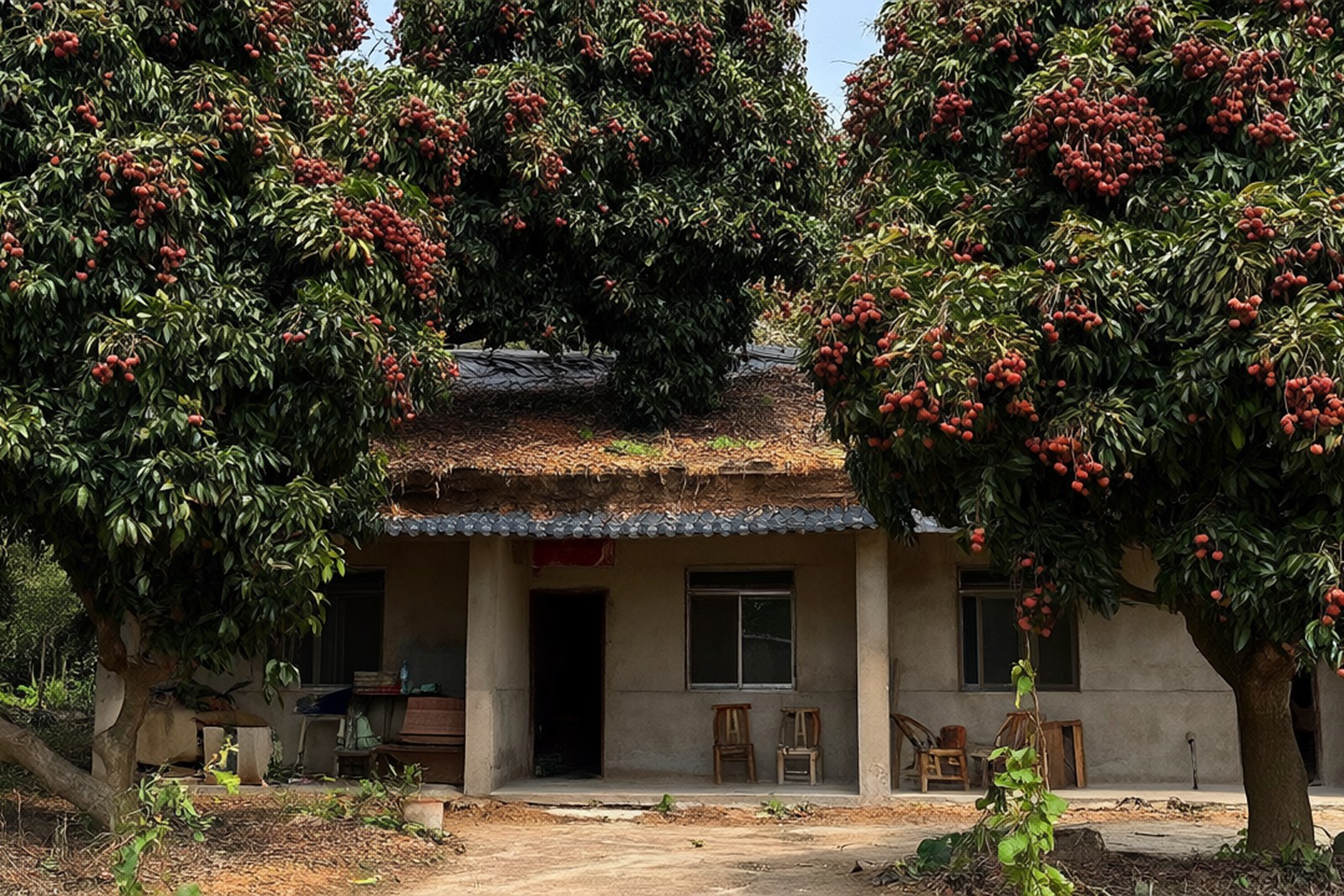
The 贡园 Gòng yuán, the Tribute Garden, is the anchor and it is within the township: eighty-odd mu of old trees, the oldest of them about thirteen hundred years, individually named by the families who have kept them, and described by the county as the largest and best-preserved collection of old lychee trees in the country. Around it the township has built the usual apparatus – the 大唐荔乡文化旅游区, a red pavilion on a rise called the 红荔阁 Hóng lì gé, a 贵妃广场, a 荔枝乐园, a stretch of greenway along the 根子河 – and the village at the centre of it, 柏桥 Bǎi qiáo, has about seven thousand mu of orchard, two hundred and sixty-two registered old trees, and a packing and pre-cooling operation that moves fruit to 广州 and 深圳 within a day of picking. All of it is walkable or a few minutes’ drive from any of the lodges.
Sleeping out here changes the trip. The picking starts before dawn, because heat is what finishes a lychee, so the noise outside the window at five in the morning is baskets and head torches and the sound of a truck being loaded, and by eight the yard outside the lodge is full of fruit at its best. The lodges run their own trees, which means the lychees on the table at breakfast were on the branch an hour earlier, and the varieties come in an order: 白糖罂 from late May, then 白蜡 and 黑叶, then 桂味 and 糯米糍 later in June and into July. Outside the season the township is quiet, the garden is open and the orchards are worth walking through for the trees alone – some of them hollowed out at the trunk and still fruiting, with the new growth coming up from the base, which is what a two-thousand-year-old orchard looks like when it has been worked continuously.
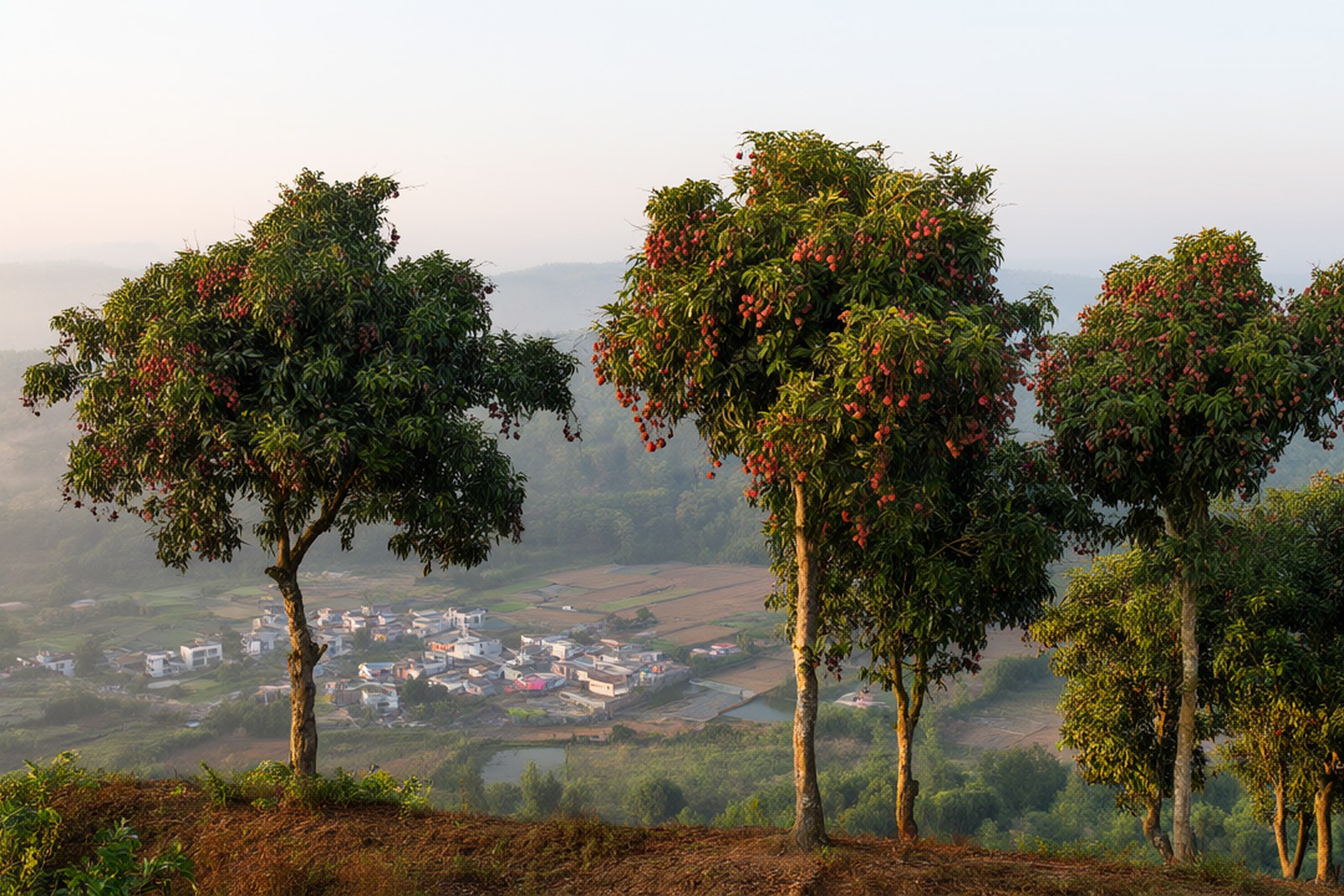
The other thing 高州 gives you from here is the rest of the county. 高州市 is an old 高凉 Gāo liáng town with a walled temple to 冼太夫人 Xiǎn tài fū rén in its centre and a Ming pagoda, the 宝光塔 Bǎo guāng tǎ, on the river; the 玉湖 Yù hú, the reservoir at 长坡镇 Cháng pō zhèn, is an hour north with wooded shores and boats. All of it is within a morning. What it is not is a resort: the restaurants in the township are farm kitchens, the lodges are small, and the luxury here is the fruit and the quiet rather than any service. Anyone expecting a hotel with a spa should stay in 茂名 and drive out.
What the Rooms Are Like
Expect a plain room of twenty to thirty square metres in a low building, with a firm bed, air conditioning, a kettle and a bathroom that is functional rather than decorative; the best of these places are family-run houses with a courtyard and a tiled roof, and the standard is comfortable but not hotel-finish. Ask for a room on the upper floor facing the orchard, because the ground floor is where the fruit and the vehicles are, and ask whether the window screens are fitted, because the orchards bring insects. In the six-week season the rooms sell out at weekends, so book ahead; out of season many of them will negotiate. Water pressure and wifi are the two things to check on arrival, in that order.
Practicalities
Price. A room in a 根子镇 orchard lodge runs ¥150 to ¥350 a night, with the top of that range during the lychee season and at weekends; the farmhouse rooms at the bottom of it are simple and usually include breakfast and as much fruit as you can eat.
Address. The lodges are in 根子镇, in 高州市 in the north-west of 茂名市, concentrated around the 贡园 at 柏桥村 and along the 元坝大道; the township is about twenty-five kilometres from the centre of 茂名 and about an hour from the coast.
Rooms. Ask for an upper floor facing the orchard, for a room away from the road if you are travelling with children, and for the picking times, because the operation starts in the dark and a lodge in the middle of it is not a place to lie in. Ask which varieties are ripe during your stay; the answer changes week by week from late May.
Getting there. 根子镇 is reached by road from 茂名市 in about forty minutes and from 高州市 in about twenty, on the corridor towards 电白; 茂名站 Mào míng zhàn on the 深湛 railway is the nearest railhead, with 广州 about two and a half hours away. There is no public transport to the individual orchards, so a car or a taxi from the city is the practical way in; the township is small enough to walk once you are there.
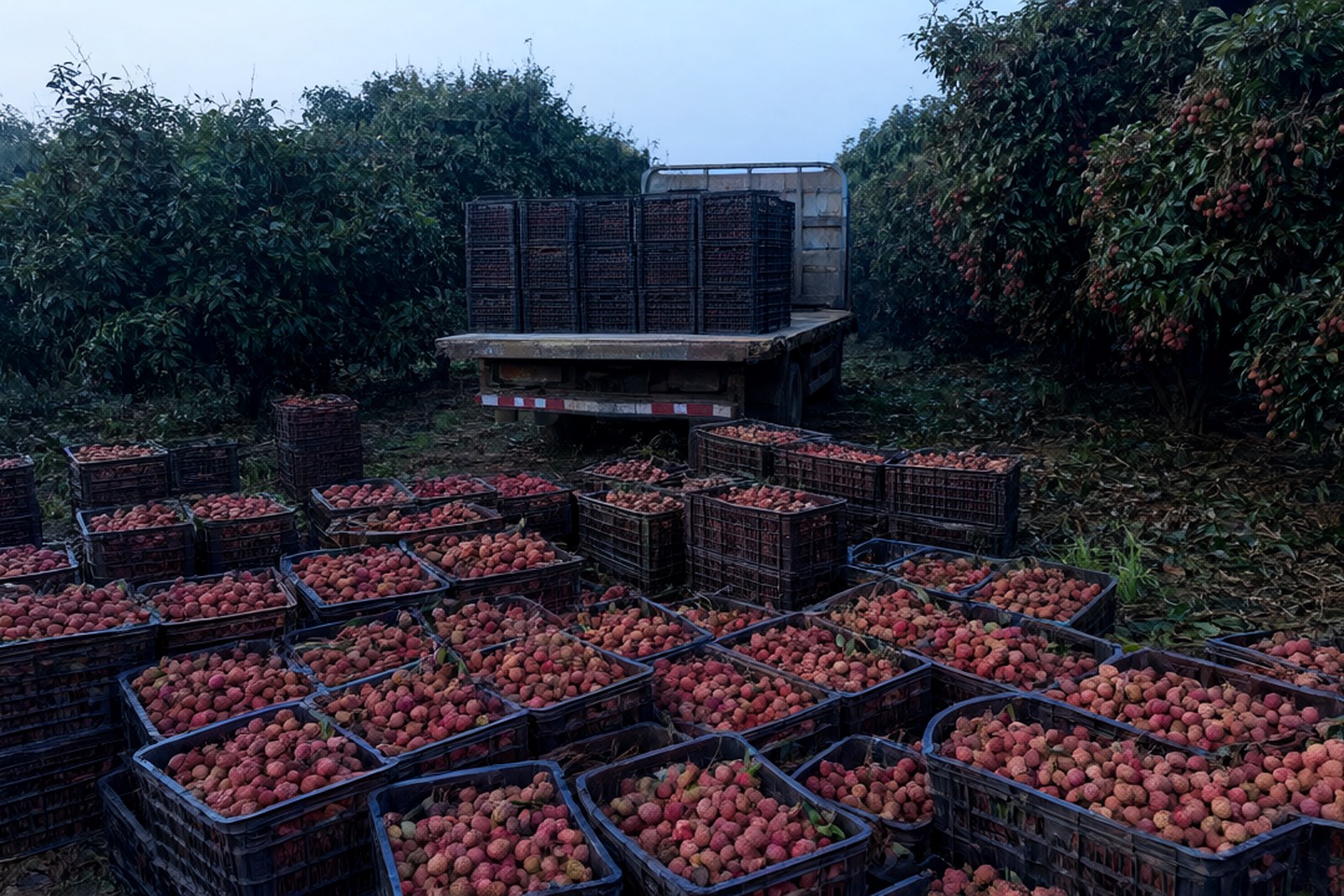
Where to stay: the orchard lodges and farmhouse rooms of 根子镇 in 高州市, within walking distance of the 贡园. Go in the six weeks from late May, take the upper floor facing the trees, and be up for the dawn picking whether or not you intend to buy anything.
flowcloud would say that the oldest continuously worked orchard in the country is not a museum with a fence round it but a working farm with rooms over the yard, and that the best time to sleep in it is the six weeks when the whole hillside is red.