
官塘 Guān táng is the hot spring country of 琼海市 Qiónghǎi shì, a scatter of resorts and spa hotels in the low ground west of 嘉积镇 Jiā jī zhèn, and it is one of the few places on the island where the reason to book a room is the water rather than the sea. The springs come out of the ground at seventy to ninety degrees all year round, which is hot enough that the water has to be cooled and mixed before anyone gets in it, and the county’s own description of the analysis is that it is a low-mineralisation, low-iron chloride-bicarbonate thermal water carrying fluorine, silicon and strontium – the sort of water that the Chinese spa trade calls 氟硅型 fú guī xíng, and that 琼海 promotes with the phrase 世上少有、海南无双, rare in the world and unmatched on the island.
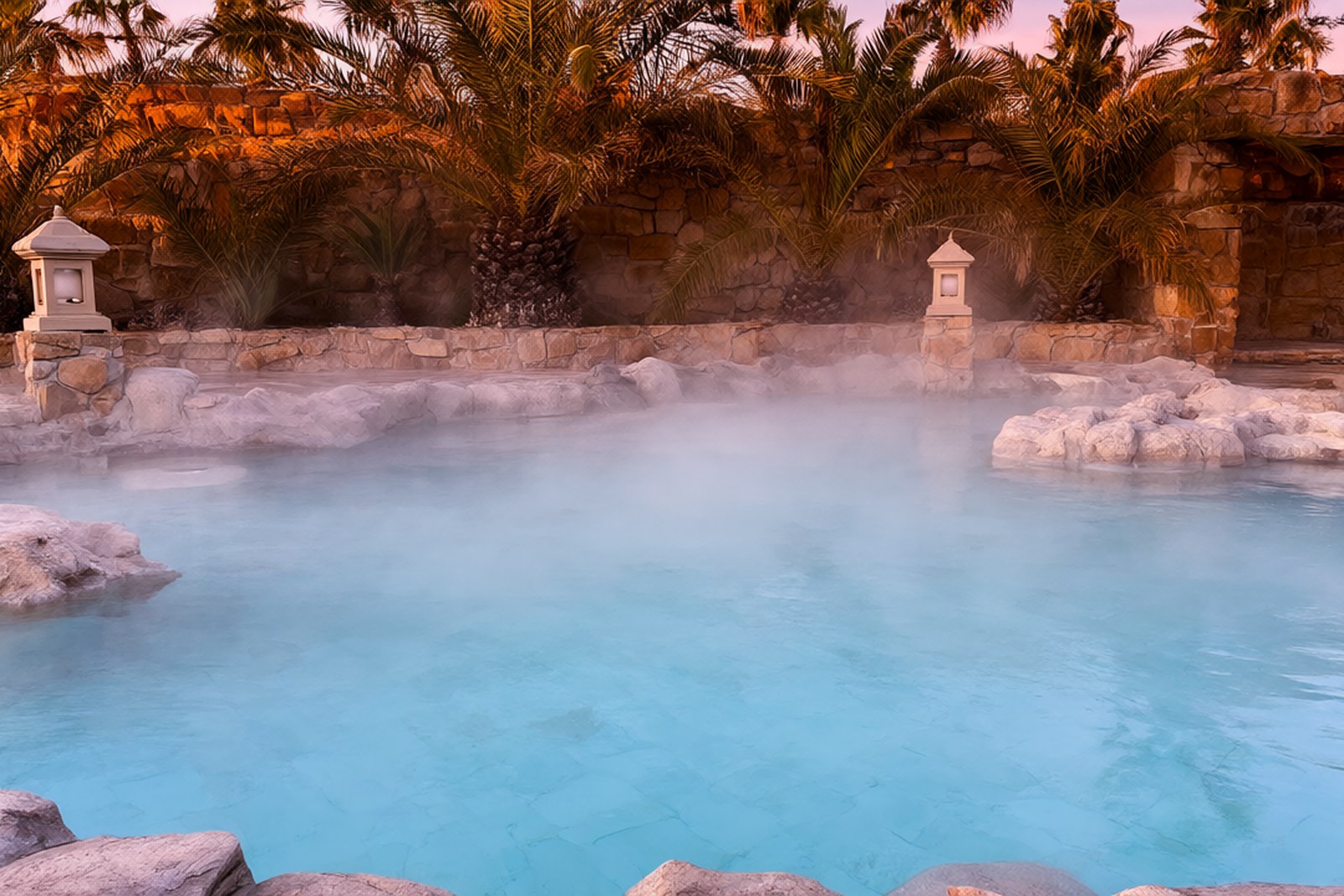
The setting is the other half of it. The resorts face the 万泉河 Wàn quán hé on one side and look up at the 白石岭 Bái shí lǐng on the other, the ridge of Cretaceous red sandstone that stands over the plain about twelve kilometres south-west of 嘉积, and the ground between the hotels is plantation and orchard rather than built-up. Because the springs are a couple of hundred metres from the hotels rather than piped from a distance, the baths are fed continuously and the water is changed by the flow rather than by a filter, and the resort pools range from a scalding plunge at the source to the children’s pool and the outdoor swimming pool that has nothing to do with the spring at all.
The practical position is convenient: 官塘 is about twelve kilometres from 琼海站 Qiónghǎi zhàn and fourteen from the 嘉积 town centre, which puts the county’s food within twenty minutes of the bath. That matters more than it sounds, because the 杂粮 zá liáng shops of 嘉积 are the island’s best sweet-soup kitchens, 温泉鹅 and 嘉积鸭 are on every restaurant list, and the harbour at 潭门 is about forty minutes east. The county also puts its own history here: 琼海 is where the 红色娘子军, the Red Detachment of Women, was raised in 1931, and the memorial park for it is in the city, which makes a half day alongside the springs if the weather turns.
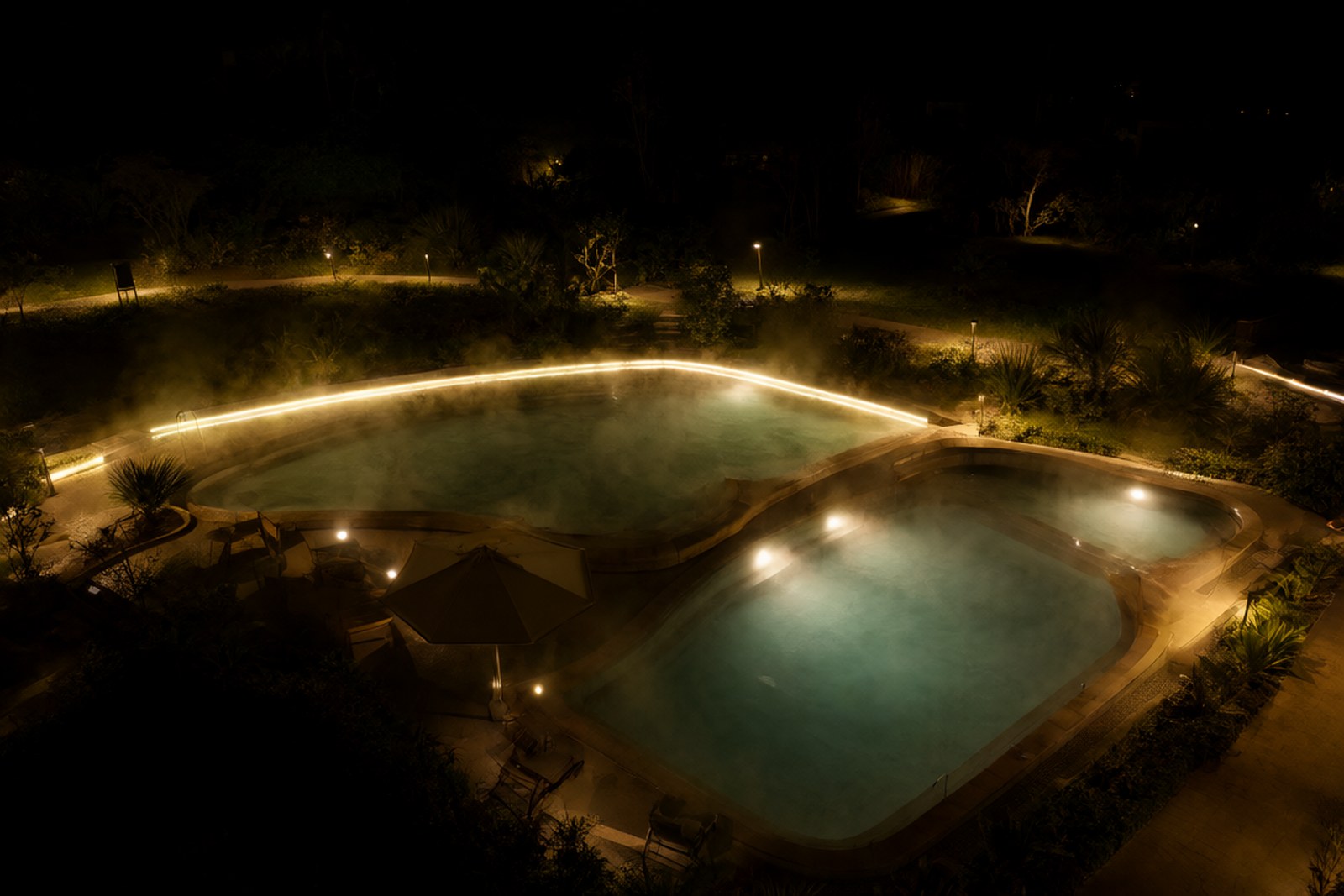
The way to use the place is to take the water twice a day rather than once, because the pools are quietest before eight in the morning and after nine at night, and to spend the middle of the day on the ridge at 白石岭 rather than in the sun. The spring season on the island is the winter and early spring, from November to April, when the evenings are cool enough that a hot bath is a pleasure rather than a punishment; in July and August the water is still hot and the air is hotter, and the sensible order is bath in the early morning, air conditioning at noon, bath again late. The spa hotels run their baths until about ten at night, and several of them sell day access to non-residents, which is the cheap way to find out whether the water suits you before booking a room.
What the Rooms Are Like
Expect a room of thirty-five to forty-five square metres with a firm bed, strong air conditioning, a bathroom with a shower and usually a private balcony; the better spa hotels put a small private tub on the balcony fed from the spring, which is the thing worth paying for. The finish is resort hotel rather than provincial city hotel, with a pool, a gymnasium, breakfast and a spa, and some of them are large complexes with several buildings. Ask for a high floor facing the river or the ridge rather than the car park, confirm that the room’s tub is spring water and not ordinary hot water, and check whether day access to the public baths is included in the rate or charged separately.
Practicalities
Price. A double at a 官塘 hot spring resort runs ¥300 to ¥800 a night in the high season from November to April, and ¥200 to ¥500 in the wet summer months, with the private-balcony-tub rooms at the top of the range. Day access to the baths is about ¥60 to ¥130 a head, and a spa treatment is charged separately.
Address. The resorts are in the 官塘旅游开发区 Guān táng lǚ yóu kāi fā qū, 嘉积镇, 琼海市, Hainan, along 官塘大道 Guān táng dà dào, about twelve kilometres from 琼海站 Qiónghǎi zhàn and fourteen from the 嘉积 town centre.
Rooms. Ask for a high floor away from the road and a balcony with a spring-fed tub if the hotel has them, confirm whether the baths are included, and ask what time the quiet hours are, because a resort with a conference group in it is a different place at eleven in the morning. Ask for a written Chinese address to hand to a driver, and ask the desk about the shuttle into 嘉积, since the resort strip has restaurants but the county’s best food is in town.
Getting there. 琼海站 Qiónghǎi zhàn on the 东环 high-speed line is about fifteen minutes away by road and 琼海博鳌机场 Qiónghǎi Bó’áo jī chǎng about thirty; 海口 is an hour by train and its 美兰 airport about ninety minutes by road. The resorts are off the road between 嘉积 and 白石岭, and a taxi from the town centre is the ordinary way in; a car or a taxi is needed for everything except the resort itself, and 白石岭 is a short drive further up the same road.
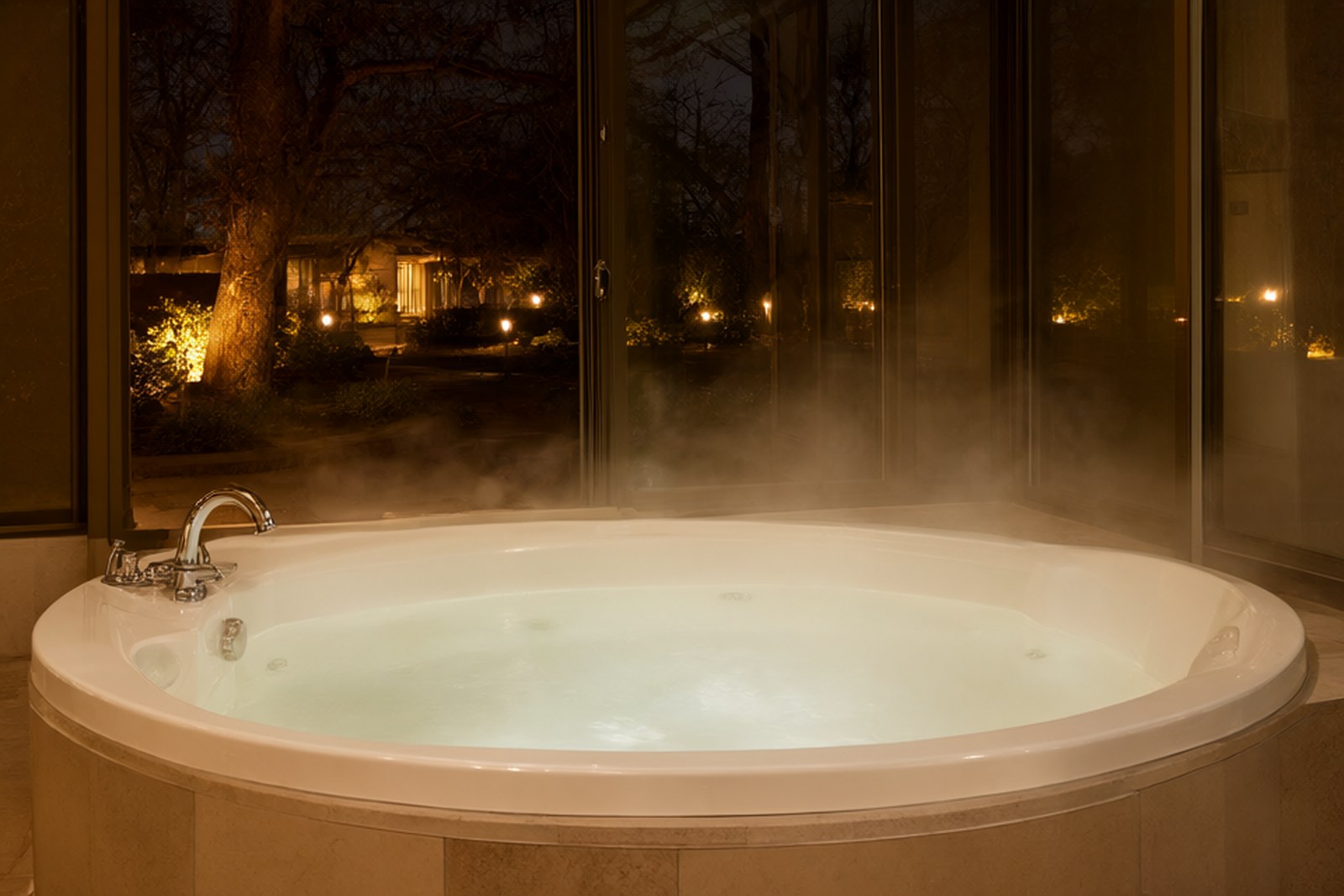
Where to stay: the spa hotels of 官塘 in 嘉积镇, 琼海市, on the road between the town and 白石岭, twelve kilometres from 琼海站. Take a room with a spring-fed tub on the balcony, bathe early and late, spend the middle of the day on the ridge, and drive into 嘉积 for the goose and the 杂粮.
flowcloud would say that a county which found water coming out of the ground hotter than anyone can sit in, had it analysed into a list of minerals with names in three languages, and then built its hotels around the analysis rather than around a beach, has understood that the most reliable luxury on a tropical island is the opposite of the climate.