
Gubei Water Town Stays: Wall-Foot Inns, Hot-Spring Hotels and Lantern-Lit Nights of Miyun District, Beijing
古北水边灯火夜,长城月下客安眠。Gǔběi shuǐ biān dēnghuǒ yè, Chángchéng yuè xià kè ānmián – By Gubei’s waters the night burns with lantern light; under the Great Wall’s moon the traveller sleeps sound.
The stay inside 古北水镇 Gǔběi Shuǐzhèn Gubei Water Town – the rebuilt water town at the foot of the 司马台长城 Sīmǎtái Chángchéng Simatai Great Wall in the far northeast of 密云区 Mìyún Qū Miyun District, 北京 Běijīng Beijing, where the Ming wall rides its knife-edge ridge above a valley of stone lanes, stone bridges and canals fed by the 汤河 Tāng Hé Tang River, and where the lamps come up along the water at dusk for the town’s famous evenings – is the 景区客栈 jǐngqū kèzhàn scenic-area inn market: boutique inns tucked behind the lantern lanes, hot-spring resort hotels on the town’s quieter edges, and a ring of wall-foot guesthouses in the older villages just outside the gates. The first band stands inside the town walls, wake-to-lantern-lane rooms minutes from the night performances; the second gathers by the hot-spring quarters, soak-and-sleep rooms with the wall lit on the ridge above; the third scatters into 古北口 Gǔběikǒu Gubeikou’s own historic streets, village-rate beds under a wilder stretch of wall. The honest product is the night: a bed close enough that the lantern-lit lanes and the wall’s silhouette are your evening, not a day trip you must abandon by the last coach.
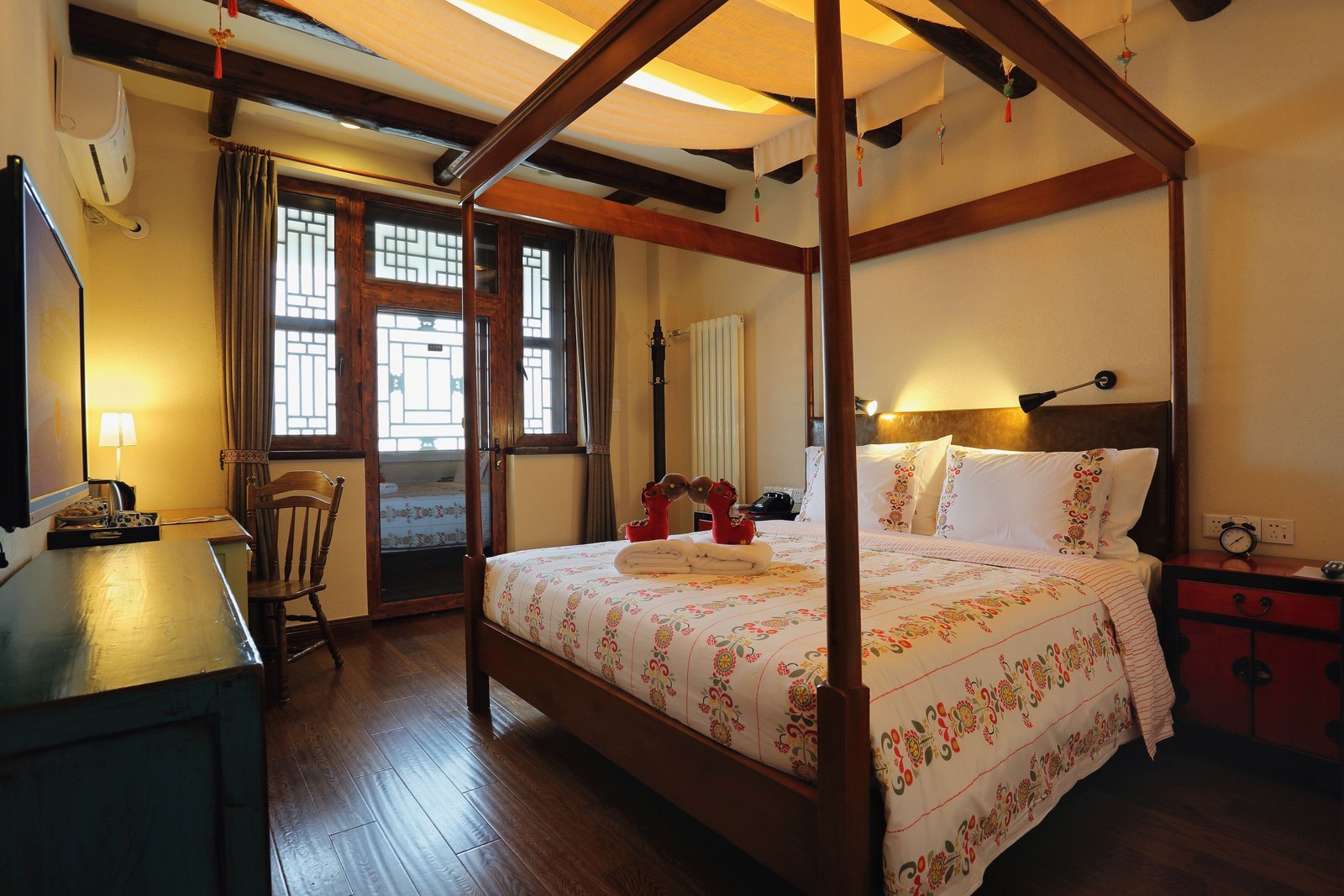
The October 2026 snapshot runs three bands, all worth confirming the details: the in-town inns, the hot-spring hotels and the Gubeikou village beds. The in-town band buys the atmosphere – canal balconies, lantern light on stone, and the night wall climb a short funicular-and-steps away, the only section of the Great Wall that regularly opens after dark (worth confirming night-wall tickets and quotas, which are limited and seasonal); the hot-spring band buys the water – private soaks, winter steam over cold air, the town at its quietest after the day crowds leave (worth confirming which springs are private to your room rather than shared); the village band buys the value – homestay rates, farmhouse tables and the older wall passes within a walk (worth confirming whether your bed includes town-gate access, which the in-town properties often package). What no band buys is cheapness or calm: the town is a designed attraction with designed prices, and foliage weekends and winter hot-spring weeks book out furthest ahead (worth confirming holiday-weekend surcharges, which spike hard). What every band does buy, uniquely, is the wall radius: the 司马台长城 Sīmǎtái Chángchéng ridgeline and the older 古北口 Gǔběikǒu passes – the passes the armies once fought through – sit minutes from any bed in the quarter, so one night covers both the restored water town and the wilder wall country without moving the car (worth confirming first buses and parking rules, which the gates enforce closely). Who it suits: couples after a lantern-lit evening, photographers of wall-and-water light and families building one big splurge into a district trip; who it does not suit: budget counters – the scenic-area premium is a non-refundable part of the rate.
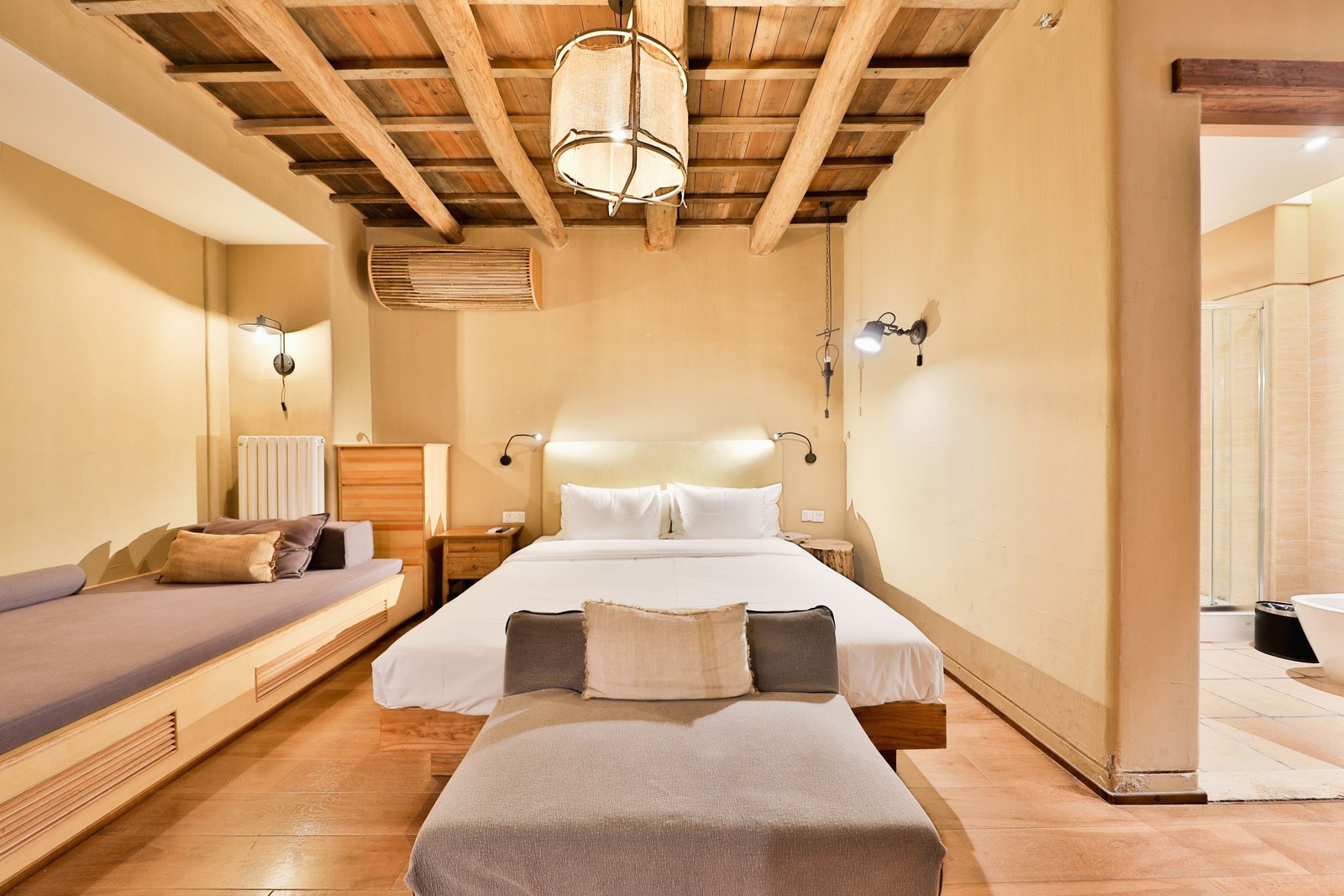
Practical shape: a water-town night is a one- or two-night move keyed to the evening – arrive by mid-afternoon, walk the lanes before the crowds thin, eat early, climb or watch the wall after dark. Transit shapes the booking: the 京承高速 Jīngchéng Gāosù puts drivers at the gates in a decided run from the city, the long buses from 东直门 Dōngzhímén Dongzhimen hand off to local shuttles and taxis (worth confirming the last connections, which thin early), and a suburban railway threads the northern hills toward the Gubeikou stations (worth confirming the timetable and the last-mile transfer). The catch is the calendar rather than the road: summer and foliage weekends fill the in-town rooms first, midweek nights are the honest rates, and winter – cold, sharp and beautiful – is the hot-spring houses’ high season (worth confirming heating per house).
Check the three things water-town rooms get wrong: 隔音 géyīn toward the performance lanes when the evening shows keep the stone alleys loud past dark, whether the “wall view” is a true sightline to the ridge or a gap between tiled roofs (worth confirming view rooms individually), and whether the kitchen or restaurant covers the early hour when the morning wall light is best (worth confirming serving hours per property). Bring one layer more than the forecast says – the valley runs colder than the city – and the wry truth: you booked the in-town inn for the lantern lanes, then found the best hour was the quiet stretch of canal after the shows ended, the wall a black ridge over gold water and your own footsteps the only sound (self-assessment from a writer who came for one lantern night and left with a list – the reservoir’s quiet wings, the mountain yards, and the district seat’s errands to file the story).
The Stays
- 古北水镇内精品客栈 Gǔběi Shuǐzhèn nèi jīngpǐn kèzhàn boutique inns inside the water town: worth confirming the details, lantern-lane rooms with canal balconies and packaged wall access. Who it suits: couples and atmosphere-first travellers; who it does not suit: budget counters.
- 古北水镇温泉度假酒店 Gǔběi Shuǐzhèn wēnquán dùjià jiǔdiàn hot-spring resort hotels at the town’s edges: worth confirming the details, soak-and-sleep rooms with the wall lit on the ridge. Who it suits: winter soakers and slow couples; who it does not suit: courtyard romantics.
- 古北口村周边民宿 Gǔběikǒu cūn zhōubiān mínsù homestays around the Gubeikou villages: worth confirming the details, village-rate beds under the wilder wall passes. Who it suits: value counters and wall hikers; who it does not suit: town-gate convenience seekers.
- 水镇周边设计民宿 shuǐzhèn zhōubiān shèjì mínsù design inns around the town approaches: worth confirming the details, view decks and tea rooms above the valley. Who it suits: photographers and slow couples; who it does not suit: in-town purists.
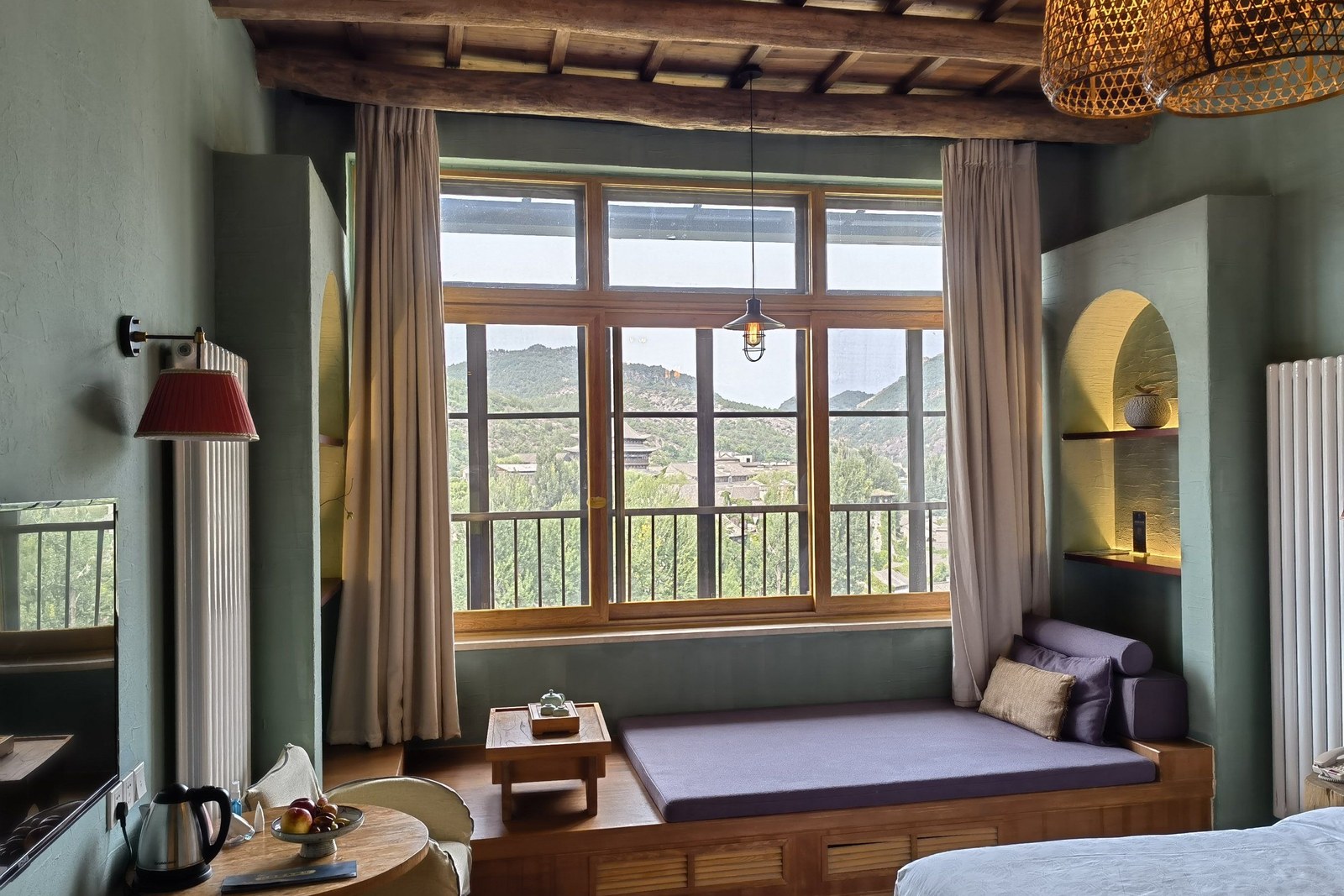
flowcloud would say that the water-town stay is a bed bought for the night – in-town inn to village homestay in the October 2026 snapshot, all worth confirming the details – and that the honest move is to book midweek, time the lantern lanes after the coaches leave and let the wall do the decorating, because the evening is the amenity and the scenic-area premium is the price – the ridge keeps the only calendar. All checked October 2026.
Where to stay: Stay inside the town walls for the after-dark lantern lanes and early starts on the wall before day-trippers arrive, or pick a hillside lodge just outside the gates when rates spike on weekends, confirming whether your booking includes the evening entry session. All checked October 2026.