
古劳 Gǔláo is not a village so much as a way of farming that has been going on for six hundred years, and the guesthouses sit inside it. The land here is on the west bank of the 西江 Xī jiāng, the West River, and it is flat, low and prone to flooding, so the people who settled it dug fish ponds and used the spoil to raise 围墩 wéi dūn, embanked islets a metre or two above the water, and built their houses and their mulberry beds on those. Between the islets are channels and stone slab bridges; over them are 榕树 róng shù, banyan trees, planted at the corners of the plots centuries ago and now immense, their aerial roots dropping into the water and forming the archways the place is photographed through. The result is a settlement with no roads worth the name, where the fields are ponds and the footpaths are bridges, and where a boat is a more useful object than a car.
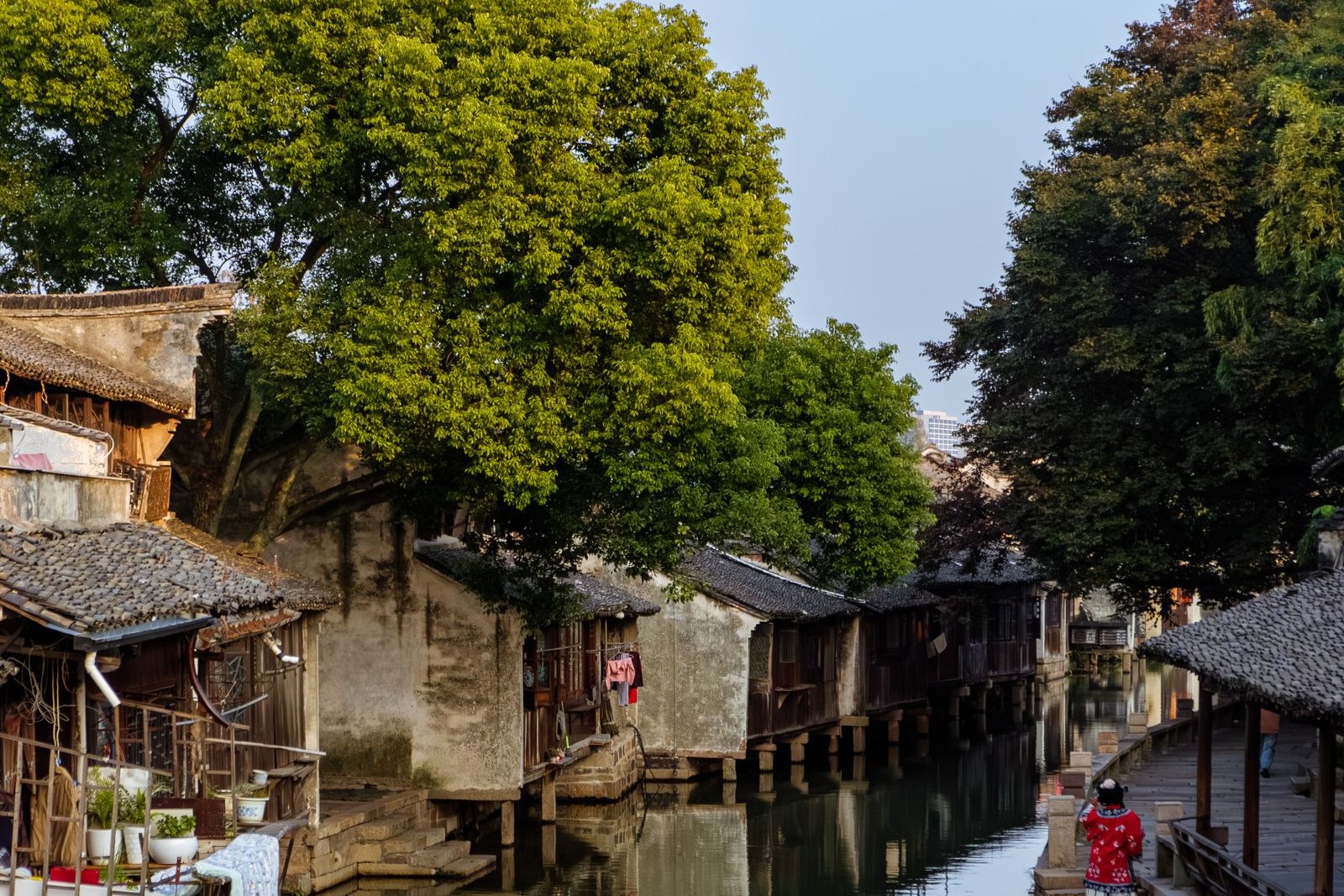
The lodges are built on the islets among the ponds and are low by design, because anything tall would be out of place and would spoil the view for everybody else. Rooms tend to be on one or two floors with wide windows facing the water, and the architecture is deliberately plain: white or grey walls, dark timber, tile or metal roofing, deep eaves for shade and rain. The pleasure of the place is not in the room but immediately outside it, and the better lodges are built around a terrace that meets the water, with a few chairs and a mossy stone edge where the fish come to be fed. There is a resident population of ducks, geese and the occasional 鸬鹚 lú cí, the cormorant the old fishermen here used to work, and the noise at night is frogs.
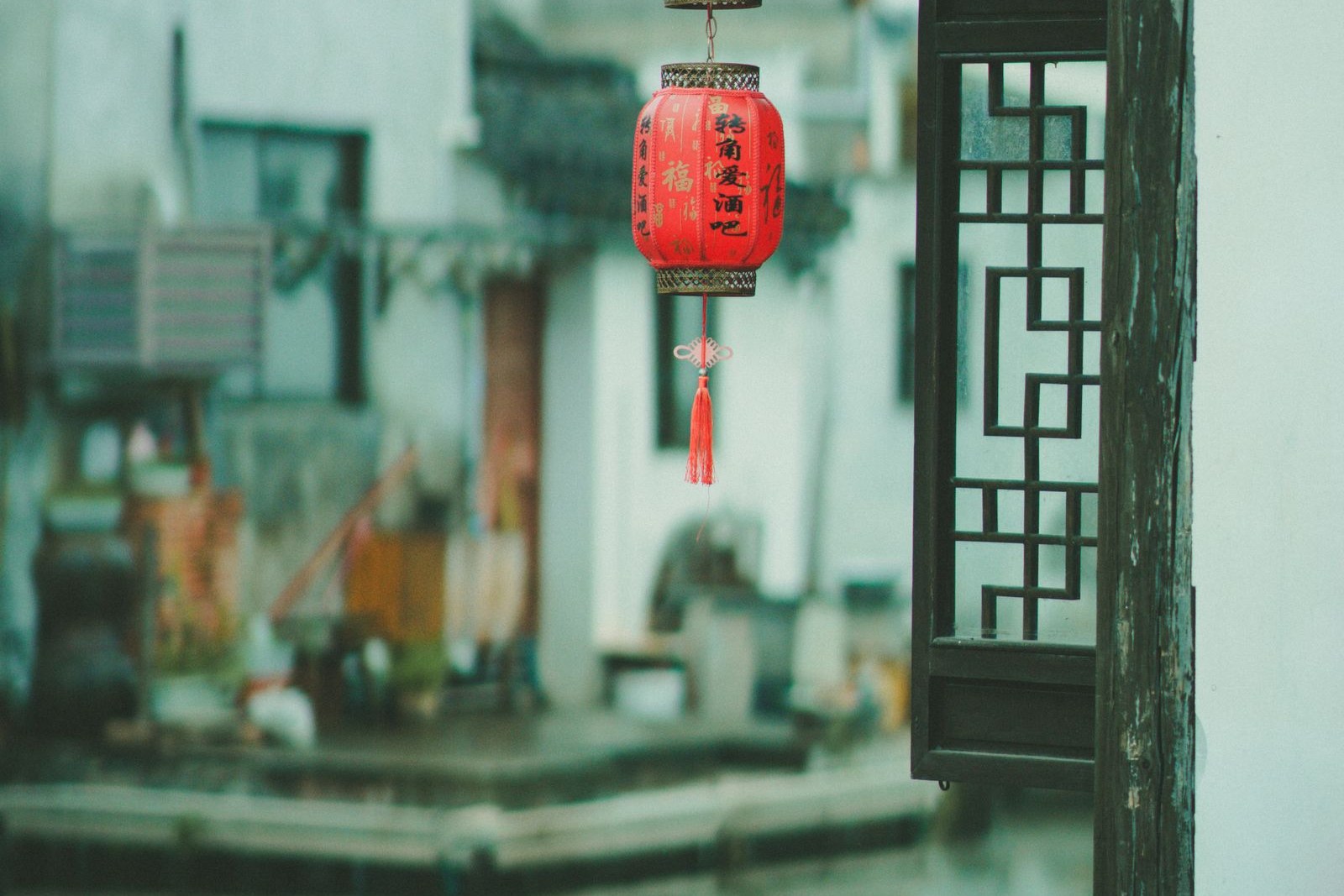
The days here are structured by the water and by the crop the ponds carry. In summer the lotus is in flower and covers whole channels; in autumn the 荷塘 hé táng, the lotus ponds, are being dug out for the root, and the whole district smells of mud and steam from the boiling cauldrons. 古劳 Gǔláo is also, unexpectedly, a centre of martial arts: 梁赞 Liáng Zàn, the nineteenth-century Wing Chun master who taught 叶问 Yè Wèn’s teacher’s line, was born here, and there is a modest 故居 gù jū, a birthplace house, with a hall where the local schools practise. The village of 上升 Shàngshēng, a few minutes away, is the prettiest of the settlements and is where most visitors end up; the boat trips through the channels leave from the same place and take about forty minutes. Walk or cycle the embankments in the late afternoon, when the light comes across the ponds and the whole thing looks like the paintings of it.
What the Rooms Are Like
Expect a simple room of fifteen to thirty square metres with timber or tile floors, a firm bed, air conditioning and a bathroom with a shower; several lodges have a 榻榻米 tà tà mǐ, a raised platform bed, instead of a frame, which suits the climate. What varies is the view, and it should be the thing you book on: a room facing the ponds and the banyans is worth double one facing the car park, and in the better places every room faces the water. Insect screens on the windows matter more than usual here in summer. Some lodges have a shared kitchen and a dining terrace where the owners cook fish and lotus-root dishes from the ponds outside; others are rooms only and expect you to eat in 古劳镇 or 鹤山 city.
Practicalities
Price. A double in a pond-side lodge runs ¥180 to ¥450 a night, rising by half at weekends and doubling on public holidays. The very simple family-run rooms start around ¥120, and the highest rates here buy a water-facing room in a new building rather than anything luxurious. Most lodges include breakfast, usually congee, buns and a boiled egg.
Address. The lodges are among the fish ponds of 古劳水乡 Gǔláo shuǐ xiāng, in 古劳镇 Gǔláo zhèn in the north-west of 鹤山市 Hèshān shì, about ten minutes by car from 鹤山 city centre and an hour from 江门. The densest cluster is around 上升村 Shàngshēng cūn and the 双桥 Shuāng qiáo area, where the boat jetties are.
Rooms. Ask for a room with a window over the ponds and confirm that it opens, because several lodges have sealed glass and the point of the place is the air. Ask whether there is mosquito netting or screening on the windows, and whether the bathroom has hot water at night, since a few of the simpler places heat water on a schedule. If you want to be able to launch a boat or a kayak from the property, say so when booking; some lodges have their own and others are a walk from the jetty.
Getting there. From 鹤山市 Hèshān shì take a taxi or the local bus towards 古劳镇 Gǔláo zhèn, fifteen minutes; from 江门 the coach to 鹤山 takes about an hour and a taxi from there is cheap. The nearest railway is 鹤山站 Hèshān zhàn on the 南沙港铁路 Nánshāgǎng tiělù, with limited passenger service, so most people come by road. By car, leave the 佛开高速 Fókāi gāosù at the 古劳 exit and follow the signs to 古劳水乡; parking is on the edge of the wetland because the islets are reached on foot or by bridge.
flowcloud would say that a place where the roads are water and the trees are older than the houses is doing something that a restored old town cannot, which is to stay in use, and that the reason to sleep here rather than visit is to hear the frogs stop when the heron lands.
Where to stay: the lodges among the fish ponds of 古劳水乡 Gǔláo shuǐ xiāng in 古劳镇 Gǔláo zhèn, 鹤山市 Hèshān shì, ten minutes by car from the city centre. Book a room with a window over the water, ask whether the window opens and whether it is screened against mosquitoes, and arrive before dusk so that the first thing you hear is the frogs and not the taxi.