Staying in Haikou
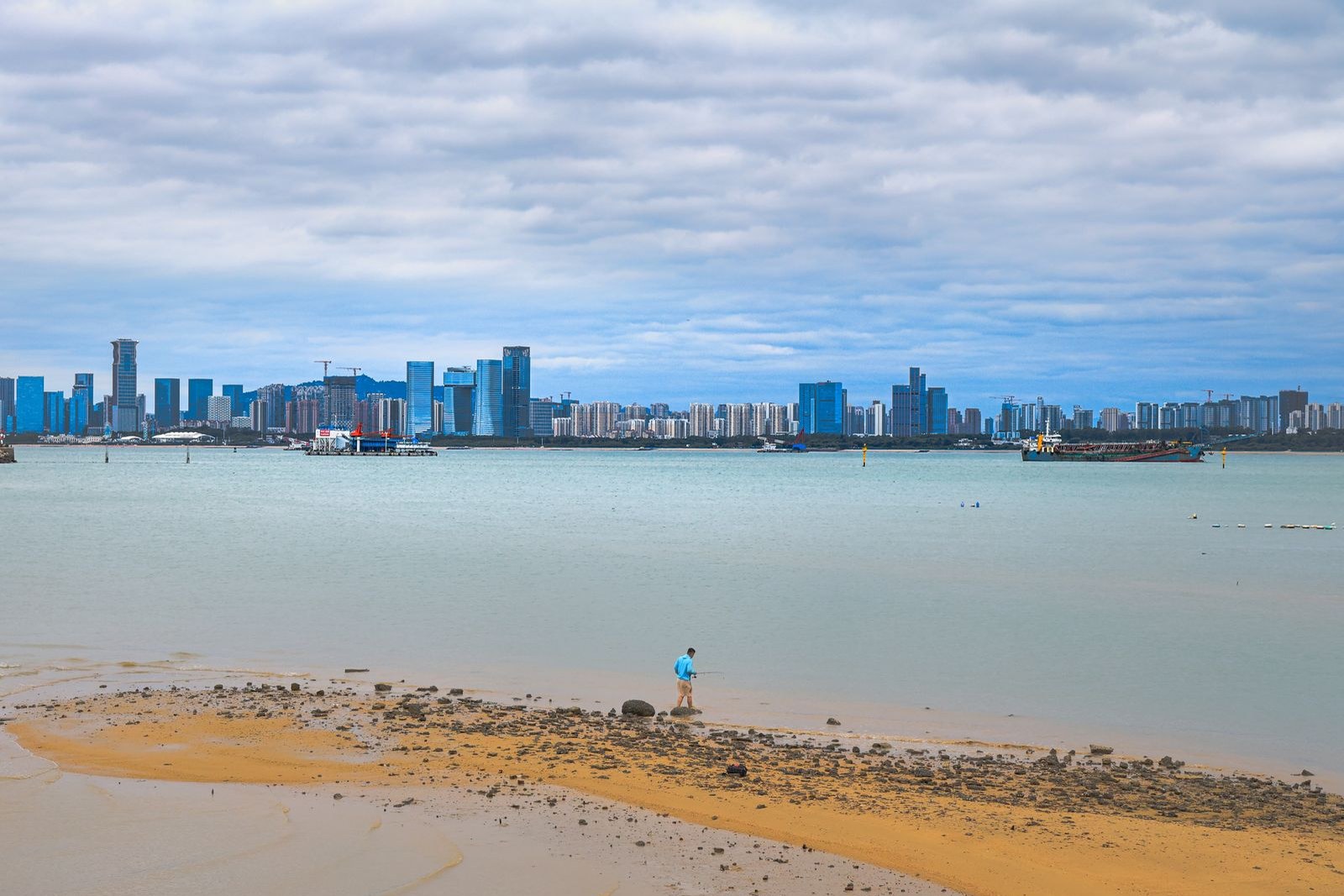
Haikou does not look like the rest of Hainan. It is not a resort town on a turquoise bay. It is a proper city — the capital of the island, a working port with coconut palms along the waterfront, wide roads, a big skyline, and the ordinary, lived-in energy of a place people actually live and work in. And it is the most underrated place to stay in the province.
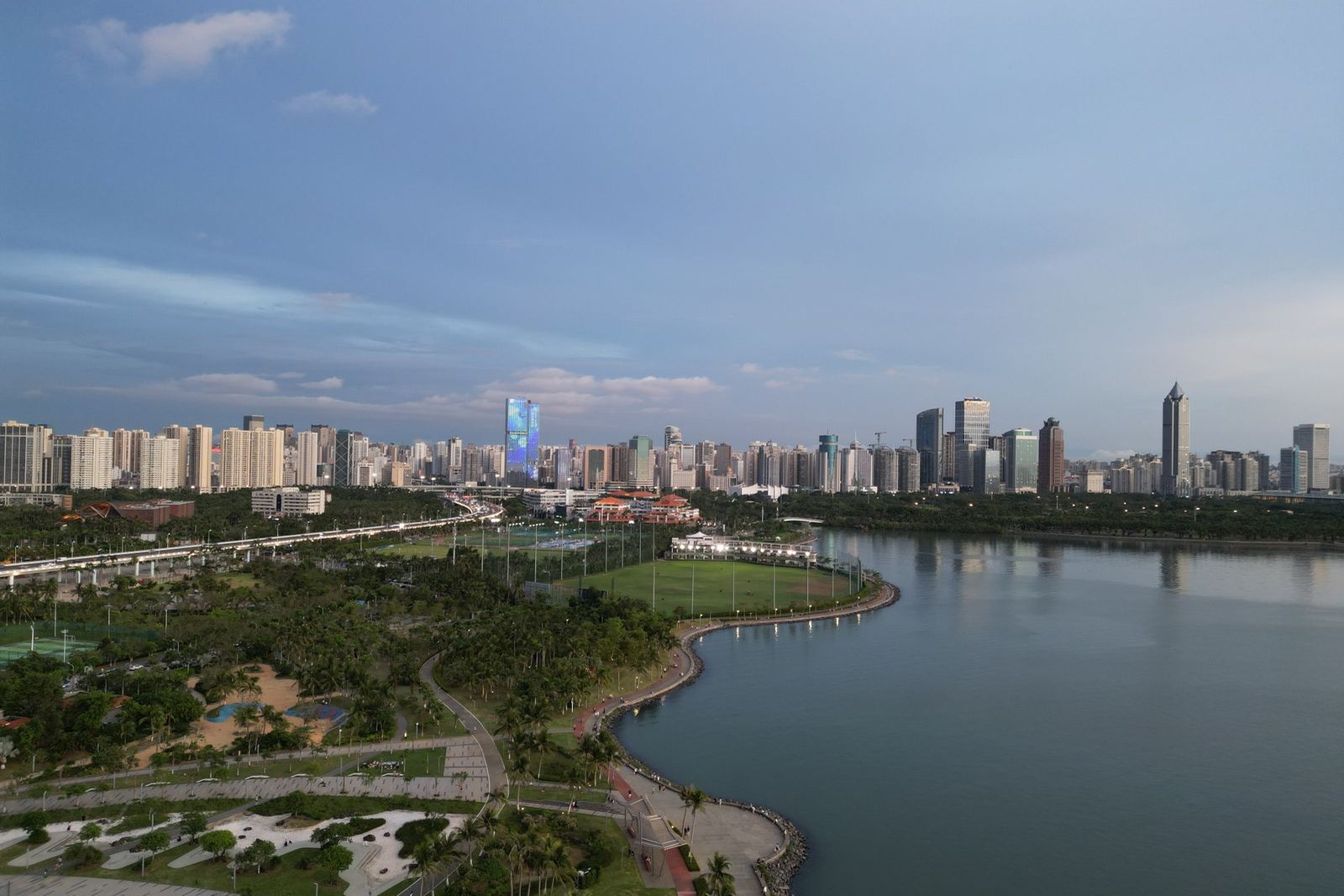
If Sanya is the beach holiday and the resort, 海口 (Hǎikǒu) is the real Hainan: a city on the north coast where you can feel what the island is like when it is not performing for tourists. It is cheaper, it is more interesting in a low-key way, and it is a completely different kind of stay.
The Capital, Not the Resort
Haikou sits on the northern coast of Hainan, facing the mainland across the Qiongzhou Strait. It is the provincial capital and the main port, and it is where a great deal of the island’s actual life happens.
The city is a proper urban centre: modern skyscrapers, a big waterfront, wide beach-adjacent boulevards, and a population that is going about its day. It is not, and does not try to be, a tropical resort. What it has instead is a real city’s texture — markets, neighbourhoods, a working harbour, an everyday food scene, and the island’s distinctive café culture.
The 假日海滩 (Jiàrì Hǎitān, Holiday Beach) is the city’s main sandy stretch, and it is a proper palm-fringed beach on the city’s western edge. It is not the dazzling cove of Sanya, but it is a good, long, walkable beach, and it is how Haikou does a beach: as part of everyday life, not a resort.
A City of Two Characters
Staying in Haikou means choosing between two quite different parts of the city, and it is worth knowing the difference.
The modern centre is where the business and the big hotels are — comfortable, familiar, with all the conveniences. It is the practical base for most visitors, near the waterfront, the shopping and the everyday restaurants.
The old and interesting part is the 骑楼老街 (Qílóu Lǎojiē, the Arcade Old Street) district, where the city’s 19th-century colonial-era shophouse streets run in a grid. It is the historic heart of Haikou, and near it there are guesthouses and smaller hotels. If you want to feel the city’s age and its character, this is where to be, though the rooms are smaller and more atmospheric than than the modern towers.
The Case for Staying Here
The strongest argument for Haikou is money and authenticity. A night in a good hotel here costs a fraction of what the same thing costs in Sanya, and you are getting the island without the resort premium.
It is also a much better base for seeing the ordinary Hainan. The island’s signature 老爸茶 (lǎobà chá, “old father’s tea”) café culture — the old men’s tea houses where you sit for an afternoon over cheap tea and snacks — is a Haikou institution, and you will find the best of it here. The 海南粉 (Hainan fen) is at its best here, too, in the old streets.
And Haikou is the gateway to the island’s inland and northern sights: the 雷琼海口火山群世界地质公园 (Reiqiong Haikou Volcanic Cluster Global Geopark), a landscape of extinct volcanoes just outside the city, is one of the most unusual day trips on the island, and the rest of Hainan’s north is within reach.
The Catch
The honest downside, if you came for a tropical beach holiday, is that Haikou is not that. The sea here is not the turquoise of Sanya’s resort bays, and there is no postcard cove. It is a city with a beach, not a beach resort. The water is swimmable at Holiday Beach and it is fine, but you are not going to mistake it for 亚龙湾.
And it is a longer trip to the famous sights of the south — Sanya’s bays, 蜈支洲, 南山 — all of which are across the island and a few hours away. Haikou is its own destination, not a base for the Sanya resorts.
Who It Is For
Haikou is for people who want the real Hainan, who want a city rather than a resort, and who want their money to go further. It is for food travellers (the 老爸茶 and the 海南粉), for people interested in the island’s history and the arcade district, and for anyone who has already seen the resort bays and wants to know what the island is actually like.
flowcloud would say that the capital of an island is always less photogenic than its beaches and almost always more interesting — and that the best way to understand a place is to stay where its people live, not where its visitors sleep.
Where to stay: 海口 (Haikou), the capital of Hainan, on the island’s north coast across the Qiongzhou Strait. A proper working city rather than a resort; cheaper and more authentic than Sanya, with a real urban life. Accommodation splits between the modern centre (business hotels) and the historic 骑楼老街 (Qilou Old Street) arcade district (atmospheric small hotels and guesthouses). The 假日海滩 (Holiday Beach) is the city’s palm-fringed sand on the west edge, good for a walk and a swim, though not the turquoise cove of Sanya. See the 老爸茶 café culture and the 海南粉 in the old streets; day-trip to the 雷琼火山群地质公园 volcanic geopark. Best for food, history and the real Hainan; not a beach resort.