
鹤地水库 Hè dì shuǐ kù is the great reservoir of 湛江, and a lodge on its shore is a place to sleep on the edge of something built entirely by hand. It lies at 河唇镇 Hé chún zhèn, at the northern edge of 廉江市 Liánjiāng shì where the 九洲江 Jiǔzhōu jiāng comes down out of Guangxi; the water spreads across a hundred and twenty square kilometres at its maximum, reaches back into the hills in long drowned arms, and the shore is wooded and quiet in a way that very little of the 雷州半岛 Léizhōu bàndǎo is.
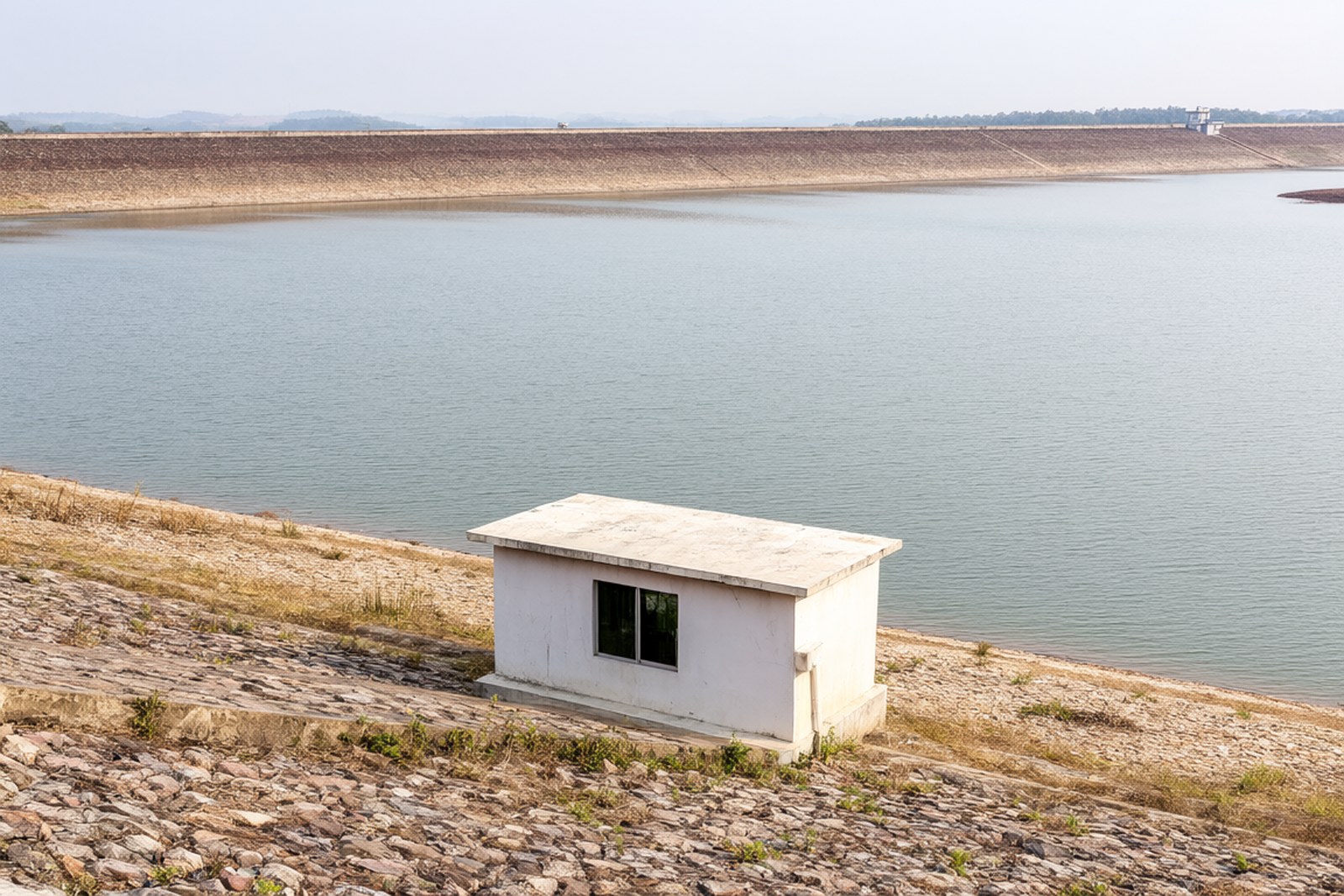
The reservoir is one of the largest pieces of civil engineering of its decade and it was built without machines. Work began on 10 June 1958, with thirty thousand people on the site at a time and hundreds of thousands passing through it over the years; the main dam was finished in September 1959 and the canals and the irrigated land were complete by the spring of 1963. The numbers are the point of it: a catchment of a thousand four hundred and ninety-five square kilometres, a total capacity of something like one thousand one hundred and fifty million cubic metres, a main dam eight hundred and eighty-five metres long with thirty-six auxiliary dams summing to more than seven kilometres, and seventy-three million cubic metres of earth and stone moved by hand, carried in baskets and barrows on the shoulders of people who had come in from the surrounding counties.
What the reservoir is for is the 雷州青年运河 Léizhōu qīngnián yùnhé, the Leizhou Youth Canal, and that is the reason the peninsula is green. The system runs for more than five thousand kilometres in total, with six main canals covering two hundred and seventy-seven kilometres and hundreds of branches below them, and it irrigates a million mu and more of 雷州 and 遂溪, which makes it the largest irrigated district in Guangdong. Before it, this was dry red soil and thin harvests; after it, it was the fruit and vegetable country that now ships 菠萝, 红橙 and winter vegetables north by the truckload. 邓小平 Dèng Xiǎopíng came in February 1960, wrote the name of the reservoir in his own hand and called the builders 当代愚公 dāng dài Yúgōng, the Fools of the present day; 郭沫若 Guō Mòruò wrote a poem on it, and 朱德, 陈毅, 董必武 and 叶剑英 all came to look at it.
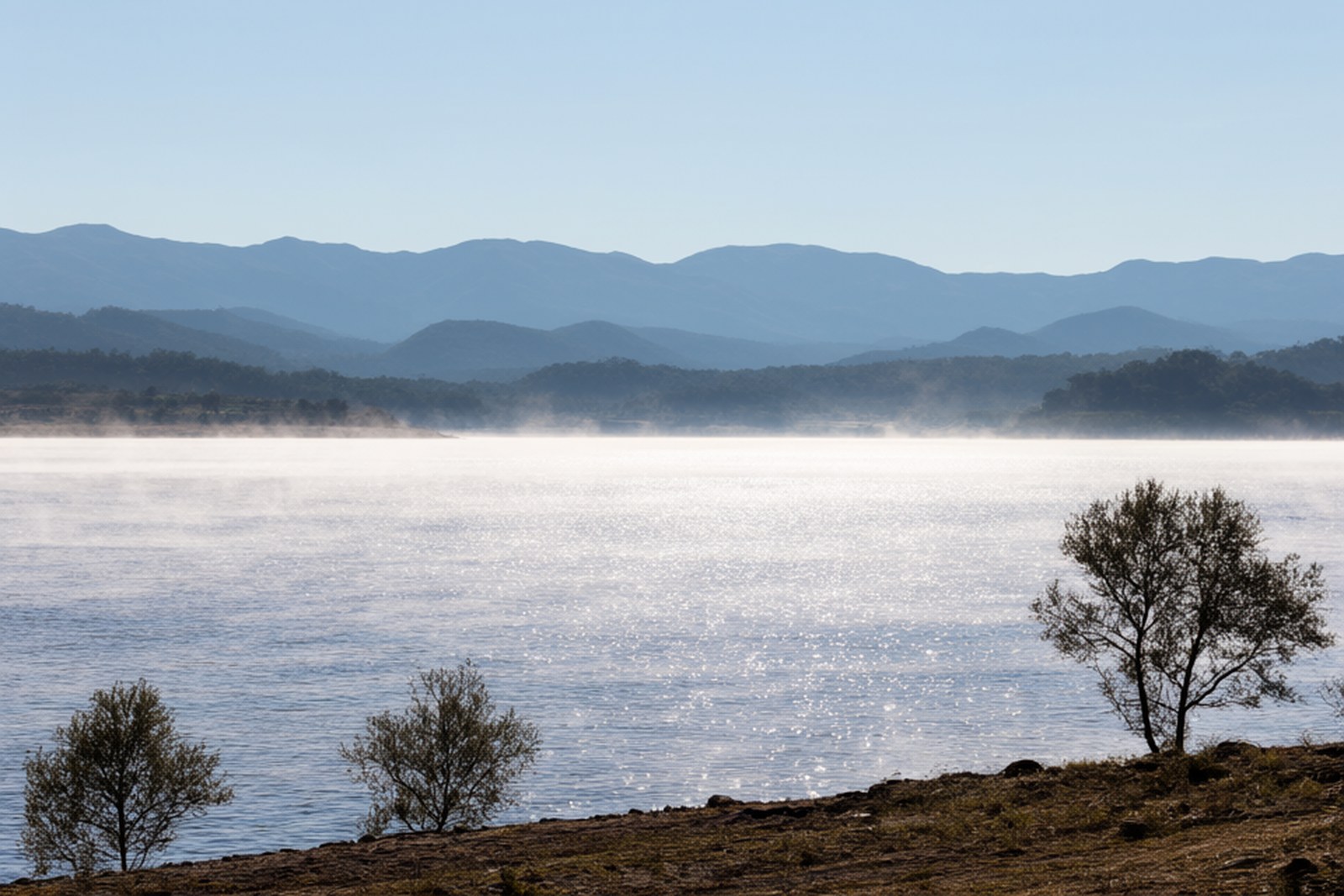
The reservoir is a park as well as a work. There is a memorial hall and a monument on the dam, a walk along the crest with the whole of the water in front of it, and a 青年亭 Qīng nián tíng looking down the canal head where the water leaves for the plain. The 河唇 country around it is orchards: 杨桃 yáng táo, carambola, is the local fruit and 河唇杨桃 is the name it is sold under, along with 荔枝, 龙眼 and 红橙; the town is known in 湛江 for its 鱼头汤 yú tóu tāng, a big-head-carp head soup, which is what people stop for on the road north. The water is closed to swimming, being a drinking supply, and the interest is the walk, the birds and the light on the water at either end of the day. It is a single-night place on the way between 湛江 and 玉林 or 北海, or a quiet base for the orchards, and it is worth the detour for anyone interested in what a country can build when it decides to.
What the Rooms Are Like
Expect a room in a low lakeside building of two or three storeys, with a double bed, an air conditioner, a bathroom with a shower and a balcony or a window facing the water. The finish is that of a provincial guesthouse: plain, clean and a few years behind a city hotel, with the advantage of a view that no city hotel can sell. Ask for an upper floor with a balcony on the lake side, check the air conditioning and the hot water, and expect the restaurant to be the only one within walking distance, serving the 河唇 fish head soup and whatever the orchards are giving that week.
Practicalities
Price. A double room in a lodge on the reservoir runs ¥130 to ¥320 a night, and the lake-facing rooms on the upper floors are usually a small premium. The reservoir and the dam are free to enter, and a fish head soup for two is ¥60 to ¥120.
Address. The lodge is at 河唇镇 Hé chún zhèn, 廉江市, 湛江市, Guangdong, on the shore of 鹤地水库 Hè dì shuǐ kù, about thirty kilometres north of the 廉江 county town and about two hours from 湛江市 by road.
Rooms. Ask for a lake-facing room on an upper floor with a balcony, confirm the hot water and the air conditioning, and ask whether the kitchen is open in the evening, because the town is small and the alternative is a drive. Take insect repellent and a torch, and ask the desk where the memorial hall and the dam crest are, since the site is large and not signposted at every turn.
Getting there. There is no railway at 河唇. The nearest stations are 廉江站 Liánjiāng zhàn on the 深湛 high-speed line, about forty minutes south, and 玉林站 Yùlín zhàn in Guangxi, about an hour and a half north. By car 湛江市 is about two hours south on the expressway and 北海 is about two hours west. A car is needed for everything beyond the dam, and the orchards and the canal head are a short drive apart.
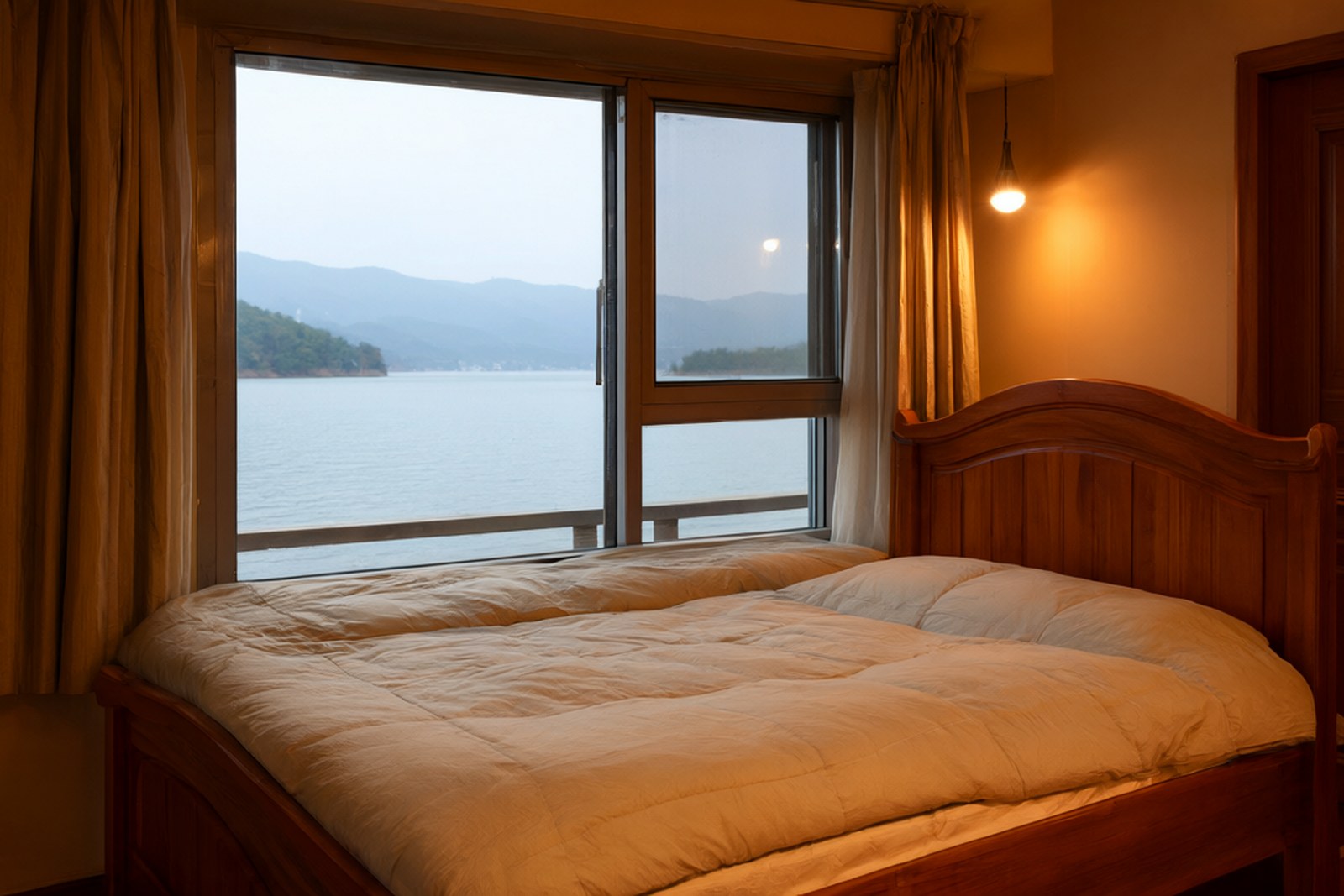
Where to stay: the guesthouse rooms by the dam at 河唇镇, 廉江市, on the shore of 鹤地水库, an hour from 安铺 on the coast and about two hours from 湛江市. Take a lake-facing balcony, walk the dam crest at either end of the day, and eat the fish head soup in the town.
flowcloud would say that a peninsula which was dry red soil until a great many people moved a hundred million baskets of earth by hand, and which now ships pineapples and oranges out of the same ground, is the clearest case in the province that irrigation is the monument.