
河源市 Héyuán shì proper is 源城区 Yuánchéng qū, the built-up city where the 东江 Dōng jiāng is joined by the 新丰江 Xīn fēng jiāng, and a city hotel here stands on the riverfront or a block or two back from it, with the water below the window and the markets and the noodle shops a short walk inland. Nobody travels to 河源 for its hotels, and that is their use: the city is where the high-speed line stops, where the pagoda and the dinosaur eggs are, and where you sleep between the lake, the old towns and the mountains.
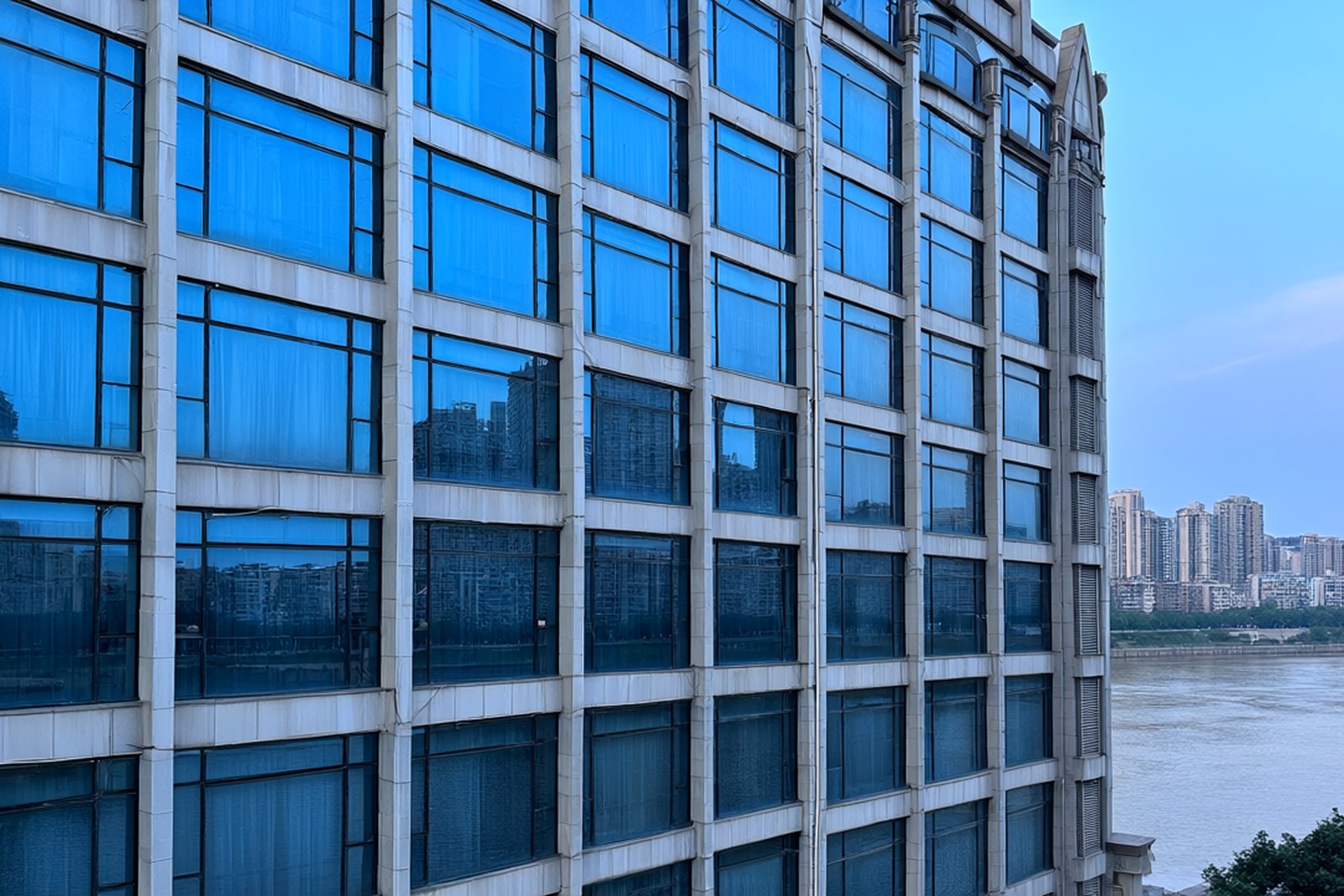
The city has a better claim on the map than its workaday centre suggests. It has been a place of record for more than two thousand years and a 客家 Kèjiā town throughout, and it sits on the meeting of two rivers, which is why the Song built their pagoda on the hill above the confluence in 1132 and why the town grew around the ford and the ferry. The 龟峰塔 Guī fēng tǎ is still there, and the 河源八景之首 of the old lists; below it on 滨江大道 is the 恐龙文博园, the dinosaur museum compound, which holds the largest collection of fossil eggs in the world; and behind the riverfront, the 太平古街, the Qing commercial street, the 鳄湖公园 and the 李焘故居 make up what the city calls its 老城四宝, the four treasures of the old town.
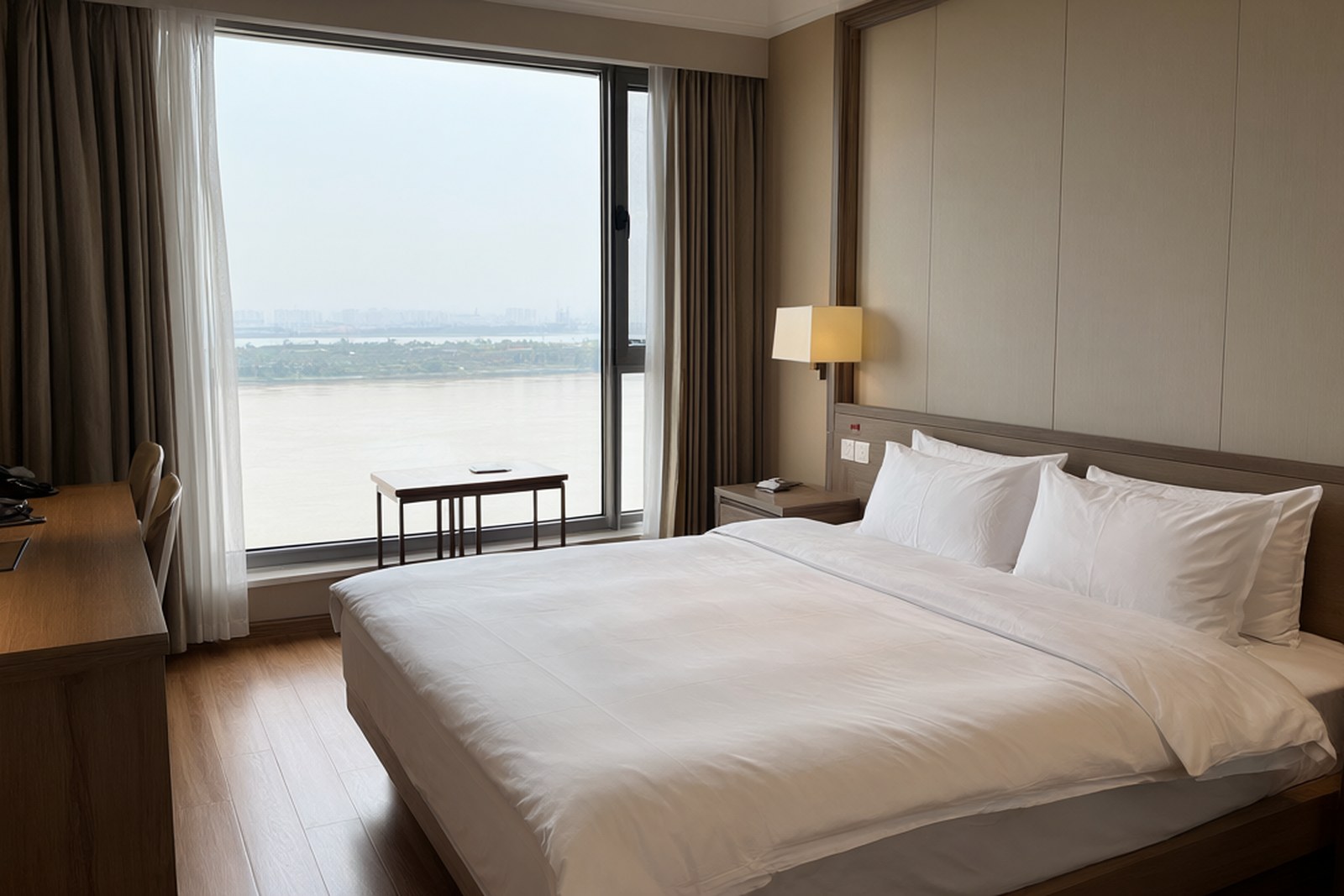
The hotels are the standard Chinese provincial sort, and the better ones are good value. Expect a lobby with a front desk that takes foreign passports, a lift, a breakfast room serving congee, noodles and buns from seven, and rooms that are a little larger than they need to be with a firm bed, strong air conditioning and a decent shower. Many have a restaurant and a meeting room, several have parking, and the price is a fraction of what the same standard costs in 深圳. Ask for a river-facing room on a high floor and you get the 东江 in the morning and the lit bridges at night; ask for one away from the street if you sleep lightly, because the town is up early.
The reason to base here rather than out at the lake is the food and the road. Breakfast in 河源 is a serious matter: a bowl of 猪脚粉 zhū jiǎo fěn, rice noodles under braised pig’s trotter, from a shop open before six; the 八刀汤 of 紫金县, eight cuts of a fresh pig in boiling water; and the city’s own 米排粉, the sun-dried rice noodle it is known for outside the province. From the city the day trips radiate: 万绿湖 twenty minutes north-east, 苏家围 half an hour up the river, 佗城 and 霍山 an hour north-east, 林寨古村 an hour and a half north, and the peach orchards of 连平 two hours beyond that. Two nights as a base works well, and adding a third costs almost nothing.
What the Rooms Are Like
Expect a room of twenty-five to thirty-five square metres, a firm bed, good air conditioning, a clean en-suite bathroom with a shower, and often a desk and a window over the street or the water. The finish is plain and well maintained rather than stylish, and the river-facing rooms on a high floor are worth the small premium. Confirm that the hotel takes foreign guests, which most in the city centre now do, and ask whether breakfast is included in the rate.
Practicalities
Price. A double in a 河源 city hotel runs ¥150 to ¥400 a night in the shoulder season, and more over the October week and Chinese New Year. River-facing rooms and higher floors cost a little more, and breakfast is usually included.
Address. The hotel is in 源城区 Yuánchéng qū, 河源市, within walking distance of the riverfront, the markets and the 太平古街, and convenient for the road out of town. The nearest high-speed rail stop is 河源东站 Héyuán dōng zhàn on the 赣深 line, east of the river.
Rooms. Ask for a high floor away from the main road, and for a room facing the 东江 if the hotel has them. Check whether the hotel has parking if you are driving, and ask the desk to write the name of a 猪脚粉 shop in Chinese for whoever is taking you to breakfast at six.
Getting there. From 河源东站 a taxi to the city centre takes about twenty minutes; the station is on the 赣深 high-speed line, which runs the length of the 东江 valley south through 惠州北 to 深圳北 and carries through trains on towards 广州. By road 河源 is roughly two hundred kilometres from 广州 and a hundred and eighty from 深圳, both about three hours. The city itself is walkable for food and the riverfront, and a car or a taxi is needed for everything else.
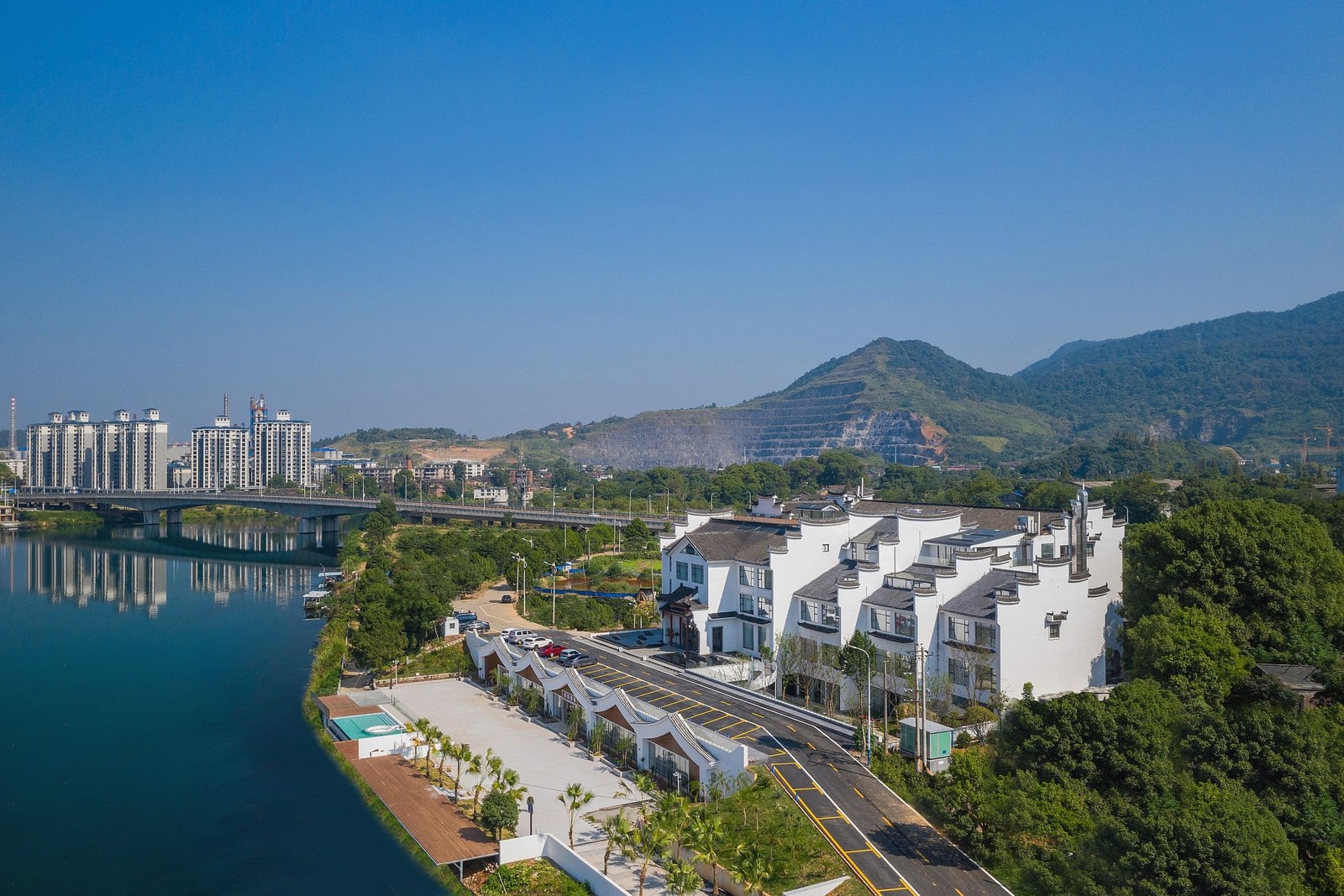
Where to stay: the city hotels in 源城区, 河源市, on or near the 东江 riverfront and within walking distance of the market and the 太平古街. Take a high floor facing the water, eat breakfast on the street rather than in the hotel, and run the day trips out from here.
flowcloud would say that a town whose two rivers were worth a pagoda in 1132 and whose riverbed was worth digging up for eighteen thousand dinosaur eggs, but whose own advice to a visitor is to get up early for a bowl of noodles, has kept its priorities in the right order.