
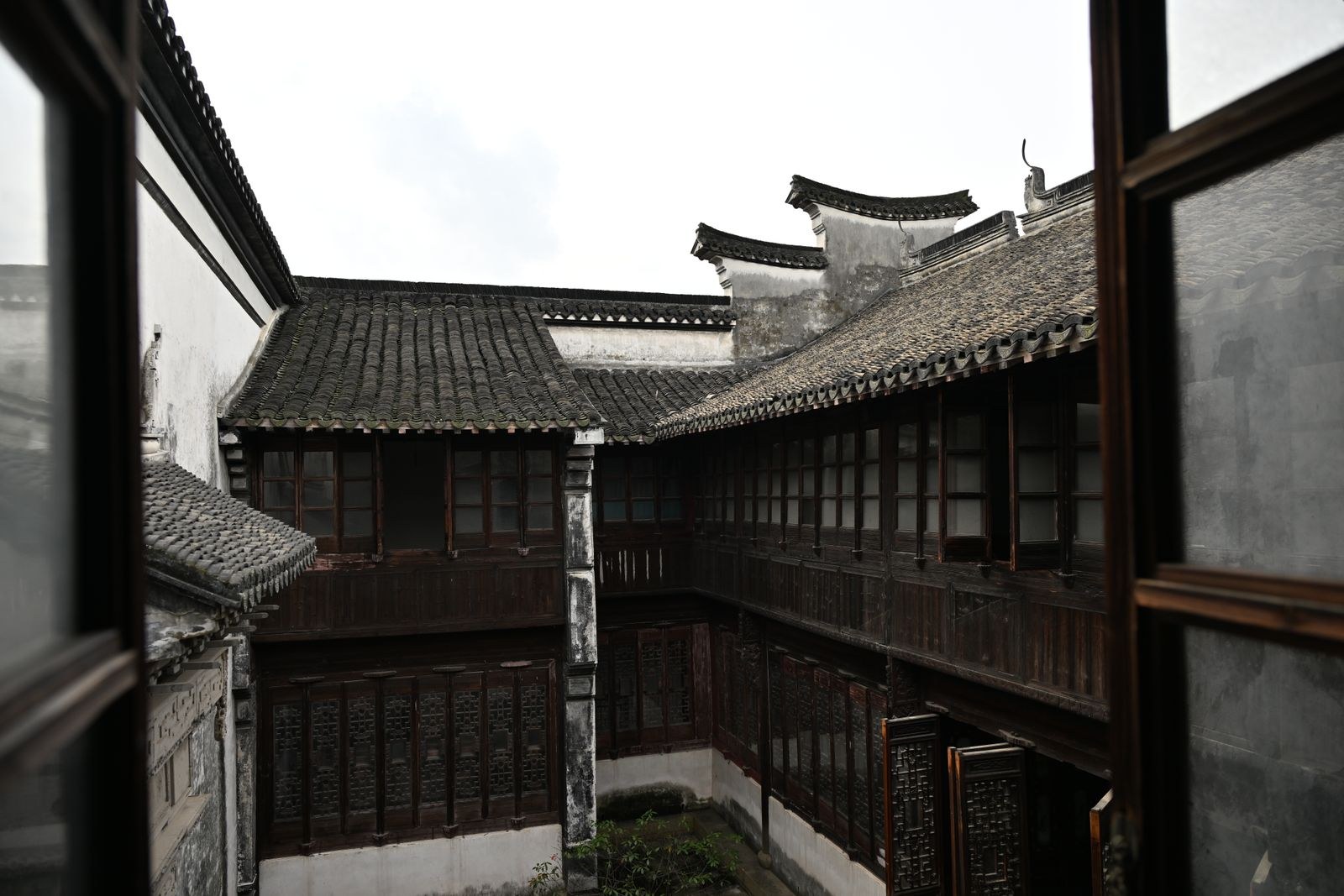
The wall of the house is on the outside of the room you sleep in, and it is four metres high, made of grey brick, with no window at all. This is not a design fault. 洪江 Hóngjiāng built its merchants’ houses as 窨子屋 yìnziwū — courtyards wrapped in a sealed brick box — because a trading town of that much movable wealth needed walls that would stop a fire from the neighbouring shop and a burglar from the roof, and because the families inside were from somewhere else and preferred to keep their business to themselves. Your room opens onto an interior courtyard open to the sky; rain falls into a stone tank in the middle, which is also the fire reservoir; and the noise of the town arrives through the outer wall as a kind of distant murmur rather than as anything specific.
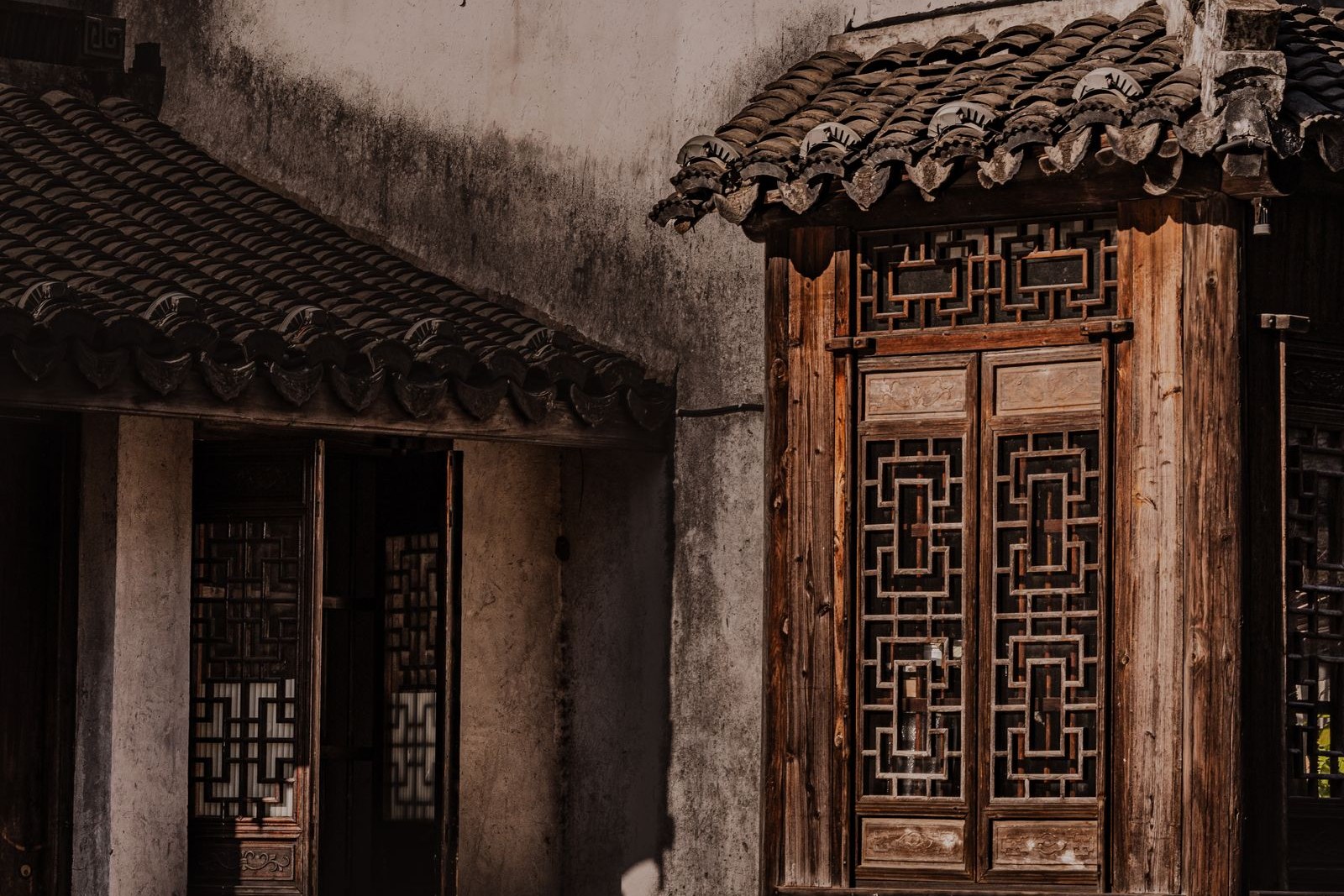
The inns here are converted 窨子屋 yìnziwū, and the conversion is usually minimal: the courtyard gets a glass roof, the upstairs gallery becomes guest rooms, and dark hardwood is left where it is. A double runs ¥200–450. The timber stairs creak in the specific way that timber stairs creak after two hundred years, and the effect — sitting on a gallery above a courtyard at night in a house built by a tung-oil merchant in the 1780s — is worth the lack of a TV.
The town’s shape explains itself once you walk it. The old market is a grid of 七冲八巷九条街 — seven lanes, eight alleys, nine streets — of which 380-odd buildings survive, laid out between the 沅水 Yuánshuǐ and the 巫水 Wūshuǐ where they meet. It handled timber rafted down from Guizhou, tung oil pressed in the surrounding hills and shipped out as 洪油 hóngyóu — a varnish-grade oil that was known by name in Europe — plus cinnabar, white wax, cloth and, in the bad years, opium. At its peak it had 23 banks, 17 newspapers, 48 theatre stages and about 60 temples. The guild halls survive: 苏州会馆 Sūzhōu Huìguǎn, 江西会馆 Jiāngxī Huìguǎn, even a 厘金局 líjīn jú, the imperial customs house that taxed all of it.
What You Are Paying For
Price. ¥200–450 for a double inside a converted 窨子屋 (yìnziwū). The top of the range is a restored courtyard house with a proper bathroom and underfloor heating; the bottom is a room in a family house with a shared shower and much more atmosphere.
Address. 洪江古商城 Hóngjiāng Gǔshāngchéng, 洪江市 Hóngjiāngshì, 怀化市 (Huáihuàshì). The inns are inside the old market quarter itself, on and around 米厂街 Mǐchǎng Jiē.
Rooms. A few dozen in total, mostly small. Ask for one on the courtyard rather than on the lane, and ask whether the bathroom is 独立 dúlì — private — because in a converted courtyard house it often is not.
Getting there. 怀化南站 Huáihuà Nán Zhàn on the 沪昆 high-speed line is about an hour and ten minutes by road, ¥25–40 on the intercity bus to 洪江. The old town is a ten-minute walk from where the bus stops.
What the Locals Know
Learn the words 进 and 出 before you walk the alleys. The layout is a deliberate maze; locals navigate it by memorising three or four courtyards, not by street names, and getting lost once is part of the experience.
Ask for a room away from the 米粉 mǐfěn shops. Breakfast trade starts at half past six and the noise comes straight through the courtyards.
Walk to the 沅水 Yuánshuǐ bank at dusk. The riverside and the lights on the two bridges are the only parts of the town that are new, and the contrast is the point.
Eat 血粑鸭 xuèbā yā here or not at all. The town’s signature duck with blood-rice cakes exists elsewhere, but the local 甜酱 tiánjiàng does not travel.
Where to Stay
The 古商城 gǔshāngchéng inns are for the atmosphere and they deliver it. If you need a lift, a bathtub and a desk, stay in 洪江 Hóngjiāng city proper or in 怀化 Huáihuà and come out for the day. Between April and October the old town is busy at weekends and quiet on weekdays; in winter it is cold, empty and, on a grey afternoon with the mist coming off the river, at its best.
flowcloud would say that there is no more honest hotel in China than a merchant’s house in a town that stopped being rich a hundred years ago: the walls were built to keep the world out, and now they keep the guests in, and both jobs are done with the same indifference.
Where to stay: 洪江古商城 (Hóngjiāng Gǔshāngchéng), 洪江市 (Hóngjiāngshì), 怀化市 (Huáihuàshì), 湖南 (Húnán). Doubles in a converted 窨子屋 (yìnziwū) ¥200–450. About an hour and ten minutes from 怀化南站 (Huáihuà Nán Zhàn), ¥25–40 by bus to 洪江 (Hóngjiāng). Ask for a courtyard room, confirm the bathroom is private, and be on the river bank at dusk.