
红毛镇 Hóngmáo Zhèn is the upland town at the north-west shoulder of 琼中黎族苗族自治县 Qióngzhōng Límé Miáozú Zìzhìxiàn – an autonomous county answering directly to Hainan province, so the town is the whole address – and its beds sit on the ground of a working tea farm. The 新伟·山有 Xīnwěi Shānyǒu culture-tourism compound at 新伟大道 111 号 Xīnwěi Dàdào 111 Hào is the old state 新伟农场 Xīnwěi Nóngchǎng reborn: the farm’s old guesthouse, its great hall and its idle staff housing have been converted into the 山有居民宿 Shānyǒujū guesthouse and the “食茶饭稻” dining-and-projects wing, two names for the accommodation and catering ends of one estate, which is why this article writes them as one.
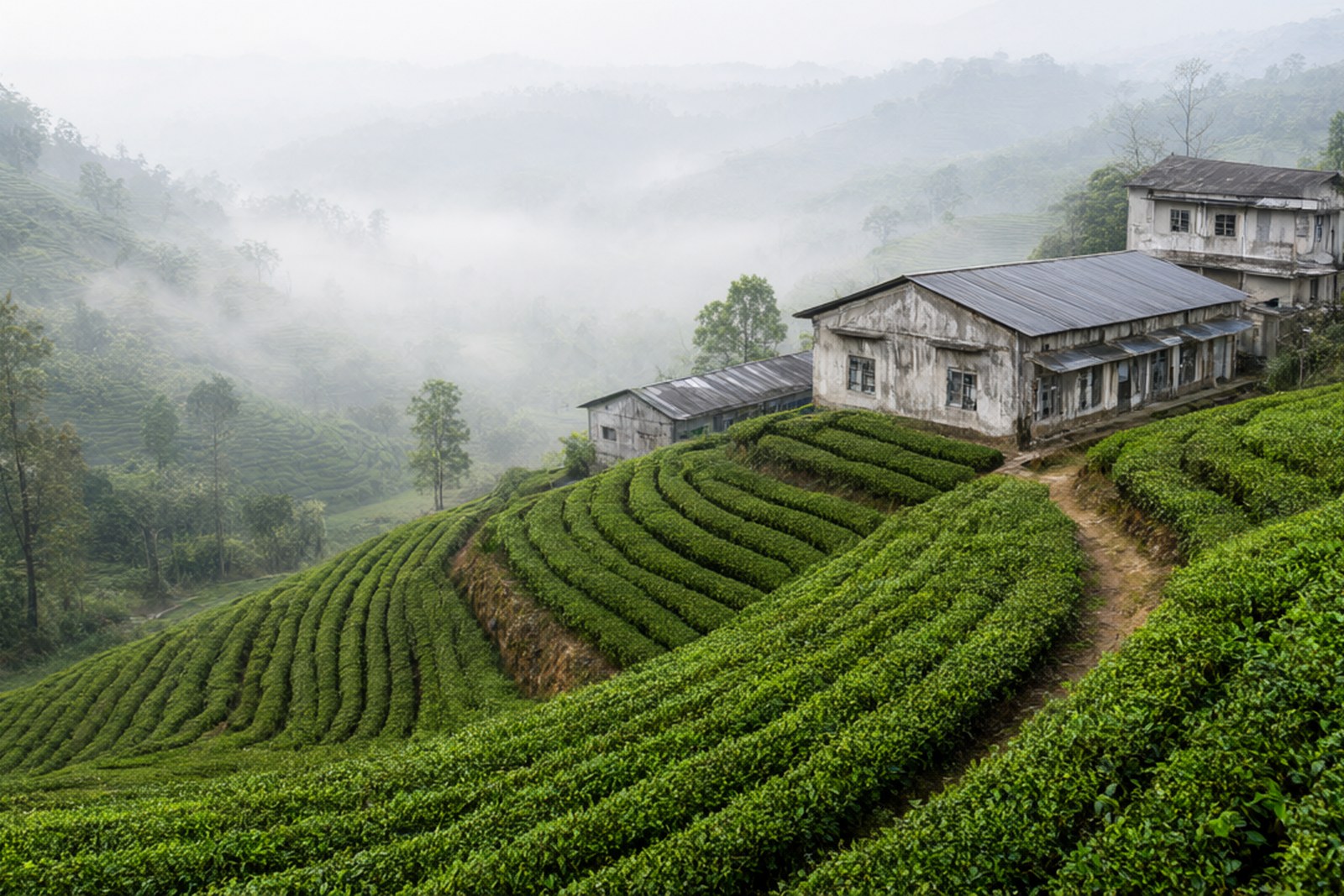
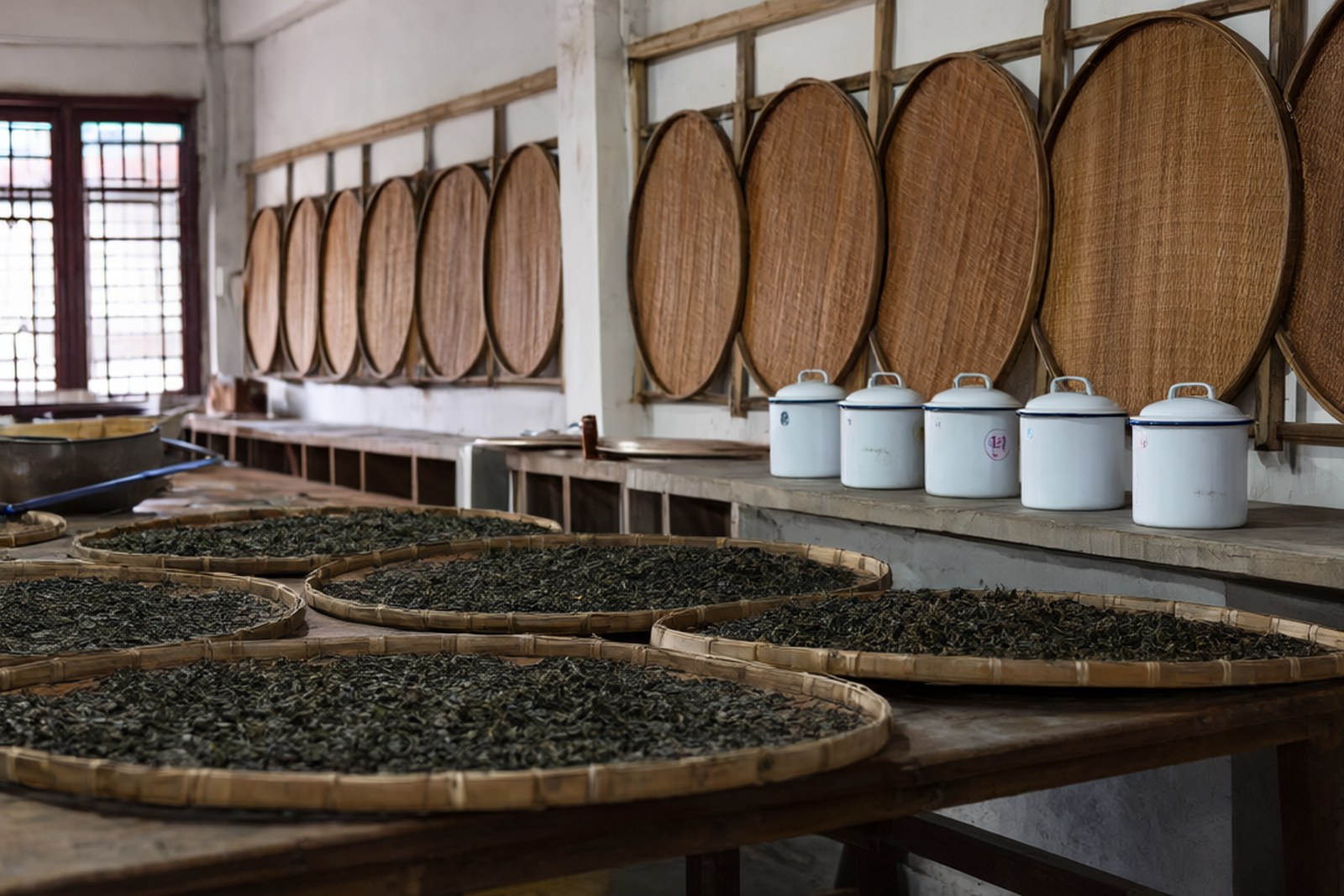
The tea behind the beds has a sixty-year plot with a fall and a rise. The state farm was founded in the early 1970s as the highest-lying farm in Hainan’s reclamation system, its first tea planted in rainforest clearings by the educated youth of the Guangzhou military region’s production-construction corps; the gardens sit at about 400 metres on what the trade calls the golden tea belt. The 新伟牌 Xīnwěi brand went into production in 1980 and from 1987 to 1992 took first prize in the green-tea quality ranking of Guangdong, Guangxi and Hainan’s state-farm system six years running – a six-year reign that drew a Japanese tea specialist, 竹尾忠 Zhúwěi Zhōng, to inspect. Then the fall: from the mid-1990s the processing plant shut, the leaf was shipped out to be sold under another grower’s 白马岭 Báimǎlǐng mark, and the gardens shrank from more than 8,000 mu to 750. The revival ran from the end of 2018 under the rehired retired works manager 覃建生 Qín Jiànshēng, whose free-range ecological management lets weeds and ladybirds stay, and the estate the county built around it – the 加钗 holding company line from 2017, the 新伟雨林茶业 company of 2021, and the 新伟·山有 tourism compound itself – now farms about 1,600 mu in the rainforest heartland and sells such teas as 雨后初晴 Yǔhòu Chūqíng and 雨林红 Yǔlínhóng at 160 to 480 yuan a jin retail. Note the neighbouring-name trap: 白马岭 is its own tea company and brand in the same county, not this farm’s.
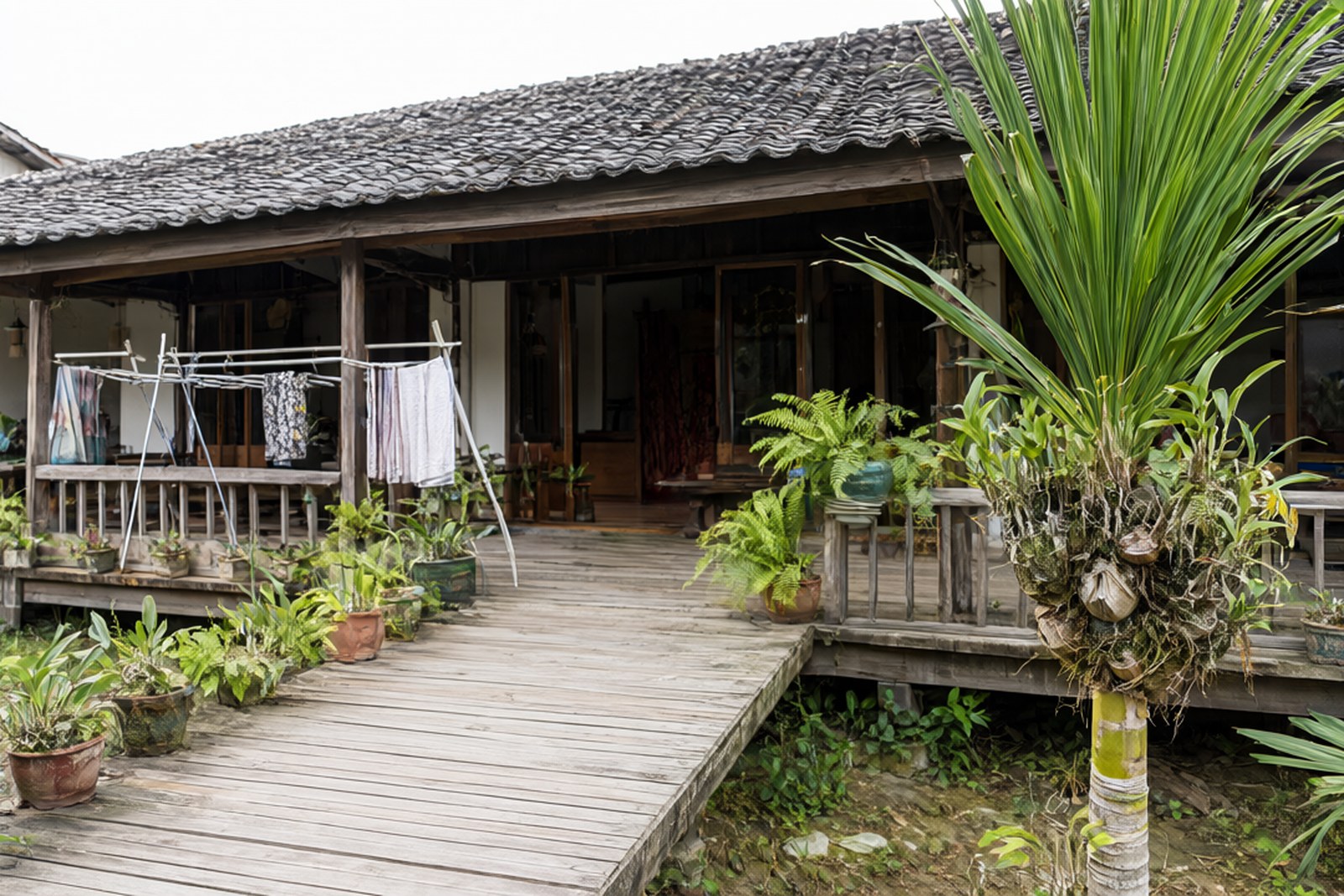
The compound turns the farm’s old bones into a day’s programme. Entry crosses a paddy field on a plank walkway; the four concepts the operators print – 山有·居, 山有·田, 山有·茶, 山有·礼 – divide lodging, fields, tea and gifts, and the old buildings carry them: the guesthouse end in the converted guesthouse and staff blocks, a “years theatre” room of old farm objects and photographs, a supply-and-marketing co-op shop on the ground floor selling local teas, dried fruit, home brewing and Li handicrafts, and the 食茶饭稻 Shíchá Fàndào restaurant beside it serving breakfast and full meals of local dishes. The fields do the rest: the rear yard is for rice cutting and scarecrow making, the north-east corner is a dendrobium garden where the orchid grows staked to areca palms and gets pressed with local honey into a fresh juice, its dregs fried into pancakes, and the A-block paddies farm bullfrogs – guests check in, take a bamboo pole baited with meat, and fish for their own dinner. Charging piles sit in the car park, and a Qiongzhong quirk frames the calendar: the county’s early-spring tea reaches the market about three months ahead of most Chinese tea regions, and from late October to December the green oranges ripen, making autumn-early-winter the double season of tea slopes and orange groves.
The town around the beds is the steepest history in the county. 红毛镇 is the cradle of the 白沙起义 Báishā Qǐyì, the Baisha Uprising of 12 August 1943, when the Li leaders 王国兴 Wáng Guóxīng and 王玉锦 Wáng Yùjǐn led Li and Miao villagers of the Baisha district, this town among it, in revolt against wartime Nationalist oppression – a rising whose leaders then sought out the Communist side, the turn the memorial texts centre on. The 白沙起义纪念园 Báishā Qǐyì Jìniànyuán, the memorial park on the 海榆中线 at the 160-kilometre post by 番响村 Fānxiǎng Cūn, was founded in 1987 across 62 mu, holds the monument, the story hall and 王国兴’s bronze statue, and carries provincial revolutionary-martyr protection from 1990, a first-batch national ethnic-unity education base from 2006, and fifth-batch national key martyr-memorial protection from 2009; the county seat lies about 23 kilometres south of it. A night at the tea farm puts both in one morning’s drive – the memorial’s ridge, then the tea slopes – and both belong to the same town’s story of hills that fed people badly and then, on this one slope at least, fed them well.
What the Rooms Are Like
The room list splits by building, and the split is the old farm’s floor plan. The A座 A block – the converted old guesthouse, the vintage end – runs the 清雅 Qīngyǎ standard twin, king and twin rooms, the 风雅 Fēngyǎ king, a special-value king, the 田园 Tiányuán king and the 望山 Wàngshān suite with its one-bedroom-one-hall layout; the B栋 B wing, the tea-culture end, runs the 茶雅 Cháyǎ line – duplex king and twin-double rooms, business doubles and twins including tatami-floor versions, and a business suite, again one-bedroom-one-hall. The Ctrip page adds the compound’s leisure layer: a paid water playground, a landscape pool, an executive lounge and loft rooms. What the room does not have is town outside the gate – 红毛镇’s own accommodation beyond this estate is scattered village lodging, so the estate is the anchor and everything else is a village bed.
Practicalities
Price. On 30 September 2026 the estate quoted from 297 yuan on Tongcheng at 4.7 and from 298 on Ctrip at 4.3 across 200 reviews – the Ctrip page itself showed 289 – while a June 2023 Ctrip community travel note priced a peak-season night around 550, a platform-community figure carried here with its date. The tea-and-orange double season of late October into December is the busy window. Every figure is a snapshot that floats.
Address. The address anchors to the town and the old farm: 琼中黎族苗族自治县红毛镇新伟大道 111 号 Hóngmáo Zhèn Xīnwěi Dàdào 111 Hào, as both Tongcheng and the Ctrip community notes file it. The 白沙起义纪念园 lies on the same national road at the 160-kilometre post, about 23 kilometres from the county seat by the provincial government’s figure.
Rooms. Ask whether your room sits in the A block or the B wing, because the vintage conversion and the tea-culture wing are different buildings with different characters. Ask at the front desk for the day’s frog-fishing and rice-cutting slots, since both are guest activities run off the fields, and book dinner at the 食茶饭稻 restaurant rather than assuming the town will feed you. And if the dendrobium juice is the draw, it is a garden product, pressed fresh – ask, do not expect.
Getting there. The estate sits on the 海榆中线 Háiyú zhōngxiàn (national road 224), the old trunk road through 红毛镇 – drive it from the county seat, about 23 kilometres to the memorial and a few minutes more to the town, roughly 25 to 30 minutes by the estimate here; navigate. Rural buses on the 8:20 Yinggen-Shihan line do pass the memorial park stretch of the road, but frequencies are limited and no reliable published timetable was found, so the practical arrival is by car or chartered car. There is no railway in the county: come by road, and treat any page offering rail to Qiongzhong as wrong.
Where to stay: a 望山 Wàngshān suite in the A block if the converted-guesthouse vintage is the mood, a 茶雅 Cháyǎ tatami room in the B wing if the tea theme is, and any room at all if the morning plan is the 1943 memorial ridge followed by frog-fishing in the farm’s own paddies – all at 新伟·山有 Xīnwěi Shānyǒu, 红毛镇 Hóngmáo Zhèn, 琼中黎族苗族自治县, the town where the county’s tea and its uprising history share one stretch of road.
flowcloud would say that a farm which lost eight thousand mu of tea to a bad decade has learned to sell the remaining sixteen hundred one night at a time, and that the correct way to sleep here is in the old guesthouse block with the pole by the door, because the frogs are farmed at night and the tea is picked before you wake.