
Chongqing is a municipality of southwest China, and the 巴南区 Bā’nán Qū, Banan District, on its south-eastern side holds close to half of the city’s hot spring resource. The belt that matters is 南泉 Nánquán, Nanquan, a subdistrict with a metro station at its edge and hotels whose rooms have their own tubs. Two boundaries belong in this first paragraph, because they are the two that get bookings wrong. Banan’s second spring is 东温泉 Dōngquánwēn, Dongwenquan, forty kilometres east above the 五布河 Wǔbù Hé, Wubu River, at a different price. The third, 统景 Tǒngjǐng, Tongjing, is in 北碚区 Běibèi Qū, Beibei District. This piece prices the Nanquan belt.
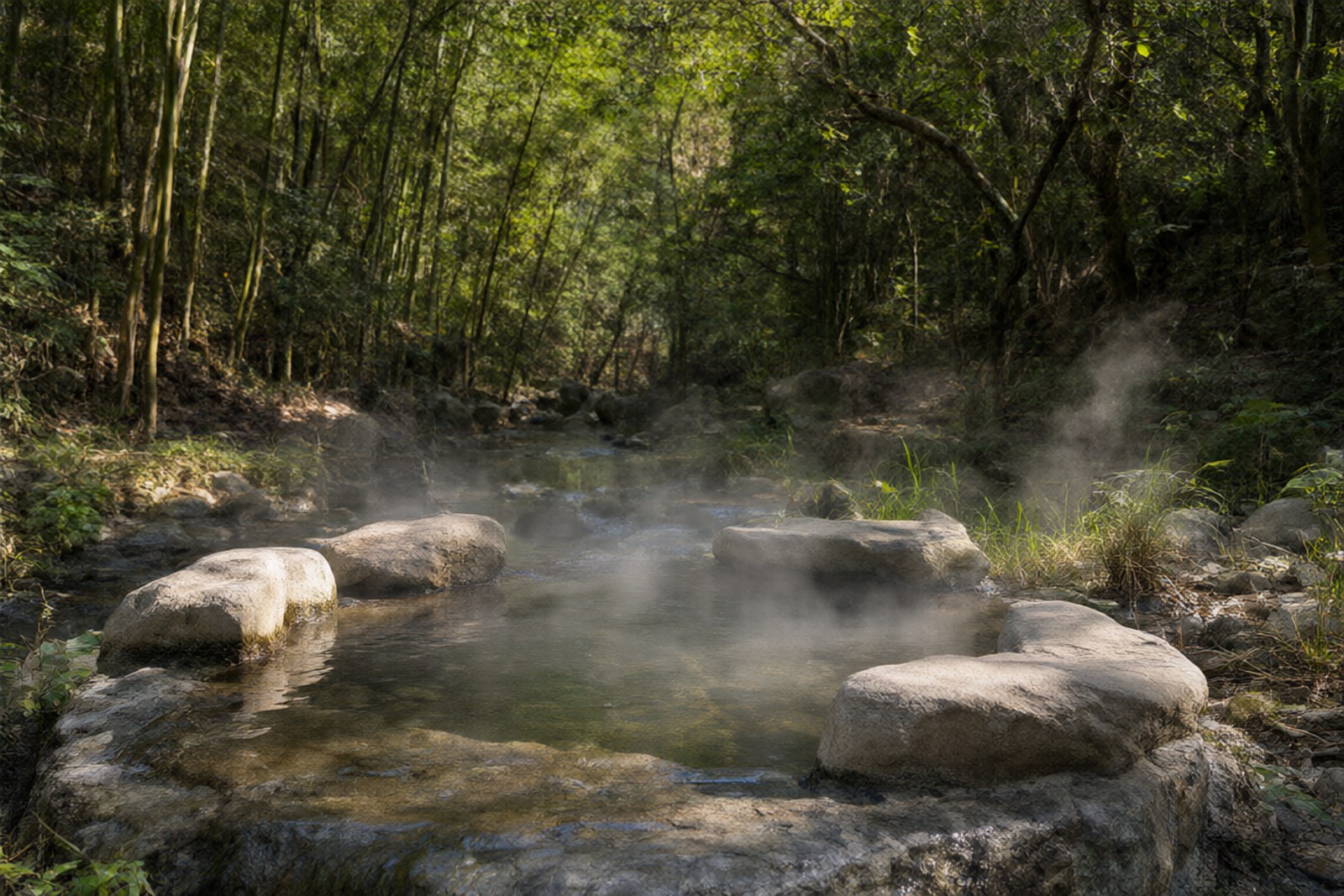
The address to book against is 南泉路 7 号. The hotel there opened in 2020, carries 4.7 on Ctrip across 1,253 reviews, and sits 3.7 kilometres by road from the metro at 花溪 Huāxī, Huaxi – the belt’s most useful number, because it decides whether the room is a base for two days of Chongqing or an overnight at the end of a drive. Its room types are the vocabulary of the whole belt: a courtyard-view bathhouse room in twin or double layout, a family suite themed on a submarine cartoon, a garden-view massage bathhouse room built around sleep, and packages folding two tickets to the Nanquan park into the rate. The tub is the product; the park ticket is the thing you would otherwise buy.
Below that anchor the belt is two streets of guesthouses, and the October 2026 read is a ladder with a soft bottom. A full-scale hot-spring hotel at 渝南大道 109 号 shows a Tongcheng floor of 184 yuan. A two-star conference guesthouse on the same avenue shows 159, with a 3.8 platform score and a name advertising meeting rooms rather than water. A four-floor guesthouse on 福鹿大道 shows 169, the cheapest way onto the belt and the least interesting room on it. The outlet centre at 福鹿大道 1999 号, a 3A site graded in 2025, gives that avenue a weekend reason to be busy that has nothing to do with soaking.
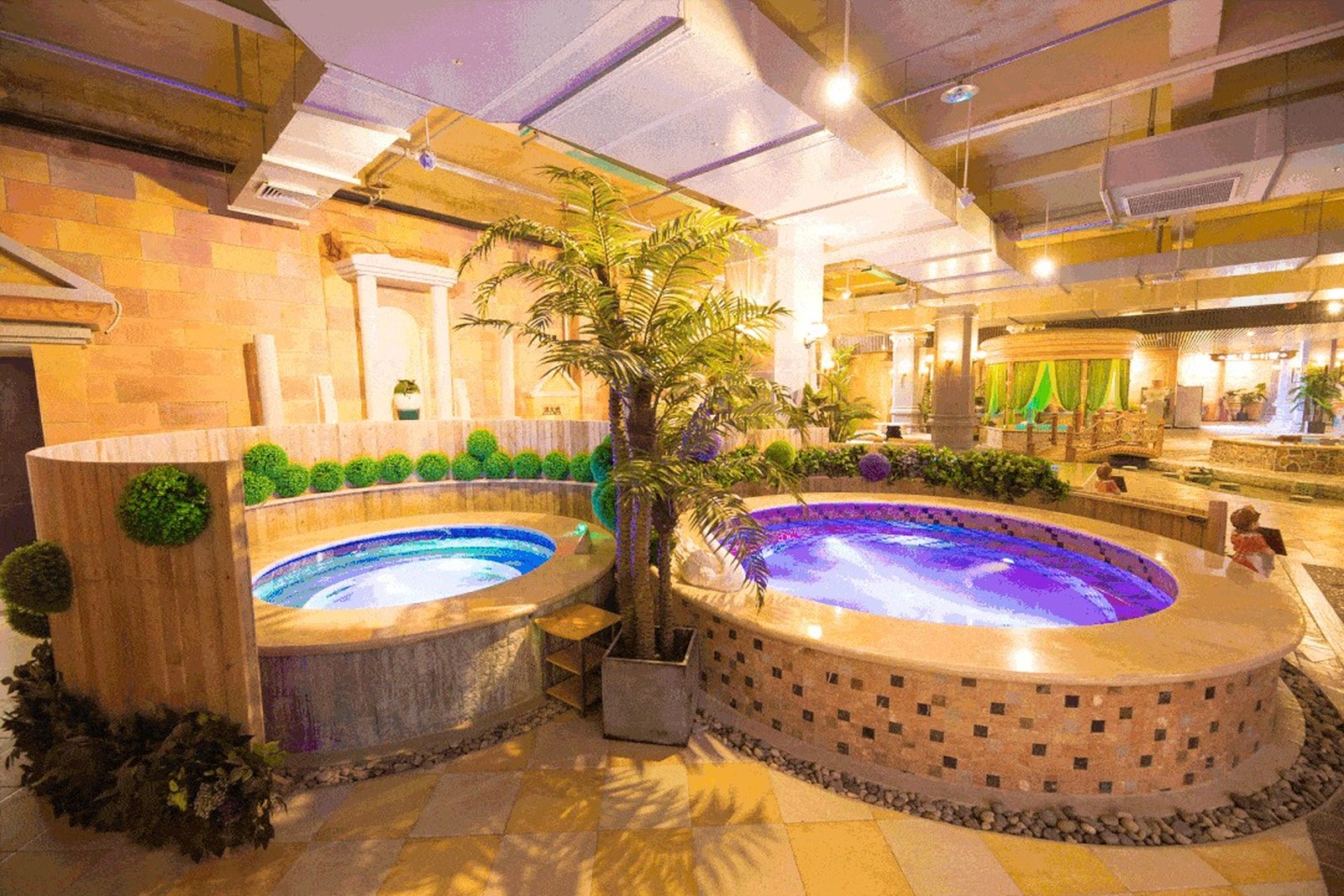
What separates the rungs is not the water. Every property on the belt draws the same underground resource, which is why the district claims half the city’s total, and the temperature argument is settled before you arrive. What separates them is what the room is for afterwards. The courtyard bathhouse room is a private tub with a garden outside it, which means a slow evening and no reason to leave. The family submarine suite is built for a specific small guest and its value collapses the moment that guest is asleep. The massage room buys an hour of somebody’s hands, and at that point you are comparing service, not geography. And the Yunan Avenue guesthouses are rooms with baths, priced by proximity to a station rather than to a spring.
The street decides which of those you are buying, and the geography is narrow. The 2020 hotel is on Nanquan Road, a short street of low buildings inside a subdistrict the district counts among its nine; the Huaxi properties run south along 渝南大道 Yùnán Dàdào, Yunan Avenue; and the cheap rung is strung along 福鹿大道 Fùlù Dàdào, Fulu Avenue, past the outlet centre, which is a bus ride from a metro station rather than a walk. The tub is not the destination, because the park ticket is in the package and the park is the larger half of the day. And none of this is Tongjing, which is in Beibei.
Practicalities
Price. Three rungs, all read off booking pages in October 2026, all describing the belt rather than any single property, because the platforms re-rank a subdistrict this size monthly. The bottom rung is the small hotels: 159 yuan for a two-star conference house on the Huaxi stretch with a 3.8 score, and 169 for a four-floor guesthouse on Fulu Avenue. The middle rung is the full-scale hot-spring hotel at No. 109 Yunan Avenue, from 184. The top rung is not published as a band, because the Nanquan Road hotel quotes by room type and folds two park tickets into the rate.
Address. 重庆市巴南区南泉街道南泉路 7 号 – Nanquan Subdistrict, Nanquan Road 7 – is the belt’s anchor address, and the listings print the full 重庆市巴南区 Banan District form at the head of all of them. The cluster runs south along 渝南大道 Yùnán Dàdào, Yunan Avenue, into 花溪 Huāxī, Huaxi, which is Banan’s Huaxi and not the identically named district of Guiyang, and west along 福鹿大道 Fùlù Dàdào, Fulu Avenue.
Rooms. Three shapes, differing in what happens after the water. A courtyard-view bathhouse room in twin or double layout: a private tub plus a garden. A family suite themed on a submarine cartoon, worth nothing to anyone else. A massage bathhouse room, where the hour on the table is the product. Then the guesthouses’ own inventory – A and B rooms, a courtyard deluxe hot-spring suite, and above the Fulu Avenue shops plain rooms with a bath and nothing else. Ask which side the room faces and whether the tub is indoors, because on this belt those two answers are the price.
Getting there. The nearest node is the metro at 花溪站 Huāxī, Huaxi, and the belt’s anchor hotel is 3.7 kilometres from it by road, a taxi ride rather than a walk and the number to plan a day around. Buses and taxis run both avenues, and the weekend traffic on them is why the cheap end of the belt sells on the metro rather than on the pool. Driving is the straightforward option, since the belt sits on the road out of the city toward the campuses.
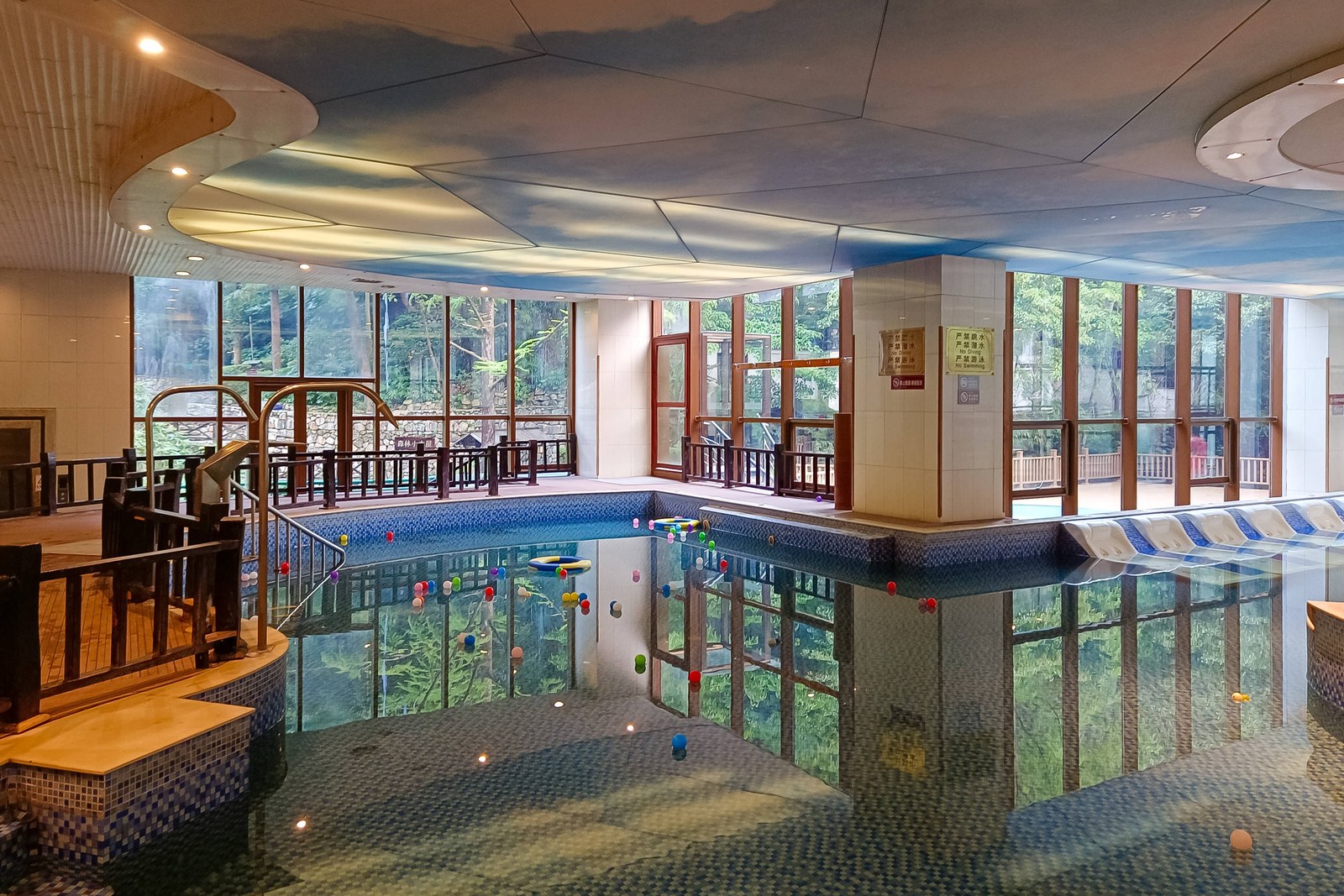
A day on the belt runs on the water rather than on the city. Late morning is the empty hour: the pools are warm, the sun is low enough to come in under the trees, and the halls are loud with families rather than with quiet. Midday is a street and a road – lunch on Yunan Avenue, a taxi back up Nanquan Road, a wait before the afternoon session. Afternoon is the second good window and the one people skip while waiting for evening. Evening between ten and midnight is the busiest hour and the only time the water is genuinely loud; if you want heat and quiet, take the afternoon. Then the taxi down to the metro, with Fulu Avenue’s traffic setting the time.
flowcloud would say that the Nanquan belt is the only place in Banan where the metro is a more important number than the water temperature, and that the correct way to book it is to decide first whether the room is for the bath or for the nights afterwards, because 3.7 kilometres from Huaxi is the difference between a base for two days of Chongqing and a bed at the end of a drive.
Where to stay: the 2020-opened Nanquan Road hotel if you have come for the water, because its packages put two park tickets inside the rate; the hot-spring hotel at No. 109 Yunan Avenue if you want a full-scale hotel with the campus on the doorstep; and the conference house if the budget is the point. And check that the page says Banan, not Beibei – 统景 Tǒngjǐng, Tongjing, is a different spring in a different district.