
There is a village on a spit of land between a bay and a lagoon, half an hour east of Sanya city, where the lanes are too narrow for a car and the surfboards lean against walls of houses that were fishing homes two decades ago. I arrived on a rented scooter at dusk, salt still crusted on my arms, and found a woman hosing down the concrete outside her gate, a board rack behind her, and a room upstairs going for less than the price of a resort breakfast. It is called 后海村 Hòuhǎi Cūn — Back Sea Village — or formally 藤海社区, and it is the cheapest genuinely interesting place to sleep in Sanya.
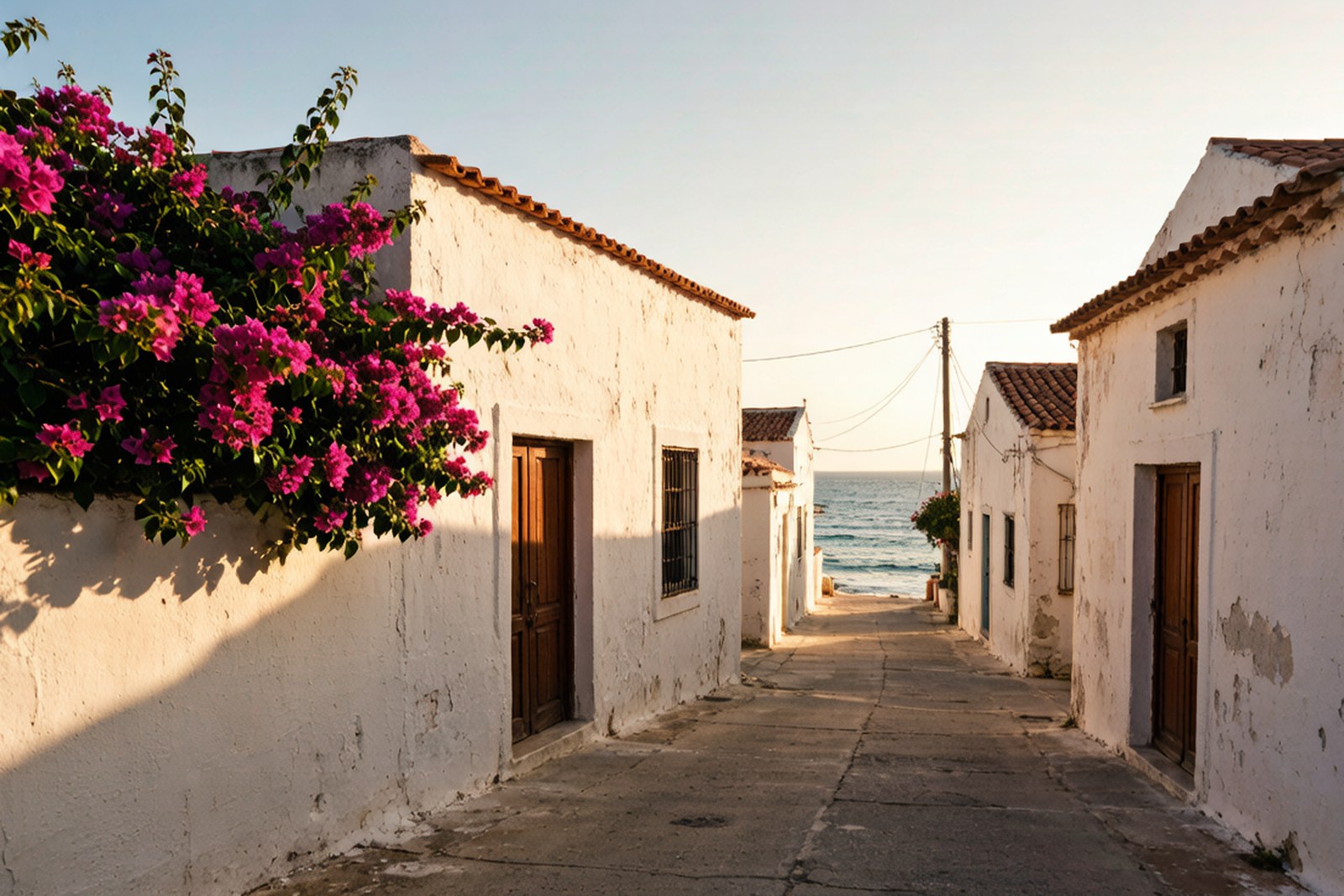
Nobody stays in a resort here. You stay in a 民宿 mínsù, a guesthouse, usually one run by a family or a young couple who came for a season and never left, and you eat breakfast on a rooftop looking at the water. Service is a person, not a department.
The Village, and Why It Exists
后海 sits at the base of the peninsula that runs out to 蜈支洲岛 Wúzhīzhōu Dǎo, and its geography is the whole story. The village has sea on two sides: an outer bay with a long shallow reef that produces the most reliable beginner surf in Hainan, and an inner lagoon behind it, flat and calm and green.
Because the reef breaks the swell, the water inside stays knee-deep for a very long way out, which is why the village became China’s surf school. There are dozens of them, a lesson costs a few hundred yuan, and the students who come for a weekend stay for the season. Around the surf schools grew the guesthouses, the cafés, the seafood barbecue places and the bars — and the whole thing now has the specific feel of a small surf town anywhere in the world, with 清补凉 qīngbǔliáng instead of smoothies.
The village is free to enter and open around the clock. No ticket, no gate. That is unusual for Sanya, and it is a large part of why the atmosphere is what it is.

Three Zones, Three Prices
The 民宿 cluster into three rough bands, and which one you want depends entirely on what you plan to do at night.
The beachfront. Rooms facing the bay, walk-out access, sunset over the water. The prettiest and the loudest — the bars along this strip run late, and a beachfront room on a Saturday in season is a room above a party. Roughly ¥600–1,400 by season.
The quiet lanes. One or two streets back, still five minutes from the water, dramatically quieter. This is the sweet spot for anyone who wants the village and also wants to sleep. Roughly ¥400–900. Most of the good mid-range 民宿 are here: small courtyards, rooftop terraces, four to ten rooms, and owners who will tell you exactly where to eat.
The fishing-harbour side. Rooms facing the inner lagoon where the boats tie up — cheapest and least picturesque, from around ¥300 off-season. The trade-off is that you are looking at working boats rather than blue water, though the lagoon at dawn, with the fleet going out, is arguably the better view.
The lagoon-side rooms look out on exactly this: the fleet tied up in ranks on green water, outboard engines tilted, the hills behind going gold at one end of the day and dark at the other. The boats leave before breakfast and come back with it, and watching the harbour wake from your balcony is the cheapest show in the village.

Prices are seasonal to a degree that is hard to overstate. A room that is ¥300 in May can be ¥1,400 at Spring Festival; the whole village fills and the rates go with it. Book ahead for any holiday week, and expect a two- or three-night minimum at Chinese New Year.
Rooms, and What You’re Actually Buying
Rooms are simple: a bed, air conditioning, a bathroom with a hot shower, often a small balcony. What you choose between is the view and the noise floor, not the thread count. Many 民宿 have a rooftop terrace you are welcome to use all day, which effectively doubles the size of your room.
- Learn to surf — beginner lessons from a few hundred yuan; boards rent by the hour
- Swim off the village beach — inside the reef, safe and shallow for children
- Eat seafood on the street — the barbecue stalls do grilled fish and shellfish at prices that make the resort restaurants look absurd
- Walk to the 蜈支洲岛 pier — the ferry terminal is minutes away, and the island is the best day trip in Sanya
- Sit on a roof at sunset and do nothing at all, which is what most people are actually here for
The catches, stated plainly: the village is small and popular, and in high season it is crowded. Parking is essentially impossible inside, so leave the car in the lot outside and walk in. Some 民宿 are excellent and some are simply a room with a bed — at this price point you are reading reviews, not brand standards. And the surf is beginner surf: this is not a destination for an experienced surfer hunting size.
For families, the shallow lagoon and calm inner water are genuinely good for children and the village is car-free enough to be safe. Pick a quiet-lane room rather than a beachfront one, for everyone’s sake.
flowcloud would say that the best things a place can sell you are a shower after salt water and a roof to watch the sun go down from, and that 后海 is one of the few places left in Sanya that still sells only those.
Practicalities
Price. Three bands, and the difference between them is mostly noise rather than quality: beachfront ¥600–1,400, quiet lanes ¥400–900, lagoon side from about ¥300 off-season. Rates roughly triple at Spring Festival and double over 国庆; a two- or three-night minimum usually applies at Chinese New Year. Cash and WeChat Pay both work; nobody here takes cards, and few places issue a formal invoice.
Address. 后海村 / 藤海社区, 海棠区, Sanya, Hainan (Houhai Village / Tenghai Community, Haitang District, Sanya) — the village at the foot of the road out to 蜈支洲岛 Wúzhīzhōu Dǎo, at the base of the peninsula. Free to enter, open 24 hours.
Rooms. Simple doubles and twins, almost all en-suite with air conditioning, hot water and a small balcony; the view and the noise floor are what you are choosing between, not the thread count. Most 民宿 also give you the run of a rooftop terrace, which effectively doubles the size of the room. Four to ten rooms per house is typical, and the owner usually lives on site.
Getting there. About 35–45 minutes by taxi from Sanya city, roughly ¥80–120; buses 28 and 29 and the 海棠 lines stop near the 蜈支洲岛 road, and the ferry pier for 蜈支洲岛 Wúzhīzhōu Dǎo is a few minutes’ walk from the village. Come by scooter if you can. Park outside the village and walk in — the lanes genuinely do not take cars, and there is no parking inside at all.
Where to stay: 后海村 / 藤海社区 (Houhai Village), 海棠区, Sanya, Hainan — the village at the foot of the road out to 蜈支洲岛. Rooms: beachfront ¥600–1,400, quiet lanes ¥400–900, lagoon side from ~¥300 off-season; rates roughly triple at Spring Festival. Simple en-suite doubles with air conditioning and hot water; the rooftop terrace is the real amenity. Getting there: about 35–45 minutes by taxi from Sanya city (¥80–120), buses 28/29 and the 海棠 lines stop near the 蜈支洲岛 road, or come by scooter. Park outside the village and walk in. Free to enter, open 24 hours; surf lessons a few hundred yuan, board rental by the hour.