
绥宁县 Suíníng xiàn is the greenest county in 邵阳市 Shàoyáng shì, forestry country in the south-west of the prefecture with seventy-six per cent of it under trees, and 黄桑 Huáng sāng is the core of it: a national nature reserve in the south of the county where the secondary old-growth forest runs to two hundred and thirty-five thousand mu and the road stops a few hundred metres up the valley. A lodge here is a timber building on the edge of the reserve, with a veranda over a stream, the forest coming down to the water on both sides, and no electric light outside after dark.
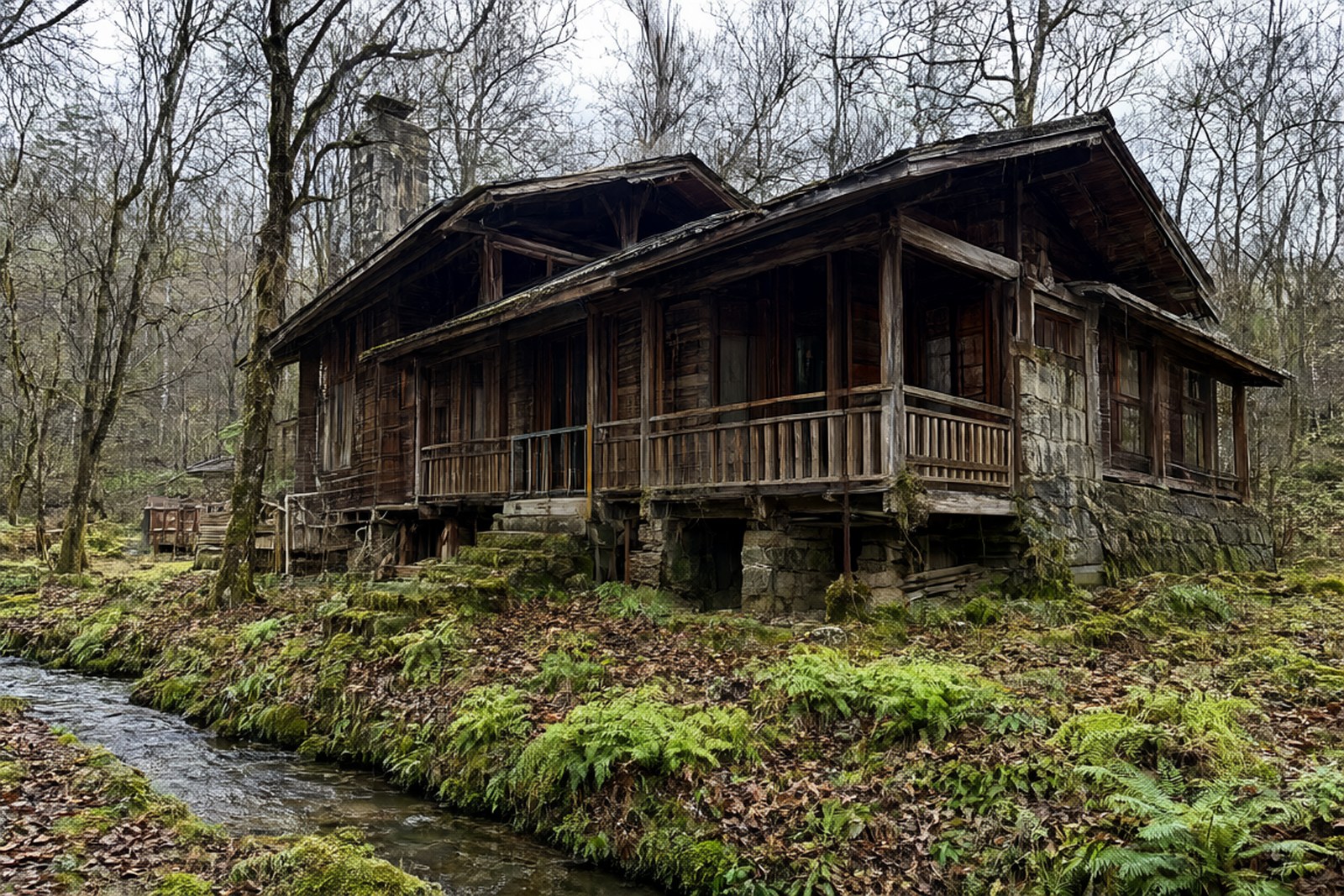
The county’s account of how outsiders found it is one of the more unlikely pieces of local history. In 1982, it says, UNESCO imagery picked out this patch of the map as the one unpolluted green spot left on the planet, and the name 神奇绿洲, the miraculous oasis, has stuck to 绥宁 ever since. What is not in doubt is what the survey of 黄桑 turned up: twenty-two species of nationally protected timber trees and seventeen of protected animals, over fourteen thousand negative oxygen ions per cubic centimetre of air, and above all a stand of thirty-eight 长苞铁杉 cháng bāo tiě shān, the long-bracted hemlock, a tree classified as a living fossil, growing together on one slope with their stems touching and their roots interlocked, male and female plants in the one group.
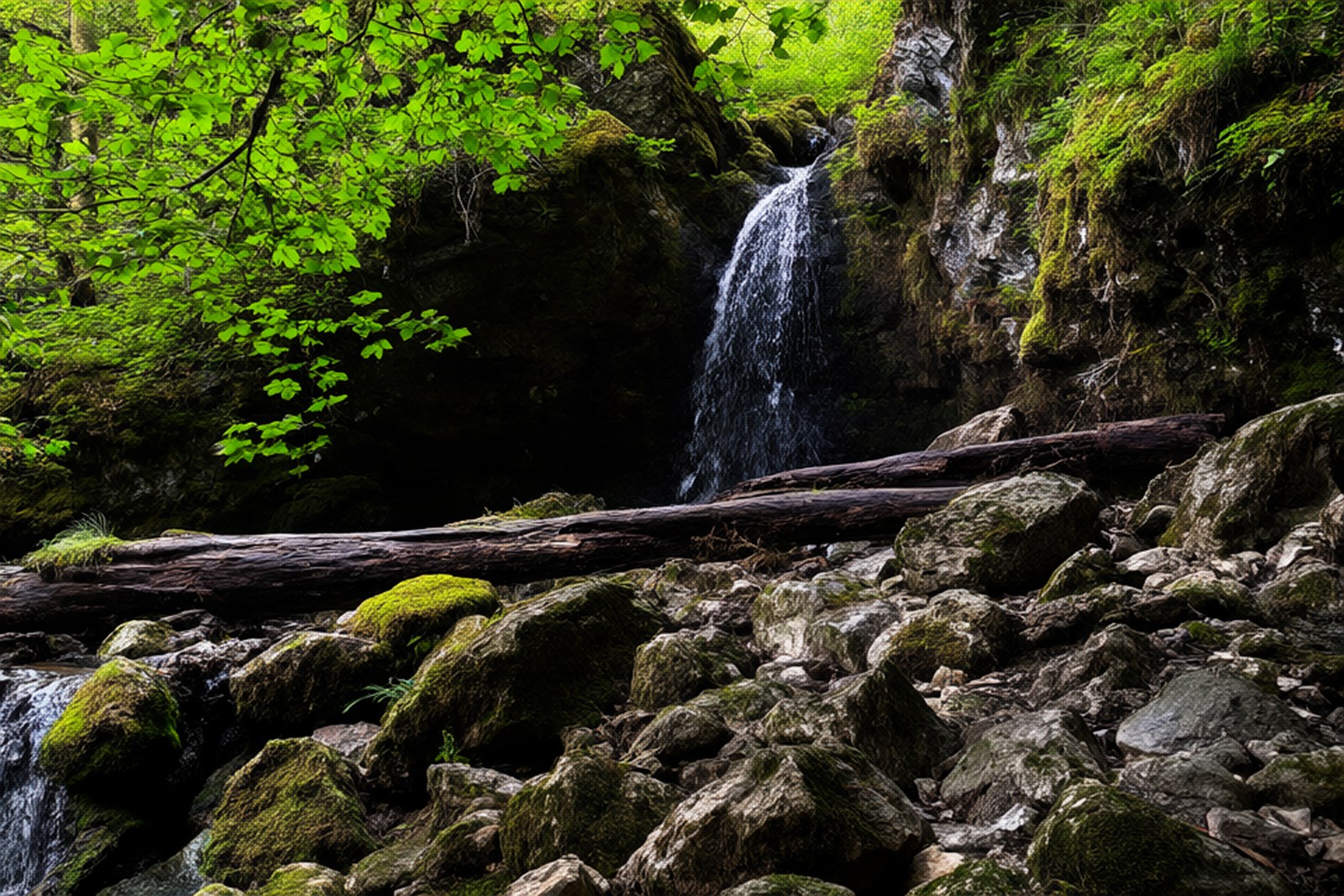
The valley itself is walked along the water. 曲幽谷 Qū yōu gǔ, the winding secluded valley, is a ten-li gorge of stream and rock where the trail follows the pools upstream from the entrance, and at the end of it the 六鹅洞瀑布 Liù é dòng pù bù, the Six Geese Cave fall, drops off a cliff face close to a hundred metres into a pool, which in the wet months is a serious noise. Above the gorge the reserve opens into the old forest proper, where the trees are large and the light comes down in shafts, and where the undergrowth carries the ferns and mosses that need real humidity. Higher still is 宝鼎山 Bǎo dǐng shān at fourteen hundred and thirty-four metres, whose summit is grass rather than forest and has a line of wind turbines along the ridge, and the 花园阁 national wetland park lies on the 巫水 Wū shuǐ below the county town.
The human history in the reserve is 上堡古国 Shàng bǎo gǔ guó, the old upland settlement of 上堡, which was the base of two large Miao risings in the Ming and the Qing: the leaders 蒙能, 李天保, 陈添仔, 杨文伯 and 金龙锡 gathered the mountain peoples of the 湘, 黔 and 桂 border here, and what is left of it includes the site of the 金銮殿, a throne hall, the horse-training ground, a general’s terrace, a shrine and stone flagpoles, with the village built up the slope above it in lanes and stone bridges and terraced fields running down to the stream. It is one of the oldest and most complete 侗 villages in the border country. Below the reserve, 寨市古镇 Zhài shì gǔ zhèn was the county seat for a thousand years and keeps a Song street with its wells and stone inscriptions, a Ming city wall with an iron bell and a covered bridge, and a spread of Qing houses; the 巫水 riverside there has a four-hundred-metre gallery of woodblock prints telling the county’s stories.
What this means for a stay is that the days go on foot. A morning is the 曲幽谷 and the fall, an afternoon is the forest and the hemlock slope, an evening is the veranda and the stream, and a second day is 上堡 and 寨市. There are steep sections and the stone is wet, so boots matter more than they would in most Chinese parks, and there is very little signposting in English. The county is Miao and Dong as well as Han, and the villages keep the fire circle, the gate-blocking welcome with a cup of wine, and the 四月八 festival in the fourth lunar month, when the girls of the villages sing against each other. The food is mountain food: cured pork and fish, winter bamboo, fern starch, wild mushrooms in the autumn, and fish out of the cold streams.
What the Rooms Are Like
Expect a room of fifteen to twenty square metres, a firm bed, a clean en-suite bathroom with a shower and a window or a veranda facing the trees or the water. The building is timber and the nights are damp, so ask for a room with a dehumidifier or at least good ventilation, and check that the bed has an electric blanket outside the summer. Insects are part of the deal in the wet months and the lodge should supply nets or coils; the timber walls carry sound, so a room at the end of the building is the quiet one. Wi-Fi is usually only near the reception, and the phone signal in the gorge is poor.
Practicalities
Price. A double at a 黄桑 lodge runs ¥150 to ¥350 a night in the shoulder season, and more over the October week. Breakfast is usually included and dinner is cooked by the house at a fair price; the 曲幽谷 and the reserve gates charge separately, in the region of ¥40 to ¥50 for the valley.
Address. The lodge is in the 黄桑 country of 绥宁县, 邵阳市, Hunan, in the south of the county towards 寨市 and 上堡, about thirty-five kilometres from the county town of 长铺镇. The nearest airport is 邵阳武冈机场 Wǔgāng jī chǎng, roughly an hour and a half away by road.
Rooms. Ask for a room with a veranda over the water, and for one at the end of the building away from the stair. Confirm hot water, an electric blanket and insect screens, and find out whether the family cooks dinner, because the nearest restaurants are some way down the valley. Bring a torch, since the lanes and the path to the stream are unlit.
Getting there. 绥宁 has no railway station and is reached by road: about two and three quarter hours from 邵阳市, two hours from 怀化 and an hour and a half from 邵阳武冈机场. From 长沙 it is around four hours. Once you are at the lodge the gorge and the forest are walkable, but 上堡, 寨市 and 宝鼎山 are each a short drive, and the drivers at the guesthouses know the forest roads, which are narrow and not well mapped.
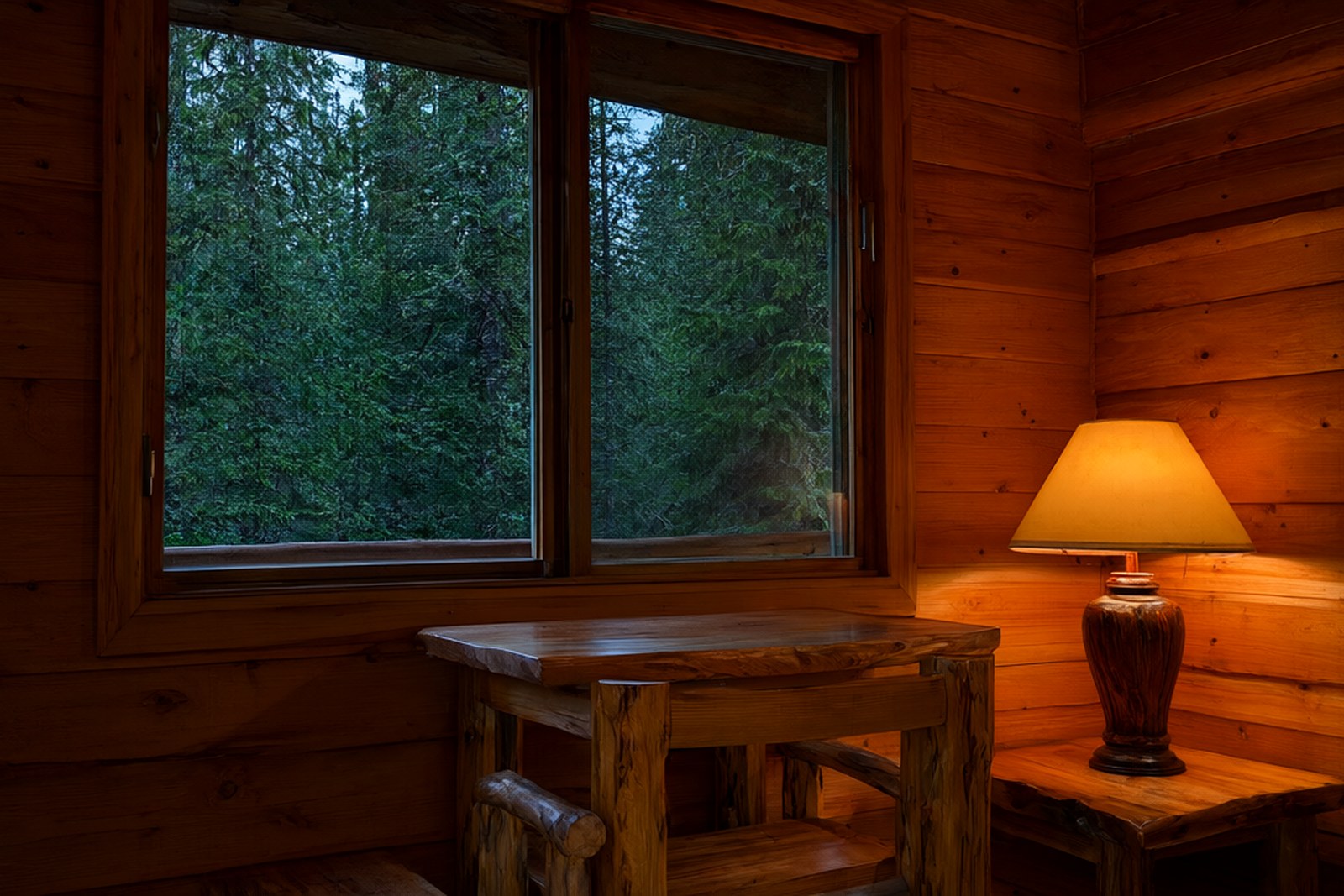
Where to stay: the timber lodges and family guesthouses in the 黄桑 reserve, 绥宁县, 邵阳市, on the stream south of the county town towards 寨市 and 上堡. Take a room at the end of the building, bring boots and a torch, give the valley two nights, and spend one day on the water and one on the old upland village.
flowcloud would say that a forest which was noticed by a satellite before it was noticed by anyone on the ground, and which now keeps a stand of living-fossil hemlocks and the ruins of a mountain kingdom in the same valley, has been protected by its own remoteness better than any regulation could have protected it.