
花石镇 Huā shí zhèn is a small town in the south of 湘潭县 Xiāng tán xiàn with ponds on every side of it, and a farmstay here is less a hotel with a theme than a house in the middle of a working crop. The town sits on the 涓水 Juān shuǐ with the edge of 衡山 Héng shān close by, it covers about two hundred and sixty square kilometres and holds some fifty-six thousand people, and it is the country’s largest collection and distribution centre for lotus seed: more than ten thousand tonnes move through a year, which is upwards of seventy per cent of the national trade. The ponds that feed it are all around the town, and in summer the crop is a spectacle – dense green leaves, pink flowers standing above them, and the smell of the leaf over the whole valley.
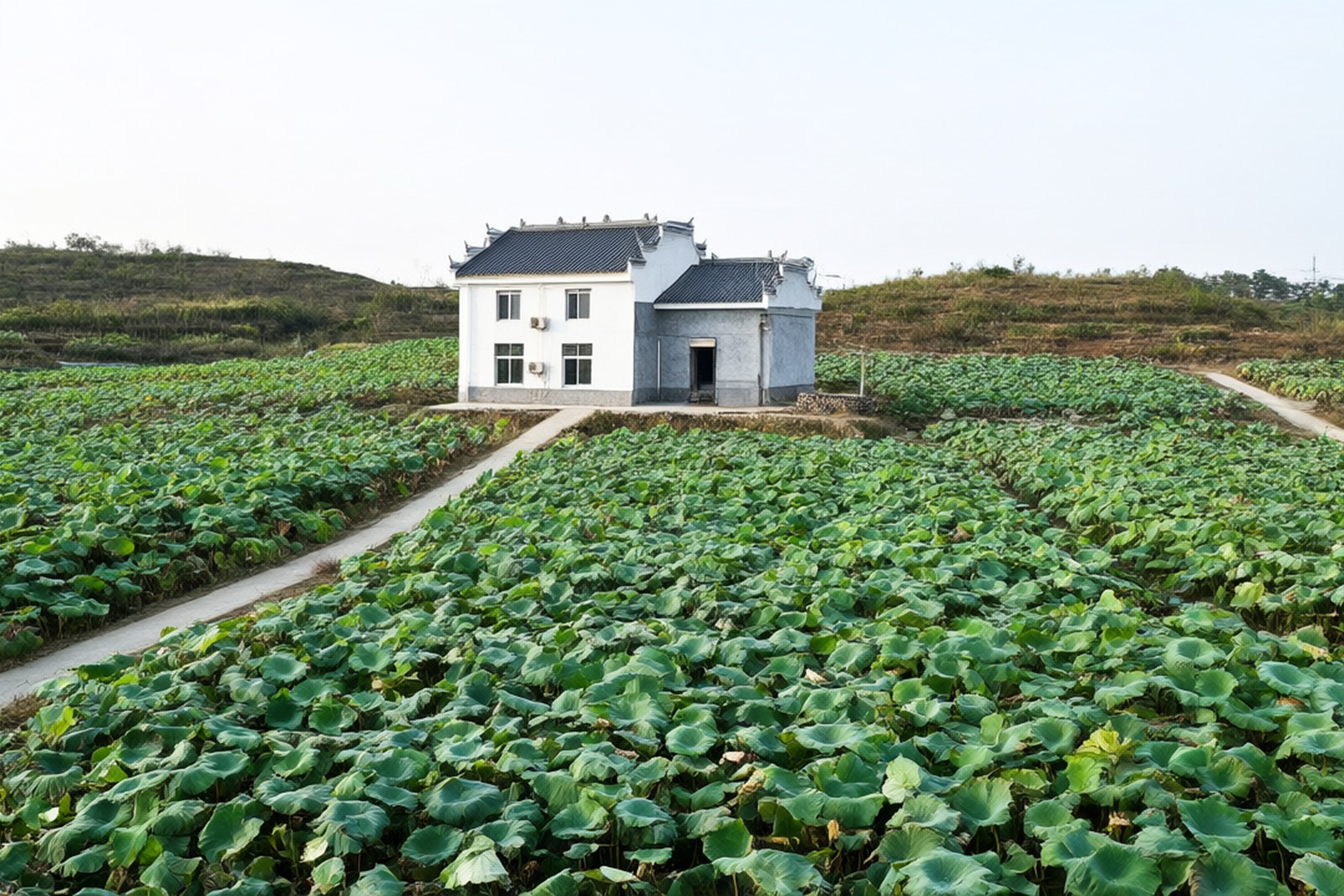
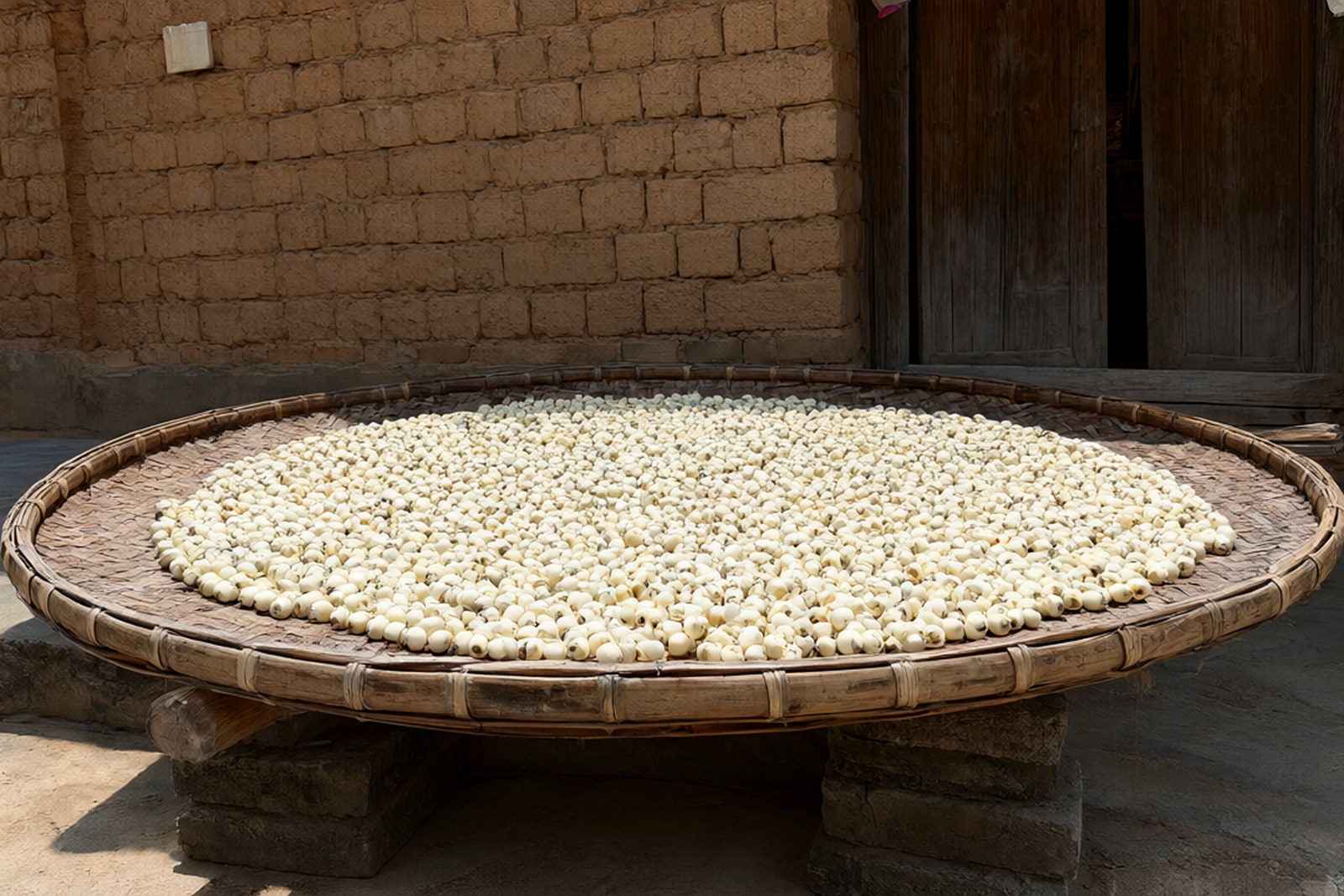
The growing season sets the calendar and therefore the stay. The lotus goes in and comes up through the spring, the ponds come into flower between June and August, and that is when the town is full of people walking the 赏荷 shǎng hé routes round the fields and the farmhouses are busy. Harvest runs from late summer into autumn, when the seed heads are cut and the seed is husked and dried, and the drying yards are laid out with trays of white kernels through the early autumn. Winter and early spring are quiet and cheap and the ponds are nothing but mud and stubble, which is honest but not what anybody comes for. The town itself has more history than its size suggests: it has been a market town on this river for centuries, it still has its 汉城桥 Hàn chéng qiáo and 观政桥 Guān zhèng qiáo, two old bridges, and the 龙口老街 Lóng kǒu lǎo jiē, the old commercial street of the river port that the seed trade grew out of.
What a guest actually does here is slow and repetitive in the way that farm stays are, and it is the reason to come. You walk the pond margins in the early morning while the flower is open and the light is still low. You eat lotus seed, obviously – 银耳莲子羹 yín ěr lián zǐ gēng, the white fungus and lotus seed soup, and 莲子粥 lián zǐ zhōu, lotus seed congee, both of which taste of very little until you have eaten them in the place they came from. You watch the husking in the sheds, which is still largely done by hand because machines bruise the kernel, and you may be handed a knife and shown how, which is harder than it looks. In the evening the town eats early and the lanes go quiet, and the frogs start.
What the Rooms Are Like
A farmstay room is a room in somebody’s house, so expect twenty to thirty square metres, a firm bed with clean cotton, air conditioning, a shower room with a good supply of hot water and a tiled floor, and a shared sitting area or yard where the family also sits. Some have been built specifically for guests and are closer to a small hotel than a home; others are literally the spare floor of a working farmhouse, and the family will be up at five. Ask which you are booking. Rooms facing the ponds are the ones to take, and a second-floor one over the yard is the best compromise between the view and the noise of the yard.
Practicalities
Price. A farmstay room in 花石镇 runs ¥120 to ¥300 a night including breakfast, and the higher end is the purpose-built guesthouses rather than the family houses. In the flowering season of June to August book ahead, because the 赏荷 trade fills the town at weekends.
Address. The farmstays are in and around 花石镇 Huā shí zhèn, 湘潭县 Xiāng tán xiàn, 湘潭市, most of them on the lanes off the 涓水 Juān shuǐ within a couple of kilometres of the town centre and its seed market.
Rooms. Ask for a pond-facing room on an upper floor, and ask whether the house cooks dinner, because in a town this size there may be one restaurant open after eight and it may not be the one you want. Bring mosquito repellent in summer; standing water is the whole point of the place and the insects know it.
Getting there. 花石镇 is in the south of 湘潭县, roughly an hour by car from 湘潭市 and about the same from 衡山; the nearest main-line station is 湘潭站 Xiāng tán zhàn with 湘潭北站 Xiāng tán běi zhàn on the 沪昆 high-speed line, both in the city. A car or a booked driver is essential, since the lanes between the ponds are not served by anything regular.
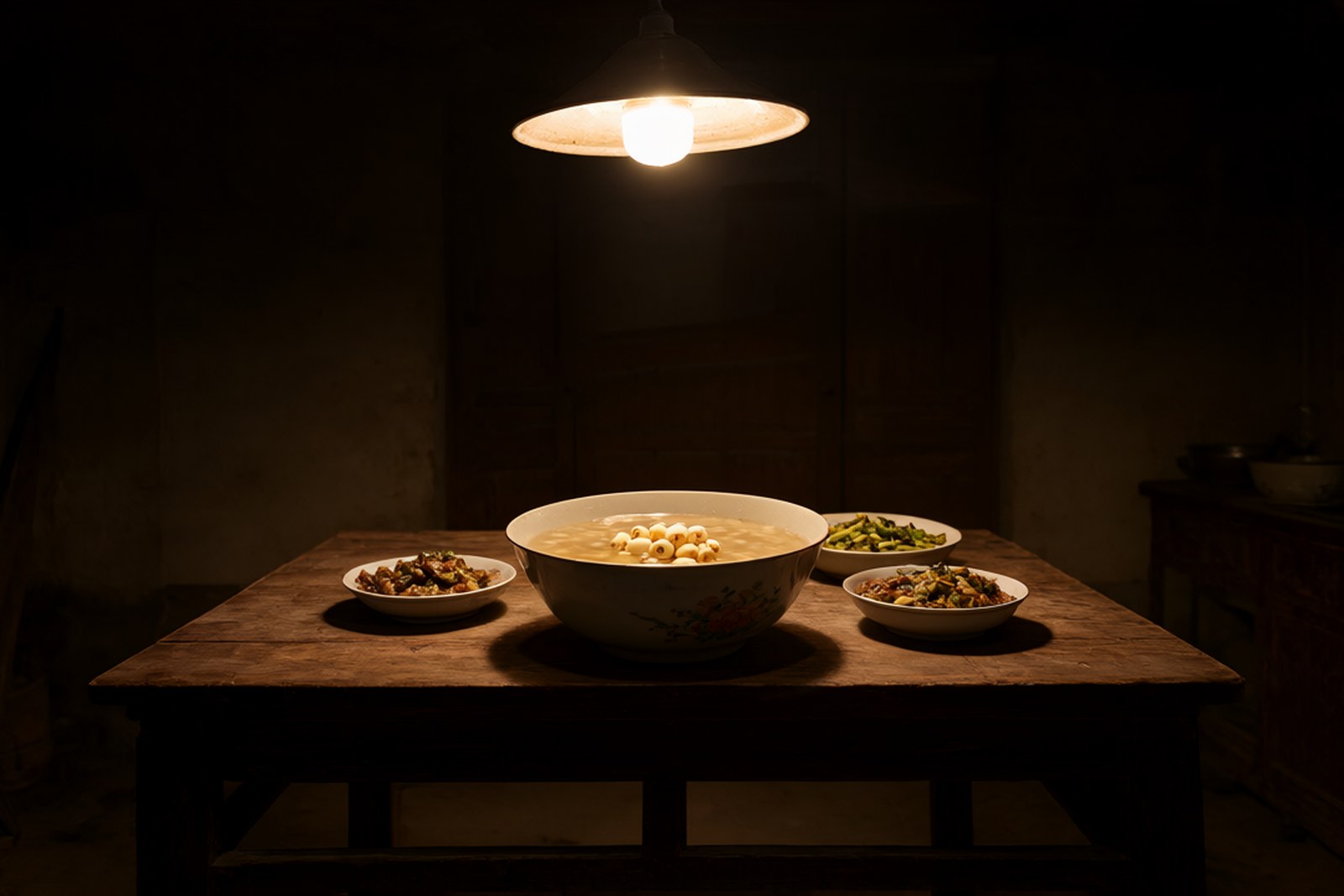
Where to stay: the farmhouses and small guesthouses in and around 花石镇, 湘潭县, among the lotus ponds. Come between June and August for the flower, eat what the house grows, watch the husking, and do not expect anything to happen after nine in the evening.
flowcloud would say that a town which has grown the same seed for two thousand years, kept its two old bridges and its one old street, and now puts visitors up in the middle of the crop rather than in a block at the edge of it, has worked out that the product was always the place.