
隆回县 Lónghuí xiàn climbs north-west out of the 资江 Zī jiāng valley into the 雪峰山 Xuě fēng shān, and in the far north-west of the county, a hundred kilometres from the county town, the hills come up to a plateau at thirteen hundred and fifty metres where the 花瑶 Huā Yáo, the Flower Yao, live. The mountain is 虎形山 Hǔ xíng shān, the tiger-shaped mountain, and the 花瑶 瑶族乡 Huā yáo Yáozú xiāng on its slopes is the only place in the country where this branch of the Yao is found. A minsu here is a family house in one of the twelve villages, 崇木凼 Chóng mù dàng or 大托 Dà tuō, with a wooden balcony facing the terraces, chillies and corn hanging under the eaves, and the old women of the house in the embroidered dress that gives the people their name.
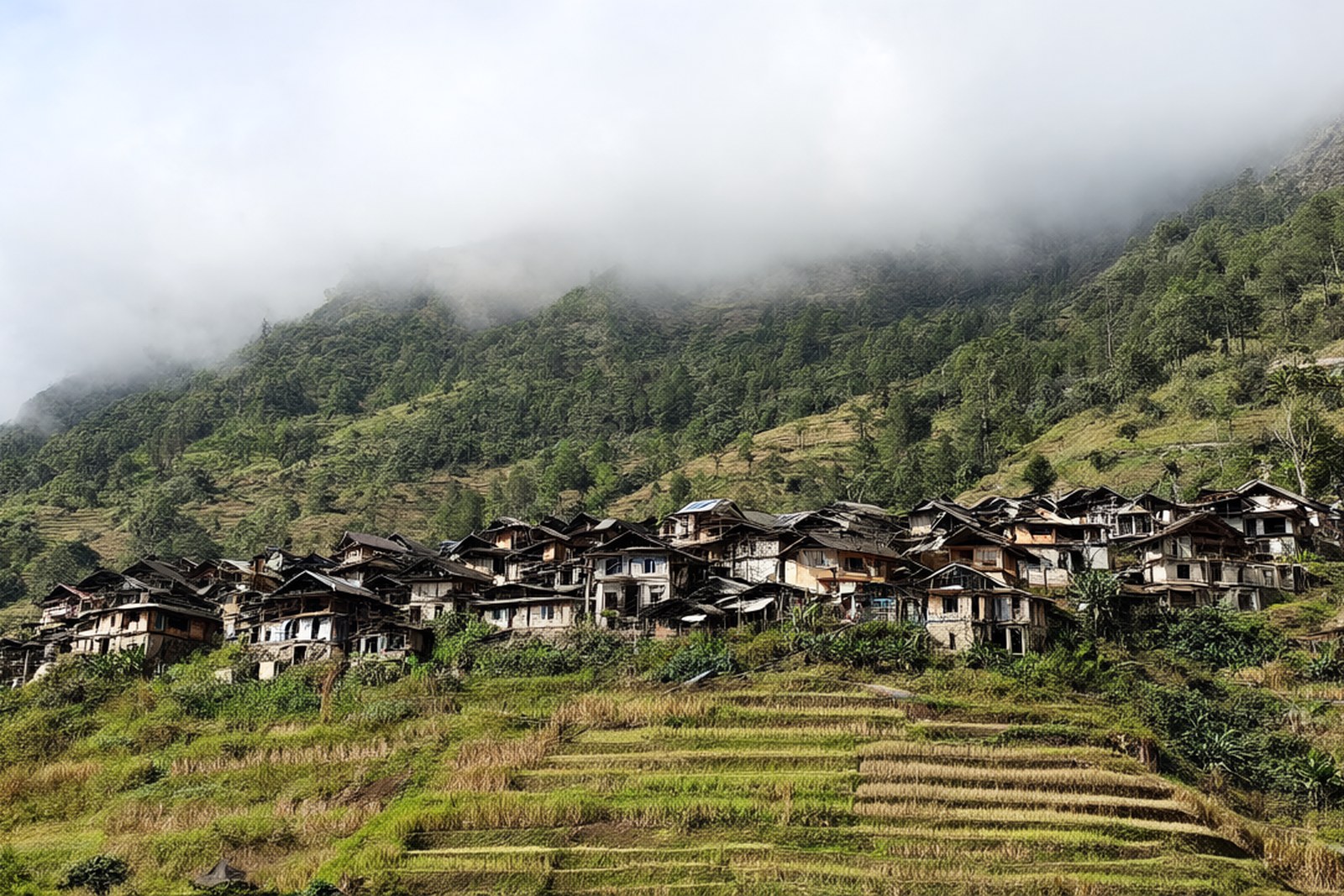
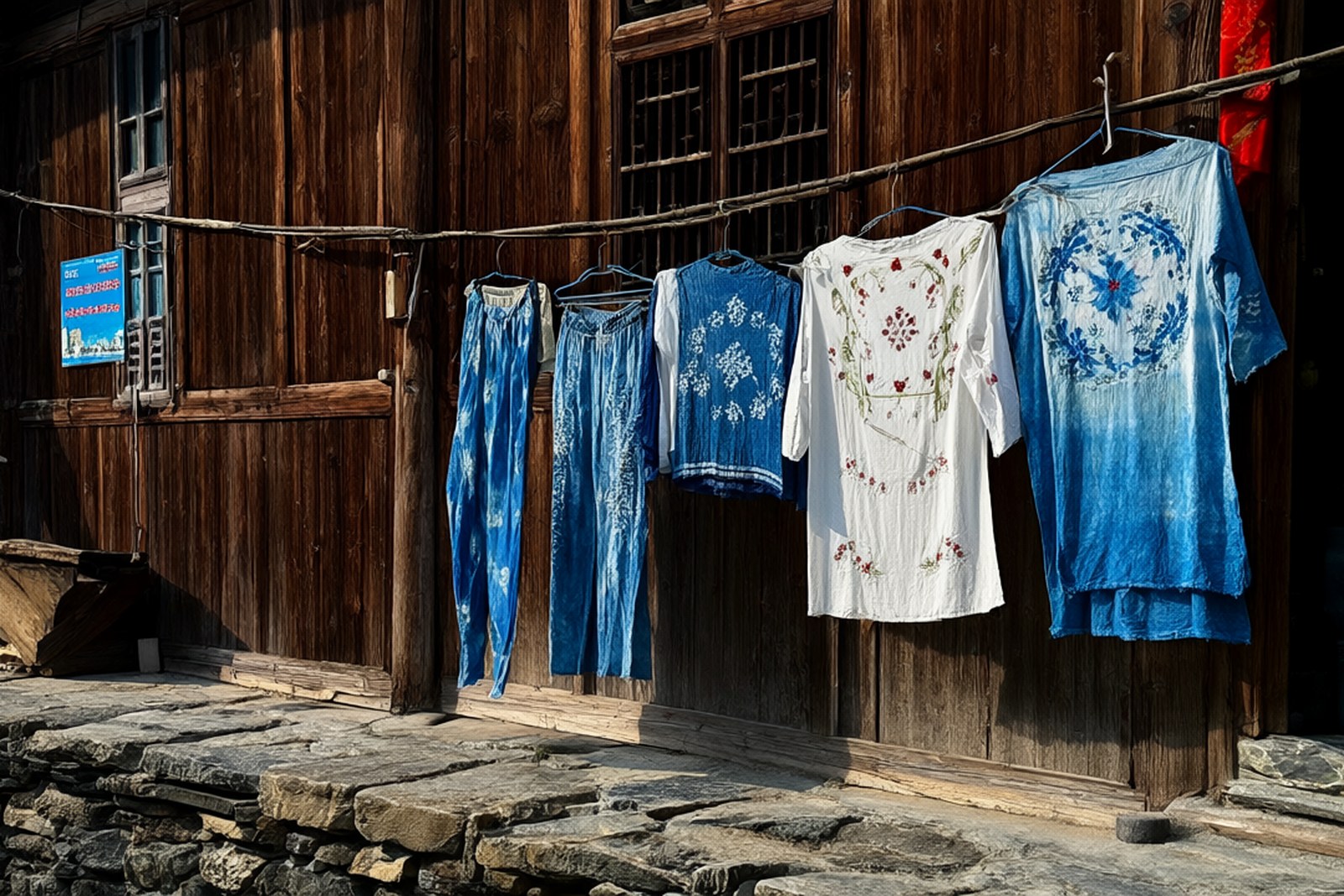
The 花瑶 are called what they are called because of what they wear. Their dress is embroidered in 挑花 tiāo huā, a counted-thread cross-stitch worked from the back of the cloth with no pattern drawn in advance, in geometric figures of a complexity that has to be seen against the light to be believed, and the writer 沈从文 Shěn Cóngwén called it first-class work by any country’s standard: a single pleated skirt takes more than three hundred thousand stitches and over a hundred and eighty working days. 花瑶挑花 and the 呜哇山歌 wū wā shān gē, the whooping antiphonal mountain song, are both national intangible cultural heritage; the wedding customs and the 讨僚皈 festival are provincial; and the township claims more intangible heritage than any other in China. The plateau is called 隆回的小西藏, 隆回’s little Tibet, and the average annual temperature is eleven degrees.
Two festivals matter and both are lunar. 讨念拜 Tǎo niàn bài, in the fifth month from the fifteenth to the seventeenth, and 讨僚皈 Tǎo liáo guī, in the seventh month from the second to the fourth and again from the eighth to the tenth, take the villages up to the old trees with offerings for an ancestor killed in the migrations, and turn into the occasions when the young people sing in competition, all day and most of the night, with the answering lines coming across the valley. The scenic area runs a seventy-minute staged version of the wedding customs, the 花瑶喜宴, in its theatre for anyone who cannot be there for the real thing. The landscape around the villages is a catalogue of strange ground: 大托石瀑 Dà tuō shí pù, a stone waterfall where a whole rock face runs down the hillside like frozen water; the 旺溪瀑布 group, five falls in a chain in one gorge; the 虎形山大峡谷 below the plateau; and terraces at several of the villages that are cut so tightly that the harvest has to be carried down by hand.
The oldest thing on the plateau is a wood. 崇木凼村 Chóng mù dàng cūn, at the top of the road, keeps a park of three hundred and twelve old trees, mostly beech and white oak, the eldest of them twelve hundred years old, and the village has a provincial protection order on the whole stand. The 花瑶, who were driven into these hills in the migrations and hid in the forest from what was following them, took the trees as protectors and have kept them since; the villagers name individual trees for their shapes and the stories attached to them, and no one cuts so much as a branch. Every festival in the calendar starts there, under the canopy, with the offerings laid out at the roots. It is the single best half hour on the mountain and it costs nothing.
The rest of the county below is worth a detour of its own, and a stay of three nights is not too long. 滩头镇 Tān tóu zhèn is the woodblock-print town, where the New Year pictures are cut and printed and hung up to dry on the walls of the houses along the water; 司门前镇 Sī mén qián zhèn has the childhood home of 魏源 Wèi Yuán, the scholar who first argued that China should learn from the West, kept as a museum and the first national patriotic education base in the city; and the high valleys towards 小沙江 Xiǎo shā jiāng are covered in 金银花 jīn yín huā, honeysuckle, in June, which the county grows more of than anywhere else in the country. Food on the plateau is mountain food: smoked pork and cured sausage, bamboo shoots, potatoes and 蕨粑 fern-root cake, chicken from the yard, and a rice wine that the villages brew themselves, served in a bowl rather than a cup. Guests are met at the gate with a cup of it, which is not optional and not a small cup.
What the Rooms Are Like
Expect a room of fifteen to twenty square metres, a firm bed, a clean en-suite bathroom with a shower, a quilt and usually a wooden balcony facing the terraces. The houses are timber, so the walls are thin and the floors creak, and the room next door will be audible; ask for one at the end. Heating is by electric pad or air conditioning and the plateau is genuinely cold from October to April, so confirm the blanket before you book. Water is heated by the house and can run cool when it is full. Wi-Fi is available at some houses and not others, and the mobile signal is reliable at the top of the plateau and patchy in the valleys.
Practicalities
Price. A double in a 花瑶 minsu runs ¥120 to ¥300 a night in the shoulder season, and rather more during the two festivals, when the whole plateau is booked out weeks ahead. Breakfast and dinner are usually available from the family for a small extra charge and are the best food in the village.
Address. The minsu is in one of the 花瑶 villages of 虎形山瑶族乡 Hǔ xíng shān Yáozú xiāng, 隆回县, 邵阳市, Hunan, about a hundred kilometres north-west of the county town and close to the 虎形山-花瑶 scenic area gates. The nearest railway station is 隆回站 Lónghuí zhàn on the 怀邵衡 line; 邵阳武冈机场 Wǔgāng jī chǎng is about two hours away.
Rooms. Ask for a room with a balcony facing the terraces and, if the house has one, a view of the old trees. Confirm the quilt and the heating, and ask the family to cook dinner rather than looking for a restaurant, since there is not much of one. If you are coming for 讨念拜 or 讨僚皈, book a month ahead and confirm twice, because the plateau fills completely.
Getting there. The plateau is reached by road from 隆回县城 桃花坪, about two and a half hours of mountain driving, and about three hours from 邵阳市; 长沙 is roughly five hours. 隆回站 on the 怀邵衡 high-speed line is convenient for the county town and the 滩头 and 魏源 stops but leaves three hours of road at the end, so most visitors come by car. Once you are up, the villages are connected by a single ridge road and everything within it is walkable, but the valleys and the gorges need the car, and the road up should not be driven at night for the first time.
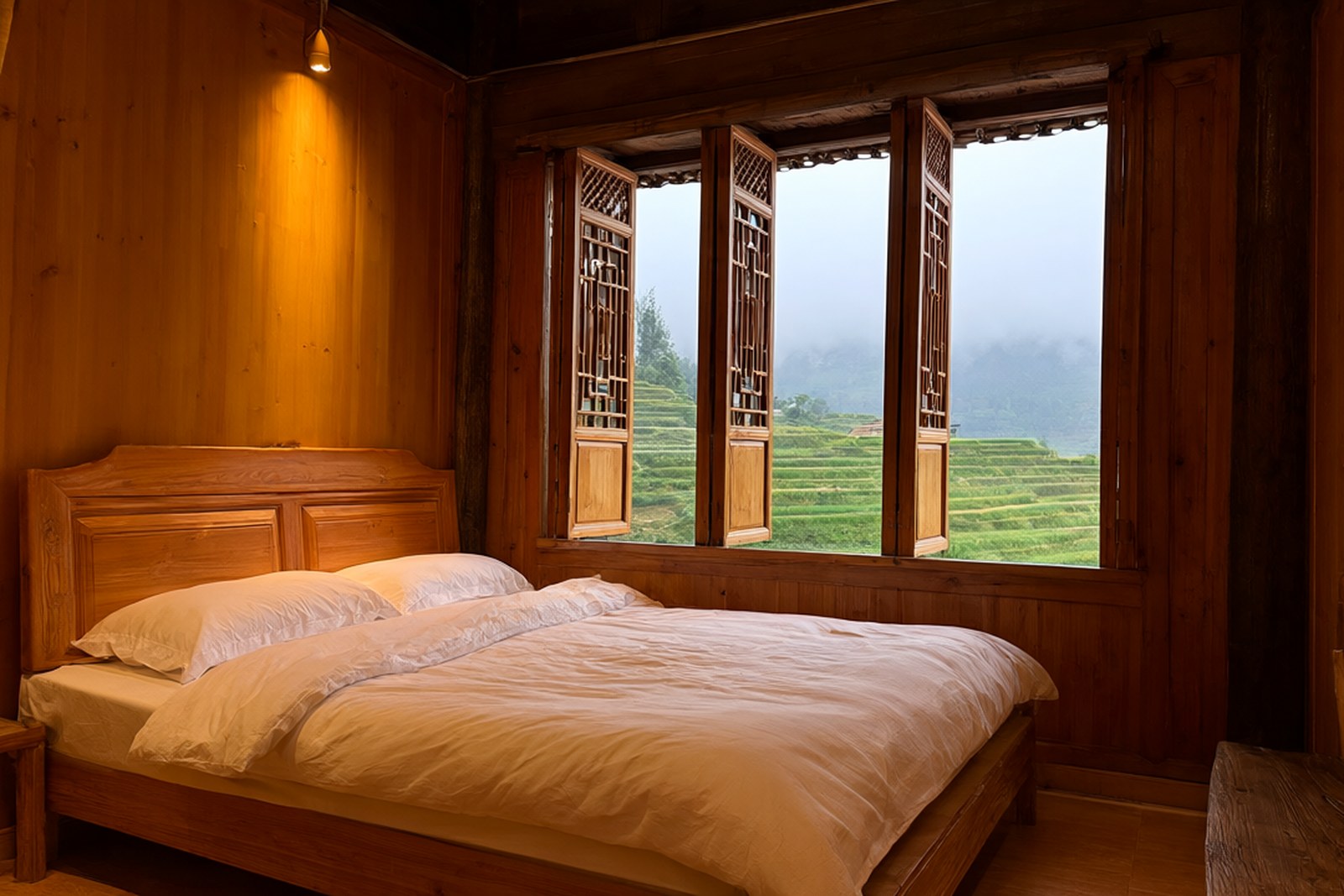
Where to stay: the family minsu in the 花瑶 villages of 虎形山瑶族乡, 隆回县, 邵阳市, on the ridge road through 崇木凼 and 大托. Take a balcony room, let the family cook, walk to the old trees at first light before anyone else is up, and if you can time it to a festival, do.
flowcloud would say that a people who were driven into the highest hills they could find and answered by inventing an embroidery that takes half a year a garment, and who then decided that the forest which hid them was sacred, have left a better account of themselves on that plateau than any monument would have been.