
Rooms by the Gold: Lodging at the Poplar Stands
金林推窗见,一夜伴秋眠 Jīn lín tuī chuāng jiàn, yī yè bàn qiū mián – Push open the window to the golden woods; sleep all night in autumn’s company
正文:胡杨景区住宿 Húyáng Jǐngqū zhùsù the lodging at the poplar stands lines the terrace roads at 胡杨河市 Húyáng hé Shì Huyanghe City’s edge – farmhouse inns, roadside hotels and timber cabin courtyards that put the October gold a five-minute drive from the pillow. For the ten days a year when the forest burns gold, these rooms are the city’s most contested real estate; the other fifty weeks they are its best-value quiet, terrace tracks and river oxbows at the door and nobody else checking in.
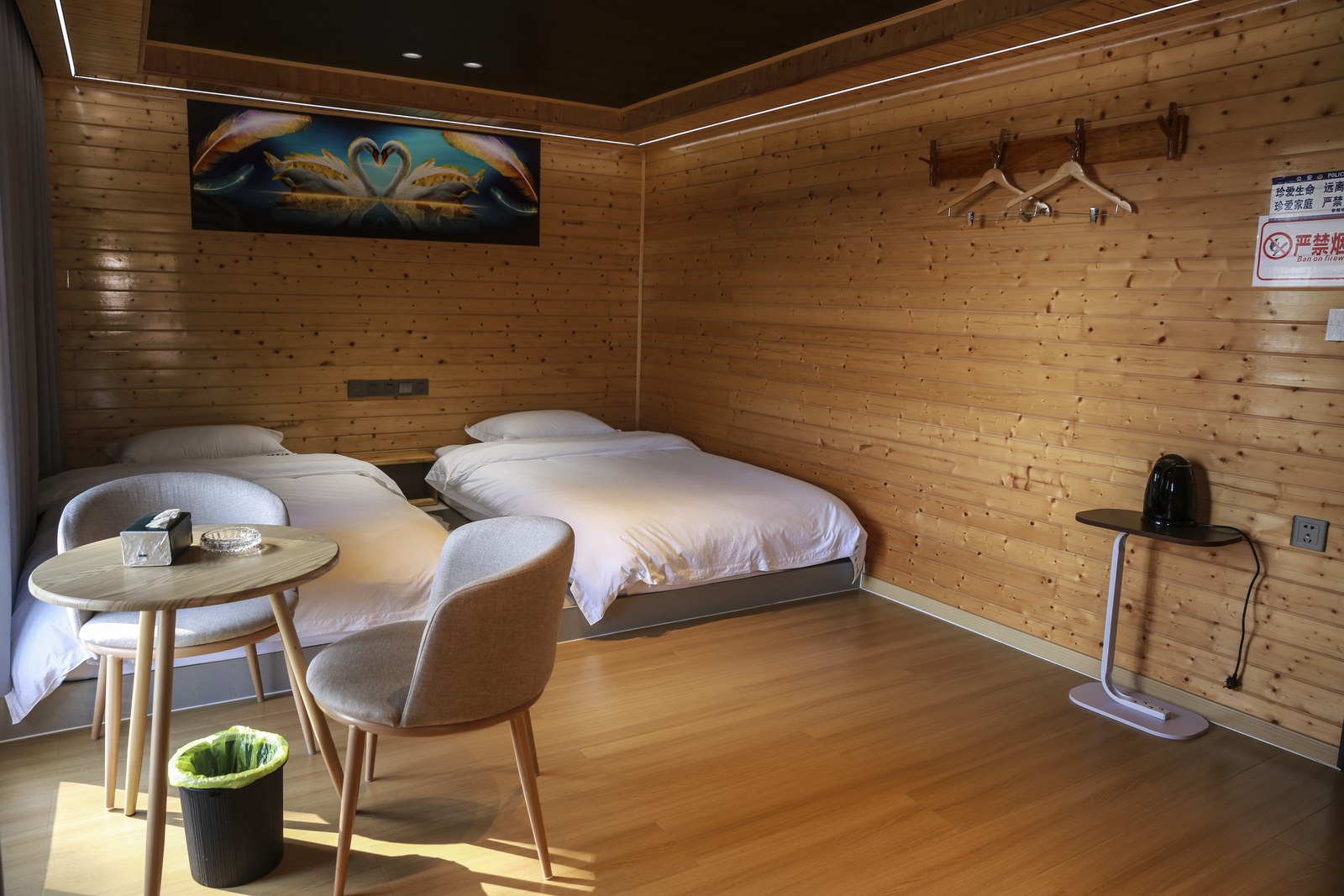
The stock splits into two characters. The timber cabin courtyards lean scenic – pine-lined rooms, courtyards with morning frost on the benches, windows framed for the canopy – while the roadside hotels run the practical line: big beds, hot showers, and lobbies full of photographers comparing memory cards at night. Both keep the same front-door advantage: the terrace tracks start across the road, dawn light reaches the gold before the crowds leave downtown, and an evening walk among silver trunks needs no ticket at all.
October rewrites the economics. The gold weeks fill these rooms a fortnight out – the poplar rooms go first, then everything within sight of a trunk – and prices ride the season like a harvest. The counter-move is simple: book early, or come in the shoulder weeks when the forest is silver-green and serene, the inns negotiable, and the hosts have time to walk you to their favorite grove personally.
Practicalities first: book the gold weeks a fortnight out since the poplar rooms go first, confirm dinner hours at the roadside inns, and keep a torch for the terrace tracks after the short November dusk. The cabins run cool at the shoulders of the season – ask about heating before committing to October’s first cold snap – and the best photography mornings begin at the gate before the tour vans clear the city.
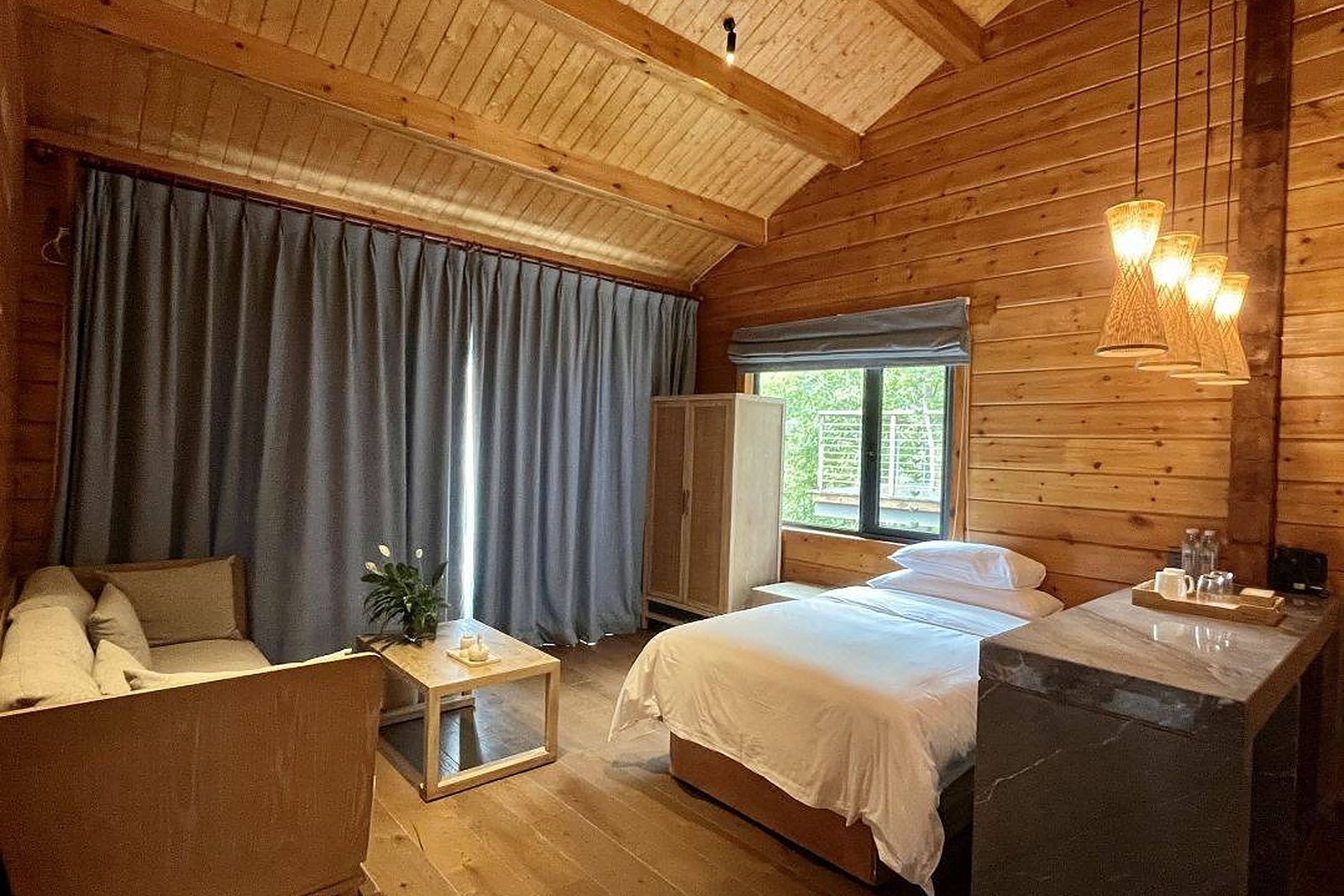
What the stay sells is time inside the forest’s day cycle. Photographers work the dawn frost and the amber dusk; walkers log the terrace loops in the cool hours; and everyone else discovers that a forest at one’s door changes how long a trip feels – a week at the stands passes at the trees’ pace, not the itinerary’s.
The Stays
The timber cabin courtyards frame the canopy for the scenic traveler; the roadside hotels keep the photographers fed, warm and comparing cards until midnight, and both put the terrace tracks close enough to hear the leaves click in the wind. Doors: the same 胡杨河市 Húyáng hé Shì Huyanghe City keeps downtown rooms for the evening square, wetland-side rooms for dawn birding, farm-town lodging by the Gobi Mother residence, and courtyard farmstays on the regiment farms – four more doors into the same 胡杨河市 Húyáng hé Shì Huyanghe City. Once the gold base is set, our Huyanghe food map fills the day.
The Stays
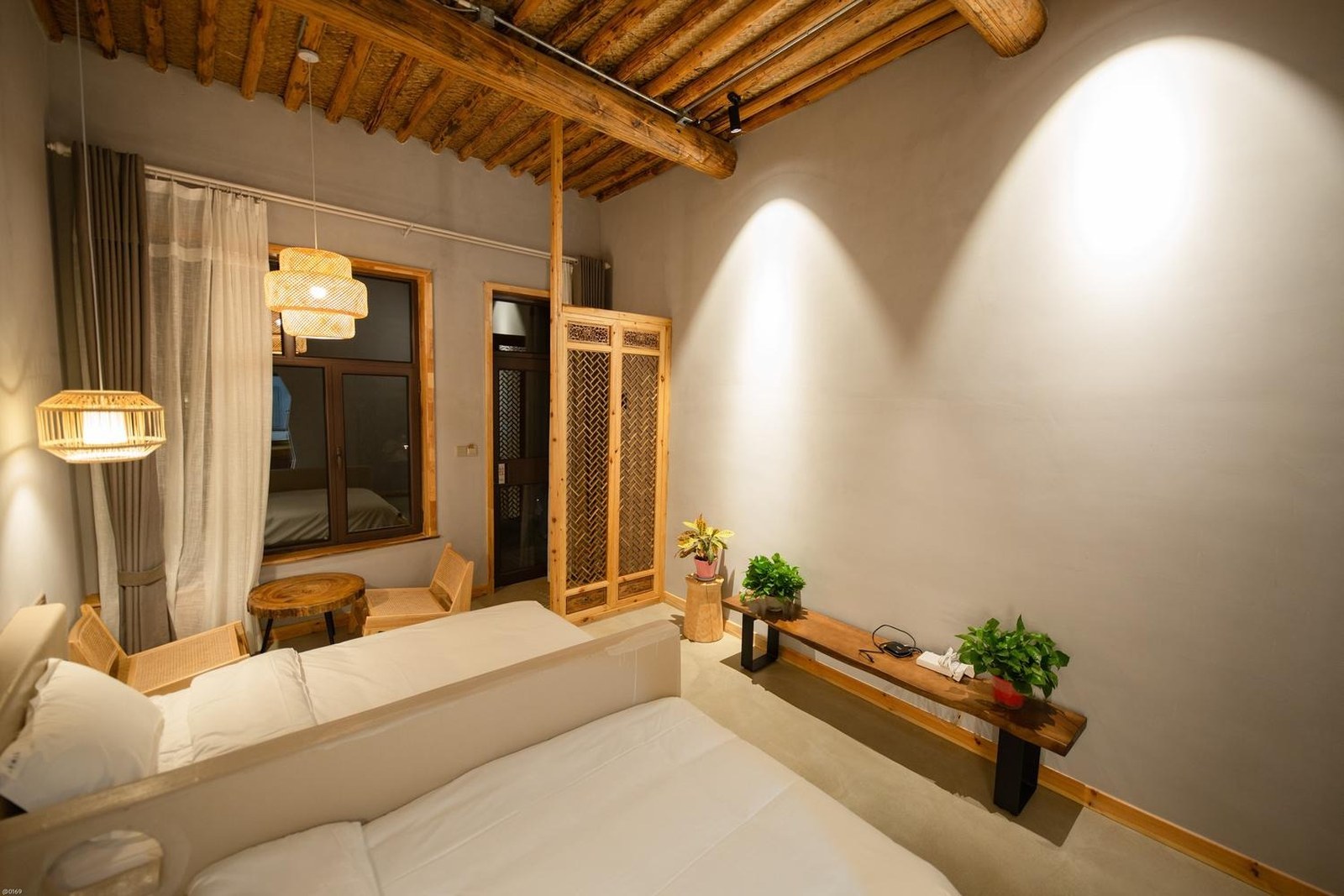
flowcloud would say the poplar-stand lodging is October’s front-row seating: rooms that wake inside the gold, lobbies that smell of woodsmoke and other people’s photographs, and terrace tracks at the doorstep – ten days a year of competition for a bed that spends fifty quiet weeks being a bargain. All checked November 2026.
Where to stay: Book the gold weeks a fortnight out since the poplar rooms go first, confirm dinner hours at the roadside inns, and keep a torch for the dark farm lanes after the terrace walk. All checked November 2026.