
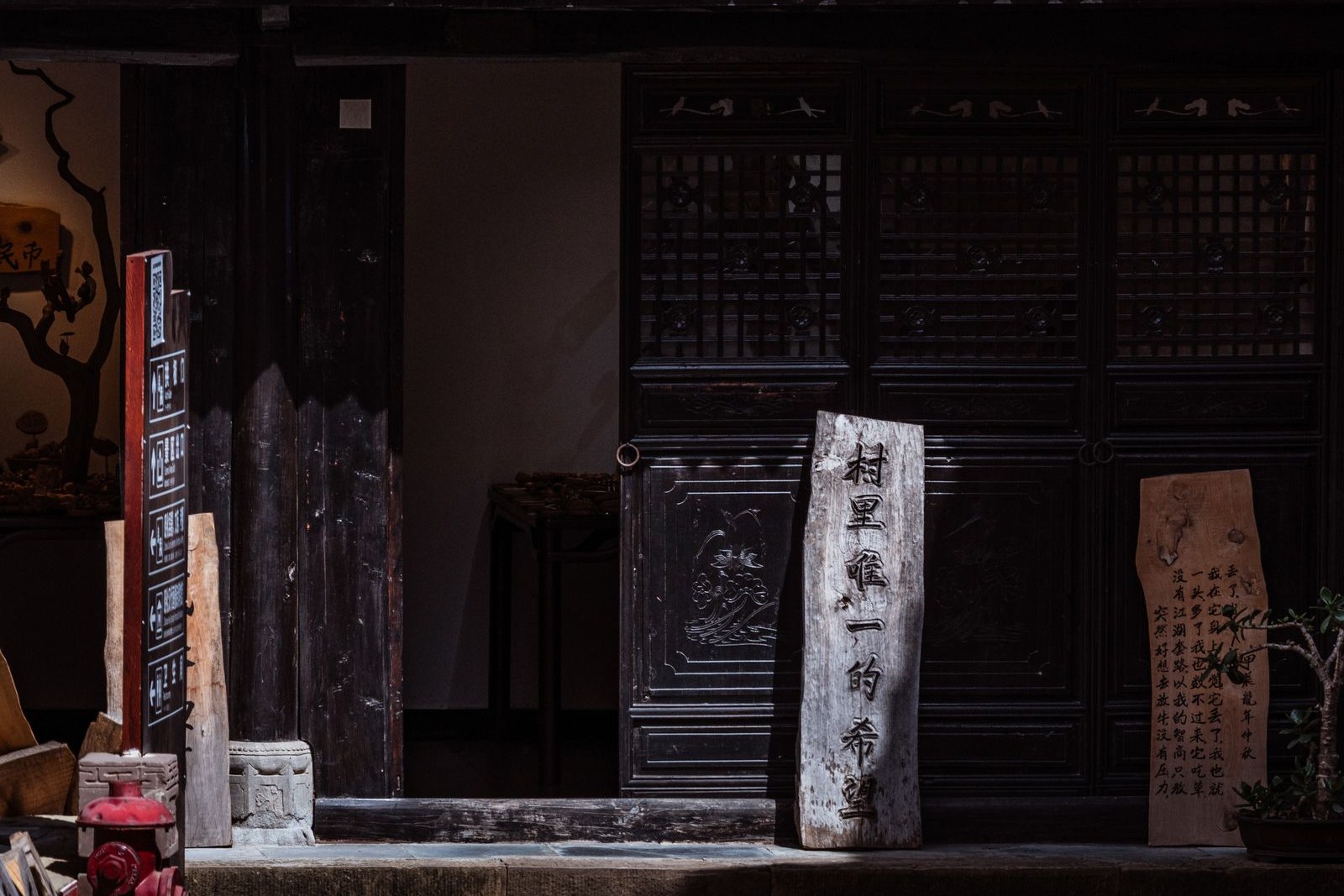
The guesthouse is built around a script. There is a framed 女书 nǚshū panel in every room, the curtains carry a border of it, and the woman who runs the place will write your name in it on a strip of paper if you ask, which you should, because the characters for a spoken name almost never have a written form and she will have to invent one for you. The rooms are new-built timber in the local style, tall and narrow with a mezzanine sleeping platform, and the windows face the 都庞岭 Dūpánglǐng hills. A double is ¥200–400 with breakfast. This is the only place I know of where the decorative theme is also the reason the county is on the map.
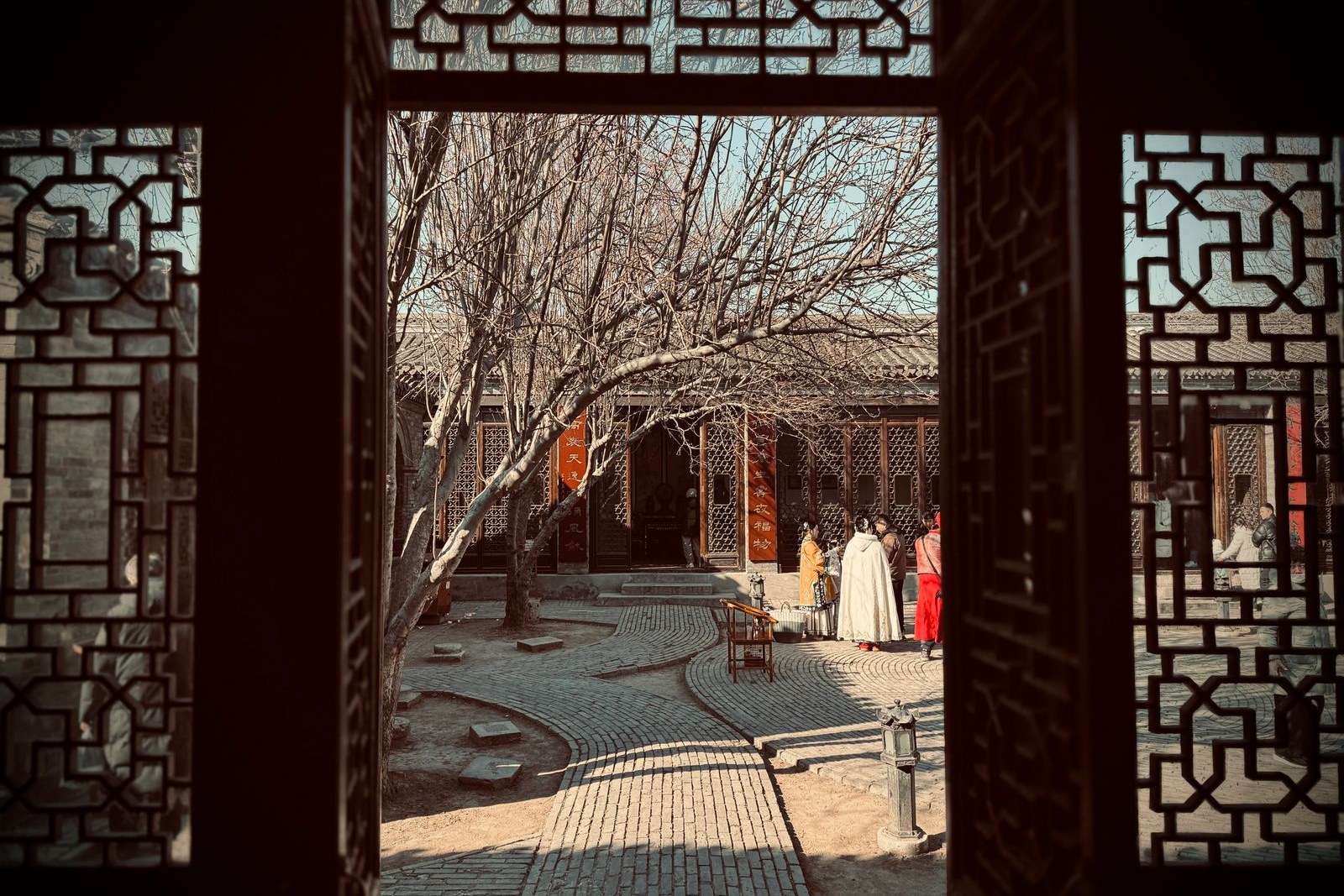
女书 nǚshū, “women’s script”, is a syllabic writing system created and used exclusively by women in a small cluster of villages in 江永县 Jiāngyǒng Xiàn, in the far south of Yongzhou where Hunan runs into Guangxi. It was used for letters, for songs, and for 三朝书 sānzhāoshū — the little cloth-bound books of farewell verses that a woman’s sworn sisters gave her when she married out of the village. Men could not read it; boys were not taught it; and its very existence was barely known outside the region until the 1980s, when scholars began documenting it and found a handful of elderly women who were still literate. The most celebrated, 阳焕宜 Yáng Huànyí, died in 2004 in her nineties. 女书 was placed on China’s national intangible heritage list in 2006, and the county’s museum, the 女书园 Nǚshū Yuán, in 上江圩镇 Shàngjiāngwéi Zhèn, is built around the surviving material.
The reason to sleep here rather than in the county town is that the villages where the script came from are twenty minutes away and are worth a morning — 普美村 Pǔměi Cūn on the river island, and the ordinary farmhouses in between, where the script survives in embroidered belts and on the walls of the temple. This is not a theme park; it is a very poor, very beautiful corner of the province where a genuinely unique thing happened, and staying nearby means you can see it in the six-in-the-morning light before the coaches arrive.
What You Are Paying For
Price. ¥200–400 for a double with breakfast. Themed but not themed-up: this is a real guesthouse with good beds, not a script museum with rooms attached.
Address. 上江圩镇 Shàngjiāngwéi Zhèn and the villages around it, 江永县 Jiāngyǒng Xiàn, 永州市 Yǒngzhōushì.
Rooms. Under twenty, in two or three separate houses. Ask for one facing the hills and away from the road. The mezzanine platforms are comfortable but there is a headroom issue at the edge; if you are tall, ask for a ground-floor room.
Getting there. No railway station nearby. From 永州 Yǒngzhōu it is about two and a half hours by road; from 江永 Jiāngyǒng county town, twenty minutes and ¥30–50 by taxi. Most guests come as a stop on a driving trip through southern Hunan.
What the Locals Know
Ask her to write your name, then ask what it means. The transliteration is always approximate and the explanation is always interesting, because the script’s value system is different: many of its words are about friendship between women rather than about anything a man would need to say.
Buy the cloth, not the scrolls. The embroidered belts and handkerchiefs made in the villages are the real article. The framed calligraphy in the shops is mostly written by visiting calligraphers in the last twenty years.
Go to 普美村 Pǔměi Cūn in the morning. The village is on a river island and the crossing is by a small ferry; before nine it is one of the quietest places in Hunan.
Combine it with 上甘棠 Shànggāntáng, twenty minutes away. A Tang-dynasty village with a Song bridge, in the same valley, and the two together make a proper day.
Where to Stay
Book by phone. The guesthouse is small and there is no walk-in desk worth the name; if you arrive without a reservation in a festival week you will be driving back to the county town. Spring and autumn are the seasons; summer here is hot and humid even by Hunan standards.
flowcloud would say that a script invented so that women could say things to each other that the men around them could not read is the most elegant act of literary defiance I know of, and that the fact its most famous living form is now embroidered on a guesthouse curtain is either a triumph or a tragedy depending on whether the village women are still writing in it — which, on the evidence of the school groups I saw, they are.
Where to stay: 女书主题客栈 (nǚshū zhǔtí kèzhàn), 上江圩镇 (Shàngjiāngwéi Zhèn), 江永县 (Jiāngyǒng Xiàn), 永州市 (Yǒngzhōushì), 湖南 (Húnán). Doubles ¥200–400 with breakfast. About 2.5 hours by road from 永州 (Yǒngzhōu). Ask for a hillside room, visit 女书园 (Nǚshū Yuán) and 普美村 (Pǔměi Cūn), and buy village embroidery rather than shop calligraphy.