
Chongqing is a municipality of southwest China, and Yuzhong is its central district: the narrow peninsula where the Yangtze meets the Jialing River, holding some 576,000 residents at the end of 2025 and, by the same year’s statistical bulletin, nearly 94 million visitor arrivals. At the head of the peninsula stands 解放碑 Jiěfàngbēi, Jiefangbei, the People’s Liberation Monument, first raised in 1940 and completed at the end of 1941, renamed after the war and renamed again in 1950, and since 1997 the anchor of the pedestrian street the Ministry of Commerce has rated a national demonstration street. This piece is about the beds within roughly a square kilometre of that monument, and its argument is that the real amenity is the street itself: the walk to the monument, one block on to the 八一路 Bāyī Lù, Bayi Road, food stalls, and about ten minutes by navigation to the river – while the district’s official star-rated list runs to just eight hotels, so most of what the platforms sell here is something else entirely.
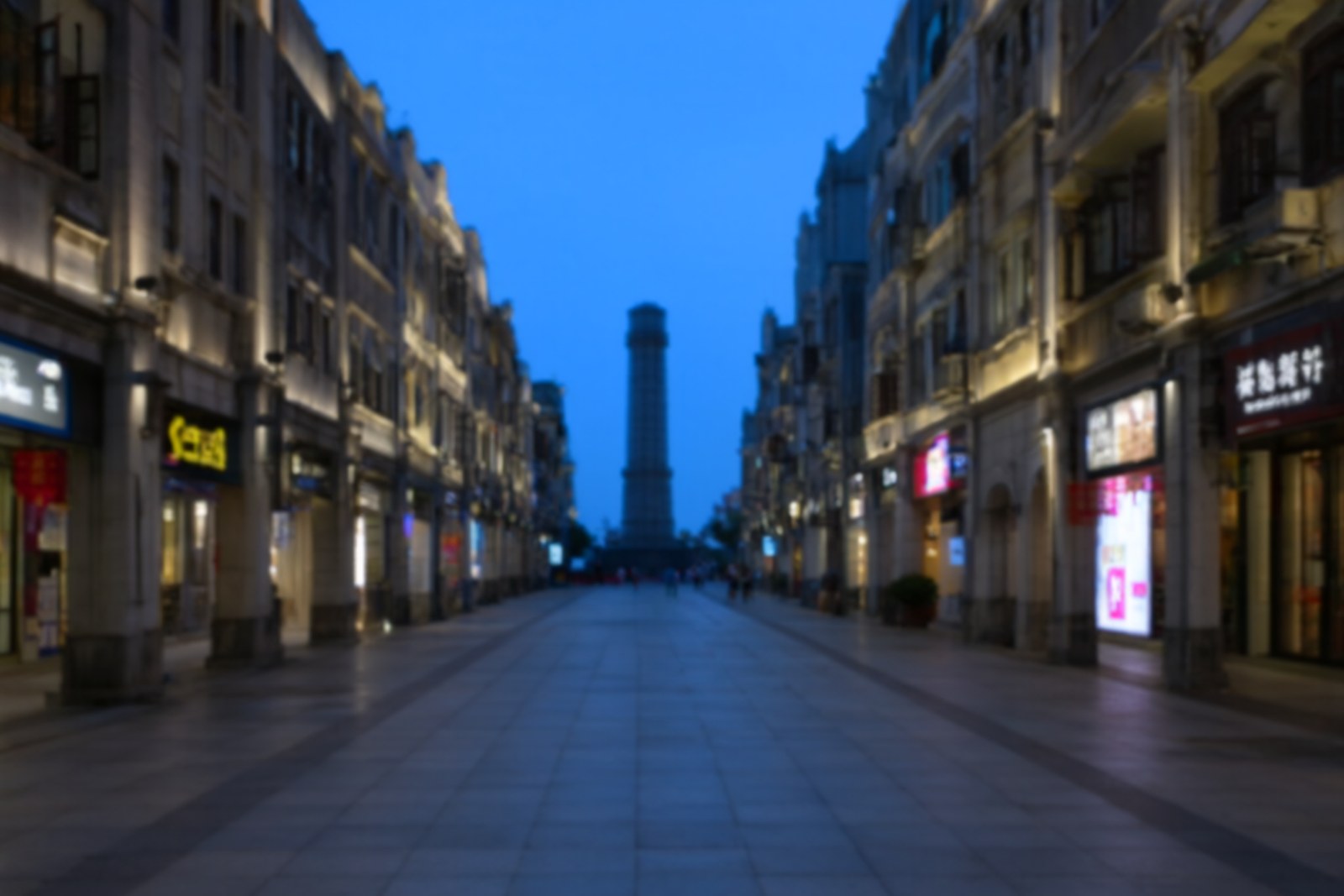
Choose a ring before you choose a room. The inner ring is the monument and the streets that feed it, 民权路 Mínquán Lù, 五四路 Wǔsì Lù and 青年路 Qīngnián Lù, Minquan, Wusi and Qingnian roads, where the evening crowd is thickest. The second leans towards the Jialing along 沧白路 Cāngbái Lù, Cangbai Road, and 临江门 Línjiāngmén, Linjiangmen, where prices begin to carry a river premium. The third is the 较场口 Jiàochǎngkǒu, Jiaochangkou, side, towards Shibati and the night markets, where the budget chains cluster. Three metro anchors frame the circle – Jiaochangkou on Lines 1 and 2, Linjiangmen on Line 2, 小什字 Xiǎoshízì, Xiaoshizi, on Lines 1 and 6 – and underneath runs the Jiefangbei underground ring road, twenty car parks and near ten thousand spaces, a national urban-renewal case that keeps the surface of the quarter for feet.
In an October 2026 platform snapshot the ladder ran as follows: a hostel berth from about 101 yuan a night; economy rooms from about 180 at 丽呈睿轩 Lìchéng Ruìxuān, Licheng Ruixuan, and about 323 at 能仁客栈 Néngrén Kèzhàn, the Nengren guest house, three upper floors of a temple annex; the mid-band workhorses 亚朵 Yàduǒ, Atour, by Bayi square from about 403 and 美居 Měijū, Mercure, on Bayi Road from about 402; and the upper band from the Moxy at about 728, through the Atour River View on the twenty-sixth floor of 45-47 Xinhua Road at about 808 – its lobby hangs behind floor-to-ceiling windows in the air – to the 威斯汀 Wēisītīng, Westin, from about 1,918, whose five-star tag is the platform’s own label and not an official rating. Two names carry the cautionary tale: the 希岸 Xī’àn, Xana, on Minquan Road read 610 yuan on one platform in October 2026 and 172 in a September reading elsewhere, and the 麗枫 Lìfēng, Lavande, on Qingnian Road read 947 and 239 across the same pair – the same rooms, quotes four times apart, which is the case for treating every figure here as a snapshot that floats.
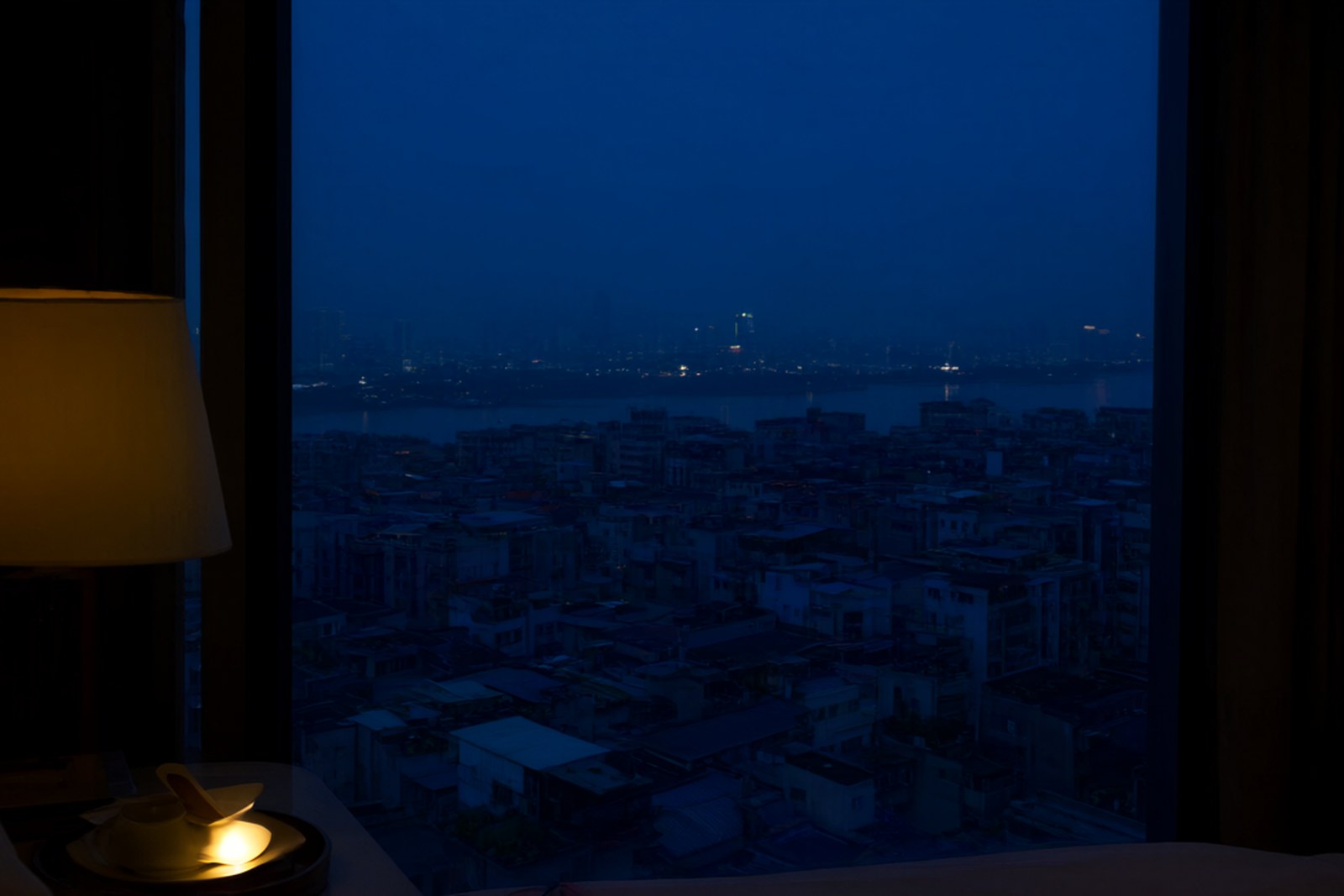
What the band rarely includes is the thing most cities mean by a hotel. Flat land is scarce on the peninsula, so much of the inventory is stacked into office and mixed-use towers between the fourteenth and the forty-sixth floors, selling itself as 高空酒店 gāokōng jiǔdiàn, high-floor sky hotels; the commute from the street is a lift ride. The platform commentary of September 2026 adds two cautions: some of these addresses sit in older towers with slow lifts and tired corridors, and any listing scoring above 4.9 on fewer than a hundred reviews deserves suspicion. Price the same room across two platforms on the day you book, and confirm which tower and which floor.
One boundary belongs here. The stilt houses by the river are the subject of another article on this site, which walks into them; this one only picks a bed within a walk of them, best measured by navigation on the day. The noodles and standing bowls of Bayi Road belong to the food column; this piece is about nothing but the beds. And against the city-hotel pieces elsewhere on this site the difference is of kind: those read a luxury market, this one reads a pedestrian street where the currency is steps rather than stars – Jiefangbei is a monument with a city arranged in circles around it.
What the Rooms Are Like
The room shapes follow the buildings: in the tower-top hotels a king or twin bed, a floor-to-ceiling window and often a projector in place of a television; in the chains compact standard rooms; in the temple-annex and family inns simple rooms with family categories. Three questions sort a booking: which tower and which floor, since one brand name can sit in two buildings; whether breakfast is served in the building or only nearby; and whether the front desk hours match your arrival, because several sky hotels are small operations on shared floors.
Practicalities
Price. In an October 2026 platform snapshot the circle ran from about 101 yuan for a hostel berth to about 1,918 at the top, the main mass between about 180 and 950: economy rooms 101 to 380, mid-band chains and sky hotels 402 to 950, upper band 700 to 1,918. The same property can carry quotes four times apart across platforms – recorded spreads of 172 to 610 and 239 to 947 – and holidays climb above all of it. Every figure is a snapshot that floats.
Address. 重庆市渝中区解放碑街道 Zhōngqìng Shì Yúzhōng Qū Jiěfàngbēi Jiēdào, Jiefangbei Subdistrict, Yuzhong District, Chongqing – the hotels gather on 民权路、五四路、八一路、青年路、新华路、沧白路, Minquan, Wusi, Bayi, Qingnian, Xinhua and Cangbai roads. The door number on the order page is the one that counts.
Rooms. The district’s official star-rated list runs to just eight hotels, one five-star and six four-star by the 2025 statistical bulletin; everything else is unranked inventory – tower-top sky hotels, mid-band chains and small inns. Exact room counts are not confirmed in government or operator sources, so any precise number is the platform’s own.
Getting there. Metro 较场口 Jiàochǎngkǒu, Jiaochangkou, on Lines 1 and 2, 临江门 Línjiāngmén, Linjiangmen, on Line 2, and 小什字 Xiǎoshízì, Xiaoshizi, on Lines 1 and 6, sit inside or on the rim of the circle; Line 3, reached by transfer, runs direct to Chongqing North station and Jiangbei airport Terminal 2. Trains run roughly 06:30 to 23:00 with announced holiday extensions; walking times are best measured by navigation on the day.
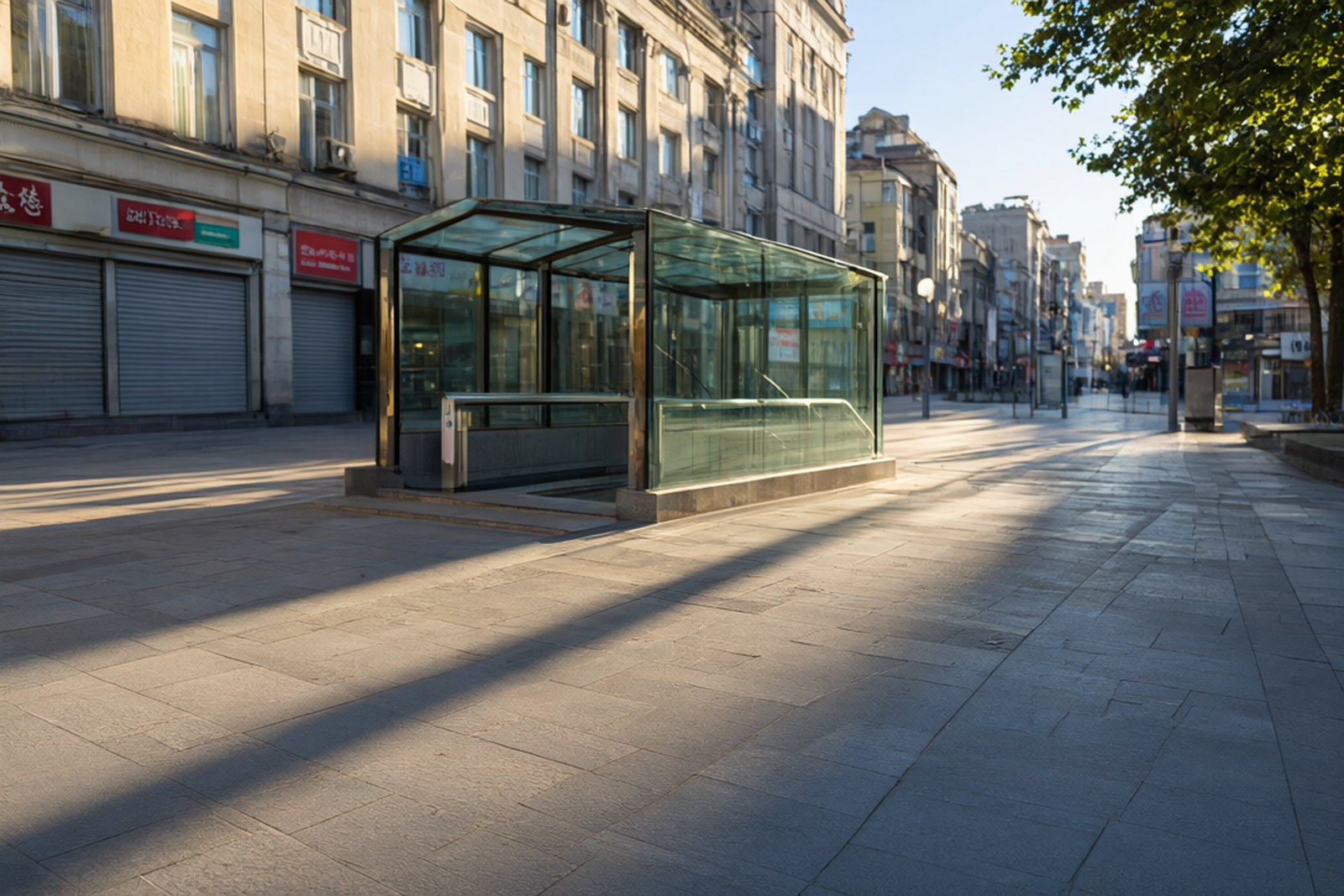
Where to stay: a tower-top room if the skyline after dark is the point, a mid-band chain room on Minquan or Bayi Road if price and the walk are the point, and a bed from about 180 yuan at the temple annex if the budget is the point – because around 解放碑 Jiěfàngbēi, Jiefangbei, you are renting a doorstep on a national demonstration pedestrian street, not buying a hotel.
flowcloud would say that the only honest amenity list for these hotels is a map with the monument, the food street and the river drawn on it, and that the correct way to sleep at Jiefangbei is in the cheapest room inside the ring, because the street is the lobby and the lobby is free.