
榕城区 Róng chéng qū is the old town of 揭阳市 Jiē yáng shì, and the hotels on the water here are built against a piece of city planning that is older than almost anything else in eastern 广东 Guǎng dōng. The name of the place gives away what it looks like: 榕 róng is the banyan, and a 榕城 róng chéng is a banyan city, a town whose streets have been roofed over for centuries by trees that drop aerial roots and close the gap above them. The banyans are still there, standing in the middle of the roads it is said they were planted beside, and the consequence for anyone booking a room here is immediate: you do not get a town of open sky and bright pavements, you get a town with a green ceiling, dappled light on the tiles at noon, and a smell of wet bark after rain.
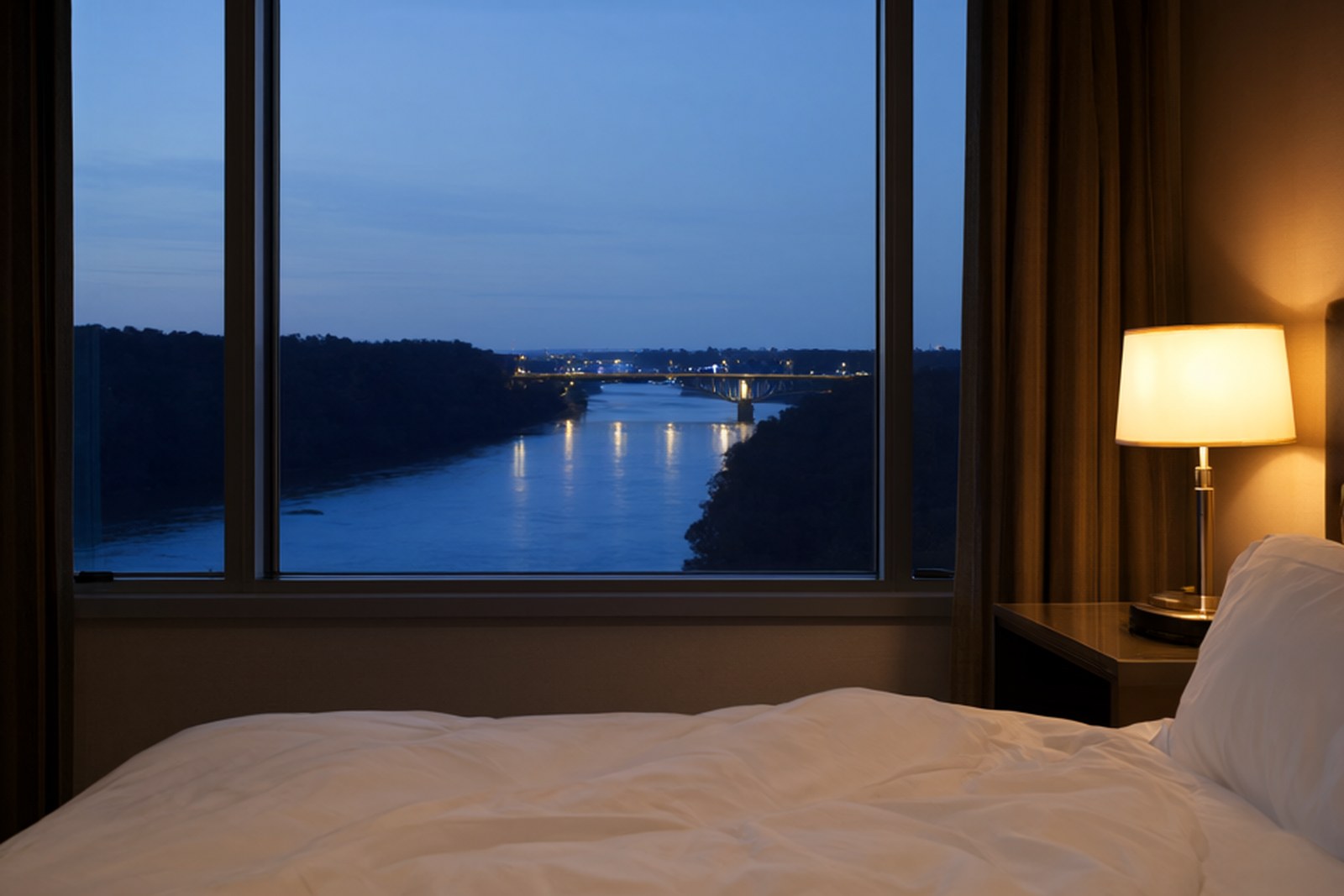
The ground itself is the reason the good rooms are on the north bank. Two rivers come round the old town rather than running past it – the 榕江 Róng jiāng, which splits into a north branch and a south branch and closes again downstream – so that the walled town sits inside a loop of water with a river on either side of it, a shape the local accounts describe as a 浮水葫芦 fú shuǐ hú lu, a gourd floating on the water, and as a 水上莲花 shuǐ shàng lián huā, a lotus on the water. Old plans of the place count the streets out in eight characters, 五门三窖廿四巷,四浦百桥五八池 wǔ mén sān jiào niàn sì xiàng, sì pǔ bǎi qiáo wǔ bā chí: five gates, three culverts, twenty-four lanes, four inlets, a hundred bridges and fifty-eight ponds. The line a 揭阳 person is most likely to quote at you about it is the couplet 城中竹树多依水,市上人家半系船 chéng zhōng zhú shù duō yī shuǐ, shì shàng rén jiā bàn xì chuán – bamboo and trees in the city lean on the water, and half the households at the market tie up a boat. It is describing a town with more water than road, and stands as well as anything for why the river side of a hotel here is worth the difference in the rate.
The hotels are spread over three pieces of ground and it is worth knowing which one you are buying into. The first is the 进贤门 jìn xián mén and city-centre shopping district, up on the old town’s edge where the shops, the department stores and the evening crowd are; a room here is a room in the middle of a working city, and the walk to the old streets is short. The second is the 黄岐山 huáng qí shān side and the 揭阳楼 jiē yáng lóu quarter, on 临江北路 lín jiāng běi lù, quieter, greener and further out. The third is the river itself, and this is where the article is aimed: a stretch of tall buildings on the north bank with the water in front of them, the embankment under the windows and the lights of the old town on the far side. If your room is on the river side of one of those, the evening is already arranged for you and you will not need a taxi to have it.
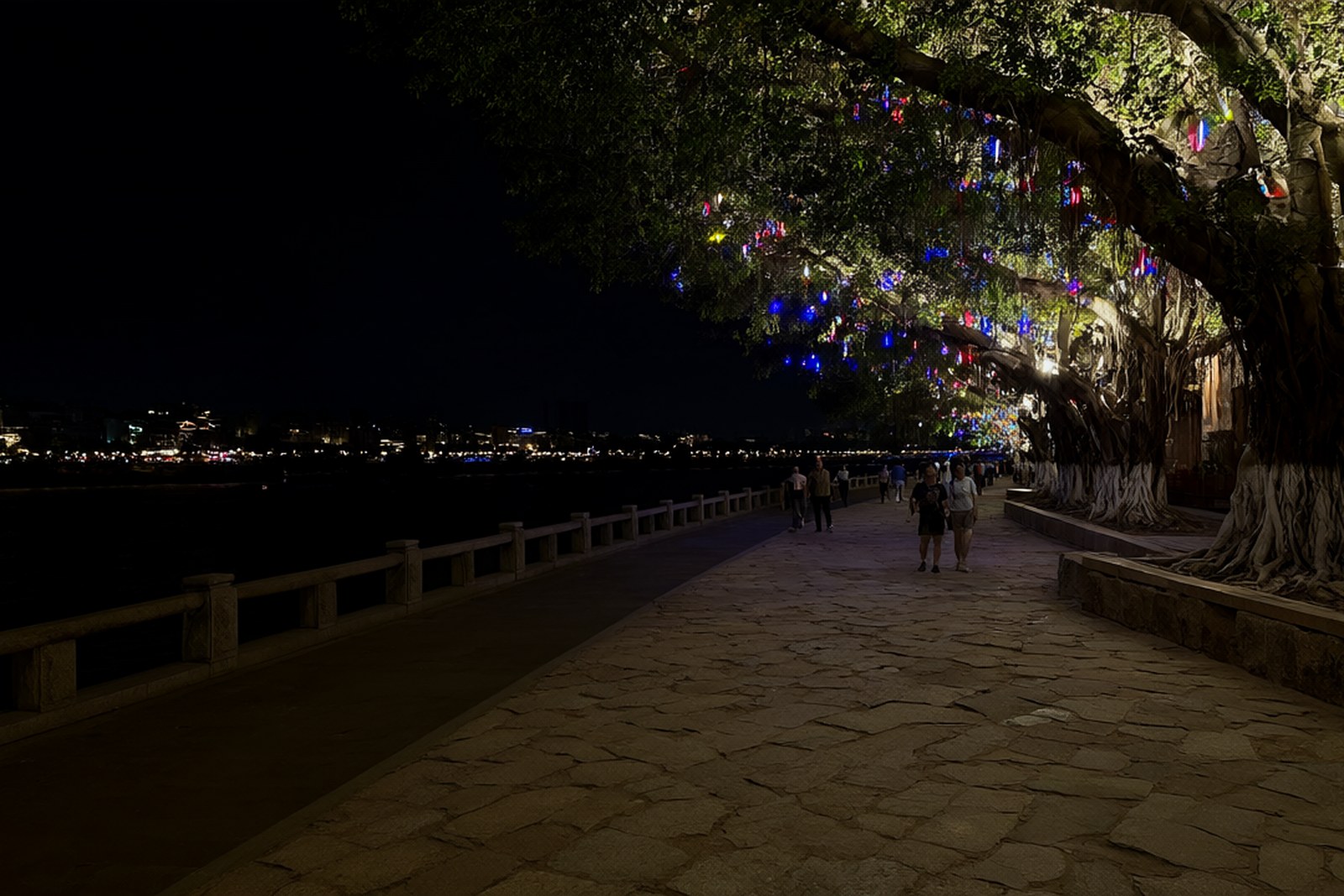
What you actually look at from a river-facing window is the fountain, and it is not a small one. The 榕江大型音乐喷泉 Róng jiāng dà xíng yīn yuè pēn quán, the Rong River musical fountain, stands in the water of the north branch in front of the municipal government building, and the figures are worth putting down because they sound wrong: a main jet that reaches 188 m, a floating platform 290 m long carrying the nozzles, and a show programmed to the idea of 水上莲花, the lotus on the water, which is how locals describe both the fountain and the old town it faces. The city says it is the tallest fountain and the longest floating platform on any river in the country, and on a summer evening the embankment in front of it holds a crowd, with the jets going up in time to the music and the reflections coming back off the water. From the upper floors of the hotels on the north bank you get it without standing up.
The practical case for staying here rather than out at the edges is that 揭阳’s own ground is not where the big sights are – the prefecture runs east to 汕头 Shàn tóu and north into Hakka country, and its waterfall, its hot springs, its mountains and its old garrison towns are between one and two hours out by road. The city is the transport hinge for all of it, with 揭阳潮汕国际机场 Jiē yáng cháo shàn guó jì jī chǎng out at 登岗镇, a high-speed station on the 厦深 Xià shēn line and a bus station beside the shopping district, so a day out in any direction starts and ends on this riverbank. And the old town you are sleeping beside is walkable from the door – 进贤门, 揭阳学宫, 城隍庙, 双峰寺, the 中山路 arcades and the 西马路 beyond them are all a stroll from the hotels on the north bank, and each of them is written up where it belongs, in the travel column. What the room adds to a day of that is a bath, a bed, and a river with lights on it when you come back.
What the Rooms Are Like
The riverside hotels in 榕城区 run from a five-star property with an indoor pool and an executive floor, through a group of the modern Chinese chains, to a long tail of small city hotels with a name like a hotel and the fittings of a good guesthouse. A room is twenty-five to thirty-five square metres with a pale floor, a big bed or two singles, air conditioning, a kettle and a shower; the newer chains do smart controls, a hard mattress and a window wall, and several of them sell 江景 jiāng jǐng – river-view – rooms as a separate grade, which is exactly what you should be buying here. Below the river rooms there are the 茶叙 chá xù rooms the local hotels are fond of: a tatami platform with a low table and a tea set, sold as somewhere to sit and pour, and a perfectly good answer if you are travelling with somebody who would rather drink tea than look at water. What separates the properties is not the fittings, which are the same everywhere in 广东, but the floor, the direction and what is in front of the window.
Practicalities
Price. A double in 榕城区 runs about ¥200 to ¥600 a night, and the river-view rooms on the high floors are at the top of that; the chains in the shopping district sit in the middle, the older city hotels at the bottom, and the five-star property above the range. Weekends and the 春节 Chūn jié period are the only times the price moves much. Treat all of it as a range and check the live rate for the nights you want, because the platforms reprice by the day.
Address. The riverside hotels are in 榕城区 Róng chéng qū, the old town district of 揭阳市, along 临江北路 lín jiāng běi lù and the north bank of the 榕江, with the 进贤门 city-centre blocks a short walk inland and the 揭阳楼 and 黄岐山 quarter further out; the high-speed station and the airport, at 登岗镇, are both a drive south-east of the centre.
Rooms. Ask for the river side and for a floor above the tree line, because the banyans on the embankment take the bottom three or four floors and one of the reasons to be here at all is the water; ask whether the window faces the fountain, since the show runs in the evening and a back room gets the car park instead. Ask what time the fountain is switched on that week, ask for a kettle and hot water rather than a minibar, and ask the desk to write the name of the old streets in Chinese for a driver, because 揭阳’s place names are hard to say and easy to mishear.
Getting there. 揭阳站 and the high-speed station on the 厦深 line are south-east of the centre, and 揭阳潮汕国际机场 Jiē yáng cháo shàn guó jì jī chǎng, which the prefecture shares with 汕头 and 潮州, is out at 登岗镇, about forty minutes by road; the bus station is beside the shopping district. The 206 and 汕昆 expressways pass the city, 汕头 is an hour away, 潮州 a little less and 广州 four hours or more, so most people arrive by road or by air and use the room as the base for a prefecture that spreads in every direction.
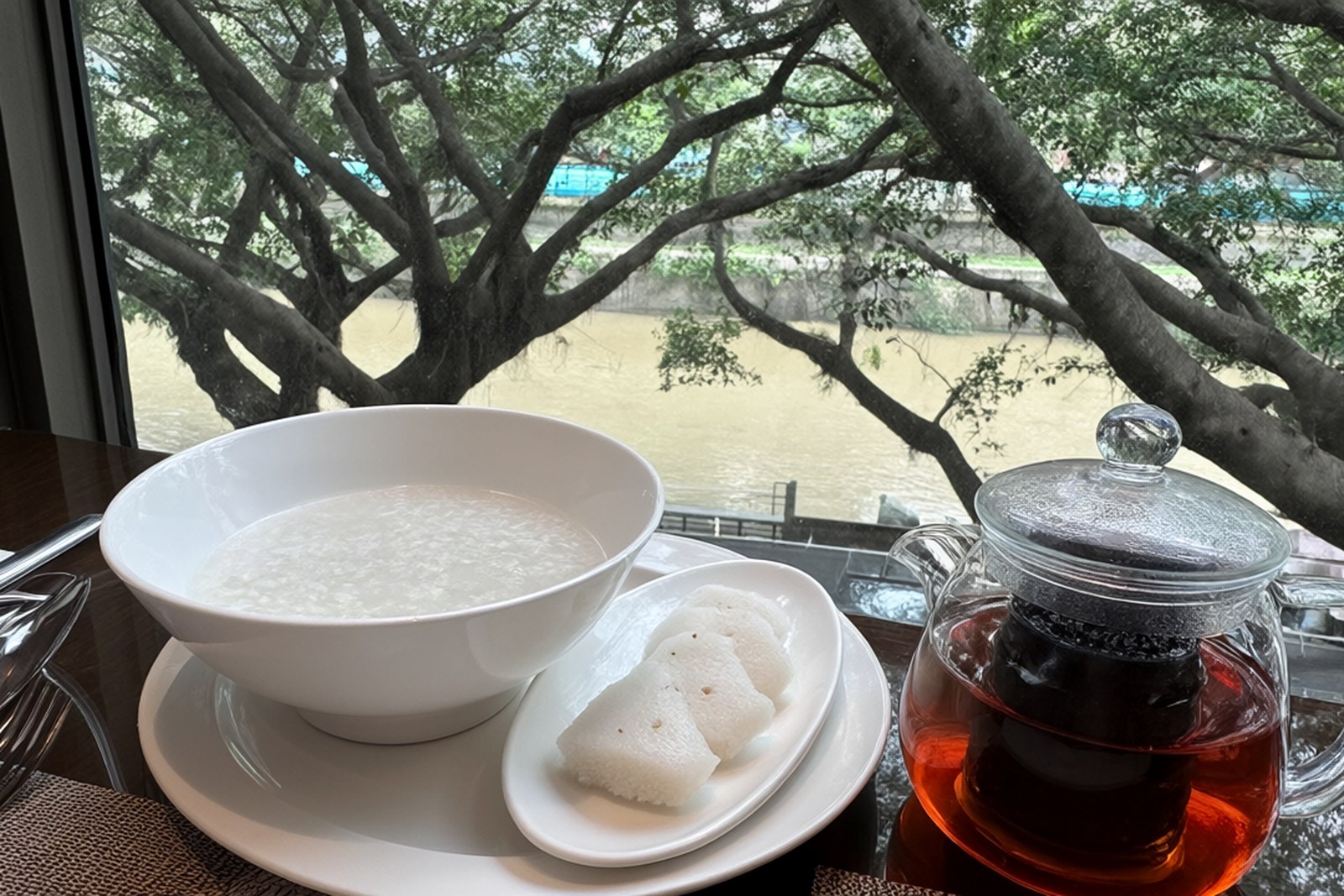
Where to stay: a high-floor room on the river side of a hotel on the north bank of the 榕江 in 榕城区, the old town of 揭阳市. Take the 江景 grade rather than the standard room, walk the embankment in the evening and the banyan streets in the morning, eat the prefecture’s rice cakes and oyster omelette in the city, and use the riverbank as the base for 揭西, 普宁 and 惠来.
flowcloud would say that a town which has spent six hundred years growing trees over its own streets and keeping two rivers wrapped round itself has already decided what its best room is, and that the answer is any room high enough to see the water it is floating on.