
Chongqing is a municipality of southwest China, and the single cheapest hot-spring address in 北碚区 Běibèi Qū, Beibei District, sits on the same stretch of road as the park 卢作孚 Lú Zuófú built in 1927. 金刚碑 Jīngāngbēi, Jingangbei, lies in 北温泉街道 Běiwēnquán Jiēdào, Beibeiquan Subdistrict, on the G212, at the junction of 212 国道 and 金刚路, and the ground around it holds six of the ten components of the 嘉陵江三峡乡村建设旧址群 Jiālíngjiāng Sānxiá Xiāngcūn Jiànshè Jiùzhǐqún, the Jialing Three Gorges rural-reconstruction group, listed as national key cultural relic 7-1865 on 5 March 2013. A village inn here starts at 145 yuan. The reason to sleep in it is not the room: it is that the six listed buildings are within walking distance and the spring is a separate ticket again.
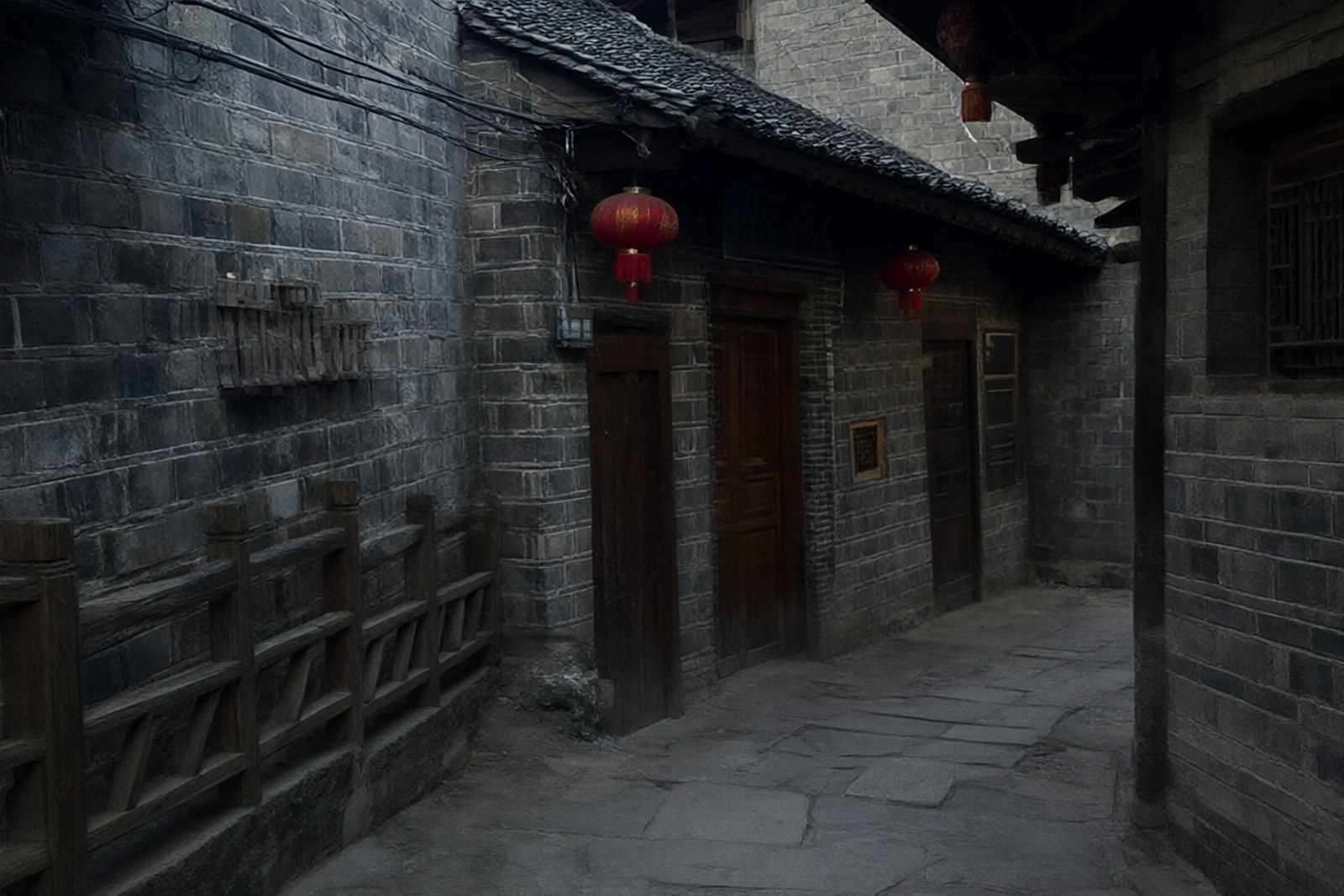
The inventory of listed buildings is short and specific, and it is the reason this village appears in a national register at all. 农庄 Nóngzhuāng, 磐室 Pánshì, 竹楼 Zhúlóu, 柏林楼 Bǎilínlóu, 数帆楼 Shǔfánlóu and 花房子 Huāfángzi make up the local members of the group, and the last of them was 梁漱溟 Liáng Shùmǐng’s former home. 柏林楼 was put up in 1935 with money donated by his 民生公司 Minshèng Gōngsī, the Minsheng Company, and named on a pun on 王伯宁 Wáng Bóníng’s name. The wider frame is the 1927 嘉陵江温泉公园 Jiālíngjiāng Wēnquán Gōngyuán, Jialing Hot Spring Park, China’s first public hot-spring park, founded in the same year Lu Zu-fu issued his first public notice, 建修嘉陵江温泉峡温泉公园募捐启, asking for donations to build it. Six national relics and the country’s first public hot spring park within a few hundred metres of each other is unusual, and it is the actual argument for staying in the village rather than passing through it.
The inn itself is 重庆金刚碑老村温泉酒店 Chóngqìng Jīngāngbēi Lǎocūn Wēnquán Jiǔdiàn, and its figures are modest enough to be worth reading carefully. Tongcheng scores it 4.3 and shows a lowest rate of 145 yuan, and the telephone is 023-68868800. The facilities list includes an outdoor pool and a children’s playground, which is the combination that makes it usable for a family in a way the cliff villas are not. The room names carry the argument: 无边际温泉景观房, an infinity-edge hot-spring view room; 国术-榻榻米房, a martial-arts tatami room; 勉仁书院大床房, a double bed in a room named for the Mianren Academy; and 半岛虚度私享温泉小院, a peninsula idle-time private hot-spring courtyard. The room with a private courtyard is the reason to be here at all, and it is not the 145-yuan room.
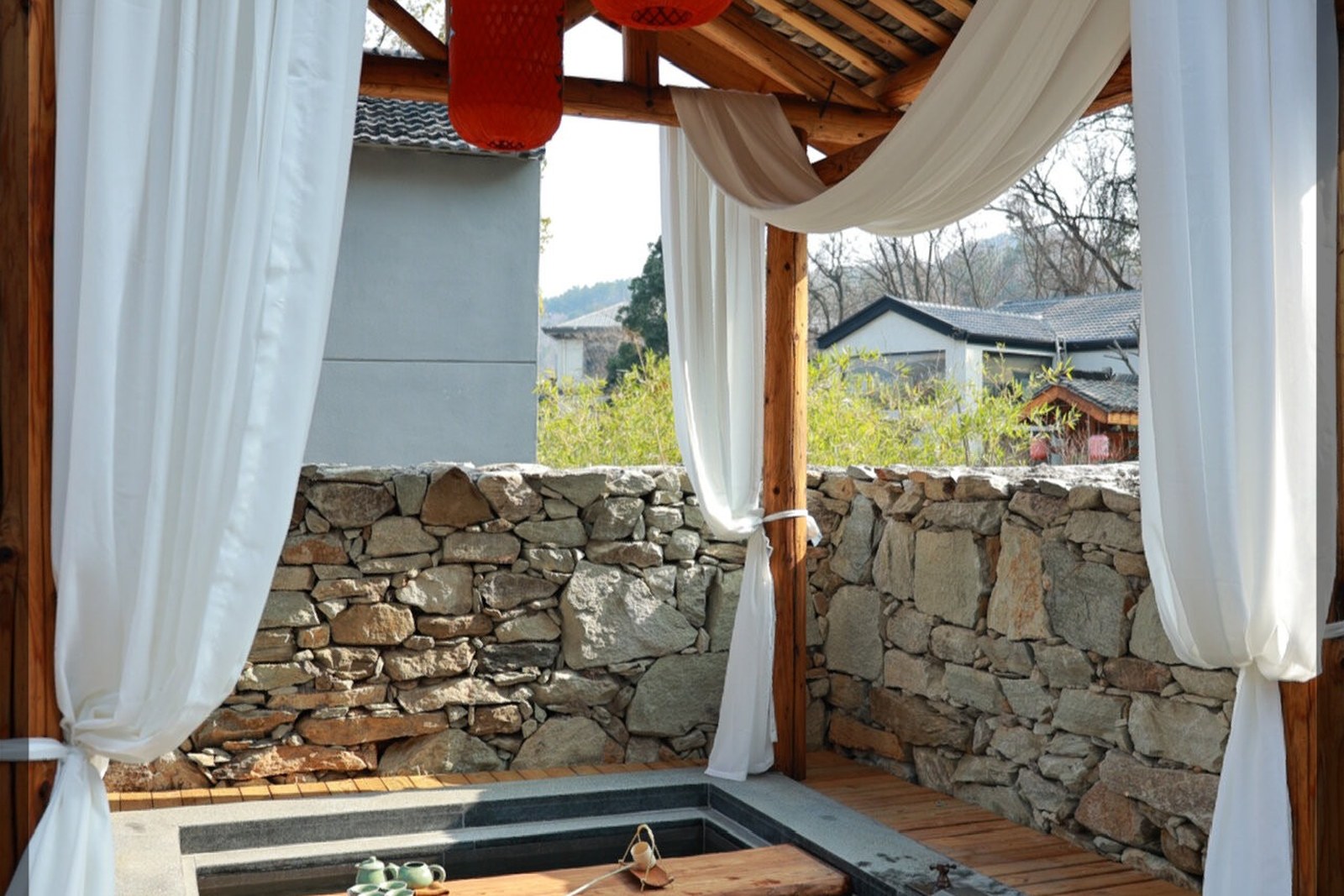
The bathing is priced separately from the lodging and the two should not be added together by accident. 金刚碑·温泉老村 charges 88 yuan for an adult, 138 for two, 168 for a family of two adults and one child, and 49 for a child. That is roughly a quarter of the cliff-villa water ticket two valleys away, and it buys the village spring rather than the park spring, in a 3A-and-below-scale village setting rather than a landscaped park. One warning, and the research is explicit about it: 勉仁书院 Miǎnrén Shūyuàn is a building name that appears in the protected group, and whether it is the same structure as 柏林楼 or 数帆楼 was not verified. They are not interchangeable in writing and a reader who confuses them will end up looking for a building that does not exist under the name they were given.
The comparison that matters here is not with the villa. It is with the district’s other village accommodation, where the district’s own January 2025 winter route named six guesthouses around 金刀峡 Jīndāoxiá and 偏岩古镇 Piānyán Gǔzhèn that have no published rate, no street address and no telephone number on any booking surface checked, and where three of the five towns that joined the district in November 2025 return no accommodation listing at all. The gap is the finding. What Jingangbei offers is a room you can price, a spring you can price, a score you can check and a telephone you can call, inside walking distance of six nationally listed buildings, at a 2026 rate that a city guesthouse in the same district would beat on volume rather than on character.
Practicalities
Price. One property and one published floor, measured on Tongcheng on 5 October 2026: 重庆金刚碑老村温泉酒店 at 145 yuan, scored 4.3, telephone 023-68868800. The price of the water is separate and cleaner than most: 88 yuan an adult, 138 for two, 168 for two adults with one child, 49 for a child. Nothing above those figures for this address could be verified, and no room-rate band is published here because none was found – the useful comparison is against the district’s other lodging on the same date, where 乡根乡舍 in 柳荫 was listed at 300 to 3,000 yuan in 2021 and the cliff villas at Bolian were quoted anywhere between 800 and 6,550 yuan depending on which page was read.
Address. 重庆市北碚区北温泉街道 G212(北泉路)– Beibeiquan Subdistrict, Beiquan Road, on the G212, at the point where 212 国道 crosses 金刚路 and 10 metres north of that junction. One listing of the inn gives a second form, 中共北泉村总支委员会平安家园 7-1 号, which is the address of the village party committee’s compound rather than the hotel’s street frontage; both refer to the same spot and both are in use on booking pages. Do not confuse 北泉路 Běiquán Lù, Beiquan Road, the road, with 北温泉 Běiwēnquán, the spring and the park, which are a different kind of thing entirely.
Rooms. Four named shapes, and the names carry the price logic. 无边际温泉景观房, the infinity-edge hot-spring view room. 国术-榻榻米房, a tatami room in martial-arts styling, which is a room for sleeping on mats rather than a themed bed. 勉仁书院大床房, a double room named after a building in the protected group whose identity against 柏林楼 and 数帆楼 is unverified. And 半岛虚度私享温泉小院, a private courtyard with its own hot-spring bath, which is the one to book if you came for the water and the reason the other three are cheap. Facilities on the listing include an outdoor pool and a children’s playground.
Getting there. The village is on the G212, which is the road out of Chongqing toward the northwest, and it is the only one of these addresses you can reach without a transfer. Line 6’s 状元碑站 Zhuàngyuánběi Zhàn, Zhuangyuanbei, is the nearest metro node, in the district seat rather than at the village, so the last leg is a bus or a taxi. Driving is the straightforward option and the sensible one at 145 yuan a night, because a village with a car park is not a village where the train is the point. The spring is a short walk from the inn; the six listed buildings are a longer walk and deserve the daylight.
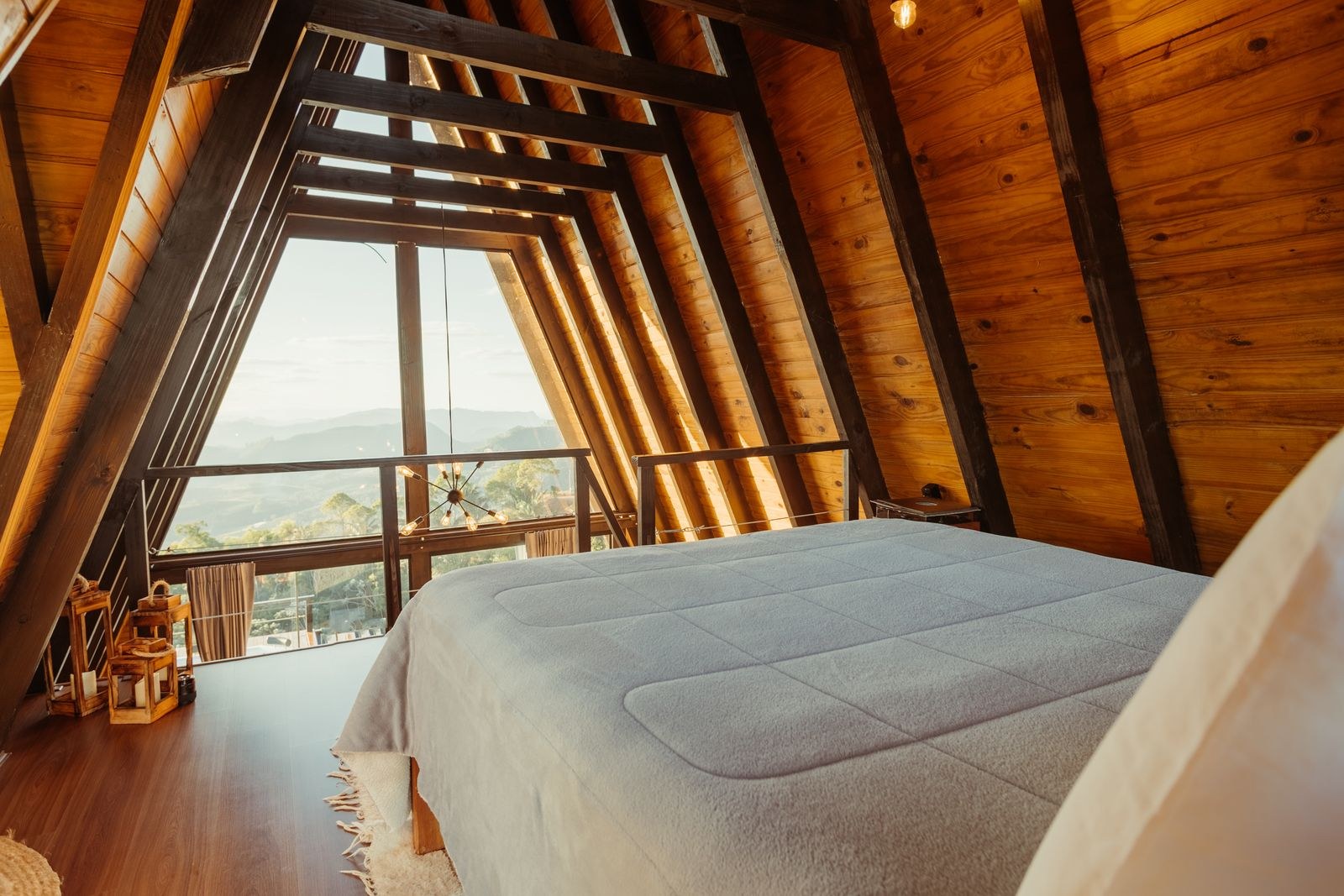
A day in Jingangbei runs from the water outward. Morning is the village spring before the coaches, when the surface is steaming and the lane is empty and the six listed buildings are just doorways with carved lintels. Late morning is the walk out to 柏林楼 and 数帆楼 and the rest of the protected group, which takes a couple of hours at a proper pace and needs more than the morning if you mean it. Midday is a bowl of noodles in the village and the wait for the afternoon session. Afternoon is the second good hour at the pool and the one families skip while waiting for the evening crowd. Evening is when the lanterns come on the lane and the outdoor pool is at its busiest, and the private courtyard room is worth having at that hour for exactly that reason. Then the room, and the sound of a village that goes quiet at ten rather than at midnight.
flowcloud would say that Jingangbei is the only hot-spring address in Beibei where the room, the score and the telephone are all verifiable at the same time, and that the correct way to book it is to treat 145 yuan as the price of a bed and 88 as the price of the reason you came, and to spend the walk you save on the six listed buildings that are within a few hundred metres of the inn.
Where to stay: the private courtyard room at the 145-yuan-floor property if the water is why you came, because the courtyard is the product and the floor price is not; the infinity-edge view room if the water is the destination but a private tub is not the budget; and one of the unpriced guesthouses around Jindaoxia only if you accept that you will be booking by telephone. And keep the two tickets separate on the bill, because 88 yuan of spring water and 145 yuan of bed are two different purchases that happen to share an address.