
京明温泉度假村 Jīng míng wēn quán dù jià cūn is a resort built on the scale of a small parish, and the reason it can be is the ground it stands on. It sits at 京溪园镇 Jīng xī yuán zhèn in the east of 揭西县 Jiē xī xiàn, the county that is the Hakka half of 揭阳市 Jiē yáng shì and the only part of the prefecture that is properly mountainous: 1,365 square kilometres, more than eight-tenths of it hill and mountain, the Tropic of Cancer running straight through the middle of it, and 78 separate peaks above eight hundred metres. The resort’s own figures are that it covers 11,170 亩 – something over seven square kilometres – of which 2,200 亩 are tea terraces and 1,200 亩 are lake. It holds a national 4A rating, a national agricultural-tourism demonstration listing and a provincial 保健养生旅游示范区 bǎo jiàn yǎng shēng lǚ yóu shì fàn qū, a model district for health-and-recuperation tourism, and it calls itself the largest tea-culture theme park in the country, which on 2,200 亩 of tea is not an empty claim.
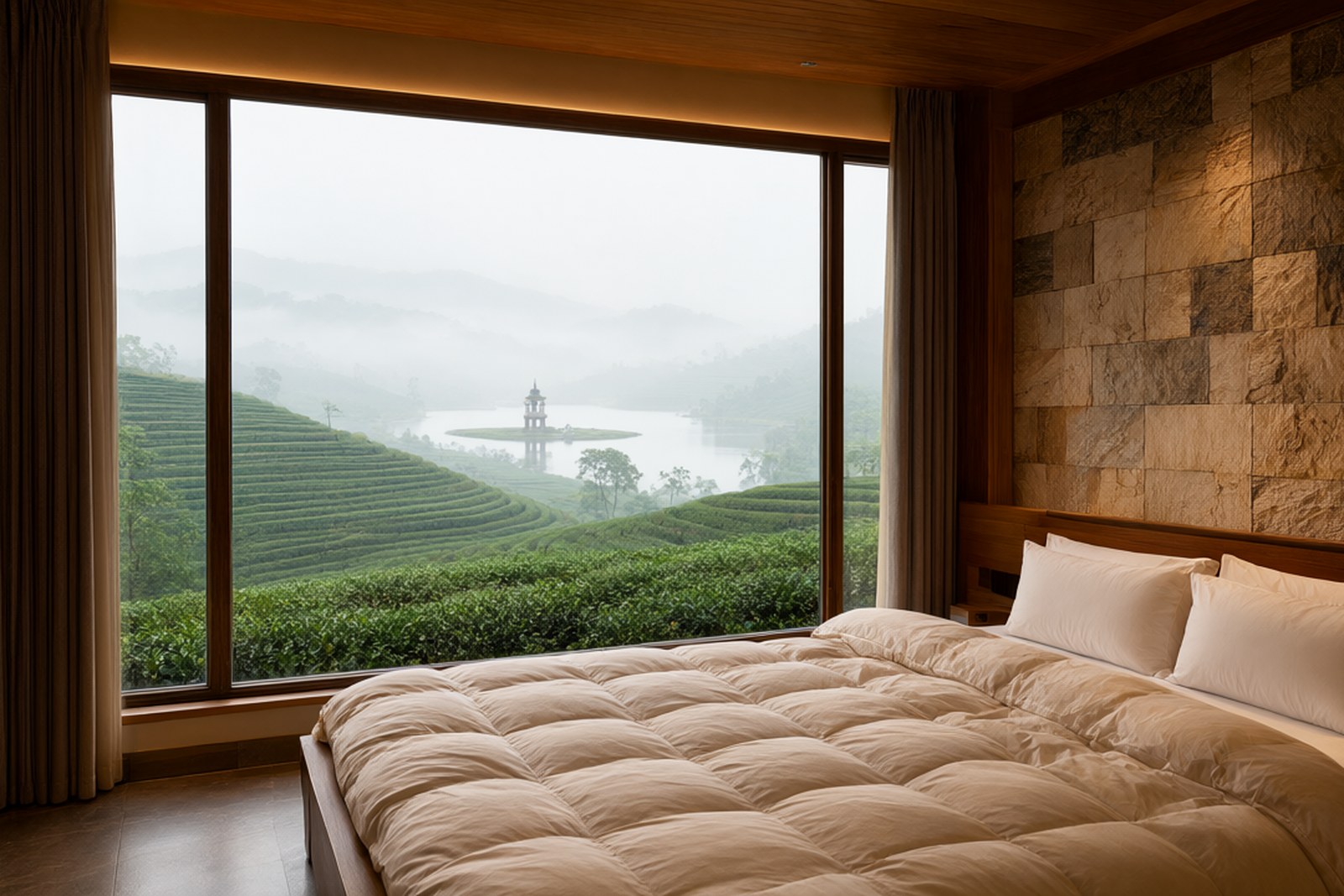
What you buy by sleeping here rather than driving up from 揭阳市 is a day’s worth of distance. The county is the 潮汕 Cháo shàn region’s own back garden – locals call it 潮汕后花园 Cháo shàn hòu huā yuán – and the resort sits inside the tea, with the terraces starting at the edge of the car park and the lake, the 七泓碧湖 qī hóng bì hú, running up the middle of it. A guest can walk a tea row before breakfast, is on the water when the light is still low, and is back in the room before the coach parties have finished their first loop. The place is furnished with things to walk to on foot: a tea-garden gallery, a fruit orchard, an animal park, the 京明宝塔 Jīng míng bǎo tǎ, a 盘古文化园 and a scaled-down 京明长城 Jīng míng cháng chéng, a miniature of the Great Wall laid out along a ridge, which looks exactly like what it is and is more fun than it has any right to be.
The tea is the serious half of it. 京溪园 and the hills around it grow 揭西’s tea, the terraces are worked, and if you come in the spring picking season – April into May – the resort takes bookings for 采茶体验 cǎi chá tǐ yàn, a session in the rows with a basket, and the tea factory on site pours free tastings of whatever came off the hill that week. Even outside the season there is a working factory to walk through and the smell of it in the air over the whole valley, which is the one thing about the place a photograph cannot carry.
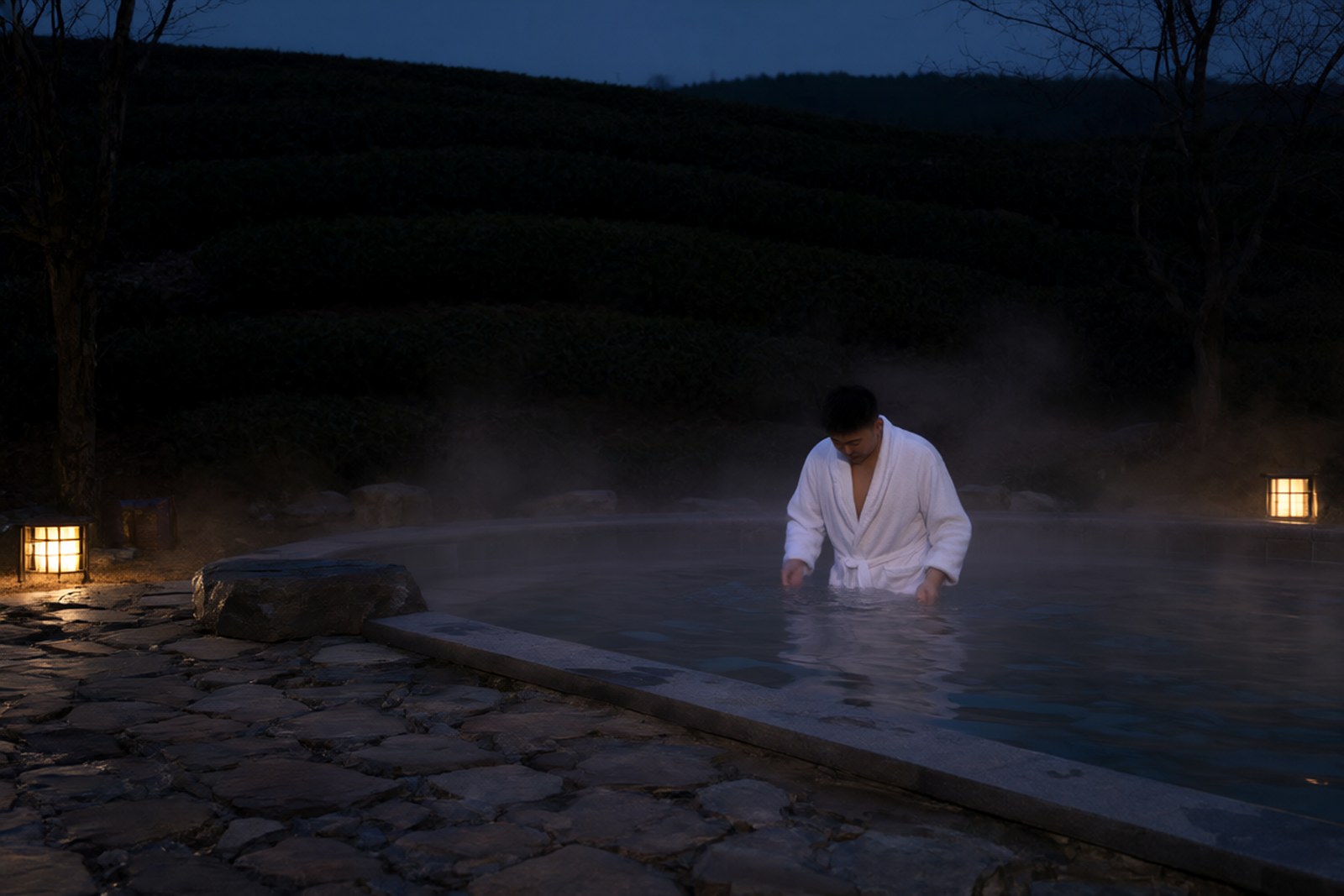
The springs are what the name promises, and they are laid out as a set of outdoor pools rather than one bath. There are mineral and 药材 yào cái herb pools, a red-wine pool, and the 鱼疗 yú liáo pool where small fish clean your feet and nobody lasts more than four minutes before laughing. The water is hot enough to matter and the pools are outdoors under trees, which means the good hour is the hour after dark, when the steam shows against the tea slopes and the whole valley goes quiet. It is an unhurried place and the whole design assumes you are staying the night: nobody drives an hour home after the last pool.
The mountains behind the resort are the other reason to take a room rather than a day pass. 大北山 Dà běi shān, the 5.2-万亩 national forest park at 南山镇 Nán shān zhèn a little to the north-west, runs to better than 85 per cent forest cover over some 700 plant species in 148 families, with 福建柏 fú jiàn bǎi, 罗汉松 luó hàn sōng and 红豆杉 hóng dòu shān – the Chinese yew – among the protected trees, and it holds the 知青楼 zhī qīng lóu, the old sent-down-youth building, and the 大北山革命历史纪念馆 Dà běi shān gé mìng lì shǐ jì niàn guǎn, a provincial patriotic-education base, up among the trees. The county’s own 大北山森林公园京明度假村 sits at the source of the 榕江 Róng jiāng with 270-odd rooms and a banquet hall seating six hundred at once. It is one more night’s ground than most people plan for, and the resort below is the comfortable way to take it in. The 黄满磜 huáng mǎn qì waterfall group at 粗坑村 is the other direction and has its own article in this batch; from here it is a morning’s drive rather than a walk.
What the Rooms Are Like
This is a resort with hundreds of rooms rather than a guesthouse, and it runs several grades at once: standard blocks with tiled floors and twin beds, larger rooms in the newer buildings with timber furniture, stone-clad bathrooms and a window wall at the terraces, and a cluster of villa-style units around the lake with their own sitting rooms. What they share is the setting and the temperature, which is the point – the county averages around 21.5°C over the year and the hillside here is cooler still – so the beds carry proper quilts for more of the year than a 广东 address would suggest, and the air conditioning is idle at night. Expect the ordinary apparatus of a Chinese resort: a kettle, a hot-water dispenser in the corridor or the room, slippers, a bathrobe in the better categories, and a window that in the good rooms is genuinely the whole reason for the booking. Furnishings are sturdy rather than fine, and the place is kept for volume and for families, which shows in the noise level at breakfast rather than in the rooms.
Practicalities
Price. A room at 京明温泉度假村 runs about ¥400 to ¥900 a night for two and includes breakfast and the springs at most rates, with the lake-side villas above that and the older standard blocks at the bottom; the resort also sells day tickets to the springs without a room, and bundles a room with the tea-picking session in the spring season. Rates move hard at weekends, in the 五一 and 国庆 holidays and through the tea season, so treat the figures as a range and check the live rate for your dates.
Address. 京明温泉度假村 Jīng míng wēn quán dù jià cūn is at 京溪园镇 Jīng xī yuán zhèn in 揭西县 Jiē xī xiàn, in the east of the county below 大北山 Dà běi shān and a short drive from the 黄满磜 falls at 粗坑村; the county town of 河婆 Hé pó is about half an hour to the west and 揭阳市 Jiē yáng shì roughly an hour and a quarter south-east by road.
Rooms. Ask for a room facing the terraces or the lake rather than the car park, and ask which building it is in, because the site is large enough that the walk from reception to the far blocks is a real walk; ask whether the springs are open in the hours you want them, since the pools are cleaned in the mornings and the season’s schedule changes. Ask about the tea-picking session when you book if you are coming between April and May, because it is arranged in advance and not sold at the door, and ask whether a car can be laid on to the waterfall, since the entrance to 黄满磜 is a few kilometres away on roads that are easier driven than walked.
Getting there. By road from 揭阳市 Jiē yáng shì in about an hour and a quarter, and from 汕头 Shàn tóu or 潮州 Cháo zhōu in about two, off the 汕湛 and 潮惠 expressways; 揭西 has no railway of its own, and the nearest stations are on the 厦深 line beyond the county. 揭阳潮汕国际机场 Jiē yáng cháo shàn guó jì jī chǎng is about an hour and a half by road. The county’s own town is 河婆 Hé pó, half an hour west, and the last stretch into 京溪园 is a country road through villages and tea, which is a pleasant drive in daylight and a dark one at night.
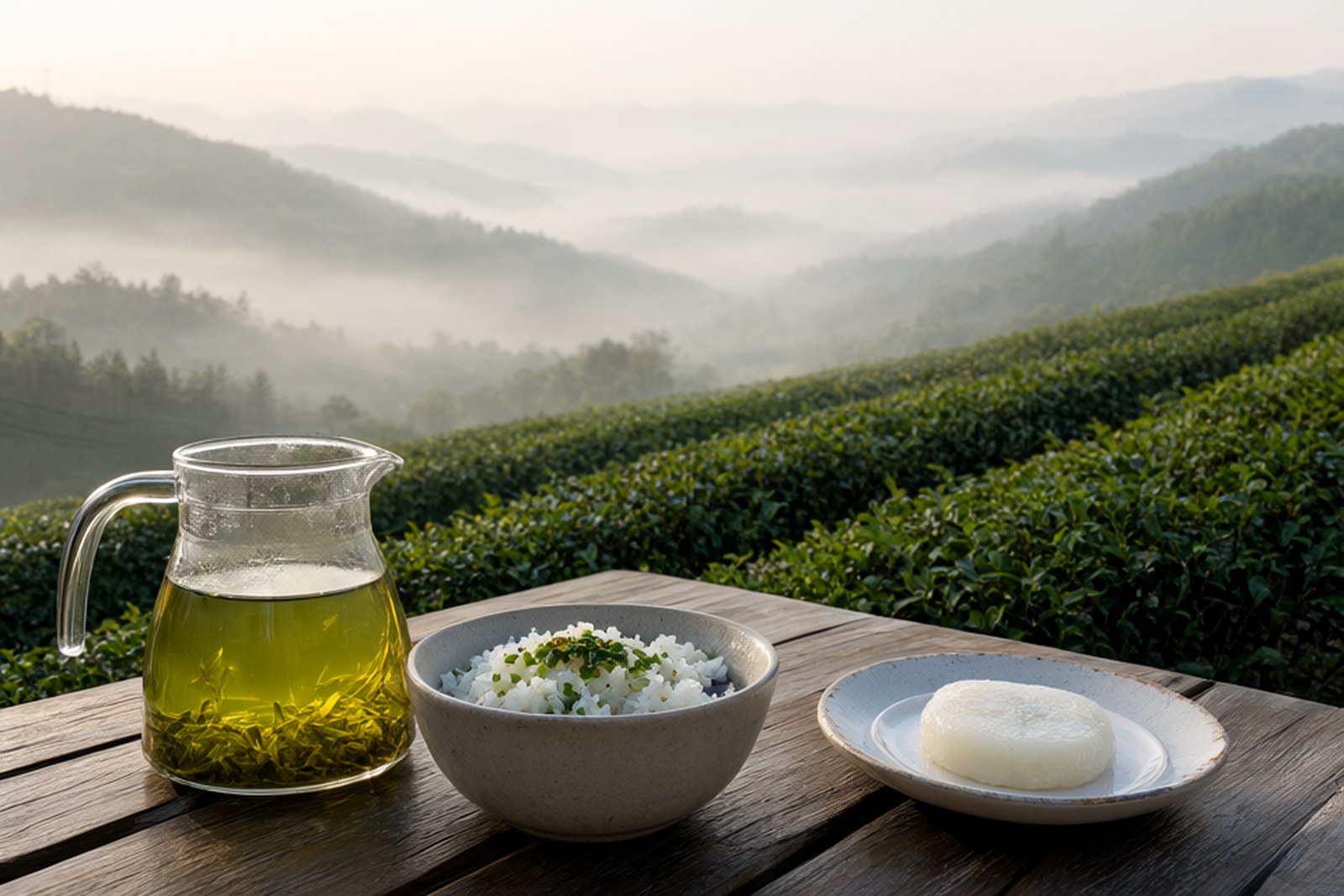
Where to stay: a terrace-facing room at 京明温泉度假村 in 京溪园镇, 揭西县 Jiē xī xiàn, on the tea slopes below 大北山. Take the pools after dark, walk the tea rows before breakfast, book the picking if you are here in April or May, and treat the resort as the comfortable end of a county that is eight-tenths mountain and is called the back garden of 潮汕 for a reason.
flowcloud would say that a place which has put two thousand two hundred 亩 of tea, a lake, a mountain and a set of pools inside one wall has not so much built a resort as bought itself a piece of the county’s weather, and that the right way to take it is to stay until the steam shows against the slopes after dark.