
金江镇 jīn jiāng zhèn is the seat of 澄迈县 Chéng mài xiàn, and it sits where it sits for one reason: the river. The 南渡江 Nán dù jiāng, the Southern Crossing River, is the longest watercourse on 海南岛 Hǎi nán dǎo and the only one that carries a real town in the middle of its course, and 金江 – the name means golden river – is that town, a working county capital of markets, government offices and food streets rather than a resort of any kind. It is inland, about an hour by road from 海口市 Hǎi kǒu shì and forty minutes from the coast, which is why most visitors to the county never see it, and why the ones who do come back.
The town is a working county seat and it is laid out the way one is: the 南渡江 Nán dù jiāng on one side, the bus station and the wholesale fruit and vegetable markets on the other, government offices and schools between them, and the streets of shops and eating houses filling the rest. 金山寺 Jīn shān sì stands on rising ground at one edge of it with the tallest pagoda on the island above the roofs, which has its own entry in the travel column; from the hotel side of town what it mostly means is a lit landmark to walk towards in the evening. Past the temple the built-up area gives way almost at once to the flat farming country of the county’s north, which is where the oranges come from, and the town functions as the hub for all of it: every road into 澄迈’s interior passes through here, and every bus that serves the villages starts here.
The rest of the town is food, and it runs to a timetable. From about four in the afternoon the 白莲鹅 bái lián é stalls appear along the streets, their birds poached whole in a pot of water scented with ginger, spring onion, white pepper and dried tangerine peel, then chopped and sold with a dip of chopped garlic, chilli and a squeeze of small green lime – a local goose the county calls one of the eight famous dishes of 海南, and the county town is where it is eaten rather than sold. 大茂酸菜 dà mào suān cài, the pickled mustard of 大茂村 just outside the town, arrives as the cold dish at the start of every meal; 金江粿卷 jīn jiāng guǒ juǎn, the town’s own steamed rice-flour roll, is the snack sold in the morning; and the county’s 福橙 fú chéng are stacked in the fruit shops all winter. A town this size with this much named food and no tourism worth the name is the sort of place where the restaurants are good because the locals will not tolerate otherwise.
A city hotel on the 南渡江 makes a different kind of base from the coast. It is the centre of the county’s road network, so the inland draws are all within reach: the sister pagodas at 美榔 are fifteen kilometres out, the pickled mustard is made in the next village, the wagyu farm and the hot springs at 九乐宫 are south, and the orange and pomelo orchards are west and north. It is also the place where the county’s own food culture is legible at every hour of the day rather than at one afternoon market. What it is not is a place with a view worth paying for: the river is a working one, the embankment is a promenade rather than a beach, and the point of staying here is to be inside the county rather than looking at it.
What the Rooms Are Like
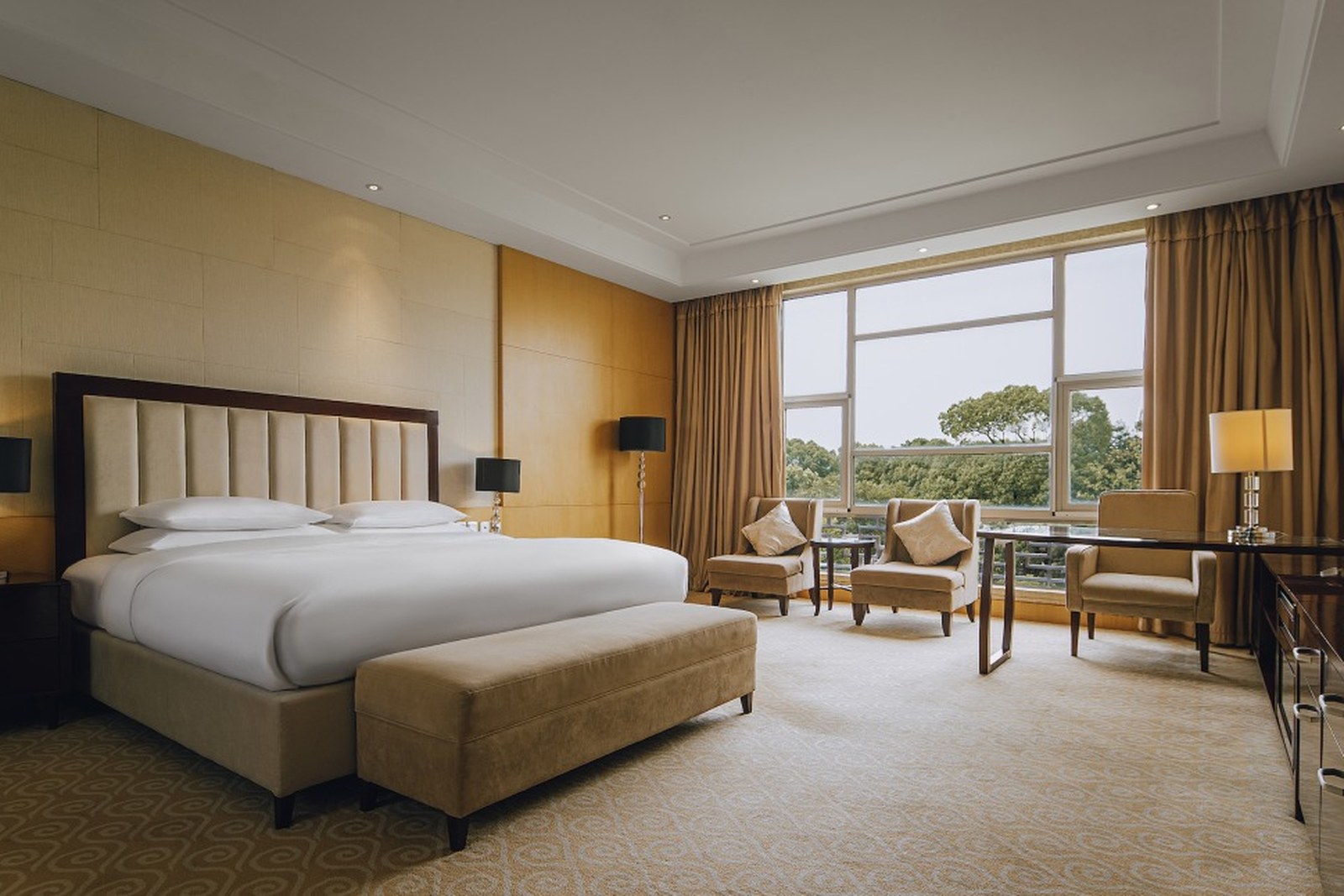
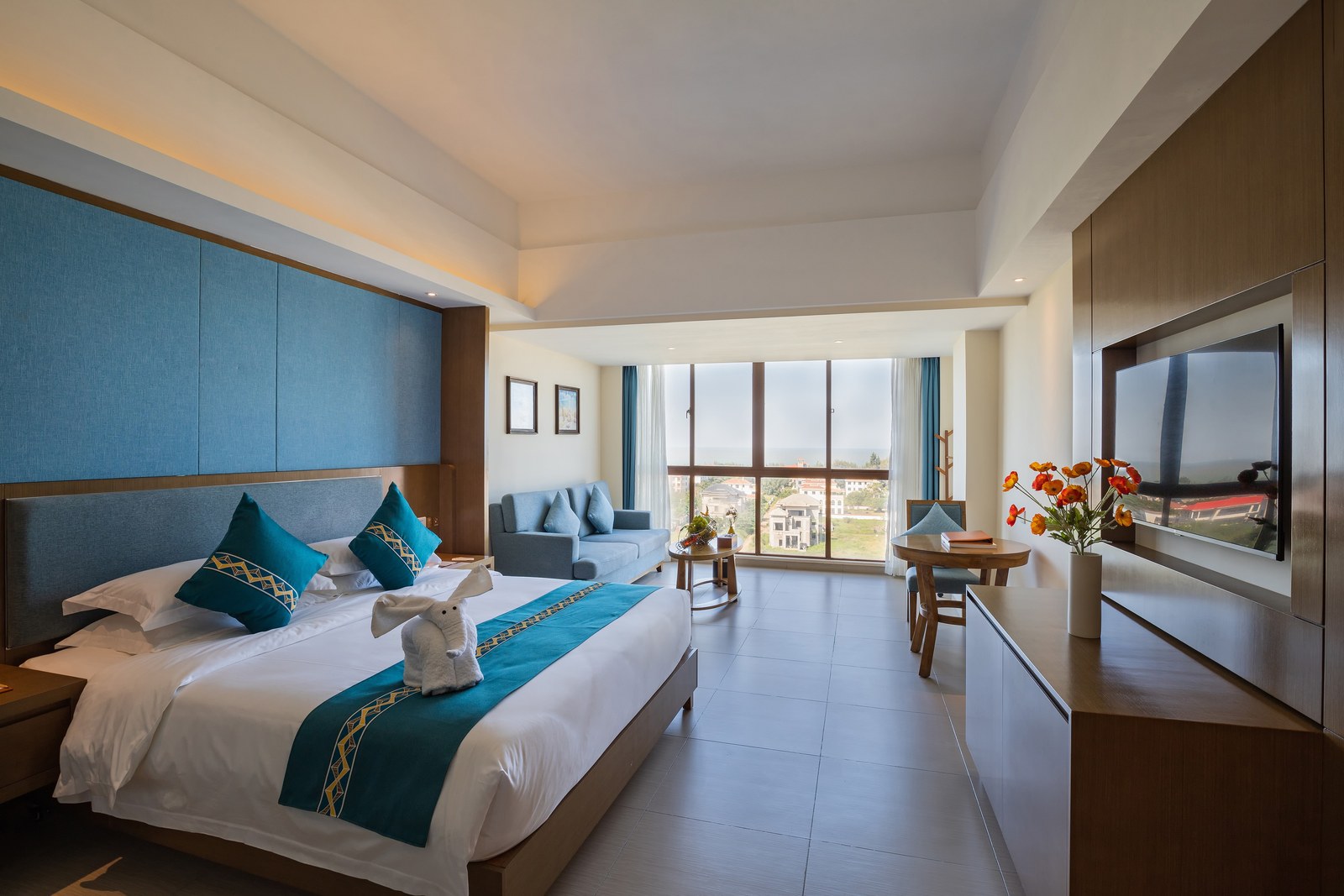
The hotels are new-build Chinese city hotels of the kind that every county town on the island has put up since the high-speed line arrived: a tower or a low block with a lobby, a lift, a breakfast room and a car park, rooms of twenty-five to thirty-five square metres with tile floors, heavy curtains, reliable air conditioning and a bathroom with a shower. The riverside ones charge a little more for the view and are worth it, because the 南渡江 embankment is where the town walks in the evening and the room looks out at that rather than at a car park. There is nothing boutique here and nothing needs to be.
Practicalities
Price. A double in the centre of 金江镇 runs about ¥180 to ¥400 a night, with the riverside rooms at the top of that and the older business hotels at the bottom; the town has no holiday season to speak of, so the rates barely move and a weekend costs what a Tuesday does.
Address. The hotels are in 金江镇, the county town of 澄迈县, most of them within a few minutes of the 南渡江 embankment and the 金山寺 Jīn shān sì; the bus station and the main fruit and vegetable markets are in the same small centre, and the temples of the town’s 城郊 are a short taxi ride out.
Rooms. Ask for a river-facing room above the fourth floor, which gets you over the trees on the embankment and away from the street. Ask the desk what time the 白莲鹅 stalls open – late afternoon, and they sell out – and where the 大茂酸菜 is sold by the jar, which is not the same place as the tourist shops. If you are leaving early, ask them to write the destination in Chinese for the driver, since drivers from 海口 may not know the inland villages by name.
Getting there. 金江镇 is about an hour from 海口市 Hǎi kǒu shì and from 海口美兰国际机场 Hǎi kǒu měi lán guó jì jī chǎng by road, on the 西线高速 Xī xiàn gāo sù corridor and then inland; the island’s west-ring high-speed railway does not come into the town, its two 澄迈 stations being down on the coast at 老城镇 and 福山镇, so the last leg from either is by taxi or bus. The town itself is small, walkable along the river, and served by local buses and three-wheelers for the villages.
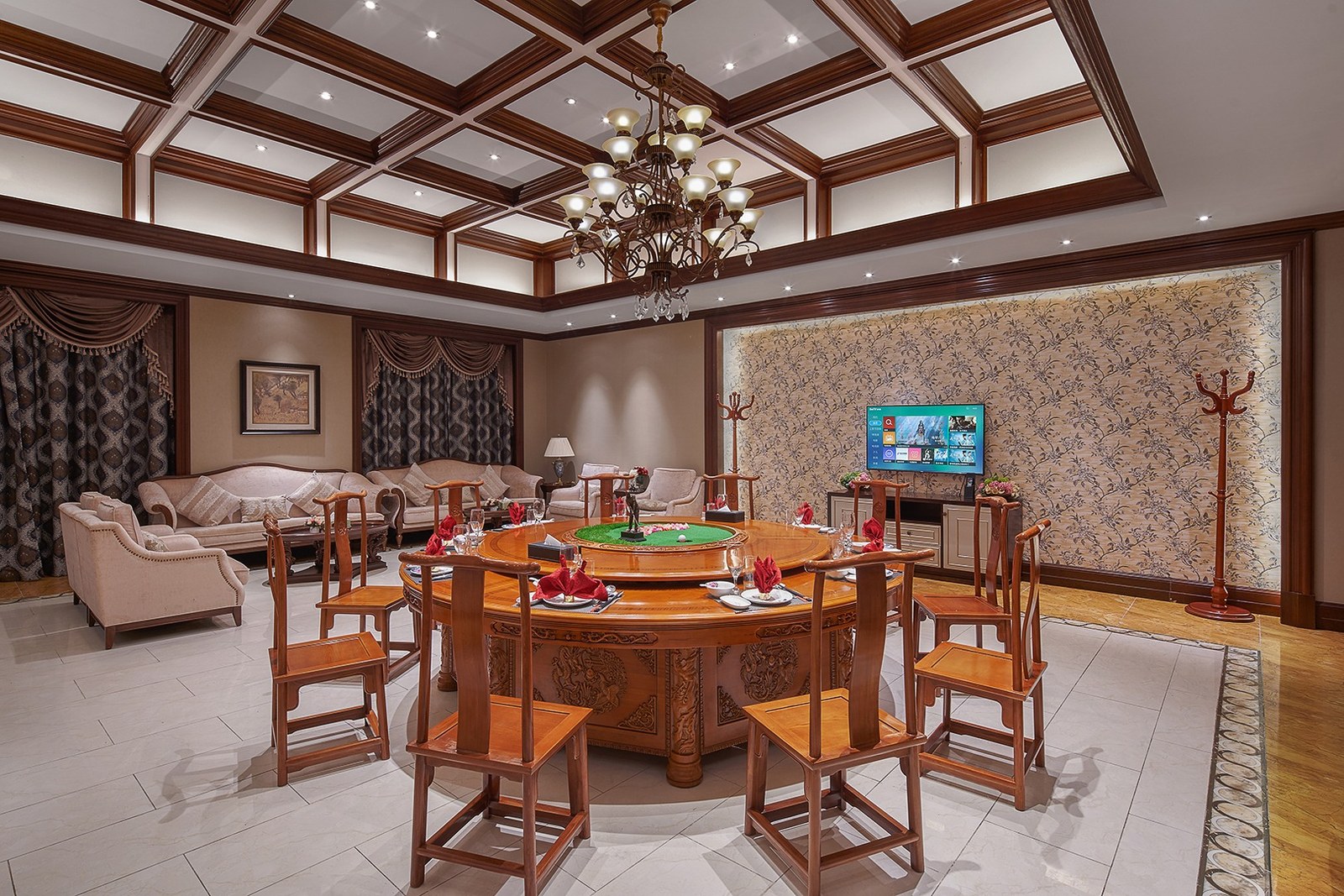
Where to stay: a riverside city hotel in 金江镇, the county town of 澄迈县. Take a room above the trees on the river side, eat the poached goose when the stalls open at four, and make the town the base for 美榔双塔, 九乐宫, the wagyu farm and the 大茂 pickle village rather than for the coast.
flowcloud would say that the county keeps its capital exactly where the river made it convenient two hundred years ago, sells no view, opens its goose stalls at four and shuts the fruit shops when the oranges run out – and that a town with nothing to show a visitor and nowhere else to eat is the most reliable place on the island to get a good dinner.