
九乐宫 jiǔ lè gōng, the palace of nine joys, is a hot-spring resort in the 西达农场 xī dá nóng chǎng country in the south of 澄迈县 Chéng mài xiàn, a long way inland from the coast and a world away from the peninsula hotels. The address is the 九乐宫开发区 jiǔ lè gōng kāi fā qū on the state farm, and the setting is what the name promises: low buildings in a garden, an outdoor pool, a lake on the doorstep, palms and fruit trees, and hot water coming out of the ground. It is the county’s one inland resort and it exists because 海南岛 Hǎi nán dǎo sits on a volcanic basement and the north of the island is full of warm water looking for somewhere to come up.
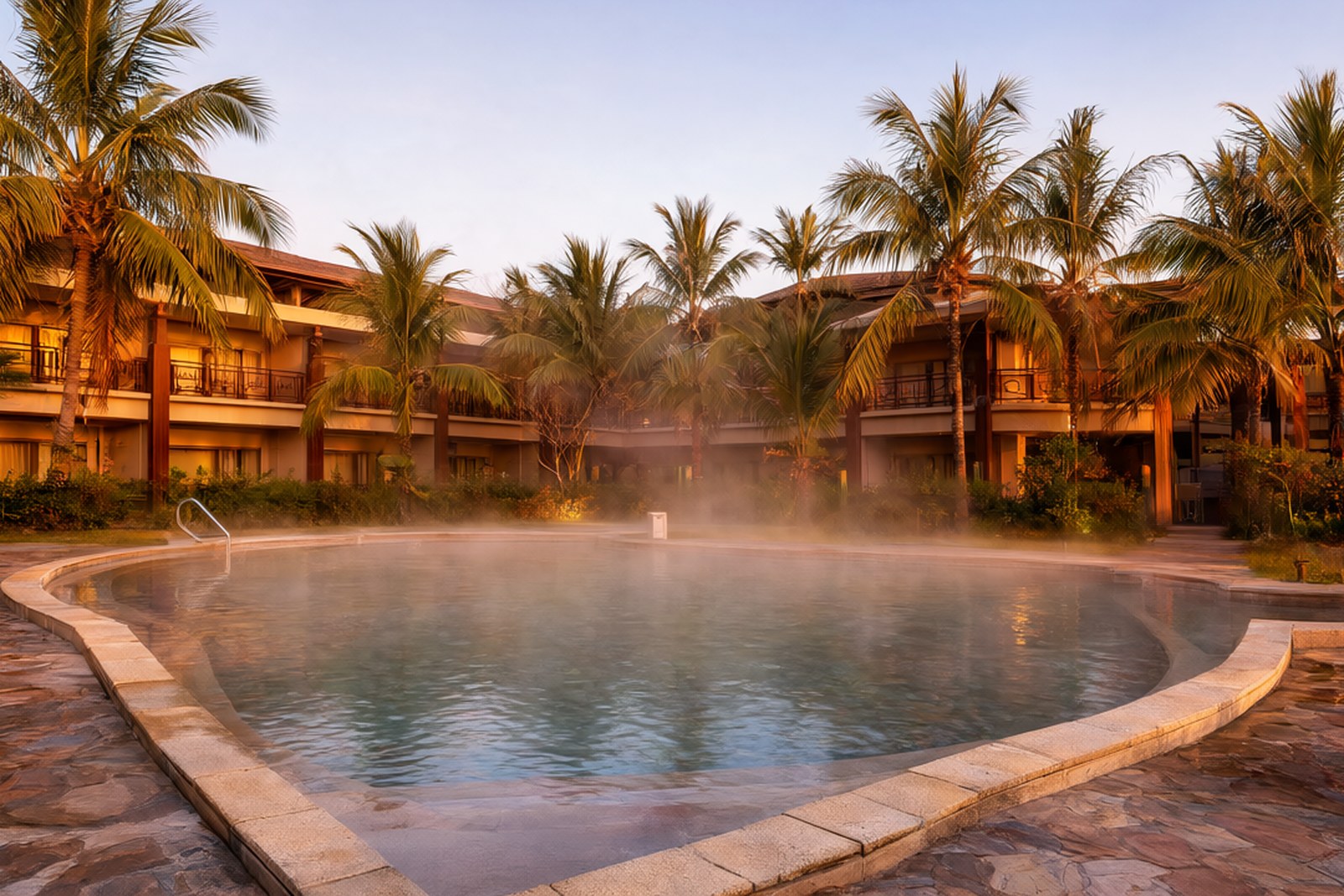
The Hainan springs are not the showy kind. There is no geyser and no crater, and the water arrives quietly through the rock of the northern volcanic field, which is why the island has built its hot-spring hotels in a belt across the north – 海口’s outskirts, 定安, 儋州 and here – rather than in one dramatic place. What 九乐宫 offers is the domestic version of the idea: pools in the open air, some of them hot and some of them merely warm, a garden to walk round between them, a 茶室 chá shì, tea room, for the middle of the afternoon, and a lake to look at from a plastic chair. The booking sites classify it as a two-star or economy property, which is accurate and also slightly unfair, because what it is good at is not the room but the water and the quiet.
The county around it is the part of 澄迈 that visitors rarely reach. This is farm country: the 西达农场 and the villages south of 金江镇 jīn jiāng zhèn, growing rubber, rice, fruit and the cattle the county is proud of, and it is where 澄迈’s wagyu business spread out into smallholdings rather than staying in one company’s sheds. 加乐 jiā lè and the roads around it are lychee and pomelo country, the hot springs are the reason anybody comes down here at all, and the county’s own tourism literature puts 九乐宫 on the same page as the temples and the twin pagodas rather than with the beaches – which is the correct grouping. It is also, in the wet months, the greenest and least-visited corner of the county, and the drive down from the county town is through low hills and orchard rather than along a coast.
For a visitor the calculation is simple. This is a place to stay on the way to somewhere else in the county or on the way back from it: 金江镇 is less than an hour north, 美榔双塔 is reachable in a morning, the coast at 老城镇 and 盈滨半岛 is the far side of the county, and 海口市 Hǎi kǒu shì is about an hour and a half by road. It is not a base for the beach and it does not pretend to be one. What it is good for is the two days in the middle of a trip when nobody wants to drive anywhere, which in a county with five named foods, three temples, two pagodas and a kiln yard is a more useful thing to have on the list than it sounds.
What the Rooms Are Like
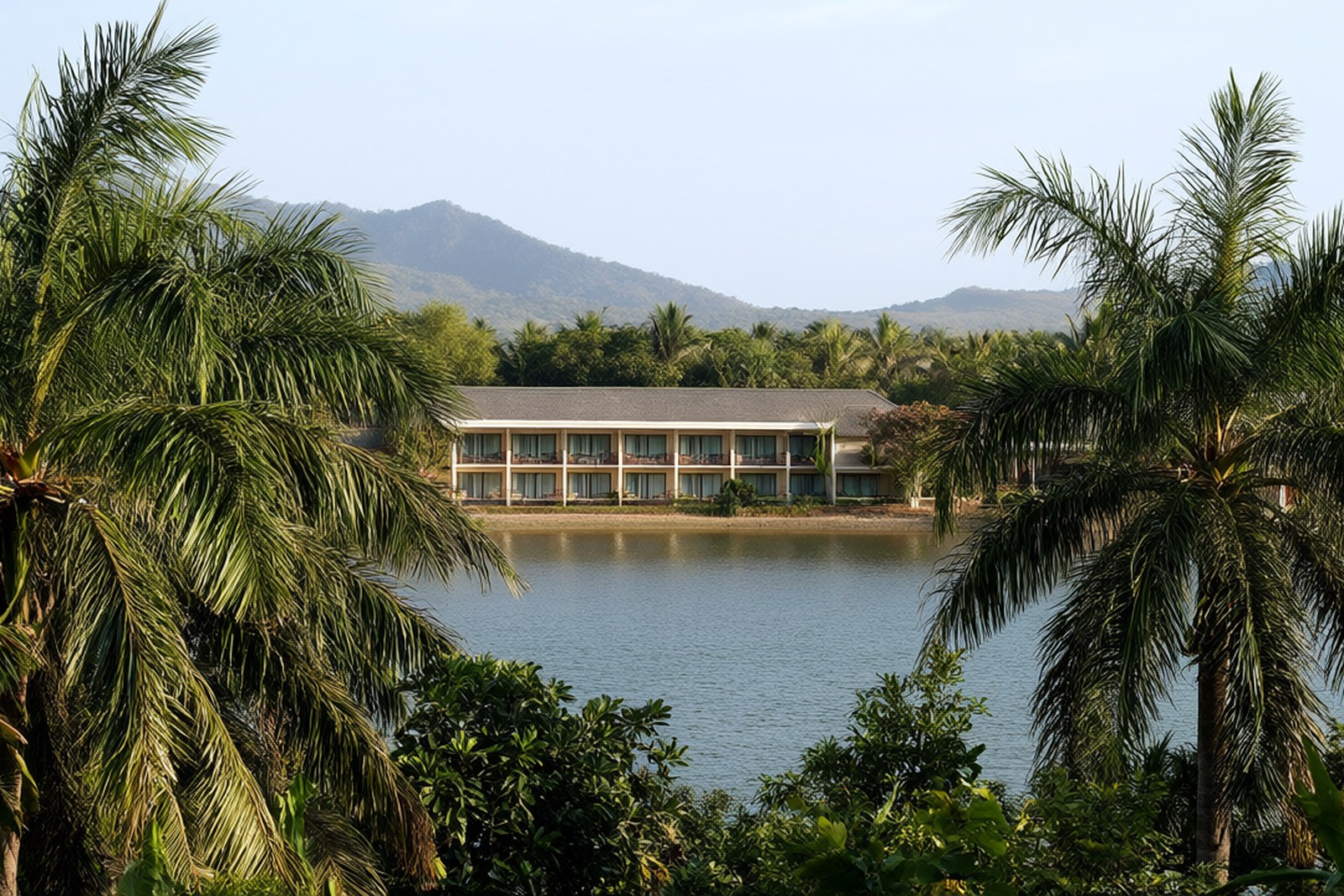
The rooms are in low blocks of two or three storeys set in the garden, and the categories on the booking sites are named for what they look at: lake-view doubles, garden twins, and family rooms in the courtyard. Expect a modern Chinese provincial resort room – tile floor, two beds or one big one, air conditioning, a kettle, a shower, a small balcony in the better rooms – with the water as the amenity rather than the room. The lake-facing rooms are worth the small premium because the alternative is a view of the car park, and the garden rooms are the ones to ask for if you want to sit outside in the evening. Nothing here is luxurious and everything here is quiet.
Practicalities
Price. A double at 九乐宫 runs about ¥200 to ¥450 a night, with the lake-view and garden rooms at the top of the range and the standard twins at the bottom; the hot-spring pools are part of the property rather than a separate ticket, and prices rise modestly at weekends and in the Spring Festival week, which is when the county’s own families come.
Address. The resort is on the 九乐宫开发区 at 西达农场 xī dá nóng chǎng, in southern 澄迈县, inland of 金江镇 jīn jiāng zhèn; it is a rural address, so a driver will want the resort’s name and the farm’s name together, and the approach is by county road rather than expressway.
Rooms. Ask for a lake-facing room and a quiet block, and ask what hours the pools are open, because the outside pools are the point and they may be drained for cleaning on a given morning. Ask whether the resort can arrange a car back to 金江镇, since pick-up by app is unreliable that far inland, and ask for a room away from the function space if a wedding or a company outing is booked – which happens often enough at a property with a garden and a pool that it is worth the question.
Getting there. By road from 金江镇, roughly forty minutes to an hour depending on the lane, and about an hour and a half from 海口市 Hǎi kǒu shì and 海口美兰国际机场; there is no station nearby, the island’s west-ring high-speed railway stopping down on the coast at 老城镇 and 福山镇, so the practical arrival is a car or a taxi from the county town. The resort has parking, and the roads are quiet enough that driving yourself is the easiest option.
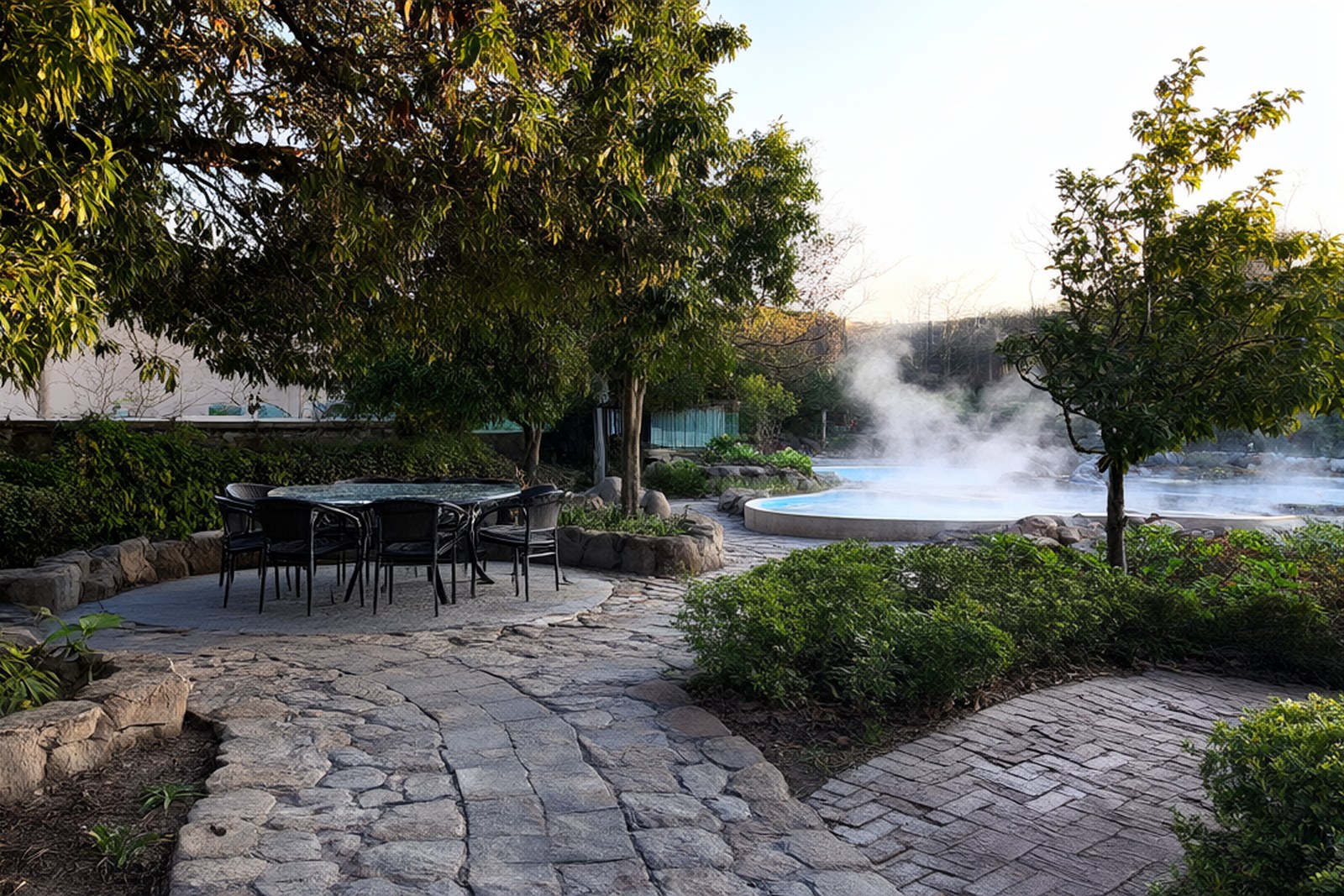
Where to stay: the hot-spring villas at 九乐宫 on the 西达农场 in southern 澄迈县. Take a lake-facing room, spend the afternoon in the pools and the evening in the garden, and use it as the slow middle of a county whose other ends are a harbour, a county town and a pair of stone pagodas in a pond.
flowcloud would say that a county which has been selling oranges, coffee, beef and pickled mustard to the rest of the island for three hundred years has also quietly been sitting on warm water the whole time, and has finally built the one building that lets it charge people for doing nothing at all.