
I woke up in a watchtower. Not a hotel pretending to be one, and not a tower with a lift — an actual 碉楼 diāolóu, a fortified house built by a family who went to America and came back rich and afraid, and the first thing I saw out the window was the village rooftops and the other towers standing around me in the morning haze. There are hundreds of these strange hybrid buildings in the fields of 开平 Kāipíng, a UNESCO World Heritage landscape of rice paddies and concrete castles, and a handful of them now take guests.
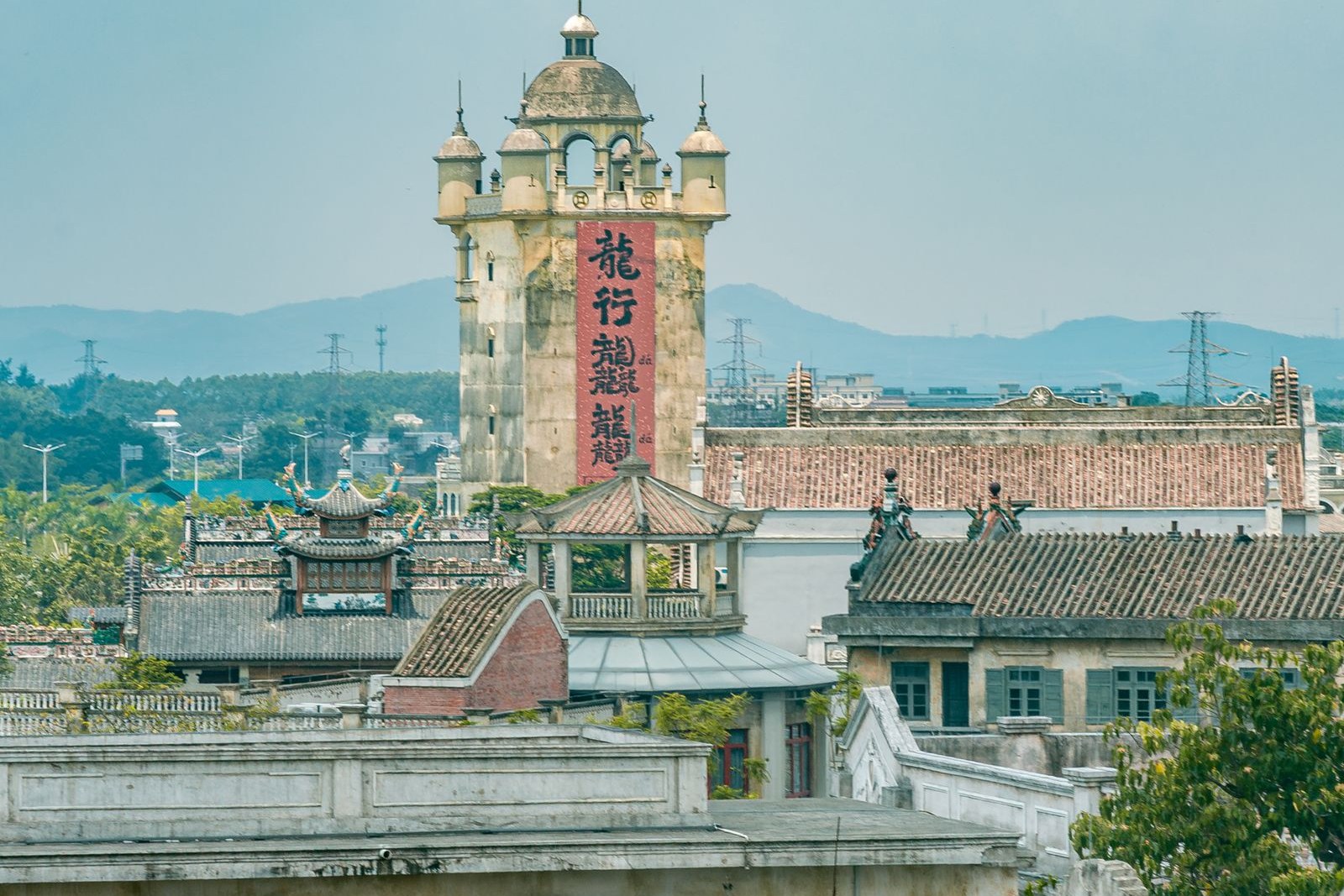
碉楼 diāolóu means “watchtower house,” and the name understates the strangeness of the thing. In the 1920s and 1930s the overseas Chinese of the 五邑 Wǔyì region sent money home to build fortified family mansions that mixed a defensive tower with a European villa — Romanesque turrets, Baroque balustrades, Islamic arches — all sitting in the flat green country of the Pearl River Delta. The result is one of the most peculiar architectural landscapes in the world, and staying in one is the closest you will get to sleeping inside it.
The Rooms
The guesthouse here occupies one of the restored towers in a village near 自力村 Zìlì Cūn, the best-known cluster. The interior is a surprise: outside it is all turrets and gun-slits, but inside the rooms have been brought back with the original lime-plaster walls, dark wooden furniture, and the narrow windows that light the tower like a church. The bed is decent and modern — the one concession to comfort that makes it a guesthouse rather than a heritage display — and the walls are so thick that the room is cool even in the Guangdong summer.
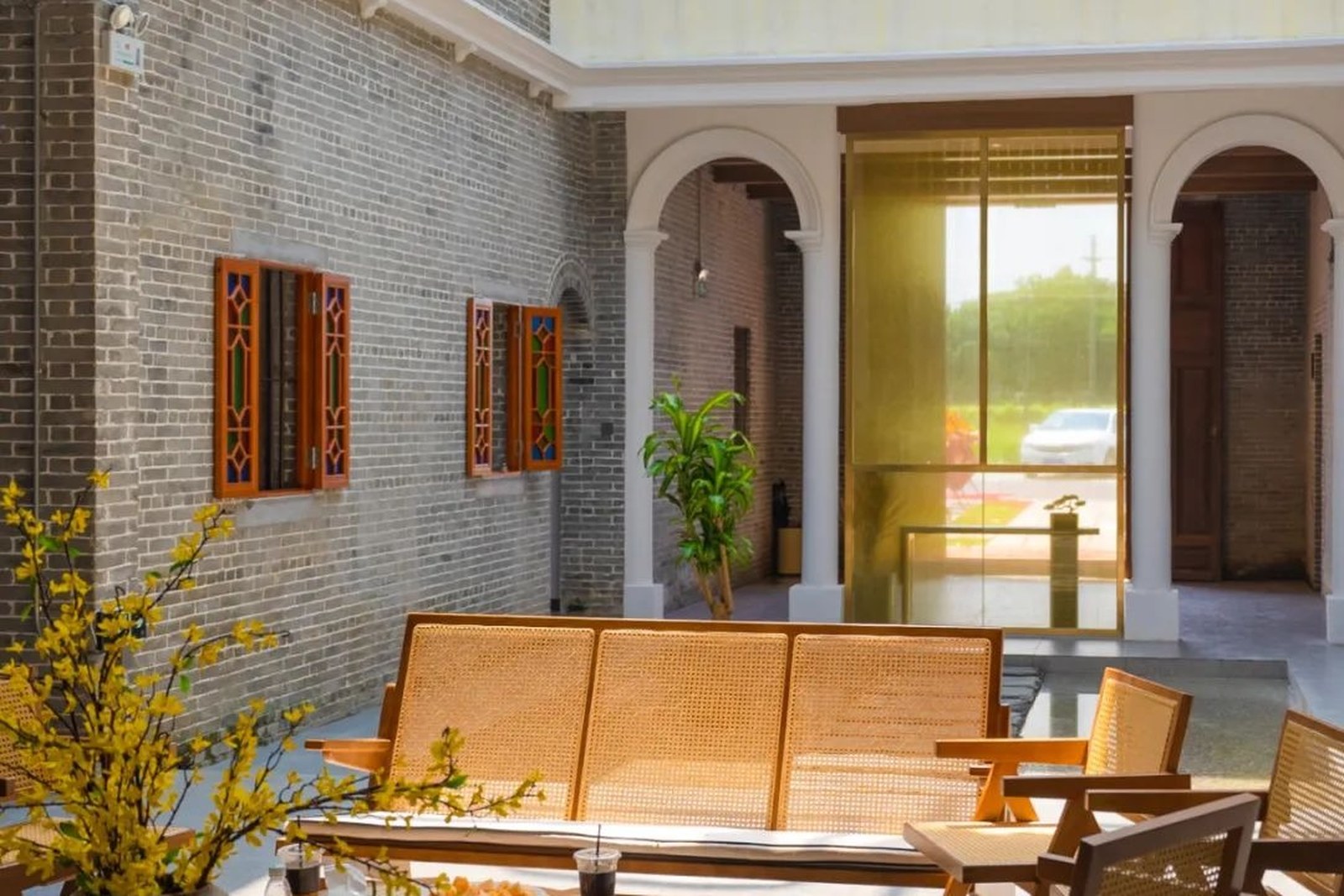
The stairs are the thing nobody warns you about. They are original, which means steep, narrow, and spiralling between floors, and climbing to the top room is a small adventure every time. The best rooms are the ones on the upper floors, where the high windows give you the view across the village — other towers, the green paddies, the odd silhouette of a 骑楼 arcade — and where the light falls in long narrow bars across the floor.
The Village
The tower is the day’s base, and the whole village is walkable in the quiet hours. Before the tour buses arrive, the lanes are empty and you can wander among the 居庐 jūlú (the mansions that are not fortified) and the newer towers without another soul. Neighbouring clusters are a short drive or bicycle ride away — 立园 Lìyuán with its formal garden, 马降龙 Mǎjiànglóng set among bamboo, 锦江里 Jǐnjiānglǐ — each with its own towers and each quieter than the last.
The best light is late afternoon, when the towers go gold against the green fields. That, and a walk down to the 潭江 Tán Jiāng where the farmers still work the rice, is the reason to stay the night rather than come for the day.
The Food
The village guesthouse runs a simple kitchen. The food is honest 开平 country cooking — a whole steamed fish from the river, 马冈鹅 Mǎgāng é the local goose, 煲仔饭 claypot rice, and the 腐乳 fǔrǔ fermented tofu that this part of Guangdong does better than anywhere. You eat in a courtyard or at a long table with the family that keeps the tower, and the conversation is worth the stay on its own.
Breakfast is rice congee, pickles, and a fried egg, and there is a kettle of good local tea on the table all day.
Price, Address, Rooms, Getting there
Price. A night in a restored tower room runs from about ¥200 to ¥500 depending on the floor and the season, a fair price for sleeping inside a UNESCO monument. Meals are ¥40 to ¥70 a head; book ahead in high season because there are only a handful of rooms.
Address. In a village near 自力村, 塘口镇 Tángkǒu Zhèn, 开平 Kāipíng city, 江门 Jiāngmén, Guangdong. The guesthouse is reached by a village lane; ask for it by name at the Zili Village entrance or let the owner guide you.
Rooms. A small number — often fewer than ten — because a tower only has so much space. Upper-floor rooms with the narrow high windows and the rooftop view are the ones to ask for. All have air conditioning and a private bathroom; the original steep stairs are part of the deal.
Getting there. 开平 is about 130 km from Guangzhou. By high-speed rail, take the line to 开平南 Kāipíng Nán station, then a taxi or local bus the last stretch to the village; by car, about two hours from Guangzhou on the 沈海 expressway. From the station the rural roads are flat and easy, and a taxi to 自力村 is quick and cheap.
flowcloud would say that 开平 is the rare heritage site you can sleep inside: the towers are real, the village is still a village, and a morning watching the light come up over the rooftops from an original tower room beats any five-star lobby.
Where to stay: 开平 Kāipíng, 江门, Guangdong — the 碉楼 watchtower country, a UNESCO World Heritage landscape of fortified overseas-Chinese towers in the rice fields. A restored-tower guesthouse near 自力村 puts you among the towers, within reach of 立园, 马降龙 and 锦江里. Rooms ¥200–500, meals extra. Reach it by rail to 开平南 or about two hours by car from Guangzhou. Come in the late afternoon for the gold light on the towers, and climb the original narrow stairs for the view.