
新宁县 Xīnníng xiàn sits in the south-west corner of 邵阳市 Shàoyáng shì with 广西 on the other side of the ridge, and the 夫夷江 Fū yí jiāng runs the length of it past the red sandstone pillars of 崀山 Làng shān. The name of the mountain is a character used for nothing else in the language: 崀 làng is said to have been made by the 舜帝 Shùn dì on a southern tour, when he looked at the place and called it 山之良也, the excellence of mountains, and gave it a word of its own. A minsu here is a farmhouse of two or three storeys in one of the villages at the foot of the cliffs, with navel-orange trees on the slope behind it, a stone path down to the river, and the pillars standing over the roof in the evening light.
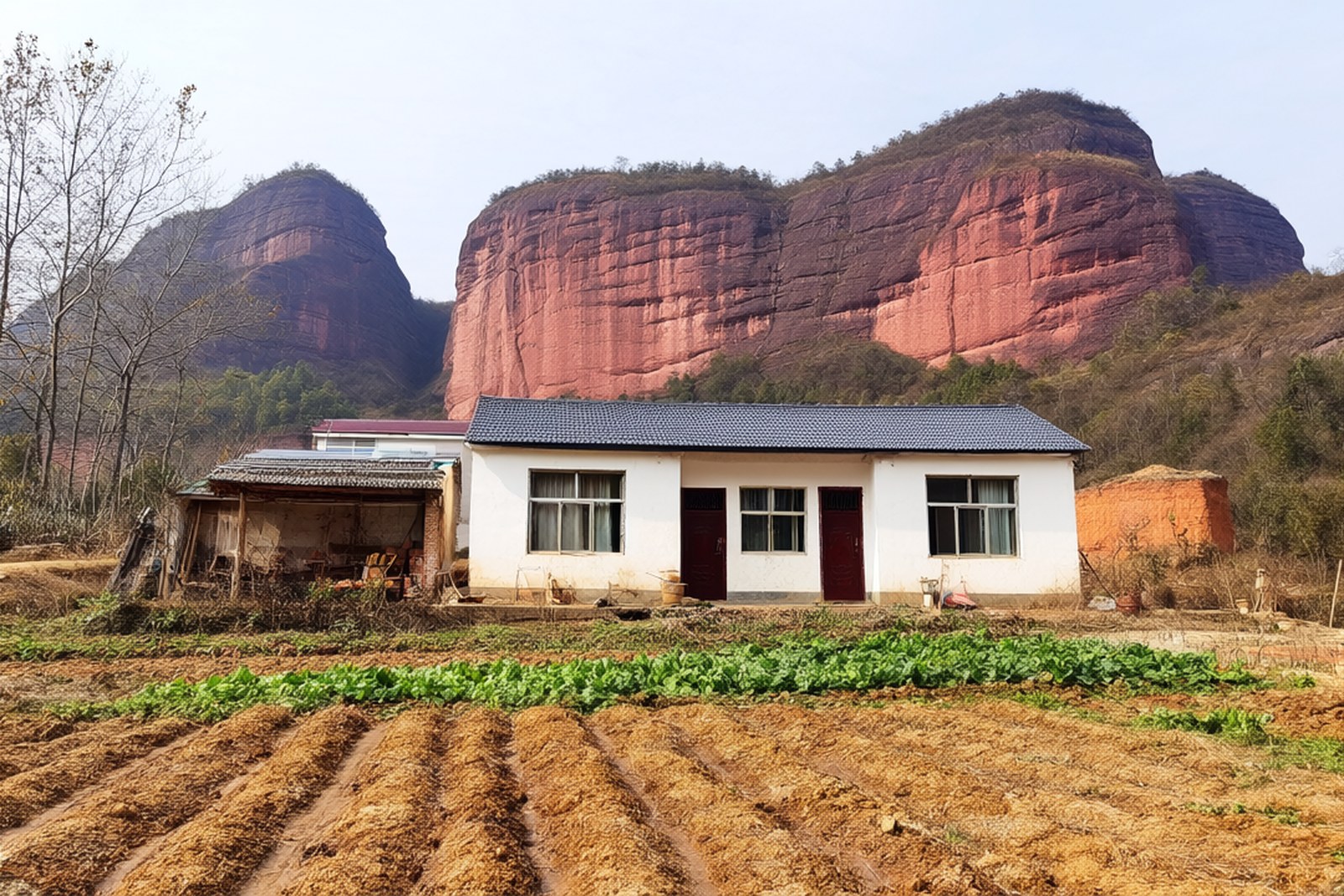
The mountain is the reason anyone comes, and its standing is not local pride. On 2 August 2010, at the thirty-fourth session of the World Heritage Committee in Brasília, 崀山 was inscribed as part of the serial property 中国丹霞 Zhōngguó Dānxiá, China’s eighth natural World Heritage site and the second in Hunan after 武陵源; the scenic area was rated 5A in August 2016, and it had already been a national geological park in 2001 and a national scenic area in 2002. It covers a hundred and twenty-eight square kilometres in six sectors, 八角寨, 辣椒峰, 天一巷, 夫夷江, 紫霞峒 and 天生桥, and the geologist 陈国达 Chén Guódá called it the soul of the red beds and a national treasure. What the world heritage listing was for is that 崀山 is the fullest and most typical example of 丹霞 landform at its mature stage, the stage when the plateau has been cut into separate towers and walls rather than one great table.
The sectors are worth knowing by name, because the day is arranged around them. 八角寨 Bā jiǎo zhài, also called 云台山, is the highest ground and the best viewpoint, a ridge of eight projecting corners at eight hundred and eighteen metres with a Song-dynasty temple, the 云台寺, on the flat top, and in the right weather the clouds pour between the peaks below you and the place is called a sea of whales. 辣椒峰 Là jiāo fēng, the chilli pepper peak, is the shape the whole range is photographed for, and 骆驼峰, the camel, stands behind it. 天一巷 Tiān yī xiàng, the Lane of One Line of Sky, was called 牛鼻寨 until the county renamed it for what it actually is: a group of nine clefts cut through the rock, the narrowest of them under half a metre wide and seventy metres high, so that walking through is a matter of holding both walls. 紫霞峒 is the gorge and grotto sector, 天生桥 the natural arch, and 夫夷江 the river, which is seen from a raft rather than from a path. The poet 艾青 Ài Qīng left the line that every signboard in the county now quotes, that the 桂林 hills may be first under heaven but those of 崀山 beat 桂林.
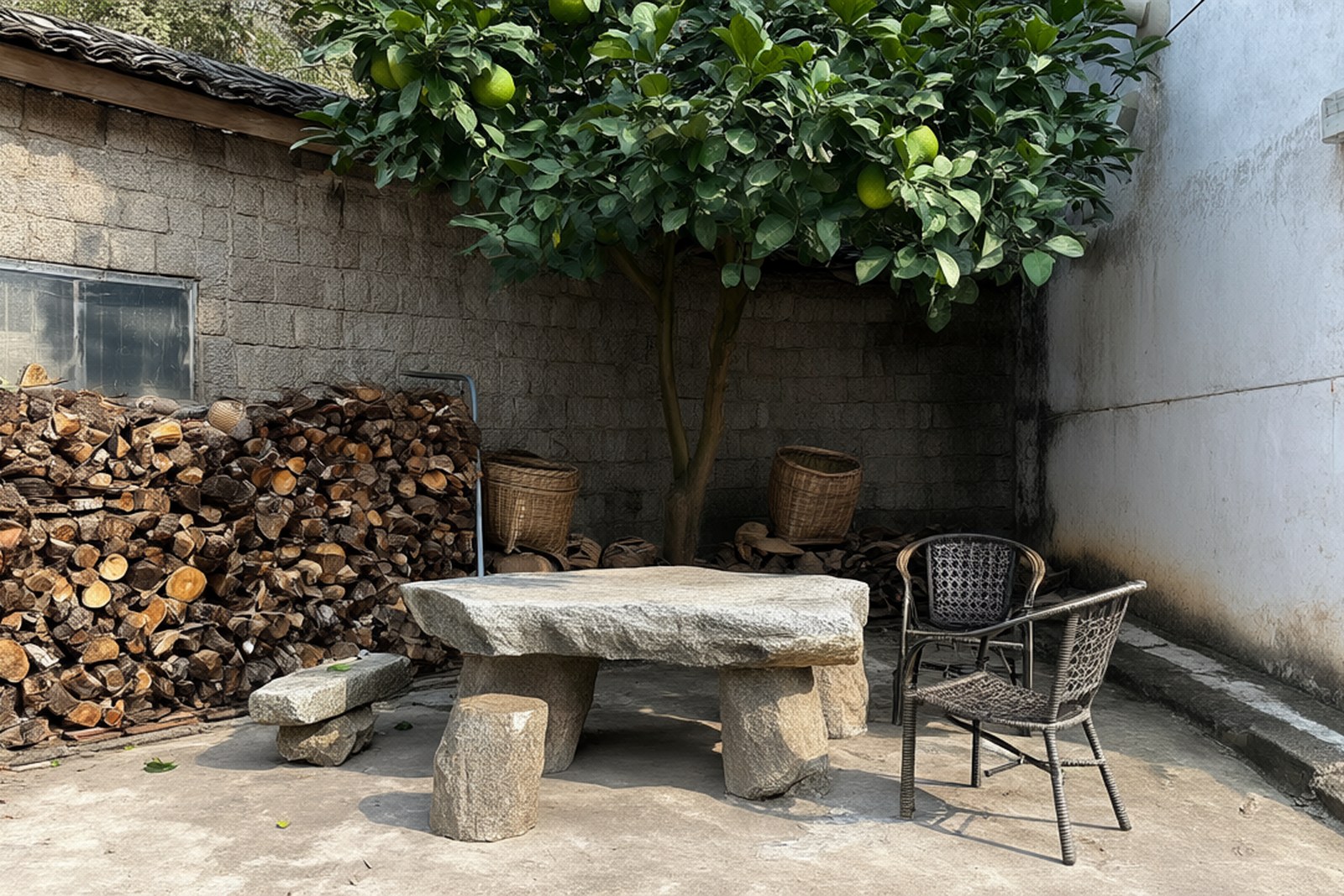
The villages below are farming villages that have learned to keep rooms, and the farms are orange farms. 崀山脐橙 Làng shān qí chéng, the 崀山 navel orange, carries a national geographical-indication mark, it is picked from November into December, and in the weeks when it is being brought in the whole valley smells of orange peel. A minsu family will usually be picking something all year: oranges and pomelo in the winter, bamboo shoots in the spring, lotus root and river fish through the summer. The cooking is 湘西南, which is to say hot, with the fresh fish of the 夫夷江, chicken from the yard, smoked pork, fern-root starch and mountain greens, and a bowl of pickles on every table. The families are 苗 and 瑶 as well as 汉, and a few of the villages keep the drum and the long-table meal for guests.
What the position gives you is the whole of the scenic area within half an hour. 崀山镇 and the 天一巷 and 辣椒峰 gates are ten minutes off; 八角寨 is forty minutes up the valley; the 夫夷江 raft dock at 水溪码头 is fifteen; and 紫霞峒 and 天生桥 are on the same circuit. The stairs are long and steep and there is very little shade at the top of 八角寨, so the year divides sharply: March to May and September to November are the good months, July and August are punishing, and winter is clear and cold with occasional snow on the pillars that the county photographs for its own postcards. Two nights is right, one for the mountains and one for the river and the orange groves.
What the Rooms Are Like
Expect a room of fifteen to twenty-five square metres, a firm bed, air conditioning, a clean en-suite bathroom with a shower and a balcony or a window facing the cliffs or the orchard. The finish is homely and the price is low; what you are paying for is the position. Water pressure can be weak in the older houses and the rooms facing the road hear the tourist buses from about eight, so ask for one at the back. Wi-Fi is usually present and usually slow. Blankets matter in winter, because the valley is cold at night and the heating is not always more than a quilt.
Practicalities
Price. A double in a 崀山 minsu runs ¥120 to ¥300 a night in the shoulder season, and rather more over the October week when the scenic area is at its fullest. Breakfast is usually a few yuan extra and is worth taking, and dinner cooked by the family costs very little.
Address. The minsu is in one of the villages at the foot of 崀山 in 崀山镇 Làng shān zhèn, 新宁县, 邵阳市, Hunan, within half an hour of all six sectors of the scenic area. The nearest airport is 邵阳武冈机场 Wǔgāng jī chǎng, about an hour and a half away by road.
Rooms. Ask for a room away from the main road and, if the house has one, a balcony facing the pillars. Confirm air conditioning, hot water and a quilt for the winter, and ask the family whether they can cook dinner, which is better than the restaurants by the gate. The scenic-area ticket is separate from the room and is bought at the gate.
Getting there. 新宁 has no station of its own and is reached by road: about two hours from 邵阳市, an hour and a half from 武冈市 and its airport, and about two and a half hours from 桂林, whose airport is the other practical way in. Once you are in 崀山镇 a car or the village taxi is still needed to reach the individual gates, because they are spread out along the valley, and the drivers know the order that keeps you out of the worst of the sun.
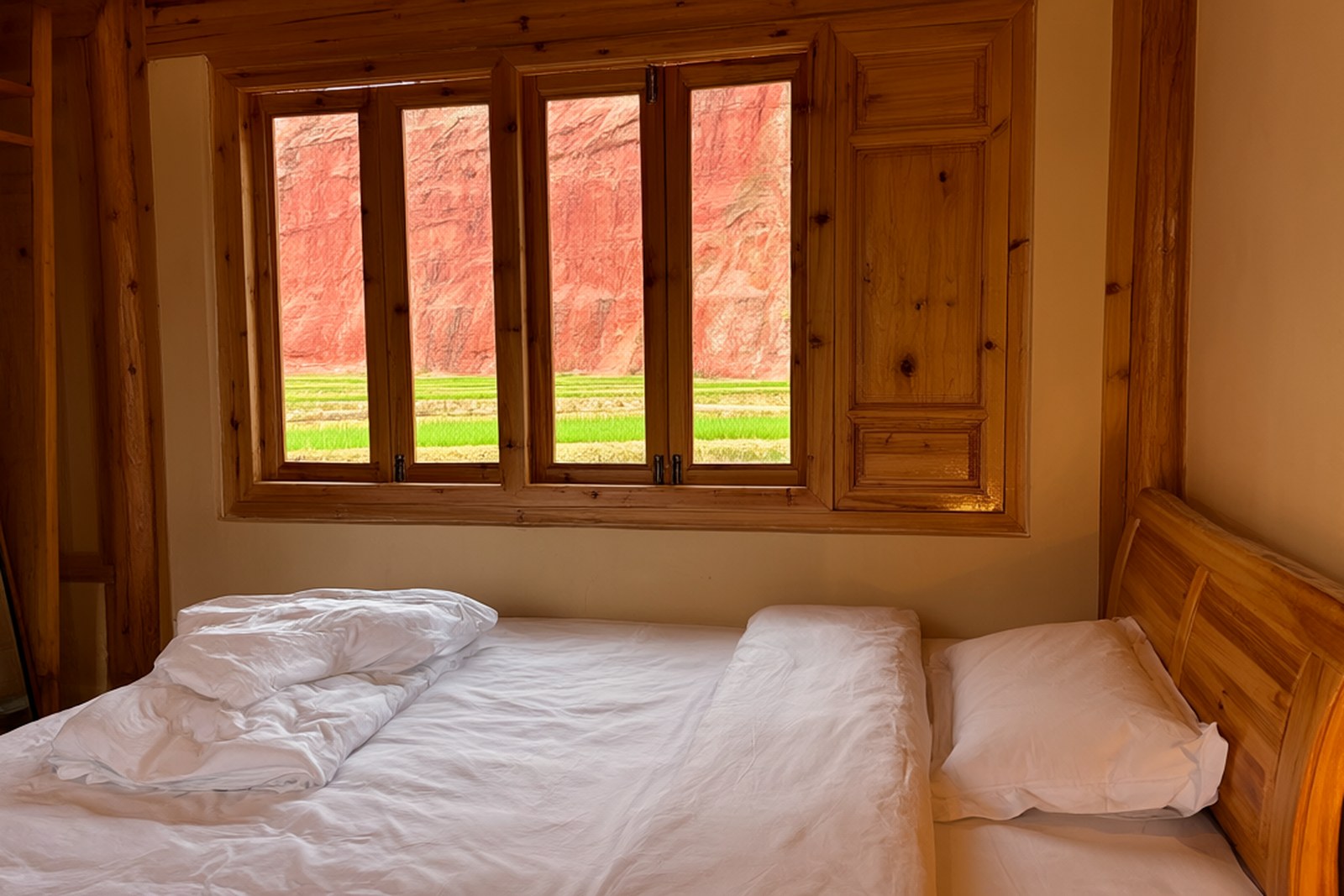
Where to stay: the family minsu in the villages at the foot of 崀山, 崀山镇, 新宁县, 邵阳市. Take a room at the back with a balcony, have the family cook, give the mountains one full day and the river another, and come between the orange harvest and the spring for the clearest light.
flowcloud would say that a place which has been given its own character by an emperor’s pun, which was then declared one of the great geological exhibits of the world, and which still smells of orange peel in December, has managed to be both a monument and a farm at the same time.