
Chongqing is a municipality of southwest China, and 南岸区 Nán’àn Qū, Nan’an District, puts its quietest beds on the temple slope of 南山 Nánshān, Nanshan, between the Taoist terraces of 老君洞 Lǎojūndòng, Laojun Cave, and the plant collections of the 南山植物园 Nánshān Zhíwùyuán, Nanshan Botanical Garden. Above 黄桷垭 Huángjuéyà, Huangjueya, this slope keeps a different clock from the old-street guesthouses below: incense smoke in the morning, bells on the hour, birdsong the rest of the day, and the city below reduced to a haze beyond the pines. The register is the district’s quietest, chosen for temple mornings and garden afternoons.
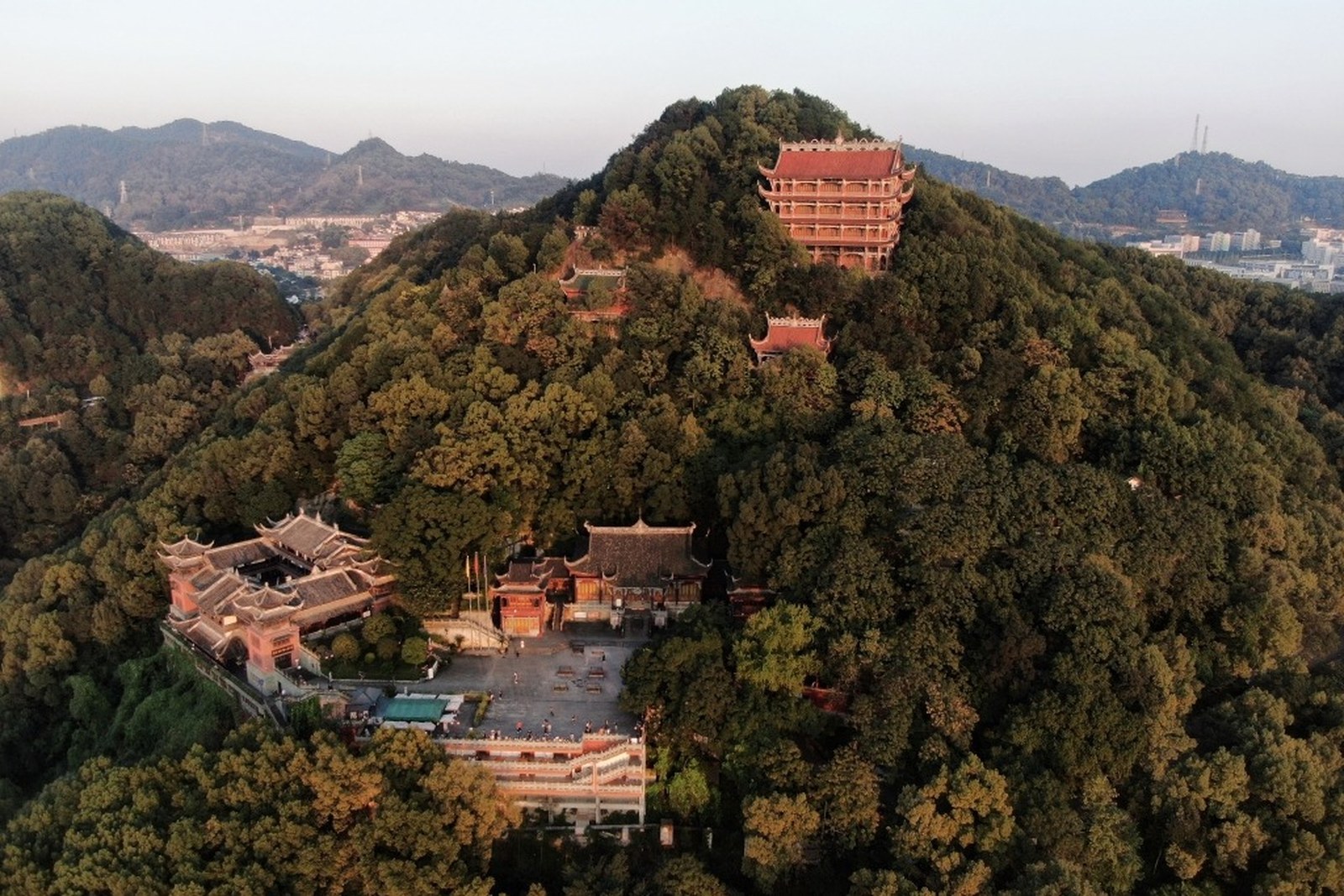
The temple sets the register, and its history is official. 老君洞道观 Lǎojūndòng Dàoguān, the Laojun Cave Taoist Temple, a municipally protected heritage site on the hill above Huangjueya, was first founded in the Sui-Tang transition as 涂山古洞 Túshān Gǔdòng, the ancient Tushan cave, and rebuilt in 1480 in the Ming; it was expanded with its mountain gate and the Hall of the Three Pure Ones in the Wanli reign, taking the name 太极宫 Tàijí Gōng, Taiji Palace, and repaired on a large scale in 1739 in the Qing. Its grounds run to some 223 mu of terraced halls and cliff shrines, its Ming-era stone carvings are fine work of the period, and its reputation as the leading Taoist temple of eastern Sichuan draws worshippers who come to draw fortune sticks.
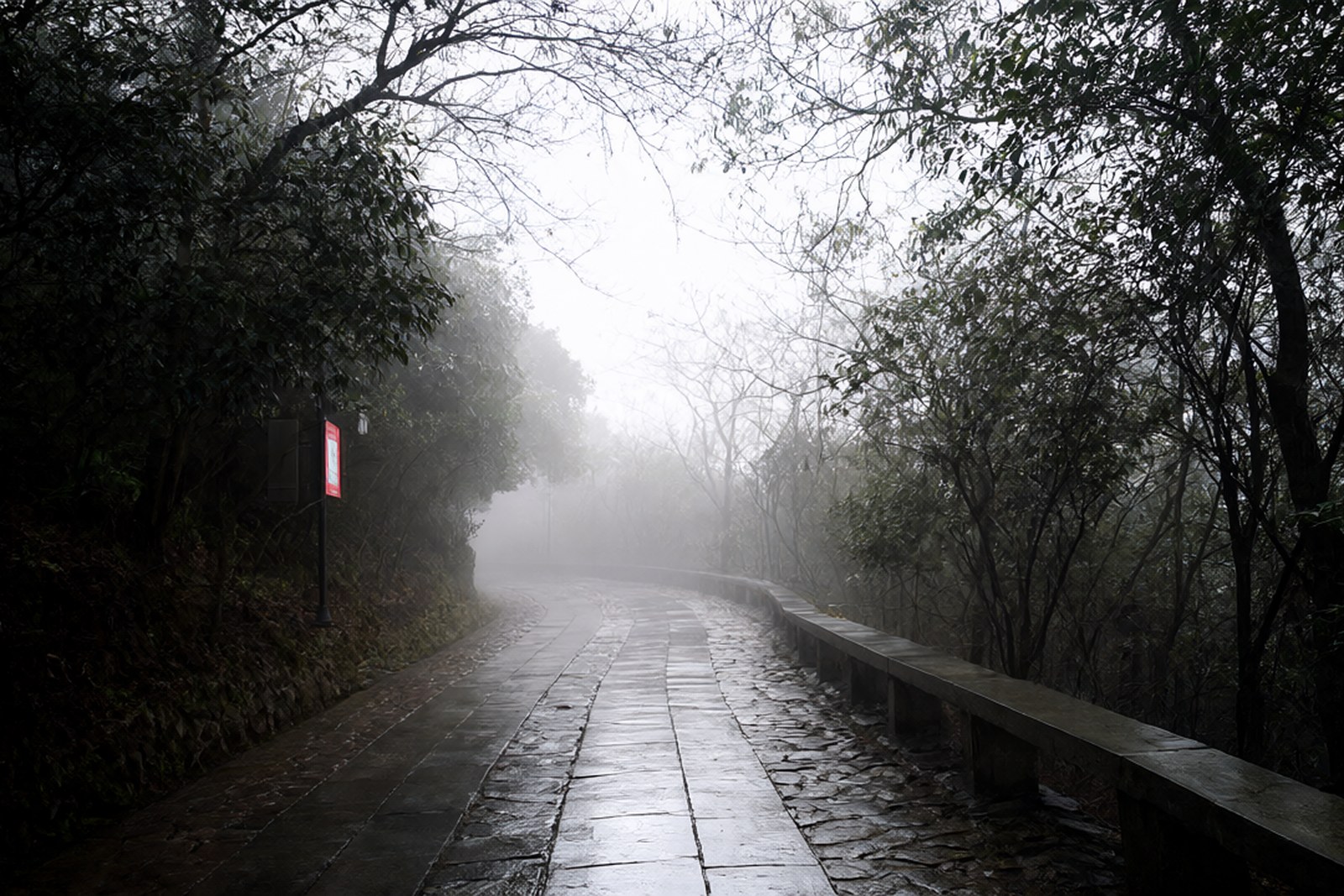
The slope’s footpaths tie the register together. The 黄葛古道 Huánggē Gǔdào, Huangge Ancient Trail, the centuries-old stone steps, connects the temple hill with Huangjueya Old Street below, so a guest can walk from bed to incense to old-street noodles without touching a road; the 清水溪步道 Qīngshuǐ Xī Bùdào, Qingshui Creek trail, threads the greener side of the slope; and the botanical garden sits a short ride below the temple. 涂山寺 Túshān Sì, Tushan Temple, stands further along the ridge, and the garden’s camellia and bonsai collections fill the afternoons.
The beds follow the slope’s own logic: small houses on the pilgrim paths, not hotels on a strip. Closest to the incense is 致虚阁 Zhìxūgé, the Zhixu Pavilion guesthouse by the temple grounds, a few steps from the Sanqing hall, from about 377 yuan. On the slope below, 木兮 Mùxī, Muxi, at 1-6 Laojunpo quoted from about 588, 所遇747 Suǒyù 747 at 114 Huangjueya Zhengjie from about 445, the new 中余草木间 Zhōngyú Cǎomùjiān at number 173 from about 268, and the 朝9晚5 Zhāo jiǔ wǎn wǔ garden inn on the Wenfeng section from about 237 with dorm beds for the trail budget. At the top of the slope’s range sits 黄葛秘境1939 Huánggē Mìjìng 1939 at 147 Huangjueya Zhengjie, from about 1,301 yuan, with an outdoor pool and a tea room – the name carries a year, but no documented building date stands behind it, so book it for the pool and the courtyard. Every figure is a snapshot that floats.
Three boundaries frame the piece. Against the old-street register one level down, covered in its own article on this site: that market sells the market – street sounds, festival kitchens, Sanmao’s lane – while this one sells the silence above it. Against the forest-ridge register of the city’s other bank, from an earlier round: this slope’s claim is temple and trail, not trees. And against the botanical garden, covered in its own article: the garden is the daytime half of a stay here, not the bed.
Practicalities
Price. In an October 2026 platform snapshot the slope ran from about 237 to about 1,301 yuan a night: trail-budget inns with dorms from about 237, small hillside houses from about 268 to 588, the temple-side Zhixu Pavilion from about 377, and the pool-and-tea-room courtyard house from about 1,301. Holiday weeks and temple festival days lift the slope; the smallest houses have the thinnest inventory, so reserve through the platforms ahead of weekends. Prices fluctuate seasonally; check current rates, and treat every figure as a snapshot that floats.
Address. 重庆市南岸区黄桷垭及南山街道 Zhōngqìng Shì Nán’àn Qū Huángjuéyà jí Nánshān Jiēdào, the Huangjueya and Nanshan hillside, Nan’an District, Chongqing – the houses gather along 黄桷垭正街 Huángjuéyà Zhèngjiē, Huangjueya Zhengjie, the 文峰段 Wénfēng Duàn, Wenfeng section, and the paths by the Laojun Cave temple grounds, with the botanical garden at the slope’s lower edge.
Rooms. The stock is small hillside houses and courtyard rooms: a temple-side guesthouse with a handful of keys, lane houses of three to ten rooms, one dorm-friendly garden inn, and a courtyard compound with a pool. Book by position on the slope – temple side, street side or garden side. Exact room counts are not confirmed in government or operator sources, so any precise figure is the platform’s own.
Getting there. Metro Line 6 to 上新街 Shàngxīnjiē, Shangxinjie, or the Loop line to 海棠溪 Hǎitángxī, Haitangxi, then a taxi up the hill of roughly 10 to 15 minutes; the Huangge trail links the slope with Huangjueya Old Street on foot, and the botanical garden is a taxi ride of about 10 minutes from the houses. Many houses advertise free parking, but the temple-area lots are few and holiday mornings fill them early – confirm with the house.
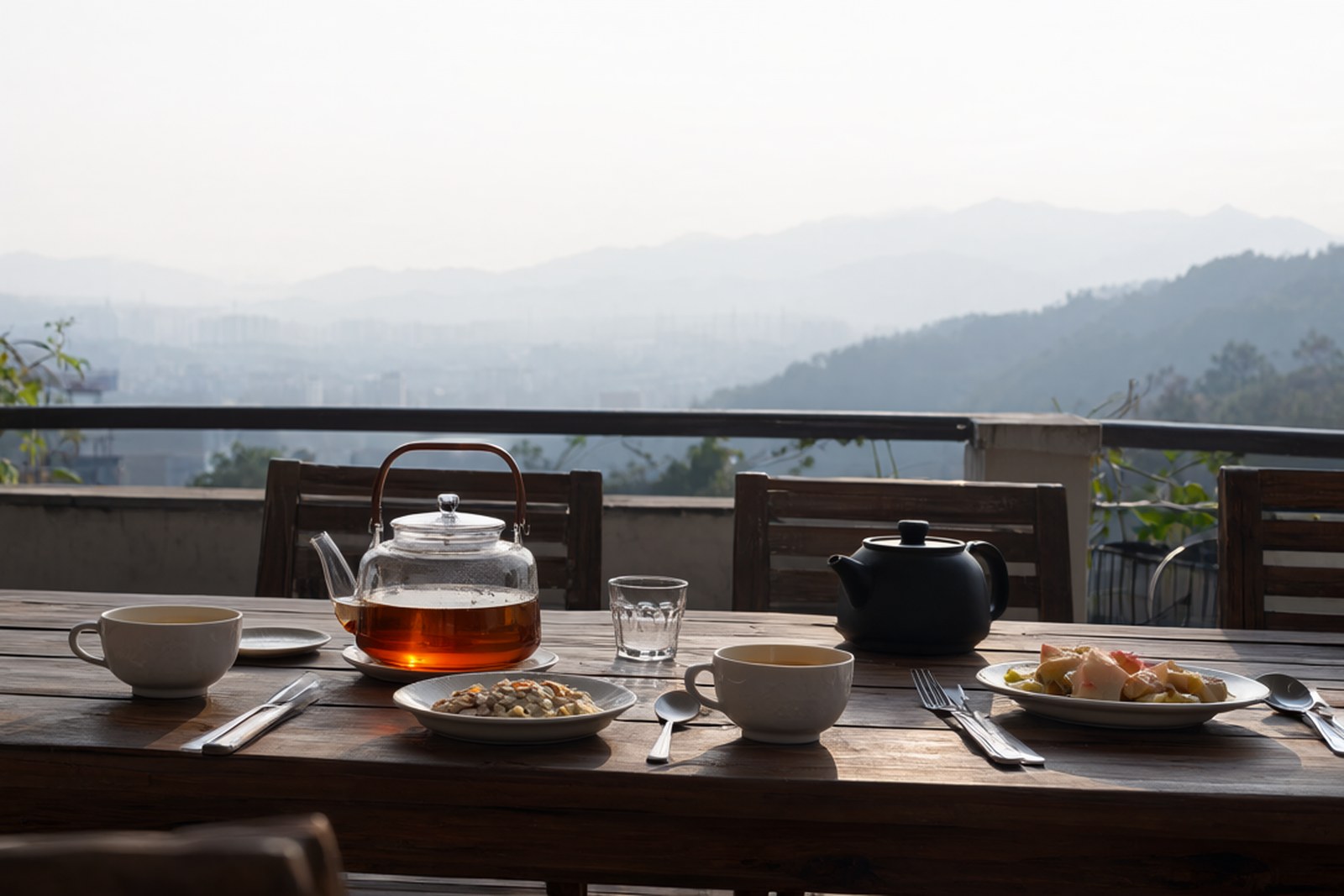
A day on the slope orders itself around the bells. Rise with the temple’s morning drum and walk the gates while the incense is fresh; come down the stone steps for breakfast on a terrace with the city still deciding whether to be visible; spend the middle of the day in the botanical garden’s greens; and end on the trail or the tea table, with the slope’s one luxury – the absence of anywhere you have to be – doing its slow work until the evening bells hand the hill back to the birds.
flowcloud would say that this is the only slope in Chongqing where the wake-up call predates the alarm clock by about fifteen centuries, and that the correct way to sleep here is in the small house by the temple path with the windows open, because the bells are free, the fog is free, and the room only has to be quiet enough to let them through.
Where to stay: the Zhixu Pavilion from about 377 yuan if the temple’s own morning is the point, the lane houses on Huangjueya Zhengjie from about 268 to 588 if the trail and the old street are, and the Huangge Mijing 1939 courtyard from about 1,301 if the pool and the tea room are – because on the 老君洞 Lǎojūndòng hillside, the room you book is really a schedule: bells at dawn, garden at noon, and the city’s noise left exactly where it belongs, below.