
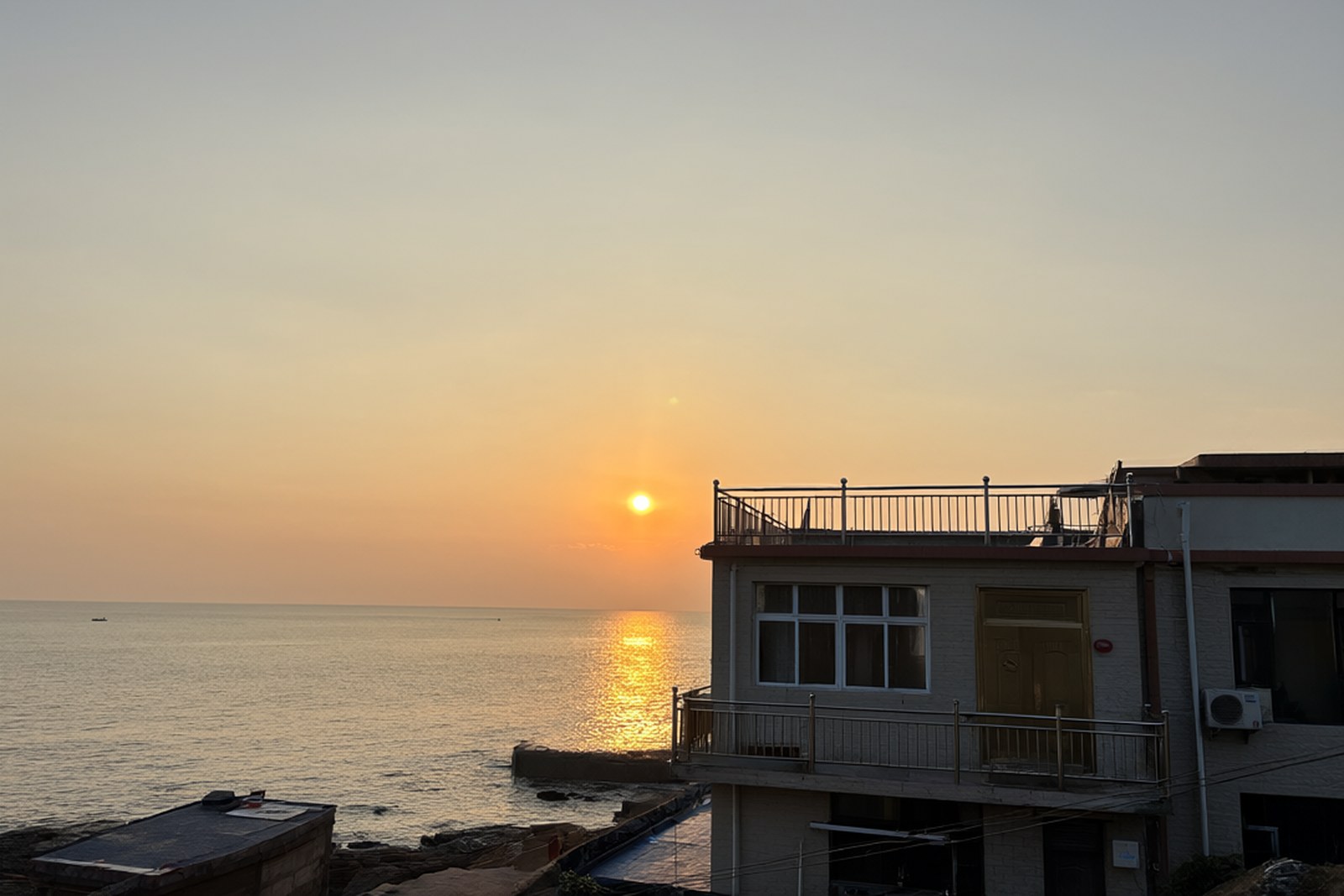
A coast minsu at 乌石镇 Wū shí zhèn on the western shore of 雷州市 Léizhōu shì faces the 北部湾 Běibù Wān, the Gulf of Tonkin, and it faces west, which is the whole of the reason to be there. 乌石 is a fishing town on a long beach at the south-western corner of the 雷州半岛 Léizhōu bàndǎo, a couple of hours from 湛江市 and an hour from the old prefecture town of 雷州; the guesthouses sit a few hundred metres back from the sand, in among the boats and the drying nets, and the sun goes down over open water with nothing at all between the beach and the far side of the gulf.
雷州 is a much older place than the fishing suggests. It was a prefecture from the Tang, renamed 雷州 in the eighth year of the 贞观 reign, and the old walled town an hour inland is a 国家历史文化名城 guó jiā lì shǐ wén huà míng chéng, a national historical and cultural city, and the only county-level one in Guangdong: a Tang ancestral temple to the 雷祖 Léi zǔ, the Thunder God, the 三元塔 raised in the Ming, a Song lake that 苏轼 and 苏辙 visited together in 1097, and six kilometres and more of arcaded streets. The whole peninsula around it is the 雷琼世界地质公园 Léiqióng shì jiè dì zhì gōngyuán, the 雷琼 UNESCO Global Geopark, with the volcanic 湖光岩 crater lake at the northern end and the basalt coast at the southern one. 雷州 also holds three national intangible heritage items of its own – the stone dogs, the 雷歌 songs and the 雷剧 opera – and counts a hundred and eighty-odd items of intangible heritage in the county altogether.
The coast around 乌石 is the part of it that is not a monument. 天成台 Tiān chéng tái, a few kilometres along the shore, is the beach and the headland that 雷州 uses as its resort, with a stretch of sand, a low cliff and a small harbour that the boats come into in the afternoon. The 九龙山 Jiǔ lóng shān mangrove reserve, at the mouth of a river further north on the same coast, is a boardwalk through red mangrove and a stopping place for the birds; and out in the 雷州湾 Léizhōu wān off the eastern side of the peninsula, the population of 中华白海豚 Zhōnghuá bái hǎitún, the Indo-Pacific humpback dolphin, is one of the largest protected groups in the country and is watched from small boats out of the bay ports. The town itself runs on the fishing: the boats go out at night and come back with the light, and the market on the quay is at its best from about six.
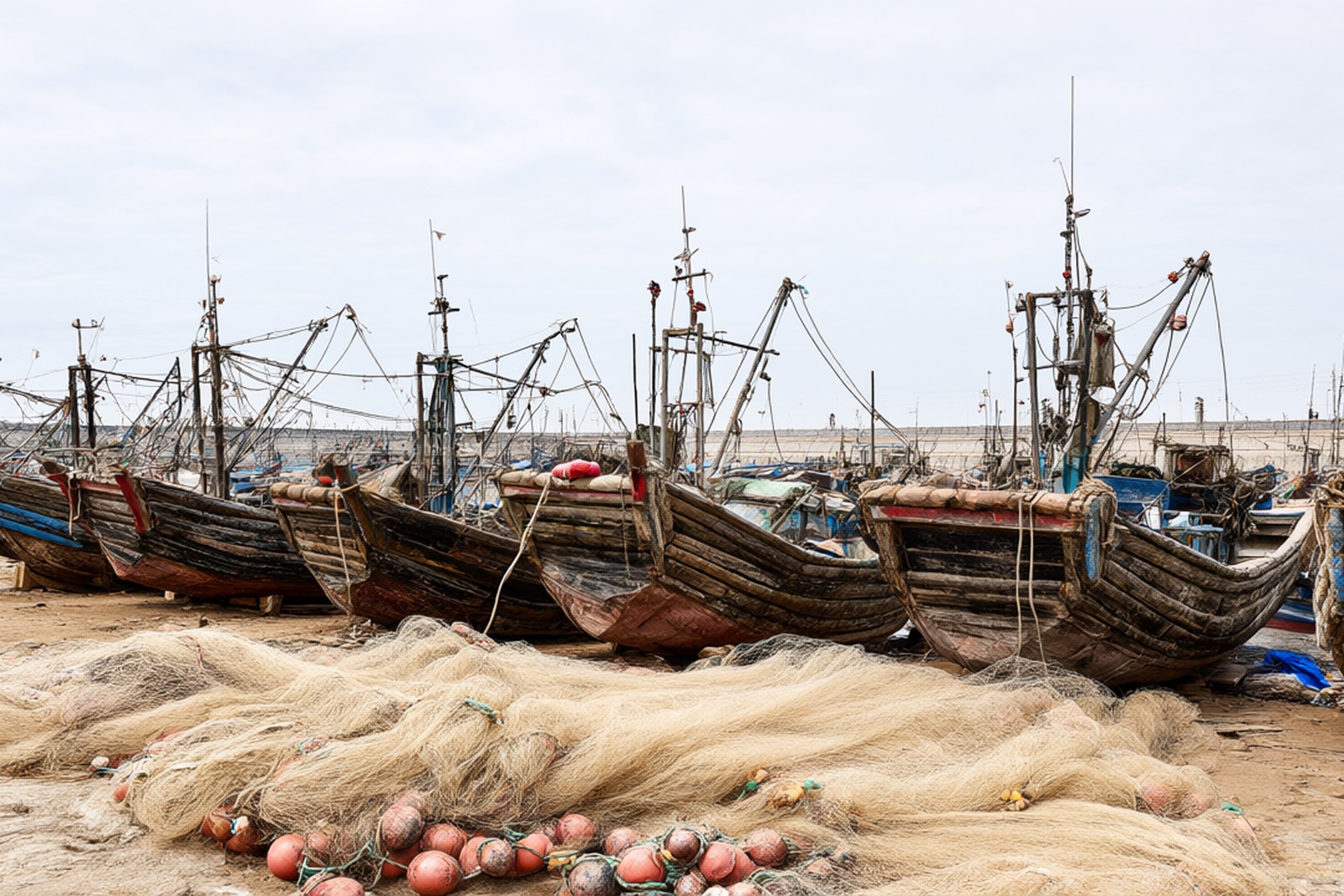
The eating is entirely the sea. 乌石 is known within 雷州 for its 海鲜: 花蟹 huā xiè, the blue swimming crab; 对虾 duì xiā, prawns; 沙虫 shā chóng from the same kind of sand as 遂溪’s; oysters in the winter; and the ordinary small fish, 沙尖 shā jiān and 泥鯭 ní méng, fried whole and eaten with congee. 雷州’s own festival food is the 树叶夹 shù yè jiā, glutinous rice steamed inside a 菠萝蜜 bō luó mì leaf with either a sweet or a savoury filling, which the 赤坎 old town in 湛江 also sells as a New Year cake. In a coast minsu the arrangement is usually that the family cooks whatever came off the boat, and the price is agreed over the fish before it is cleaned, which is the only way it can be done honestly.
What the Rooms Are Like
Expect a simple room with two beds or a double, an air conditioner, a bathroom with a shower and a window that catches the sea breeze, in a house of two or three storeys a couple of hundred metres from the water. The construction is concrete and tile and the furniture is basic and clean; the standards sit below a city hotel and well above nothing. Ask to see the room and check the hot water before you pay, and ask for an upper floor with a window on the water, which is usually the same price as one without. Bring insect repellent for the evenings and expect the wifi to be unreliable, because the coast villages are thin on signal.
Practicalities
Price. A double room in a 乌石 coast minsu runs ¥100 to ¥260 a night, and a sea-facing room on the top floor is often no more than an inland one. Meals by arrangement run ¥40 to ¥100 a person depending on what was caught, and a plate of crab at a beach table is priced by weight, with 花蟹 at ¥60 to ¥120 a 斤 in season.
Address. The minsu is at 乌石镇 Wū shí zhèn, 雷州市, 湛江市, Guangdong, on the western shore of the 雷州半岛 facing the 北部湾, a few kilometres from 天成台 Tiān chéng tái and about an hour south-west of the old town of 雷州.
Rooms. Ask for an upper-floor room with a window on the water, confirm the hot water and the air conditioning, and ask whether the house cooks and when the boats come in, because the quay market is over by nine. Take a written Chinese address, and ask the family which stall on the quay is theirs.
Getting there. There is no station at 乌石. The nearest is 雷州站 Léizhōu zhàn on the 深湛 high-speed line, about an hour away by road, and 湛江西站 Zhànjiāng xī zhàn is a little over two hours. By road 雷州 town is an hour, 徐闻 about two hours south, and 湛江市 about two and a half hours north-east on the expressway; a car or a taxi is needed for everything, and the last few kilometres into the town are a single lane.
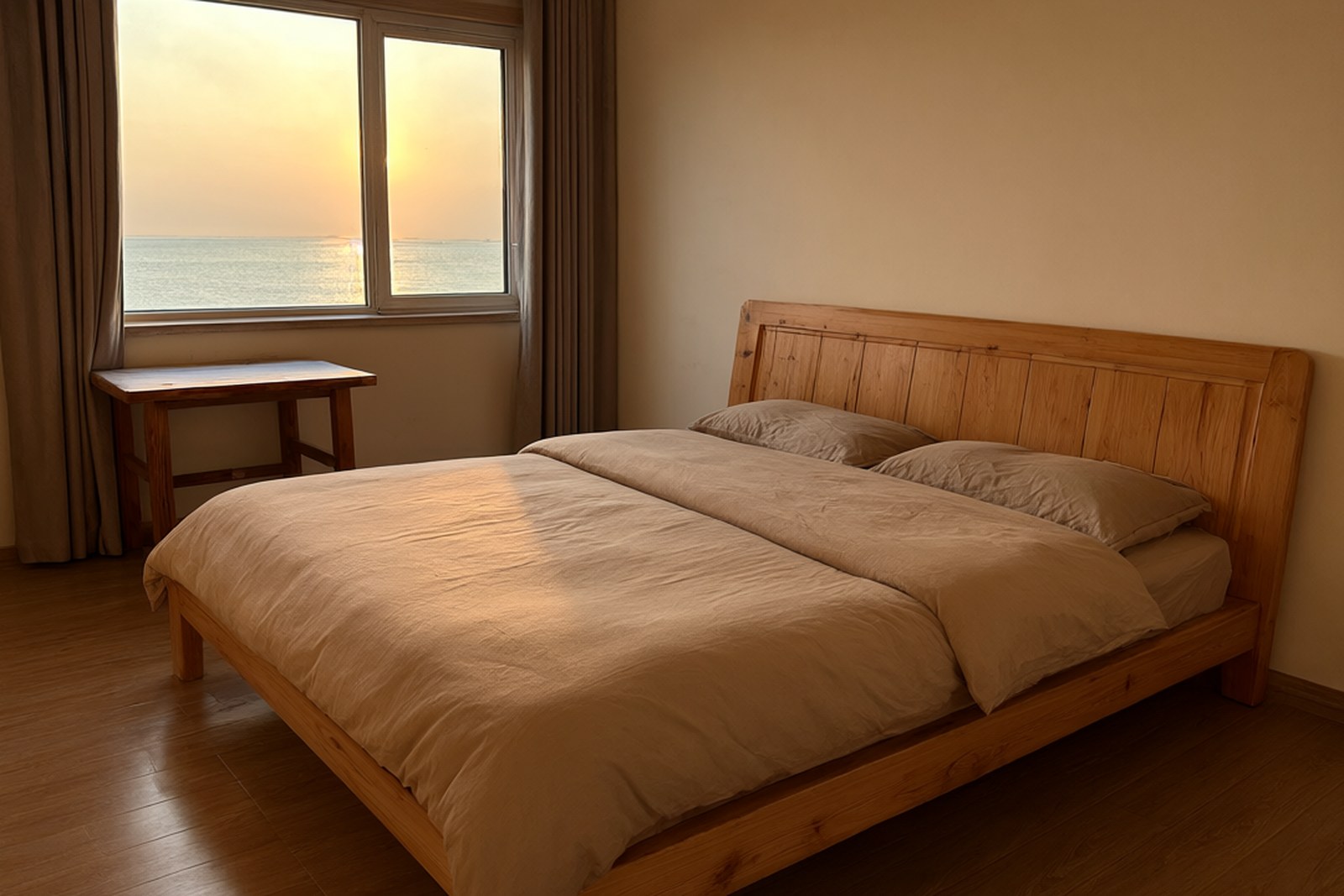
Where to stay: the family guesthouses of 乌石镇, 雷州市, on the western shore of the 雷州半岛 facing the 北部湾, within a few kilometres of 天成台 and an hour of the old prefecture town. Take an upper floor with a window on the water, eat what the boats brought in, and stay for the sunset.
flowcloud would say that a coast which has nothing on it except a beach, a market and the boats that supply it, and which has decided not to build anything else, is offering the one thing the rest of the province sold some time ago.