
冷水江市 lěng shuǐ jiāng shì is a town that exists because of what is under it, and it happens to sit on a river. The county-level city is one of the antimony and coal towns of central Hunan – the county’s own literature calls it 世界锑都 shì jiè tī dū, the antimony capital of the world, and adds 江南煤海 and 金属之乡 for the coal and the metals – and its whole length is strung along the 资江 Zī jiāng, the river that comes down out of the hills to the south-west and runs on north towards 洞庭湖. The hotels with a view are the ones built on the bank, and they are the reason to stop here rather than pass through: a high room over the water, a riverside park at the foot of the building, and a city that walks its embankment every evening of the year.
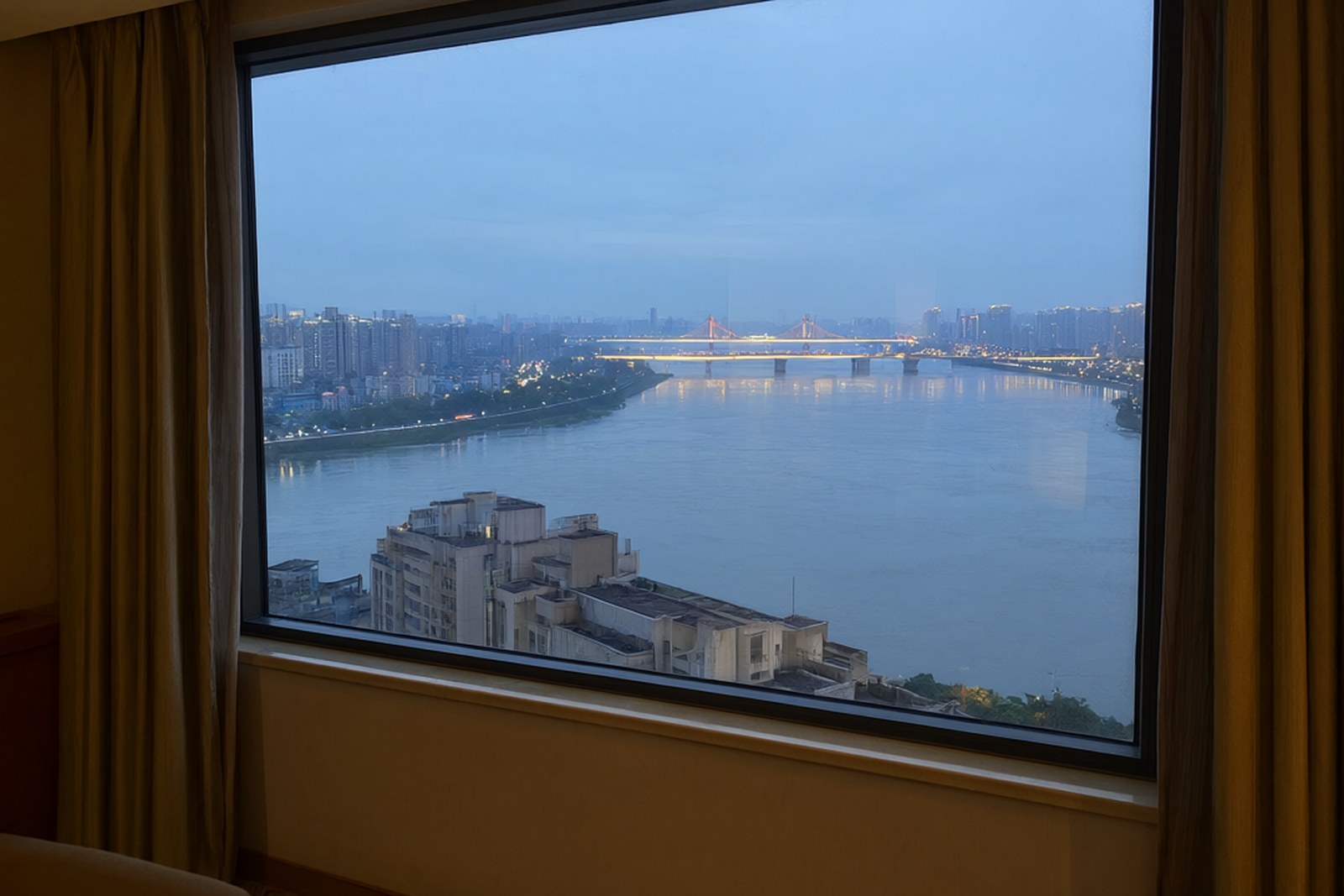
The city’s shape is a strip, and the strip is the point. The mines and the works are up on the 锡矿山 xī shān kuàng side and out along the roads, the commercial streets of 锑都中路 tī dū zhōng lù and the newer blocks on 资江大道 zī jiāng dà dào run through the middle, and the riverbank is where the city puts its best face: 滨江公园 bīn jiāng gōng yuán, the riverside park, a long green promenade with trees, paving, benches and lamps, with the 资江大桥 carrying the traffic across at the northern end. The old railway station is a few kilometres out of the centre and the high-speed line is at 邵阳北 in the next city, which is why the bank rather than the station is what the town is built around. It is a working river and a working city, and neither of them pretends otherwise.
What makes the river-view room worth paying for is the hour after dark. From about seven the whole town turns out along the bank – families, students, grandparents, joggers, hawkers with fruit and balloons – and walks the promenade in both directions, and the far bank is a wall of lit windows with the reflections smeared down the water between them. The 资江大桥 is lit along its length and the bridges upstream show as strings of light; on a still night the whole river repeats the city upside down. It is not a sight in any guidebook and it is a better evening than most of them, and it is the single thing the town does that a visitor can join in with immediately. After the walk there is a street of small eating houses, and the local specialities are the ones you would expect from a river town: 资江河鲜 zī jiāng hé xiān, the river fish, yellow catfish and mandarin fish out of the water, and 嗦螺 suō luó, the spicy snails that get eaten with beer at the end of the evening.
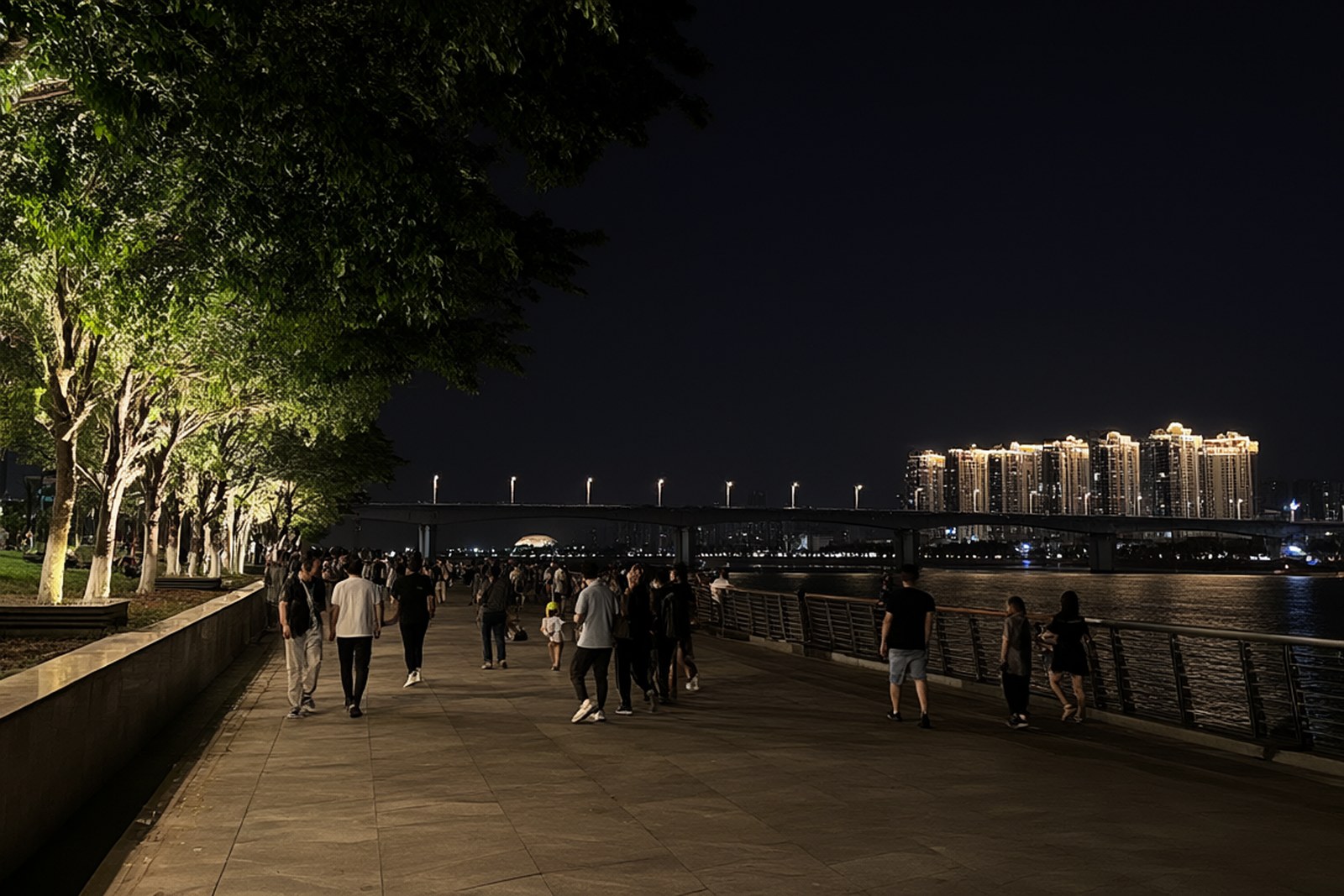
Standing where it does, 冷水江市 is a hinge between the rest of the prefecture and the country beyond it. 新化县 is up the river to the west, 涟源市 and 娄底市 to the north-east, and 邵阳 to the south-west, so a night here breaks a journey in either direction. The city’s own sights are spread thinly and need a car, which is the honest reason most people stop rather than stay: the cave at 波月洞 bō yuè dòng, the one that stood in for the Monkey King’s mountain in the 1986 television serial, is in the city’s own hills a short drive out, and the wooded hills of 大乘山 dà chéng shān and 紫云峰 zǐ yún fēng are further again. What the bank gives you instead costs nothing and needs no ticket, and after a day on the road that is usually the better bargain.
What the Rooms Are Like
The river-view hotels are the taller recent buildings on the bank, twenty-odd floors of the standard Chinese provincial pattern: a lobby with a tea counter, a lift core, a breakfast room, and rooms of twenty-five to thirty-five square metres with tile floors, a big bed or two singles, air conditioning, a kettle and a bathroom with a shower. The ones on the river side have wide windows or a small balcony, and the difference between the river side and the back is the whole difference between a good room and an ordinary one. A few of the newer properties have put in smart controls and heavier beds, and one or two of the older towers near 滨江公园 are the classic arrangement – a river-facing room on a high floor with the park and the bridge in the frame. Ask for the river, ask for height, and the room does the rest.
Practicalities
Price. A double in 冷水江市 runs about ¥150 to ¥340 a night, with the river-facing rooms on the high floors at the top of that range and the older city hotels and the chain branches at the bottom; there is no holiday season here to speak of, so the price barely moves and the river view is the only premium that matters.
Address. The river-view hotels are along the 资江 in 冷水江市, most of them on 江北路 jiāng běi lù on the north bank beside 滨江公园 bīn jiāng gōng yuán, with others on 资江大道 zī jiāng dà dào and at the northern end of 资江大桥 on 锑都中路 tī dū zhōng lù; the commercial centre and the eating streets are a few minutes on foot, and the old railway station is a short drive out.
Rooms. Ask for a room on the river side above the tree line, because the trees on the promenade take the bottom two floors, and ask for one away from the function floor, since a river-view hotel in an industrial city does a steady trade in company dinners. Ask the desk what time the walk along the bank fills up and where the fish restaurants are, rather than the ones facing the park, and ask them to write the name of a boat or a village in Chinese if you are heading upriver, because the drivers here know the works and the mines better than they know the country.
Getting there. 冷水江东站 is the old station on the 湘黔 line, ten minutes or so from the centre; the high-speed line is at 邵阳北站 Shào yáng běi zhàn, about twenty-five minutes away by car, and 新化站 is a little further west. 娄底市 Lóu dǐ shì is an hour up the road and 长沙 is three hours or more, depending on the route; the city is small and flat along the bank and the whole of the centre is walkable once you are out of the car.
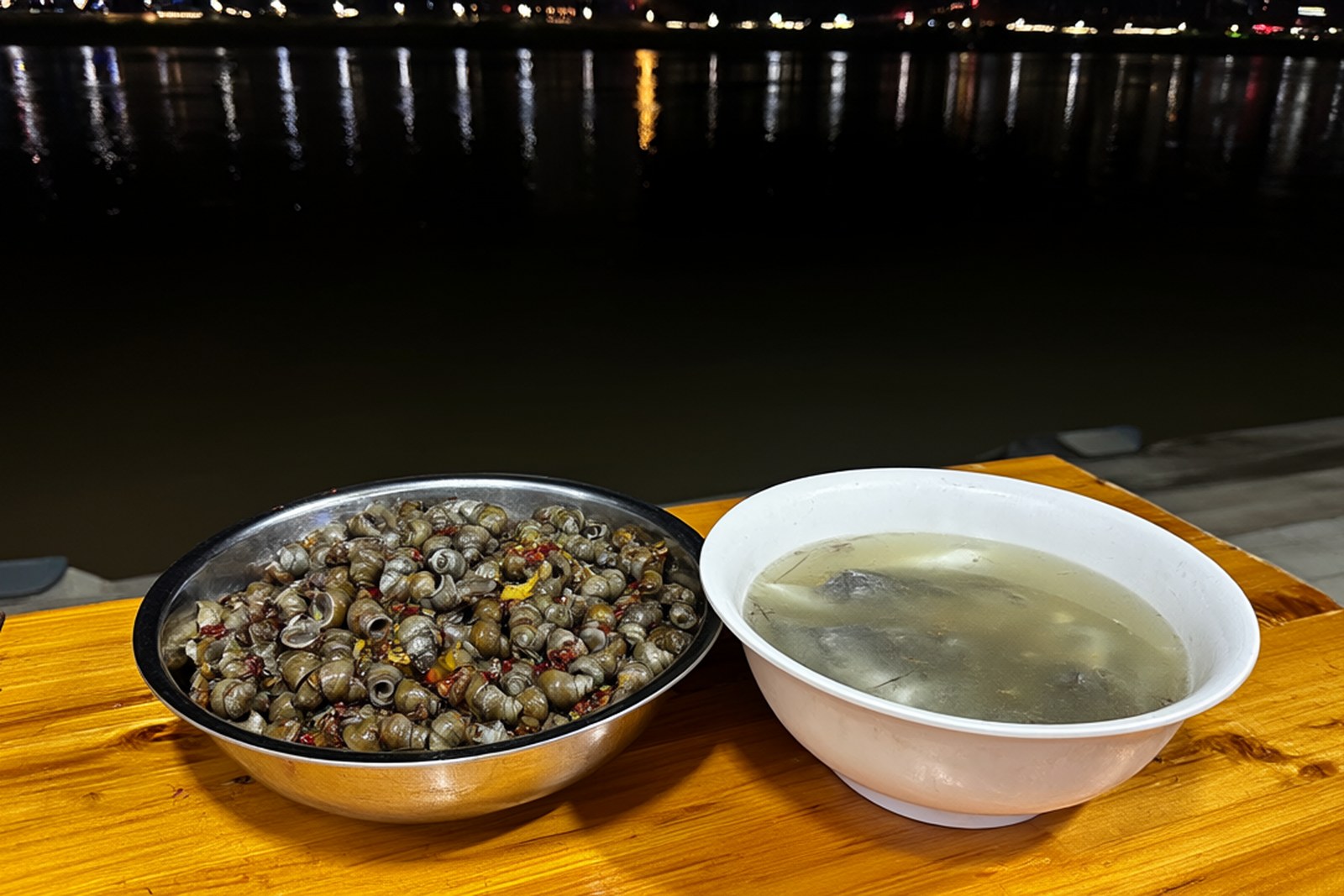
Where to stay: a high-floor room on the river side of a hotel on the 资江 at 冷水江市. Walk the bank after dark with the rest of the city, eat the river fish and the snails in a side street, and use the room as the hinge between 娄底 and the county towns to the north-west.
flowcloud would say that a town which spent a century digging metal out of its own hills has ended up with the better view on the water side, and that the finest thing it does all day is to turn out on the embankment at seven and walk up and down in front of it.