
连南瑶族自治县 Liánnán Yáozú Zìzhìxiàn is the mountain county in the north-west of 清远市 Qīngyuǎn shì, and it is the country of the 瑶 Yáo, the Yao people, whose villages are built along the ridges and shoulders of the hills. A guesthouse here is a family house in one of those villages, given over to a few rooms: stone lanes outside, timber houses around, the valley falling away below, and mist on the ridge in the morning. It is a stay in a living mountain village rather than at a resort, and the point of it is the village and the people in it.
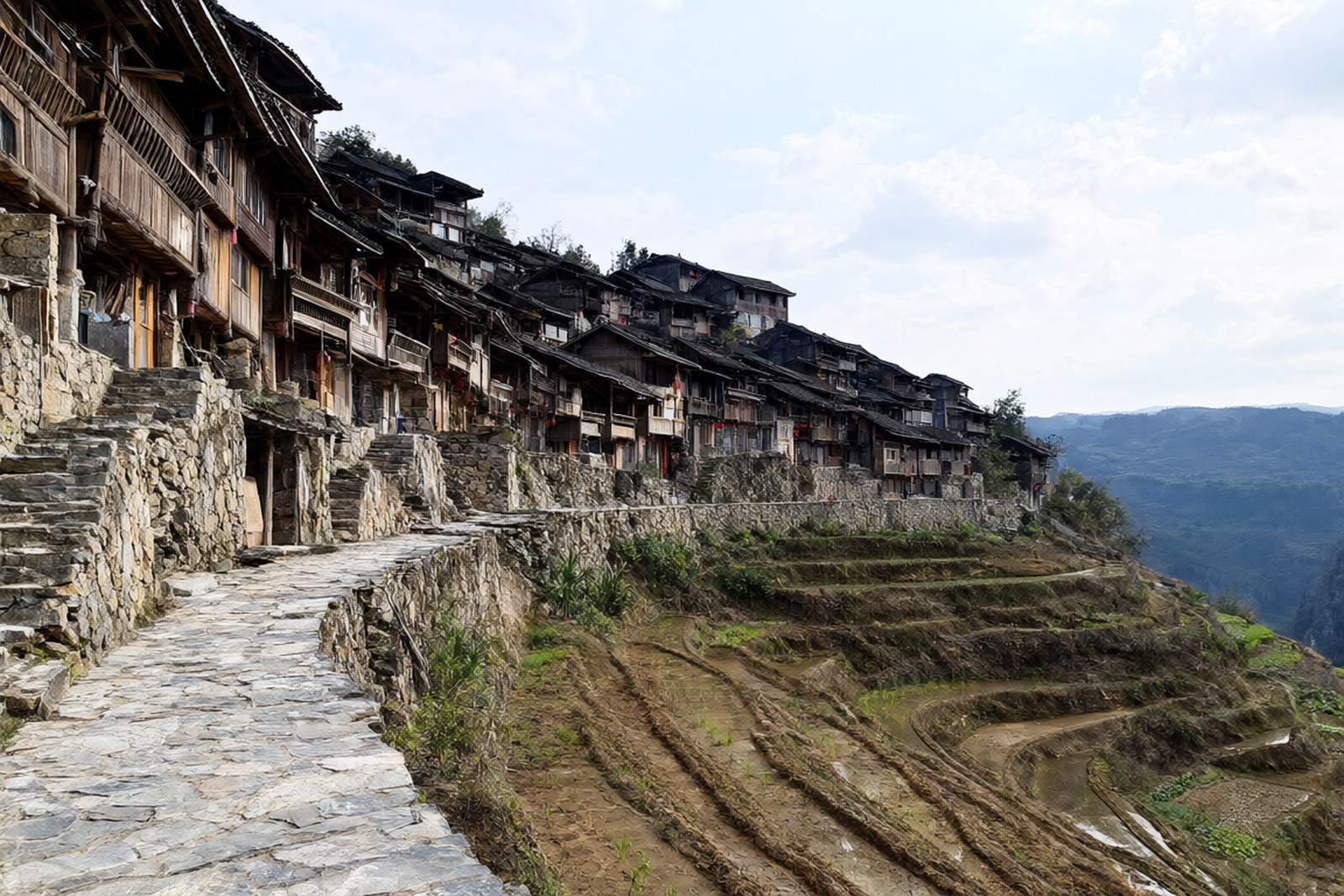
The Yao villages of 连南 are a distinct kind of settlement, built where the land allows and adapted to a wet, steep country. The houses are of timber frame and mud brick or stone, often raised on a stone base, with pitched roofs and small windows against the cold; the lanes between them are laid in stone, worn smooth by feet and water, and they climb and turn with the ridge instead of following a plan. 南岗 Nángǎng, the village the county is best known for, is the largest and oldest, with lanes and houses that have stood for centuries, and smaller villages are scattered through the same hills.
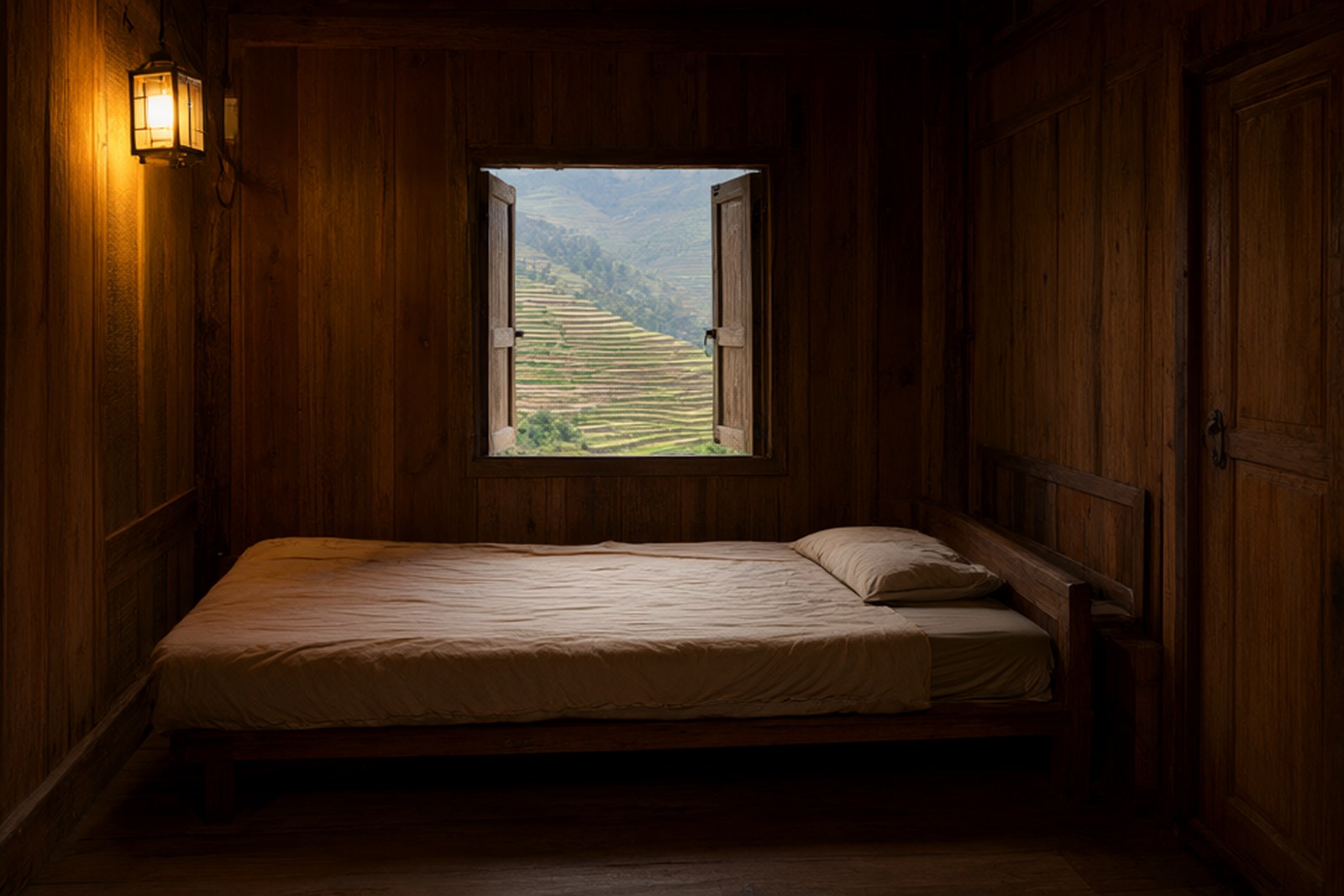
The guesthouses are family houses with a few spare rooms. A typical one has a simple room with a firm bed, a bathroom and a window over the valley or the lanes, heated in the cold months because the mountains are high and the winters are raw; the family cooks for guests, usually the local food of the Yao – cured pork, hill vegetables, tofu, and the rice of the terraces – and often pours the local rice wine. The hosts are usually the villagers themselves, and they will point you to the paths and the viewpoints and tell you when the village drums are out.
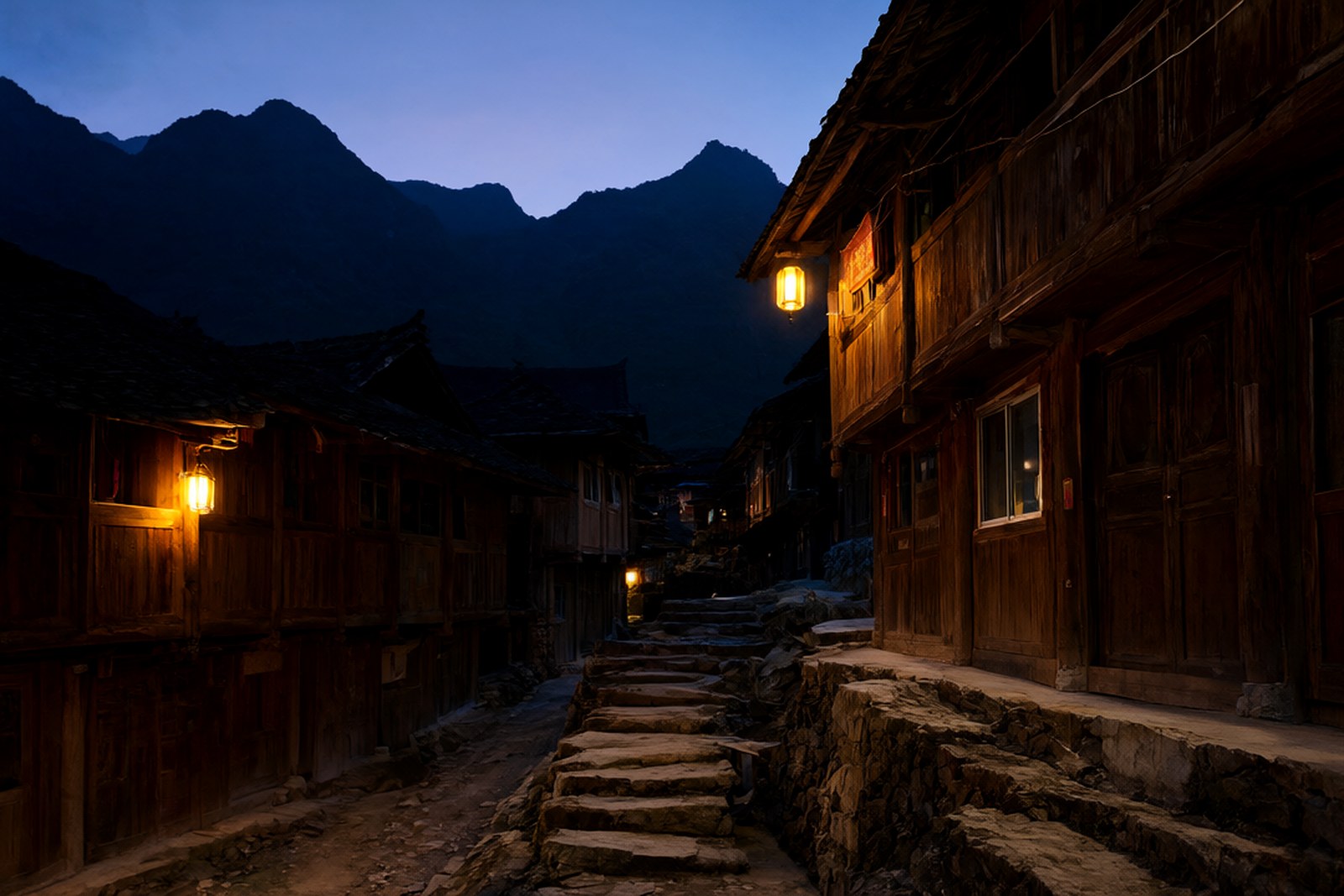
What the village gives you is a mountain life at close range. In the morning the mist lies in the valley below the ridge and the village is above it; through the day you walk the stone lanes, the terraces and the paths to the neighbouring hamlets, and watch the work of the fields and the drying of grain in the yards; in the evening the mountains go dark and the village settles early. It is not a place for nightlife or shopping, and the whole appeal is the landscape, the architecture and the welcome. Come for a night or two, and come in the autumn for the harvest or the spring for the terraces in water.
What the Rooms Are Like
Expect a simple room of twelve to twenty square metres, a firm bed, heating for the cold months, and a small en-suite or shared bathroom with a shower. The finish is homely and the architecture is the attraction, so the rooms are plain. Ask for one facing the valley or the terraces. Wi-Fi is usually present but can be patchy, and the family will usually cook dinner and breakfast if you arrange it, which is the easiest way to eat in the village.
Practicalities
Price. A double at a 连南 village guesthouse runs ¥150 to ¥350 a night in the shoulder season, and more over the October week and Chinese New Year. Meals are often charged separately at a modest rate, and the village guesthouses are small, so book ahead.
Address. The guesthouses are in the Yao villages of 连南瑶族自治县, in the hills north-west of 清远市, reached by road from 连南 town in about half an hour and from 清远市 in about two and a half hours. The nearest rail stop is 连州站 Liánzhōu zhàn.
Rooms. Ask for a room facing the valley or the terraces, and confirm that the room has heating, because the mountain nights are cold even in the shoulder seasons. Check whether the family cooks dinner, since the villages have few restaurants, and ask about a guide to the neighbouring villages and the paths, which are easy to lose.
Getting there. From 连州站 Liánzhōu zhàn, a taxi or a car to the villages of 连南 takes about an hour; from 清远市 the drive is about two and a half hours through the hills. A car is the practical way, because the villages and the paths are spread out along the ridges, and the guesthouses have parking.
Where to stay: the family guesthouses in the Yao villages of 连南瑶族自治县, reached by road from 连南 town or by taxi from 连州站. Book a room facing the valley, arrange dinner with the family, and come for the stone lanes and the mountain rather than for comfort.
flowcloud would say that a village built along a ridge out of stone and timber, where the guests sleep in a family house and eat what the family cooks, is travel at its most direct, and that a people who shape their houses to the mountain rather than the mountain to their houses have a great deal to teach a visitor.