
连平县 Liánpíng xiàn is the northernmost county of 河源市 Héyuán shì, pushed up against the 九连山 Jiǔ lián shān range and the Jiangxi border, and 上坪镇 Shàngpíng zhèn in the far north of the county is the heart of the 鹰嘴蜜桃 yīng zuǐ mì táo, the eagle-beak honey peach, a fruit so particular to this valley that it carries a national geographical-indication mark. A minsu here is a farmhouse of two storeys standing in the middle of its own orchard, with the trees on the slope in front of the door and the hills behind the roof, and there are now hundreds of them across the peach country.
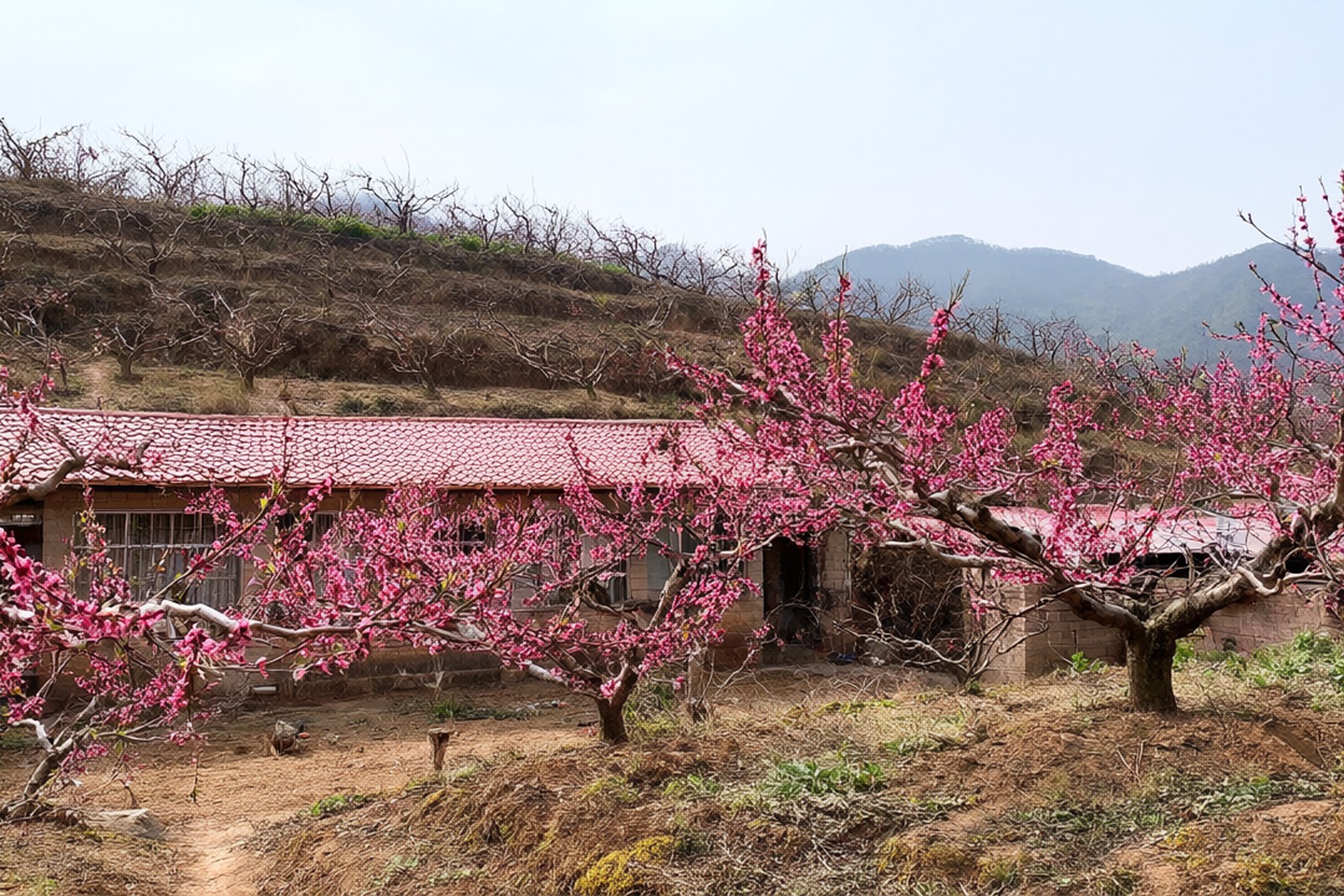
The peach is the reason the county is known at all, and it is a fruit with a shape rather than a story. It is flat and round with a small stone and a hooked point at the tip that gives it its name, the flesh is pale and crisp rather than soft and melting, and it snaps when it is bitten instead of giving way, which is what makes it worth carrying out of the county. It ripens in July, over about three weeks, and the whole valley moves to a different rhythm for those weeks: pickers in the rows from first light, boxes stacked at the roadside, cars from 深圳 and 广州 queuing on the single road in, and the price of a room trebling. In March the same slopes are pink and the county runs its blossom week instead, and 2025’s drew something in the order of half a million visitors with a spend of some ¥175 million. The county has spent heavily on the trade, with a provincial modern-agriculture park behind it, and the growers’ phrase for the year is 三月赏花,七月品果, blossom in March and fruit in July.
A minsu in this valley is not a boutique hotel with an orchard next to it; it is a working farmhouse with four to eight rooms to let, run by the family that owns the trees. Breakfast is what the house eats, rice porridge with pickles and eggs, and dinner is charged separately and is worth having: a chicken from the yard, greens from the plot below the house, 客家 Kèjiā standards such as 酿豆腐 niàng dòu fu and 娘酒鸡 niáng jiǔ jī, and in July as many peaches as anyone wants. The rooms are plain and clean, the walls are tiled, there is air conditioning and a water heater, and the family will take you into the rows to pick if it is the season for it. In the blossom week the same families run a tea table in the yard and the orchard turns into a car park.
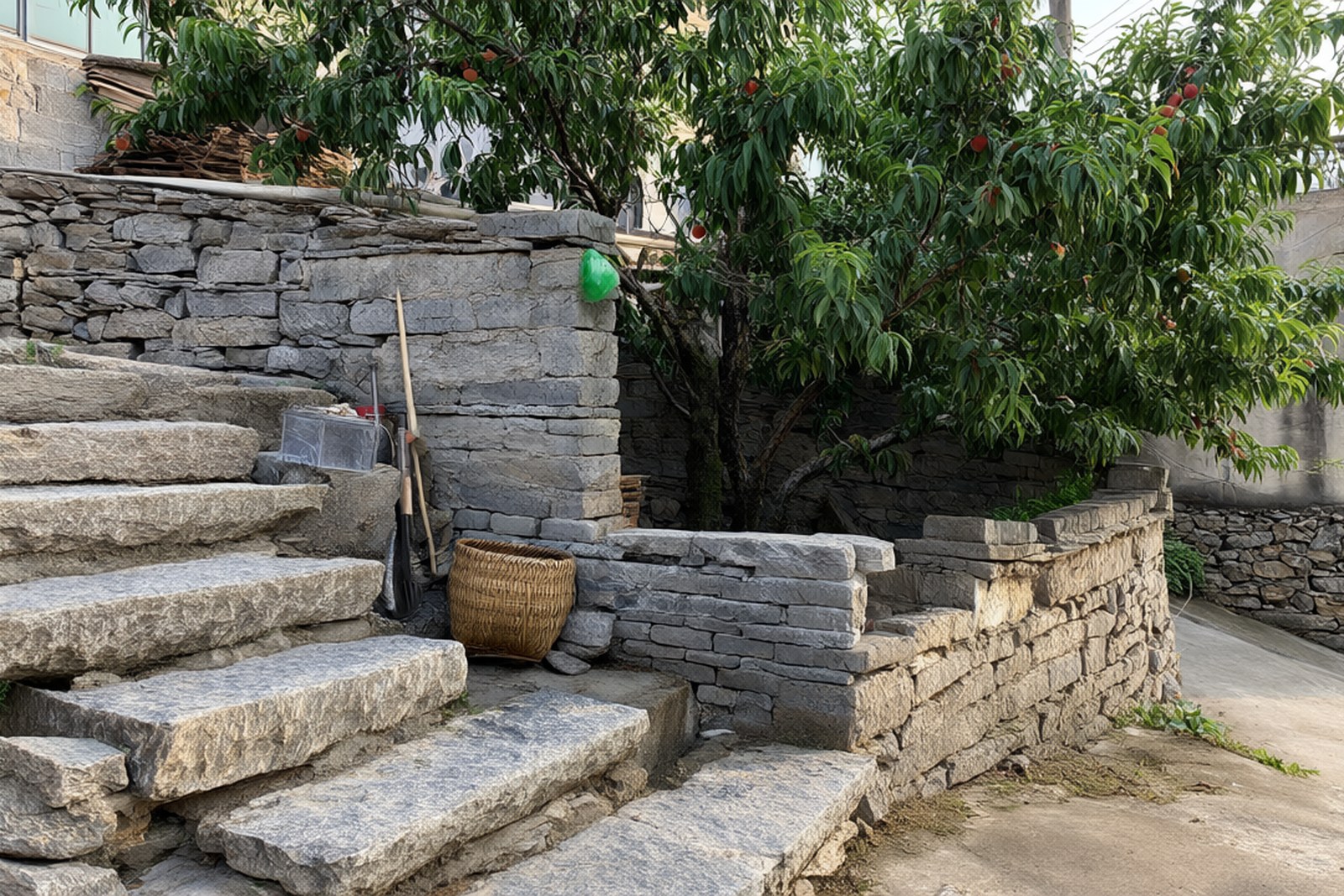
What the position gives you is the far north of the province, which is country most travellers never see. 上坪 lies an hour or so north of the county town and close to the Jiangxi line, in hills that run on into 九连山, and the road up is a long climb through terraced valley after terraced valley. 忠信镇 Zhōngxìn zhèn, back down the county, is the home of the 忠信花灯 Zhōngxìn huā dēng, the flower lanterns hung at the Lantern Festival, which is a national-level intangible heritage and one of the few genuinely local crafts left in the region. The 桃花山 blossom area is a 3A-rated scenic spot with a photography park and a small peach museum, and 陂头镇 has the limestone country and the 圣迹苍岩 cave. Come in March for the blossom or July for the fruit, and accept that for the other ten months the valley is a quiet farming place with nothing much on and no crowds at all, which is a recommendation of its own.
What the Rooms Are Like
Expect a room of fifteen to twenty-five square metres, a firm bed, air conditioning, a clean en-suite bathroom with a shower, and a window onto the orchard. The finish is plain and domestic, and the rooms on the upper floor with a balcony over the trees are the ones to ask for. There is usually a shared yard and a table on it, a kettle in the room and Wi-Fi that comes and goes. Bring a layer for the evening, because the valley is cooler than the coast, and a pair of shoes that will take the mud if it has rained.
Practicalities
Price. A double in a 上坪 orchard minsu runs ¥150 to ¥350 a night in the ordinary season. In the March blossom week and the July picking weeks the same room goes for two or three times that, and it has to be booked weeks ahead; the rest of the year it is cheap and often empty.
Address. The minsu is in 上坪镇 Shàngpíng zhèn, 连平县, 河源市, in the peach country of the far north of the county, close to the Jiangxi border. The nearest high-speed rail stop is 和平北站 Hépíng běi zhàn on the 赣深 line, from which the drive is about an hour.
Rooms. Ask for an upper room with a window or balcony over the orchard, and ask in advance whether the family will cook dinner, because there is not always a restaurant open nearby outside the season. In blossom and picking weeks confirm the rate in writing, since the market moves quickly and the good houses go first.
Getting there. By road 上坪 is roughly two hours from the centre of 河源 and three from 广州, on the fast road north towards 江西. From 和平北站 a taxi takes about an hour; from 连平县城 the drive north is a little over an hour. A car is close to essential here, because the orchards are strung out along the valley roads and there is no useful bus.
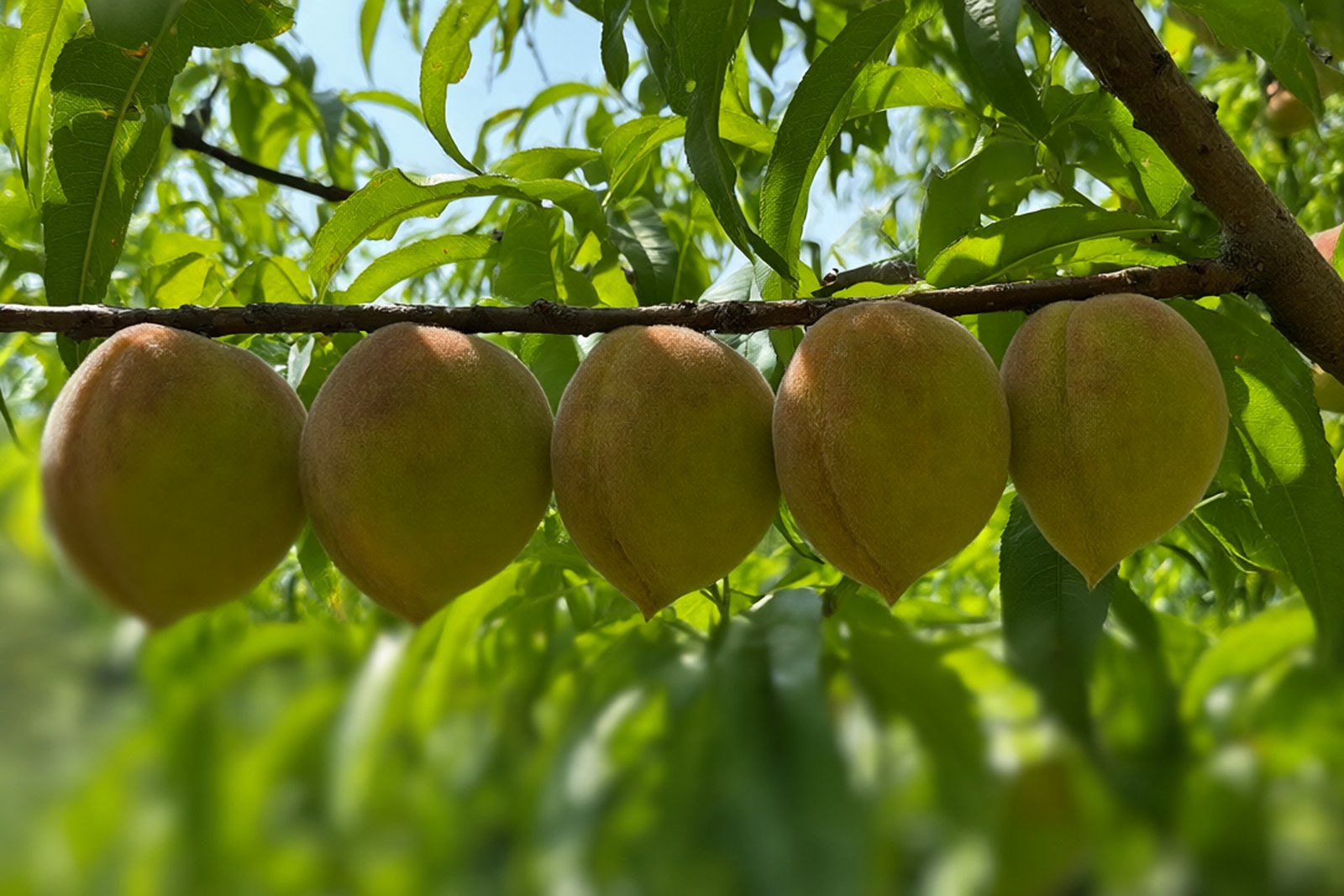
Where to stay: the farmhouse minsu among the 鹰嘴蜜桃 orchards of 上坪镇, 连平县, 河源市. Take an upper room over the trees, have the family cook, come in March for the blossom or July for the fruit, and book well ahead for either.
flowcloud would say that a valley which found that its particular soil and its particular cold nights produce a peach with a hooked tip and a snap to it, and then built a whole county’s summer around three weeks of picking, has shown that a small advantage in a small place, taken seriously, is worth more than a large one taken for granted.