
连州市 Liánzhōu shì is an old town in the far north of 清远市 Qīngyuǎn shì, on the ancient road that ran from Guangdong up into Hunan and Guangxi, and it has been a market town and a frontier post for a very long time. Its old quarter keeps the shophouses and the lanes of that history, and an inn here is a conversion of one of those buildings: a narrow frontage on a market street, rooms behind a restored facade, and the whole of the old town on the doorstep. It is the stay for someone who wants a small city’s history and its markets rather than a landscape.
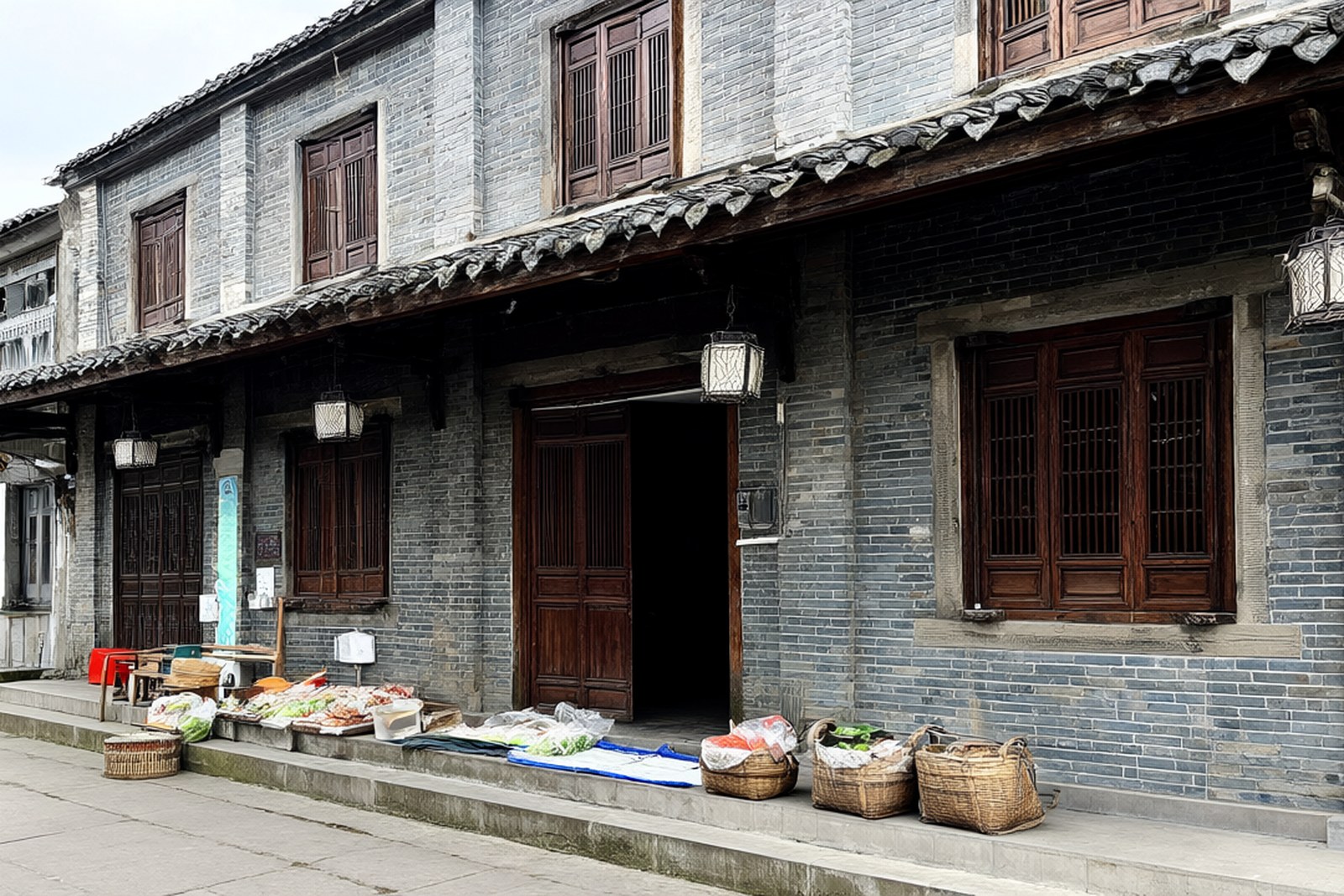
The buildings the inns occupy are the shophouses of the old commercial streets, the same form as the arcaded houses of the south but plainer and northern: a narrow front on the street, a deep plan behind it, sometimes a courtyard or a light well, and a stair up to the rooms above what used to be the shop. The conversion keeps the bones – the timber shutters, the tiled roof, the worn stone thresholds – and adds the comfort that an old building needs, because the northern winters are cold and damp and the shell alone will not do.
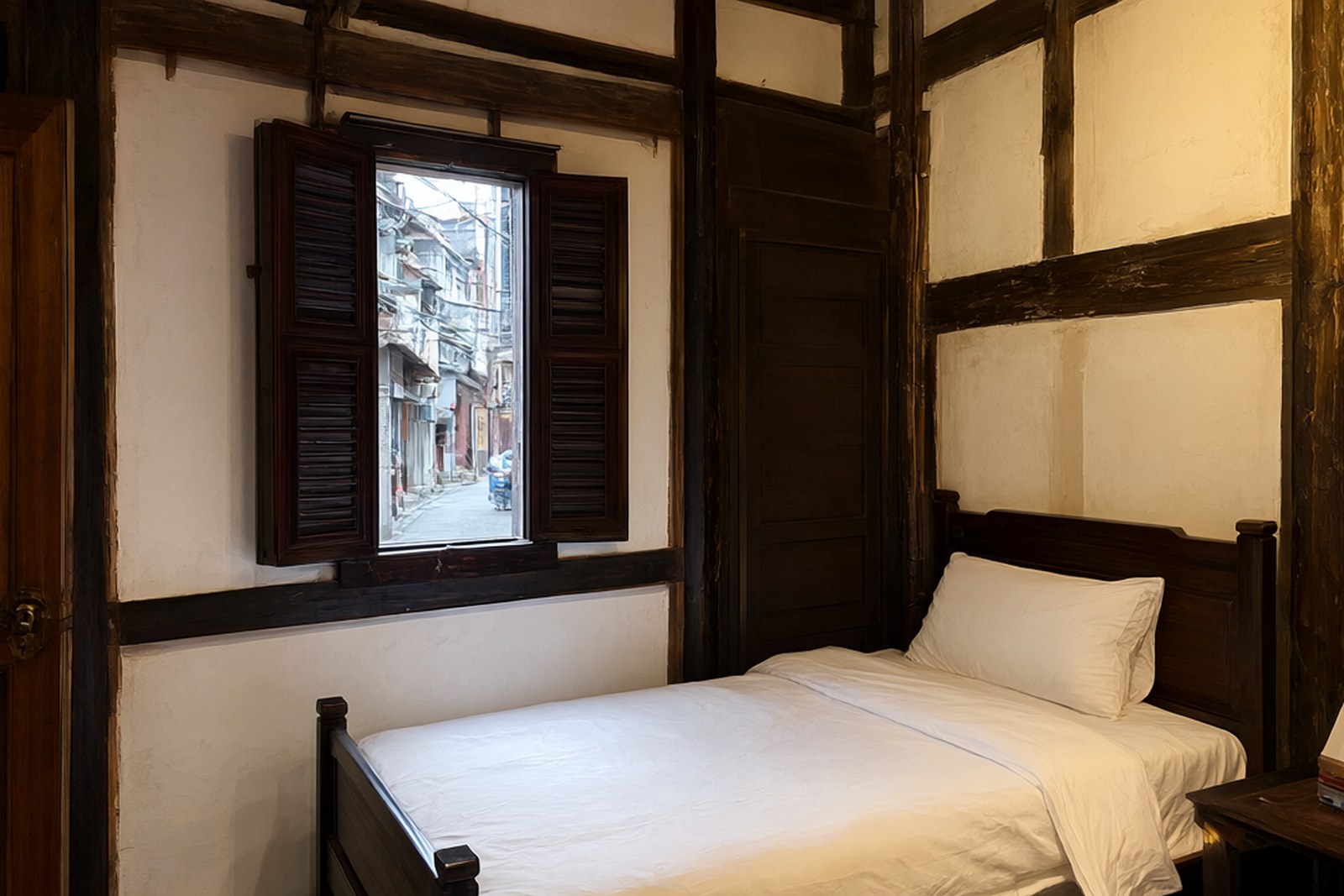
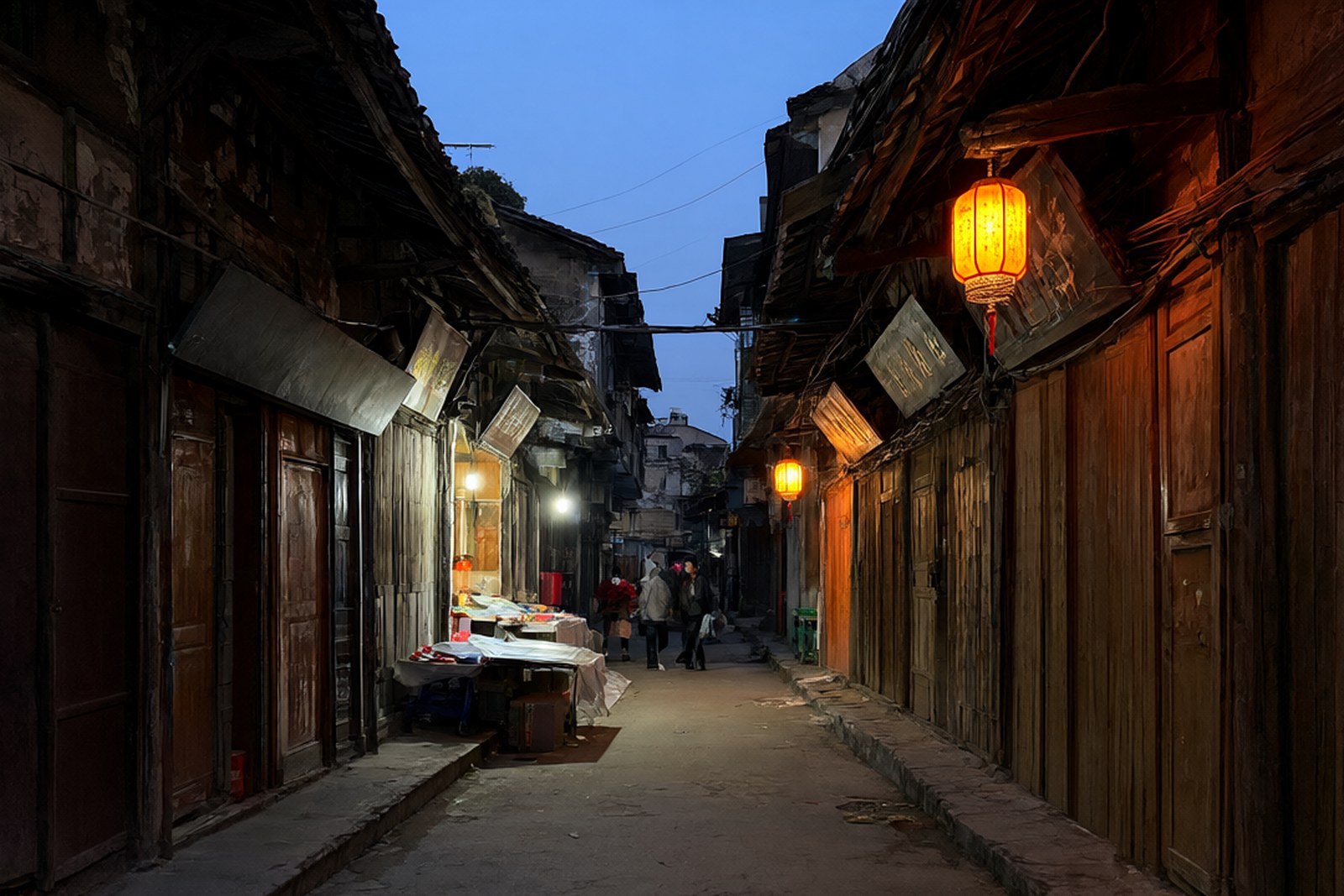
The rooms are small and the point is the street. Expect eighteen to thirty square metres, a firm bed, air conditioning and heating, a clean bathroom, and a window that may look onto the market lane or into the courtyard. The lanes around have the county’s markets, where the 腊味 là wèi hangs in the cold months and the 连州菜心 Liánzhōu cài xīn is sold in bundles, and the town has its share of old temples and halls. Everything is walkable, and the town is small enough to have seen in a day.
What the position gives you is the north of the province at close range. 连州 is the base for the 连州地下河, the underground river, and for the 湟川三峡, the river gorges, both a short drive out of town, and for the 腊味 and the vegetables that are the county’s fame. The town is high and cold in winter, which is exactly when it is best: the markets are full, the cured meat is hanging, and the choy sum is sweet. Come for two nights, walk the old streets in the morning and eat the county’s food in the evening.
What the Rooms Are Like
Expect a room of eighteen to thirty square metres, a firm bed, air conditioning and heating, a clean en-suite bathroom with a shower, and a finish that leans on the age of the building. The courtyard-facing rooms are quieter and the street-facing ones are livelier, so pick by how you sleep. There is usually a kettle, tea and a simple breakfast, and Wi-Fi is reliable. Some of these houses have no lift, and the old stairs are steep.
Practicalities
Price. A double at a 连州 old-town inn runs ¥180 to ¥400 a night in the shoulder season, and more over the October week and Chinese New Year, when the county is cold and busy. The courtyard rooms cost a little more, and the winter weekends fill with visitors to the underground river.
Address. The inns are in the old quarter of 连州市, around the market streets and the historic lanes of the town, reached by road from 清远市 in about two hours. 连州市 is on the rail line at 连州站 Liánzhōu zhàn.
Rooms. Ask for a courtyard-facing room if you want quiet, and confirm that the room has heating, because the 连州 winter is genuinely cold and an unheated old house is uncomfortable. Check whether breakfast is included, and ask the desk which of the markets is best on which morning.
Getting there. From 连州站 Liánzhōu zhàn, a taxi into the old town takes a few minutes; the station is close to the centre. From 清远市 the drive is about two hours, and a car is useful for the underground river and the gorges, which are a short drive out of town.
Where to stay: the converted shophouse inns of the old quarter of 连州市, reached by taxi from 连州站. Book a courtyard-facing room, confirm the heating, and use the town as the base for the underground river, the gorges and the winter markets.
flowcloud would say that an inn behind an old shopfront on a market street, in a small cold town that has been trading on the same road for centuries, is the most honest way to understand a place, and that a town which still sells its own food in its own lanes has nothing to prove.