
The building is shaped like a bowl. It is not a subtle reference; the main structure of the 醴陵瓷谷 Lǐlíng Cígǔ — the Porcelain Valley — is a great curved vessel of a building, tiled and glazed, and behind it are more buildings shaped like vases and plates, in white and celadon and a slightly startling orange. Sleeping inside it is a slightly absurd experience and a genuinely good one: the hotel rooms are part of the complex, decorated with underglaze porcelain panels and furnished simply, from ¥300–650, and the morning involves walking out of a giant bowl into a working ceramics town. This is the only place in China where the architecture of the hotel is a demonstration of what the town makes.
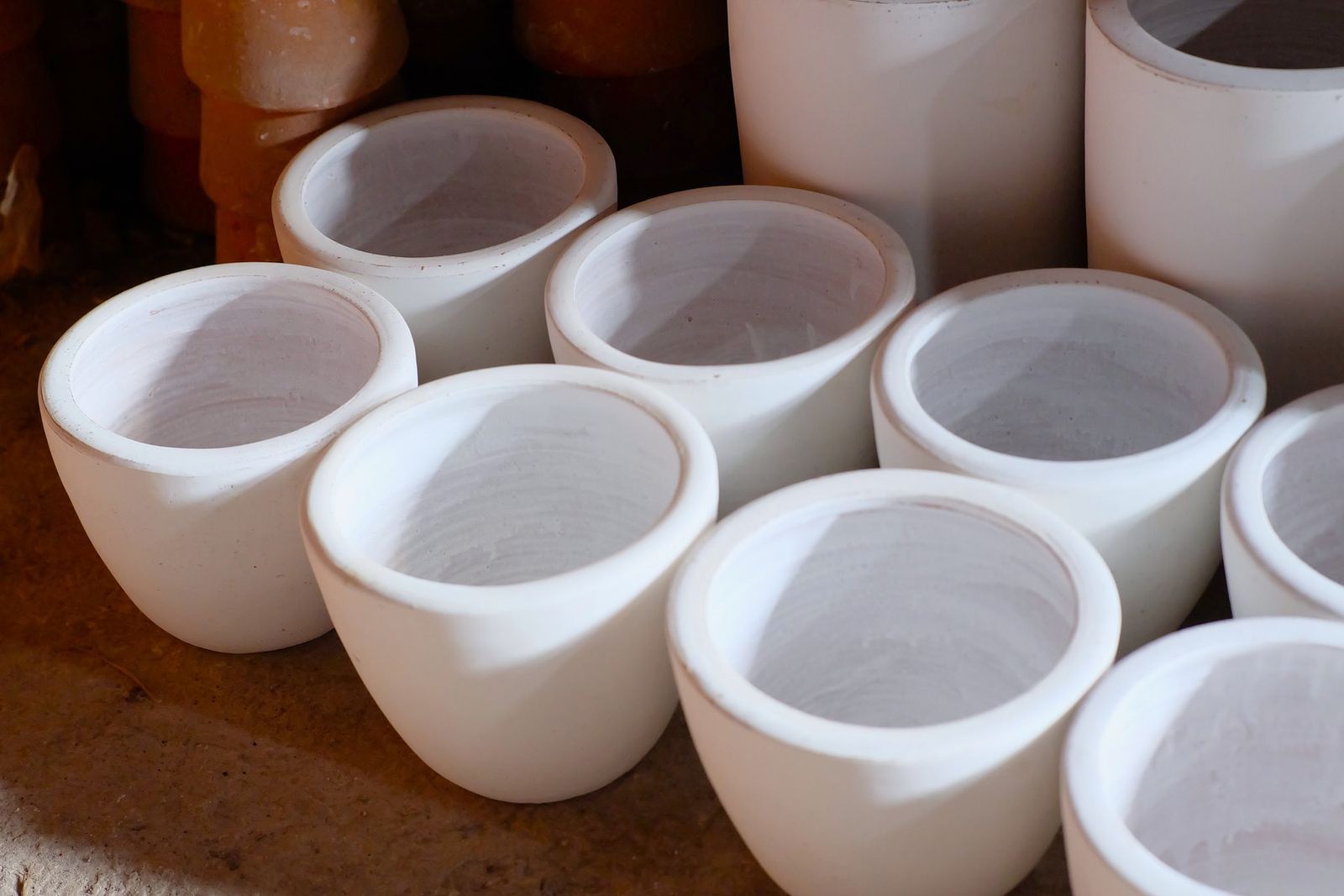
醴陵市 Lǐlíng shì is a county-level city on the 渌江 Lùjiāng in eastern 株洲 Zhūzhōu, and it has been firing ceramics for something like two thousand years — the 醴陵窑 Lǐlíng Yáo at 沩山 Wéishān, a national heritage site, has kiln remains going back that far. What made the town famous was an innovation of the early twentieth century: 釉下五彩瓷 yòuxià wǔcǎi cí, underglaze five-colour porcelain, in which the pigments are painted onto the unfired body and then sealed under a transparent glaze, so that the decoration cannot fade, scratch or leach. A vase in the technique won a gold medal at the 1915 Panama-Pacific Exposition in San Francisco, and the town has been the country’s underglaze capital ever since. 醴陵瓷器 Lǐlíng cíqì is a nationally protected geographical product and the painting technique is on the national intangible heritage list.
The 瓷谷 Cígǔ complex, finished in the mid-2010s and designed by an Italian architecture practice, contains a ceramics museum that is genuinely good, a workshop area where you can paint a piece and have it fired, shops selling both the industrial ware and studio work, and the hotel. The museum’s explanation of the difference between underglaze and overglaze is the best twenty minutes you can spend in the town, and it makes every cheap blue-and-white plate in your kitchen look different afterwards.
What You Are Paying For
Price. ¥300–650 for a double, breakfast included. The higher rooms have views over the complex and, at the top end, a private terrace. The town’s ordinary hotels are ¥150–300 and perfectly adequate if the architecture does not interest you, which it should.
Address. 醴陵瓷谷 Lǐlíng Cígǔ, 醴陵市 Lǐlíng shì, 株洲市 (Zhūzhōushì), 湖南 (Húnán), on the northern edge of the city.
Rooms. Around a hundred. Ask for a room facing the complex rather than the road. The themed rooms vary a good deal; the plain ones are the best value.
Getting there. 醴陵东站 Lǐlíng Dōng Zhàn on the high-speed line is about 15 minutes and ¥25–40 by taxi; 醴陵站 Lǐlíng Zhàn on the ordinary line is closer. From 长沙 Chángshā it is about 40 minutes by high-speed rail, and from 株洲 Zhūzhōu about 30.
What the Locals Know
Paint a piece and have it fired. The workshop at the complex takes walk-ins and posts the finished item; it takes a day or two and costs ¥80–250 depending on the object. It is the only souvenir from Zhuzhou worth carrying.
Buy from the factory outlets, not the museum shop. The town has dozens of ceramics businesses, many with factory shops, and the same bowl is a third of the price.
Eat 醴陵炒粉 Lǐlíng chǎofěn after dark. The town’s night market is ten minutes away and the late-night noodle stalls are the best argument for staying overnight.
Go to 沩山 Wéishān if you care about kilns. The old kiln site is a half-hour drive and is the archaeological half of the story the museum tells.
Where to Stay
In the 瓷谷 Cígǔ if you want the architecture and the workshop, which is the reason to come. In the town centre if you want to eat and walk. Either way, one night is enough; two if you are buying ceramics seriously enough to need a second day of looking.
flowcloud would say that a town which has spent a century perfecting a technique for painting under glass, and has now built a hotel in the shape of the thing it paints, has achieved something rare — a local industry that is genuinely proud of itself and can say so in concrete.
Where to stay: 醴陵瓷谷 (Lǐlíng Cígǔ), 醴陵市 (Lǐlíng shì), 株洲市 (Zhūzhōushì), 湖南 (Húnán). Doubles ¥300–650 with breakfast; ordinary town hotels ¥150–300. About 15 minutes and ¥25–40 by taxi from 醴陵东站 (Lǐlíng Dōng Zhàn); 40 minutes by high-speed rail from 长沙 (Chángshā). Paint a piece in the workshop and eat 醴陵炒粉 (Lǐlíng chǎofěn) at the night market.