
临高角 Lín gāo jiǎo is the cape on the north coast of 临高县 Lín gāo xiàn, the county at the north-western corner of 海南岛 Hǎi nán dǎo that 海南省 Hǎi nán shěng administers directly rather than through a prefecture-level city, and the first thing a booking has to get right here is that the cape is not the address. The address is 临城镇 Lín chéng zhèn, the county town’s own township, and more precisely 昌拱村 Chāng gǒng cūn, the village committee that wraps around the promontory; its hamlets include 龙豪村 Lóng háo cūn, 碌龙村 Lù lóng cūn and 文潭村 Wén tán cūn, and a guest hunting for a sea-view room will find the listings filed under all three names at once. The water is 琼州海峡 Qióng zhōu hǎi xiá to the north and 北部湾 Běi bù wān to the west, with 雷州半岛 Léi zhōu bàn dǎo away across the strait as the horizon; the cape sits between 海口 Hǎi kǒu to the east and the 洋浦 Yáng pǔ economic zone to the west, and it is three sides in water, with a coastline of about 7 kilometres around a headland whose tip throws a natural rock seawall roughly 250 metres long straight out into the sea, a formation the old texts call 仙人指路 xiān rén zhǐ lù, the immortal pointing the way. Behind the rocks there is about a kilometre of beach. That shape is the reason the swimming and the photography are two different afternoons. The western side, which local material calls 大鹏湾 Dà péng wān, is flat and clear and shallow-bottomed, its sand white enough to be described as flour; the eastern side takes the swell and breaks it into the long white lines the county has been selling for a century under the name 南海秋涛 Nán hǎi qiū tāo, the autumn surf of the South Sea. A minority of the tourism pages print that as 海南秋涛 Hǎi nán qiū tāo, but the official and newspaper texts use 南海秋涛, so that is the name to use. One headland, two seas, and a guest who books without asking which way the window faces has an even chance of getting the wrong one.
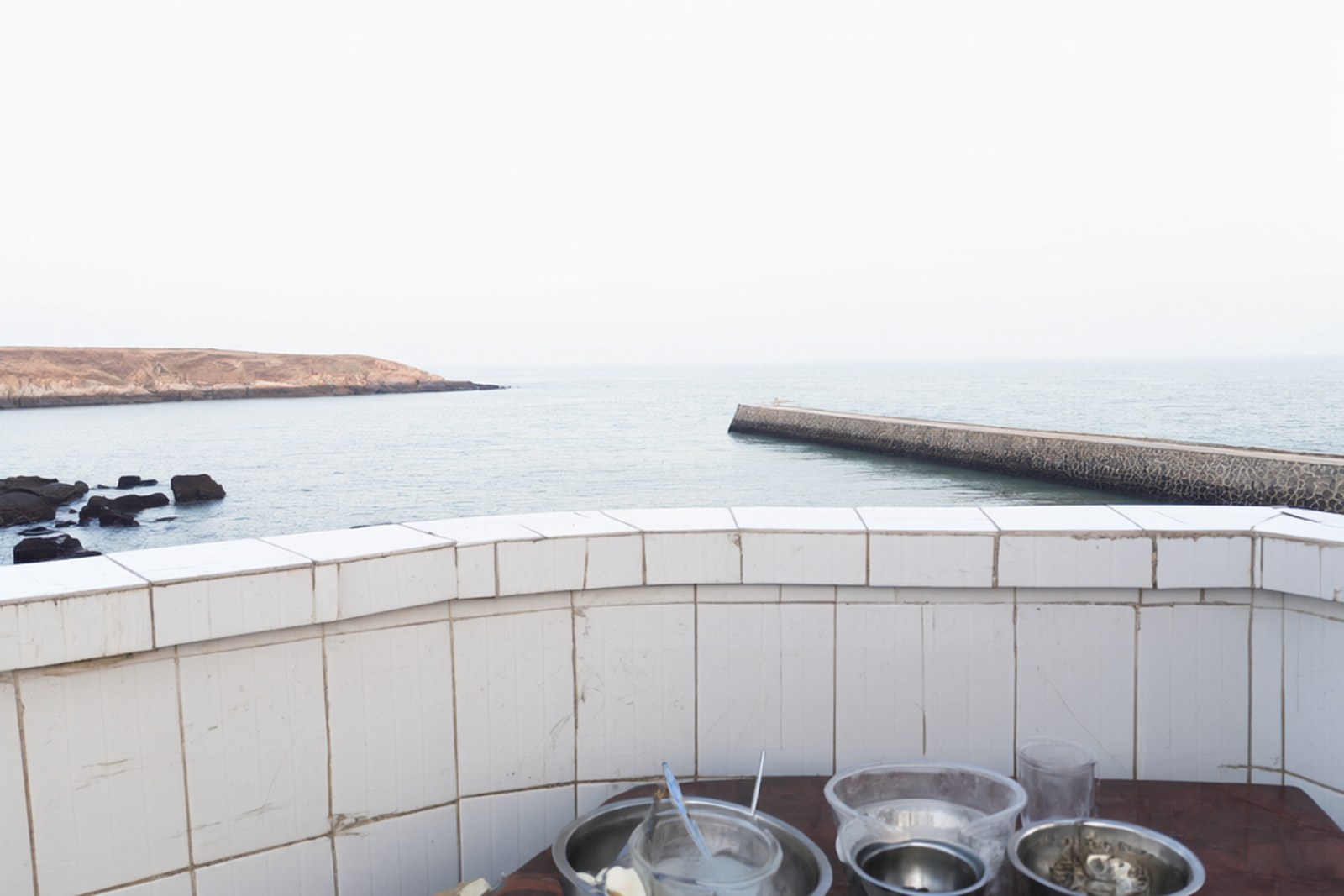
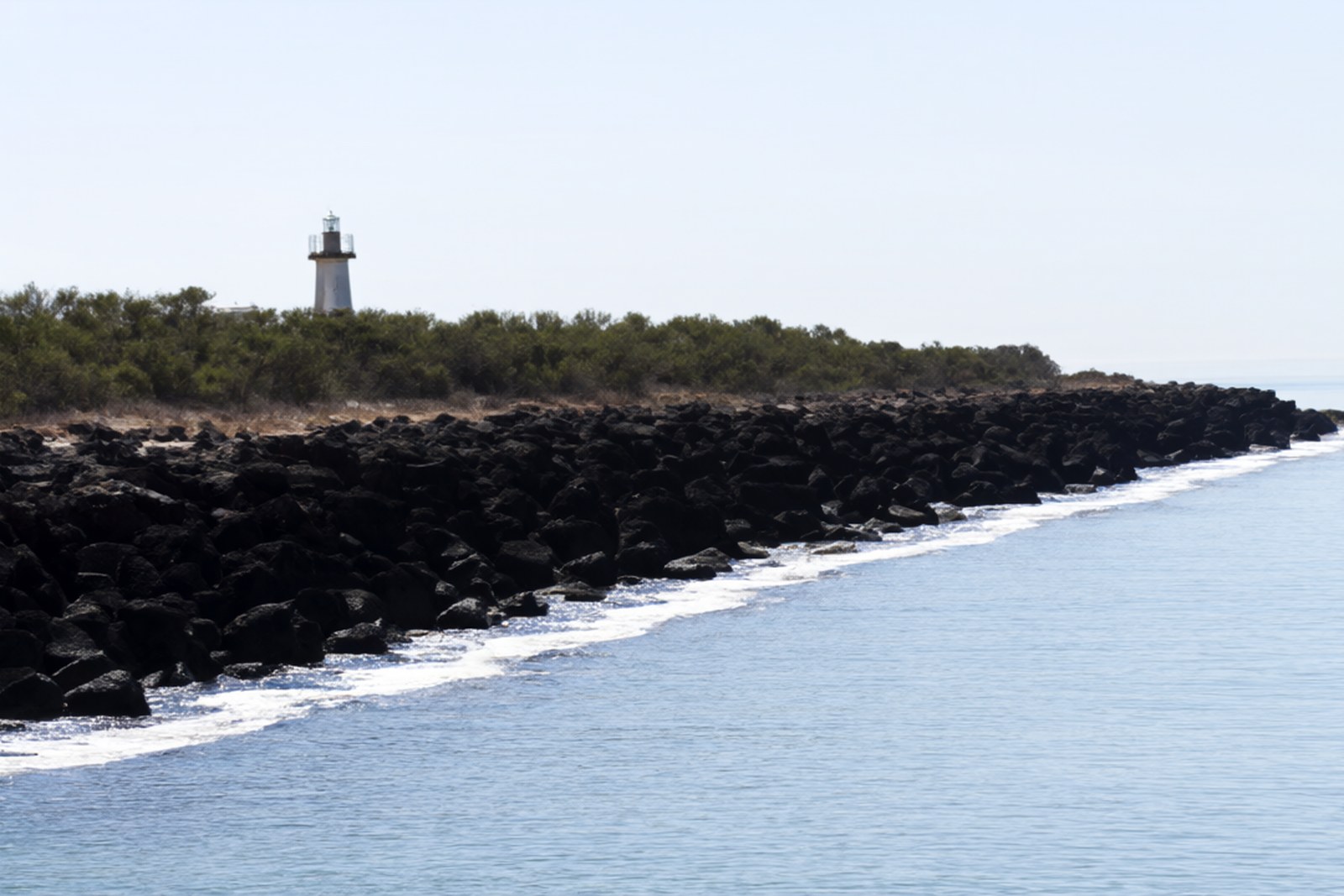
The reason anybody built anything here at all is a date. In the small hours of 17 April 1950 the People’s Liberation Army came ashore at this cape in the crossing that opened the island, and the county has organised its coast around the memory ever since. A park of 86 亩 mǔ went up in 2006 with the 热血丰碑 Rè xuè fēng bēi statue as its axis – two soldiers side by side, one raising a rifle, one a red flag, the pair of them standing watch over the strait – set against the old lighthouse and the memorial steles of the 40th and 43rd armies. On 31 December 2020 the 临高角解放公园 Lín gāo jiǎo jiě fàng gōng yuán was formally renamed 海南解放公园 Hǎi nán jiě fàng gōng yuán, and on 1 July 2022 it was granted national AAAA scenic-area status. The park covers 5.73 hectares and holds the statue, the landing memorial hall, the lighthouse and the two army monuments, and it is a provincial-level base for patriotic education. The lighthouse is the oldest object on the ground: built by the 琼海关 Qióng hǎi guān, the Qiong Customs house, in 1893, 22 metres tall and 1.88 metres across, its lamp reaching 18 nautical miles, listed in 1997 on the international register of the world’s one hundred historic lighthouses and put on a Chinese postage stamp in 2002. What matters for a bed, though, is the footfall rather than the monument. The park is a national-level base for patriotic education and takes more than 500,000 visitors a year, and the county’s tourism bureau reports that in 2024 the scenic area drove close to 20 million yuan of extra income for the guesthouses and farm restaurants around it. That number is not about a memorial. It is about a strip of rooms.
The cape is about 10 kilometres from the county town of 临城镇 Lín chéng zhèn, a figure repeated by the provincial newspaper, the provincial gazetteer and the provincial tourism office alike, and the one number that makes this place work as a stay rather than a day trip. On the rail side the county’s station is 临高南站 Lín gāo nán zhàn, on the 海南西环高铁 Hǎi nán xī huán gāo tiě, the island’s western high-speed ring; a second-class seat from there to 海口东 Hǎi kǒu dōng costs about 29 yuan and takes 36 to 46 minutes, and the ride to 美兰机场站 Měi lán jī chǎng zhàn, the airport station, is about 35 yuan in under an hour. From the station the county’s own buses take over, and the last leg out to the cape is a county minibus from the town rather than anything a visitor can book from abroad; account-level reports describe a change at the town centre and a shuttle that leaves on the hour, which is the kind of arrangement to confirm on the day rather than assume. The comfortable arrival is the newer one. The 海南环岛旅游公路 Hǎi nán huán dǎo lǚ yóu gōng lù, the island’s coastal scenic highway, now runs past the village, and the highway’s sightseeing coach operates a line called 澄迈、临高火山渔港之旅 which calls at 临高角解放公园 and then at the 新盈红树林 Xīn yíng hóng shù lín mangroves on its way back to 海口. A visitor without a car who takes that coach is delivered to the park gate, and that is the practical form of the whole argument for sleeping here. By road from 海口 the distance is roughly 70 to 90 kilometres depending on the route and the drive takes an hour and a half or a little more, coming off the G98 island ring at the 临高 exit or the 金牌 interchange and then onto the coast road.
The rooms themselves are a village’s second economy, and it is worth understanding the ground they stand on. Almost nothing here is a purpose-built resort. The stock is three things wearing one label: two- and three-storey family houses that villagers rebuilt as guesthouses, flats inside the two large residential compounds behind the beach – 长岛蓝湾 Cháng dǎo lán wān and 富力悦海湾 Fù lì yuè hǎi wān – converted into one- and two-bedroom stays, and a handful of small blocks at the park gate. That is why the band is wide and why none of the names is famous: the county’s own material records no high-end resort hotel inside the scenic area, and the booking pages carry dozens of small operators instead, some of them a single flat on the ninth floor of a compound. The same material describes how the village got there, and it is a story about a road and a subsidy rather than about a hotel brand. 昌拱村 Chāng gǒng cūn went at it through what the county calls a combination of revenue-sharing, investment and operation and labour links: households put their houses into the trade, and the village committee coordinated the rest. The village party secretary has said the committee is now applying for heritage-protection listing for two older structures, a coral-stone house and the site of a wartime maritime transport station on the 琼崖 Qióng yá route, which is the other half of what is happening here – a fishing village converting its old buildings and asking the state to protect them at the same time. The county’s reporting also carries a household’s own account of the arithmetic: a family whose income was 20,000 yuan a year before it converted its house, and more than 100,000 yuan a year after. Whatever a guest thinks of that number, it explains why every second gate in the village has a room to let, why the guesthouses close ranks and set similar prices in the same week of the season, and why the strip keeps growing house by house rather than by any single developer deciding to build a hotel.
What the Rooms Are Like
The honest description of a Lingao Cape room is that it is a modern Chinese holiday flat with the sea attached, and the quality line runs through the fittings rather than through the name. The floor of the market is a converted compound apartment: two rooms, a tiled floor, a firm bed or two single beds, split-unit air conditioning, an electric kettle, a small desk, a wall-mounted television, a shower over a tray or behind a glass panel, and a balcony you have to ask about, because not every unit in the block has one that faces water. Above that are the purpose-fitted rooms in the rebuilt family houses, which add a proper sea-view balcony, a projector or the oversize screen the listings advertise, sometimes a bathtub, and in the newest houses the whole-room smart fittings, voice-controlled lights and curtains, that have become the standard selling point of the Chinese coastal minsu. Below it are the plain rooms with an inside window and no water in sight, which is what the bottom of the band buys. Two questions decide which of the three you get. The first is direction: the cape faces two different seas and the bright one is not the calm one, so ask whether the balcony looks east at the surf or west at the flat water, and expect the answer to depend on where on the ring road the house actually stands. The second is height. A sea-view room on the first floor of a compound can have its water crossed by a car park, a fence or a hedge, and the same view from the sixth floor is the reason people come. Everything else in the room is ordinary: the wifi works, the hot water comes off a wall boiler or a roof tank, and the air conditioning is the only thing between a guest and a February night that is warm by northern standards and cool by island ones.
Practicalities
Price. A double on this coast runs about 150 to 350 yuan a night, and the band is set by the view rather than by the building. Rooms with a full sea view and a balcony sit at 250 to 350 yuan; a clean economy room facing inland runs 130 to 200 yuan; the larger compound flats that sleep four or five sit in the middle and are priced by the unit rather than by the head. These are platform snapshot figures taken in September 2026 rather than published rates, and the sellers here are small enough that the number moves with the week and the channel. Winter is the season that decides everything: from December to March the island fills with people leaving the cold, the sea-view rooms go first, and the advice worth taking is to book well ahead rather than a few days out, while the wet months from May to October are the cheap ones, with the August heat and the afternoon rain keeping the coast quiet. Treat every figure as a range and check the live rate for the nights you want.
Address. The rooms are in 临城镇 Lín chéng zhèn in 临高县 Lín gāo xiàn, in and around 昌拱村 Chāng gǒng cūn and its hamlets 龙豪村 Lóng háo cūn, 碌龙村 Lù lóng cūn and 文潭村 Wén tán cūn, with the two large compound addresses, 长岛蓝湾 Cháng dǎo lán wān and 富力悦海湾 Fù lì yuè hǎi wān, sitting behind the beach and the 海南解放公园 Hǎi nán jiě fàng gōng yuán at the cape itself; the county town of 临城镇 is about 10 kilometres inland, 新盈镇 Xīn yíng zhèn and its harbour are the next coastal town west along the ring road, and 临高南站 Lín gāo nán zhàn is the rail arrival for the whole coast.
Rooms. Ask two things before you pay. Which way the balcony faces, because the cape has a calm sea and a rough one and the listing photograph is usually the good one; and how high the room is, because a low floor in a compound block can have its water view cut by the car park. Ask whether the rate includes the smart fittings and the projector or whether those belong to a different unit in the same building, since one host often sells three grades out of one lift and the booking page shows the best of them. Ask about parking, which is free and plentiful in the compounds but tight in the village lanes over 春节 Chūn jié. Ask whether the host can cook, because the honest position is that there is no dependable restaurant street inside the scenic area and the nearest certain dinner is back in the county town or west at 新盈; several houses will do a seafood meal with a day of warning and that is the better evening. And ask the host for the tide, because the beach here is a 赶海 gǎn hǎi beach – clams, oysters, sea snails and small crabs – and the digging happens in the hours either side of low water, with the best tides around the first and the fifteenth of the lunar month. Take a tide table rather than a fixed timetable, since the informal schedules that circulate online do not agree with one another.
Getting there. 临高南站 Lín gāo nán zhàn, on the 海南西环高铁 Hǎi nán xī huán gāo tiě, is the rail arrival: a second-class seat to 海口东 Hǎi kǒu dōng costs about 29 yuan and takes 36 to 46 minutes, and the ride to 美兰机场站 Měi lán jī chǎng zhàn is about 35 yuan in under an hour, which makes the cape an easy first or last night of an island trip. From the station the cape is about 10 kilometres beyond the county town and the last leg is a county minibus or a taxi rather than a booked service. By road the 海南环岛旅游公路 Hǎi nán huán dǎo lǚ yóu gōng lù runs along the coast past the village, and the sightseeing coach line 澄迈、临高火山渔港之旅 calls at the park; from 海口 the drive is roughly 70 to 90 kilometres, between an hour and a half and two hours, off the G98 island ring at the 临高 exit.
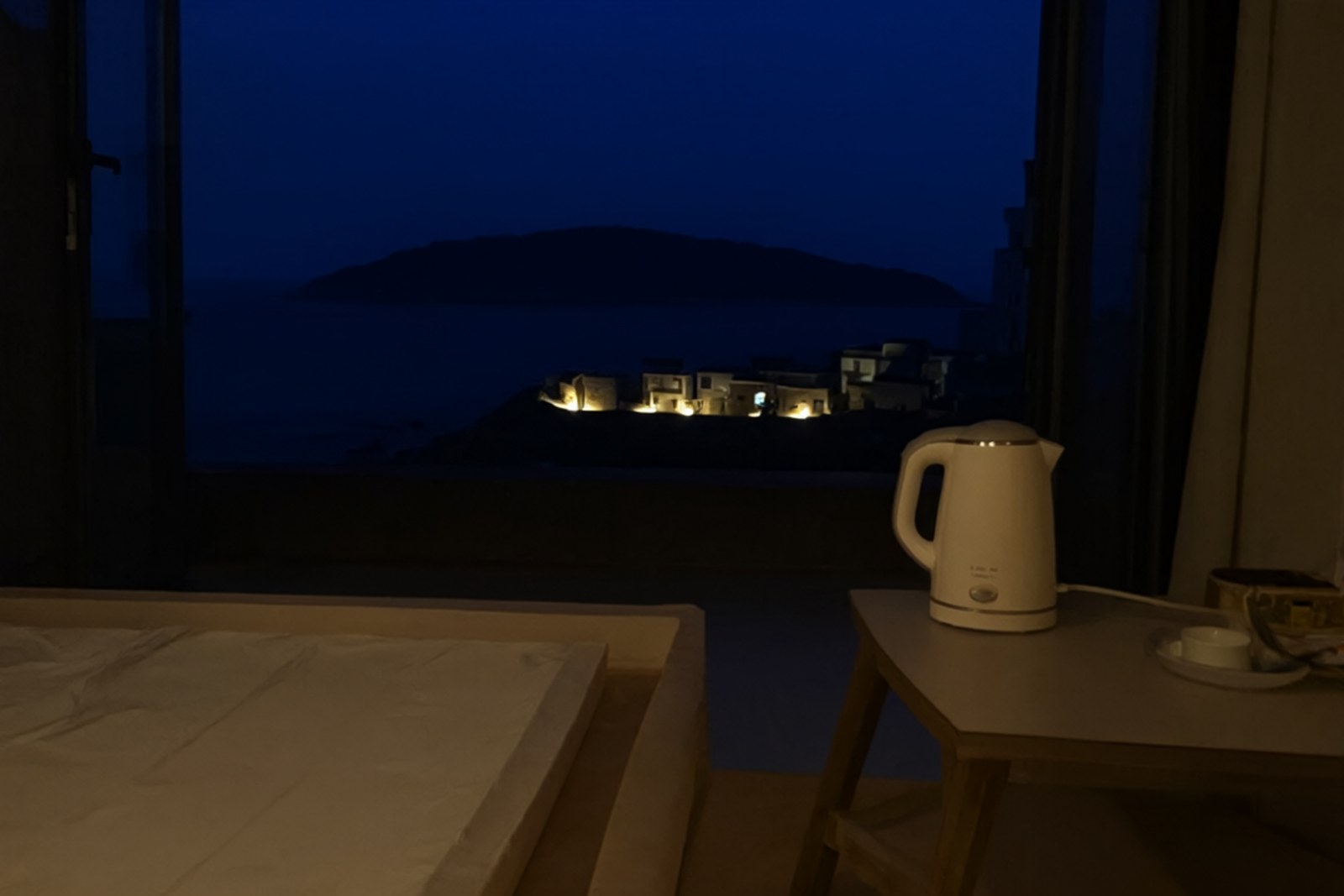
Where to stay: an upper-floor room at one of the small guesthouses in 昌拱村 Chāng gǒng cūn, 临城镇, on the 临高角 Lín gāo jiǎo coast of 临高县, where the beach, the 海南解放公园 and the old lighthouse are a walk away and the county town with its food is ten kilometres inland. Take a room with a balcony and ask which sea it faces, walk the cape at the hour when the coaches have not arrived, and keep the tide table for an afternoon of 赶海 rather than treating the coast as scenery.
flowcloud would say that a headland which took a landing in 1950 and a lighthouse in 1893 and turned both into a strip of family guesthouses has found the only honest use for a place where two seas argue on either side of the same rock – because the correct way to sleep on a cape like this is to pick the calm side, leave the surf for the morning, and let somebody’s rebuilt house hold the night.