
Chongqing is a municipality of southwest China, and 南岸区 Nán’àn Qū, Nan’an District, keeps its rarest bed not in a tower but in a compound: 既下山 Jìxiàshān, the Sunyata hotel, on 龙门浩老街 Lóngménhào Lǎojiē, Longmenhao Old Street, at 9 号楼 9 Hàolóu, Building 9, of the restored street above 南滨路 Nánbīn Lù, Nanbin Road. The approach is half the story: cross by the Yangtze River Cableway or the metro’s river crossing to 上新街 Shàngxīnjiē, Shangxinjie, and walk down into stone lanes stacked beneath the Dongshuimen bridge. The arrival is the other half: a hillside compound where the hotel keeps sixteen rooms inside the treaty port’s own walls. This is the rare case on the south bank of sleeping in the history rather than beside it.
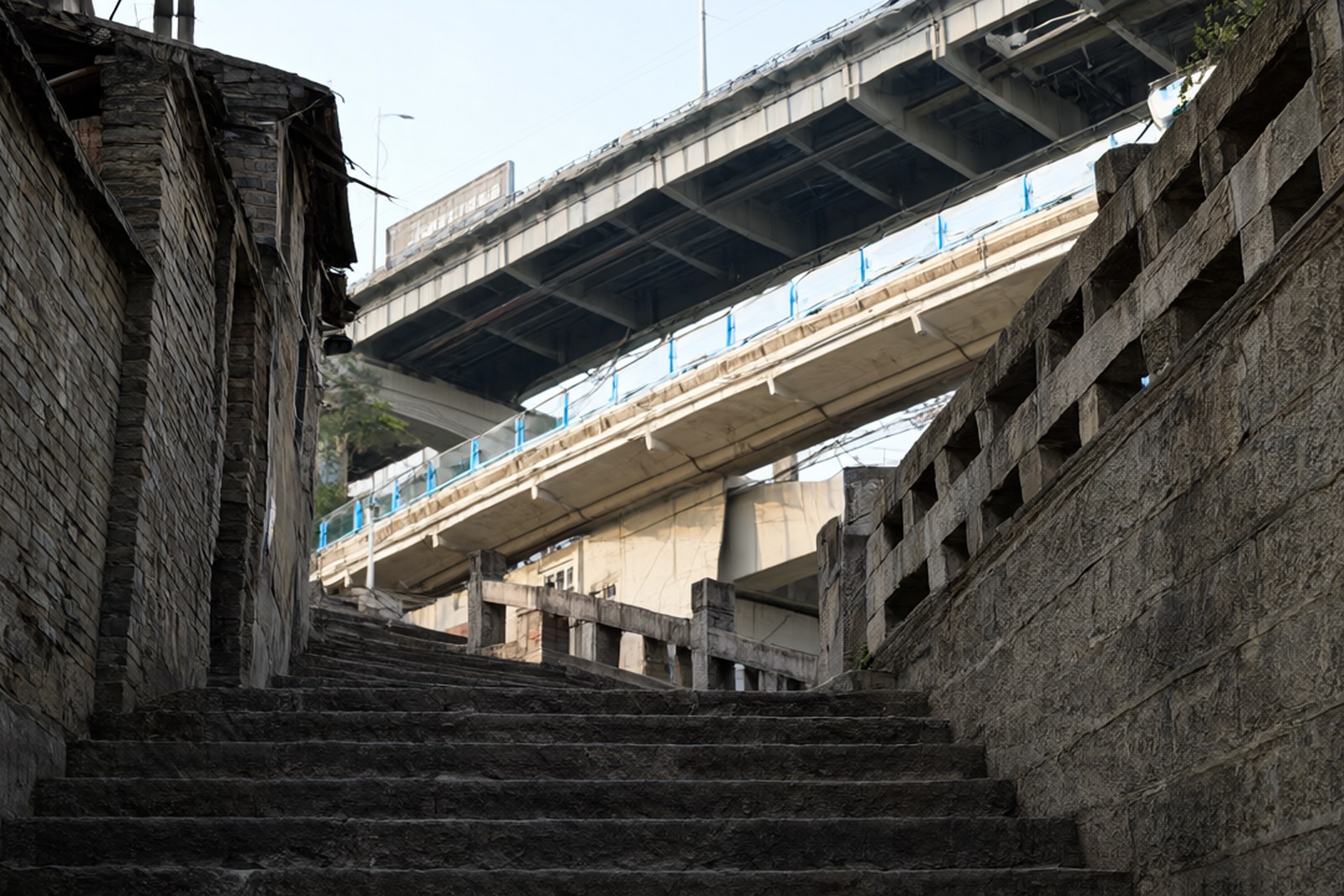
The street is the treaty port’s landing place made permanent. The 1891 customs opening put Longmenhao wharf at the front of western China’s foreign trade, and the decades after left this slope dotted with consulate buildings, bank houses and warehouses; in the wartime-capital years more than thirty countries kept missions in Chongqing, with the Italian mission’s former quarters and the American military attaché’s residence on this street. Among the warehouse fronts stands 安达森洋行 Āndásēn Yángngháng, the Andasen warehouse, remembered as the wartime hiding place of thousands of crates of the Palace Museum collection moved south in 1938. The restoration that reopened the street kept 18 heritage buildings, and by one mainstream media account the work put some 1.6 million recycled bricks, 400,000 old tiles and 30,000 tons of old stone back into the walls, with the lower lane cluster of 下浩里 Xiàhàolǐ, Xiahaoli, formally opening in November 2022.
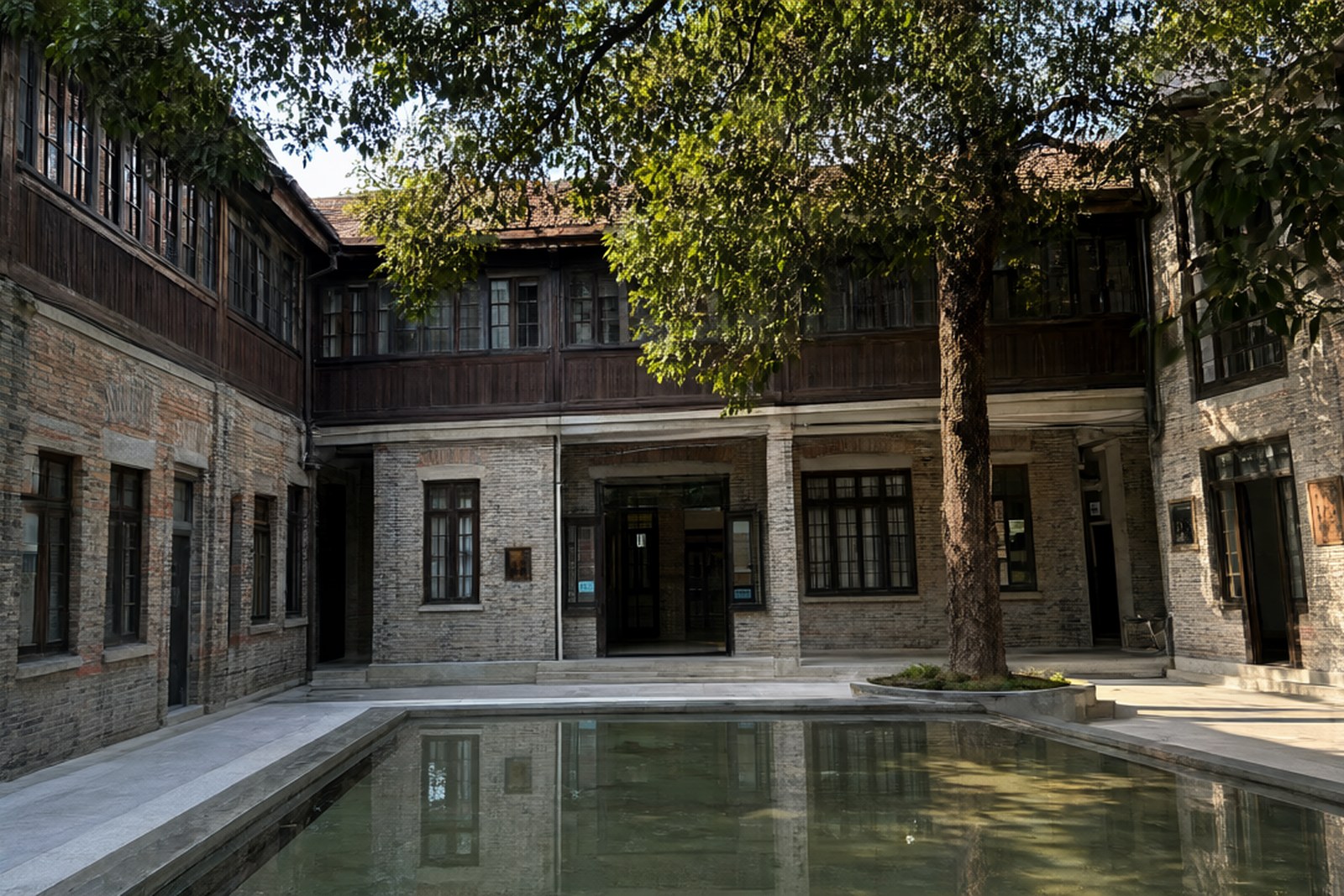
The hotel conversion is the reason to book. Sunyata was made from three Republican-era buildings – the former American military attaché’s villa, the former 新华信托储蓄银行 Xīnhuá Xìntuō Chùxù Yínháng, New China Trust and Savings Bank, and a third house rebuilt to the old drawings with salvaged materials – under the design of the architect 谢柯 Xiè Kē, Xie Ke. Sixteen rooms are the entire inventory, with terrace rooms and river-facing suites among them, and the restaurant and bar occupy the old bank premises. The house sits high on the slope, and one fact shapes every arrival: cars cannot reach the door, so guests arrange for the butler to meet them at the roadside, and a lift carries the luggage the rest of the way up.
The platforms disagree productively about the price: in an October 2026 snapshot the same inventory quoted from about 2,187 yuan on one platform and from about 3,372 on another. Breakfast is priced separately at 88 yuan a head by the hotel’s own policy page. Both are snapshots that float; with sixteen rooms, book early rather than hoping. Call ahead to confirm arrival logistics – the slope that makes the compound quiet makes it fussy for drivers.
The market around the compound is thin by design, which is why the fallbacks matter. Nearest is the 曼庚公馆 Màngēng Gōngguǎn, Mangeng Gongfu, guesthouse by the cableway’s south-bank station, a few hundred metres from the compound, for travellers who want the same streets at a lighter price. Beyond the street, the wider south-bank line offers its chain register – the river-view Atour on Nanbin Road and the Holiday Inn Express at the Danzishi end – each covered in its own article on this site. What the fallbacks cannot sell is the thing the compound sells: a room number inside a conservation building, with the street’s own stones as the corridor.
Practicalities
Price. In an October 2026 platform snapshot the compound ran from about 2,187 to 3,372 yuan a night across two platforms, with breakfast at 88 yuan a head by the hotel’s policy page. Sixteen rooms mean the calendar tightens early – a week or two ahead for weekends, through Ctrip, Tongcheng or Trip.com, with arrival logistics confirmed by phone. Prices fluctuate seasonally; check current rates, and treat every figure as a snapshot that floats.
Address. 重庆市南岸区南滨路龙门浩老街9号楼 Zhōngqìng Shì Nán’àn Qū Nánbīn Lù Lóngménhào Lǎojiē 9 Hàolóu, Building 9, Longmenhao Old Street, Nanbin Road, Nan’an District, Chongqing – the compound sits on the upper slope of the restored street, above the 下浩里 Xiàhàolǐ, Xiahaoli, cluster, with the street’s car park below and the last stretch on foot or by butler.
Rooms. Sixteen keys across three heritage buildings, ranging from courtyard and attic categories to river-facing terrace suites; the restaurant and bar occupy the old bank premises. The conversion’s materials and layout mean no two floors are alike – ask about stairs and aspect when booking, and treat any platform-awarded star as noise.
Getting there. Metro Line 6 and the Loop line meet at 上新街 Shàngxīnjiē, Shangxinjie, station, roughly 200 to 240 metres from the street, and the Yangtze River Cableway’s south-bank station is about five minutes on foot from the lane. From 江北国际机场 Jiāngběi Guójì Jīchǎng, Jiangbei International Airport, the drive is about 40 minutes. The street has a car park with fees and hours set on site; leave the car at the station end and walk or call the butler.
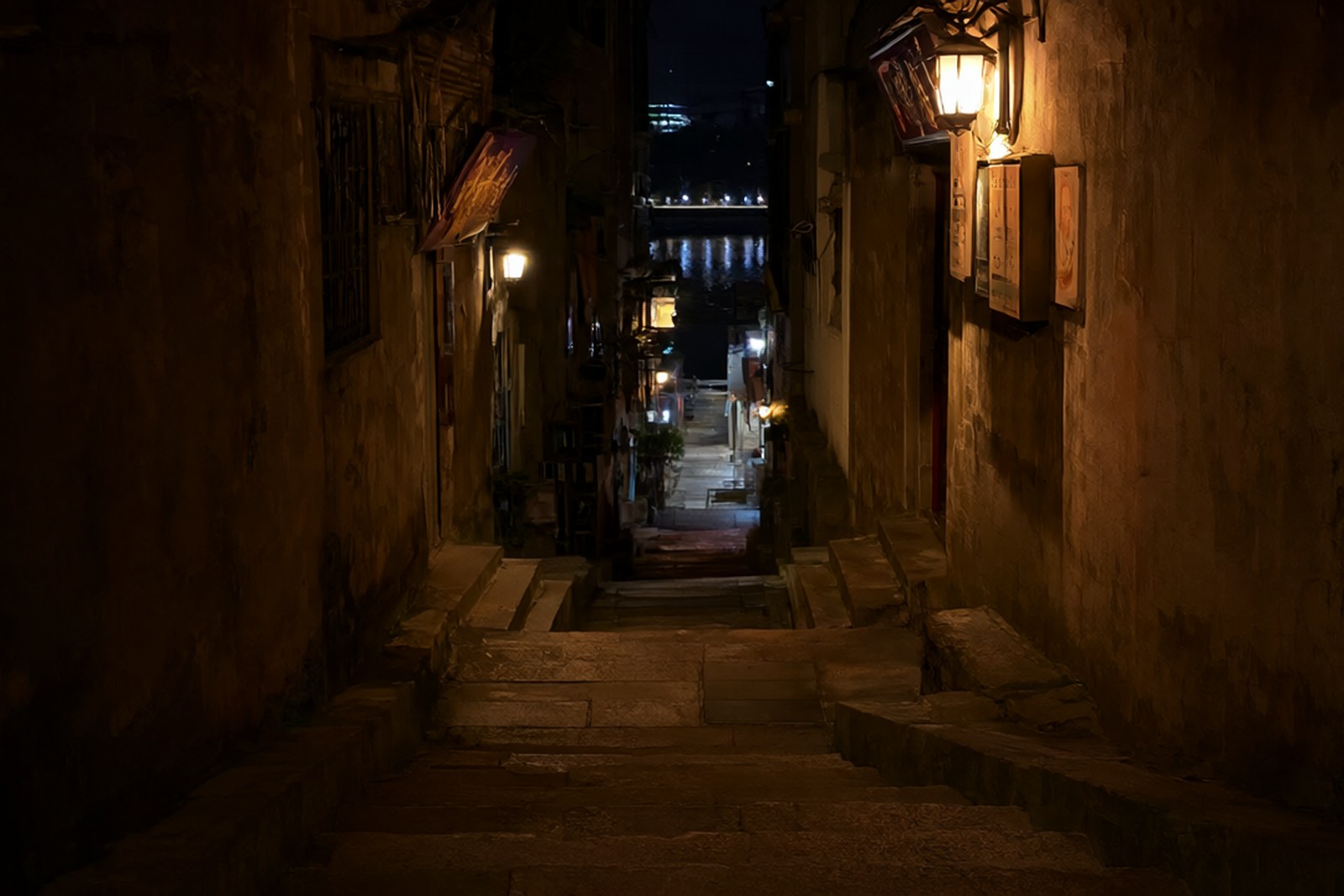
The stay rewards the slow reader. Morning belongs to the stone lanes before the day visitors climb up; afternoon to the street’s small museums, the Palace-Museum warehouse story included; and the evening to the compound’s terrace, where the far bank’s lights run in a straight line across the water and the sixteen-room scale of the house becomes the whole point – no lobby hum, no floor traffic, just the old walls and the river. Then the stone steps, the butler, the road, and the city that started all of it in 1891.
flowcloud would say that Longmenhao is the only hotel address in Chongqing where the check-in question is not which floor but which century, and that the correct way to sleep here is in the attaché’s old villa with the terrace door open, because sixteen rooms inside a conservation compound is not a hotel inventory, it is a headcount the history can afford.
Where to stay: the Sunyata compound from about 2,187 to 3,372 yuan if sleeping inside the heritage walls is the whole point, the Mangeng Gongfu by the cableway if the same streets are wanted at a lighter price, and the Nanbin Road chains if the budget prefers a river view to a Republic-era wall – because at 龙门浩 Lóngménhào, Longmenhao, the rooms are not near the history, they are the history’s own floor plan.